
Sign up to save your podcasts
Or

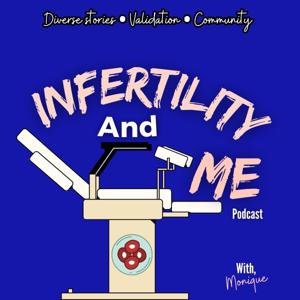


This is the last week Infant & Pregnancy Loss Awareness month. Advocacy, awareness, and celebration has been tremendous all over social media. Remember that our work does not end here. Much like infertility, stillbirth, miscarriage, and pregnancy-reductions are very taboo topics, and we often tiptoe around them as a society. The closing of this month's awareness to the babies we have lost feels final in some ways, but moms and dads are still grieving and need our support. In this episode, Monique encourages you to continue your advocacy efforts beyond October, seek healing with the help of a licensed trauma therapist or counselor, naming your baby if you haven't, and making physical space in your home to honor your baby.
*Follow on Instagram
Enjoying the show? Please leave a rating & review—just one sentence helps tremendously!
Do you have days or weeks that you feel like you’re just surviving and not fully thriving and living your best life while trying to conceive? In today's episode, Amber Fischer shares her diagnosis of endometrial cancer, PCOS, and her infertility journey. Amber never envisioned that she would be a cancer survivor, let alone it reoccurring after she gave birth to her miracle boy. Amber's endometrial cancer returned due to an increase of estrogen during fertility treatment, pregnancy, and nursing her son. Amber educates us on the relevance of the functional nutrition approach and what that could mean for health and fertility.
*Follow on Instagram
Enjoying the show? Please leave a rating & review—just one sentence helps tremendously!
*WARNING* This Bonus episode is about stillbirth and may be triggering for some. The month of October is Infant & Pregnancy Loss Awareness month. Today's episode features the story of Brittany and Quesse. A young twenty-something couple from the East Coast of the United States, that suffered the loss of their baby girl Saije, at 7 months gestation in May of 2020. According to the CDC: "The rate of stillbirth varies considerably by race and Hispanic origin of the mother. The rate for non-Hispanic white women was 4.89 per 1,000 live births and stillbirths. This rate is similar to that for Asian or Pacific Islander women, who had a stillbirth rate of 4.29.
In stark contrast, the rate of stillbirth for non-Hispanic black women was 10.32, more than twice the rate for non-Hispanic white women. The rate for American Indian or Alaska Native women was 7.22, and the rate for Hispanic women was 5.22." (Read here) Brittany and Quesse also share the lack of empathy and care they received at their local community hospital before being transferred to a level one trauma hospital. Brittany and Quesse hope that by giving voice to their pain and advocating for pregnancy loss, others will be inspired to hang onto hope, faith, and know that healing is attainable.
You can watch this episode and others, here On YouTube
*Follow on Instagram
Enjoying the show? Please leave a rating & review—just one sentence helps tremendously!
Have you heard of the term reproductive justice? Many often confuse reproductive justice with reproductive rights. The two are distinctly and philosophically different. Reproductive rights are centered around the legal right to access reproductive care services. Reproductive justice bridges reproductive rights with social, political, and economic inequalities that affect a woman's ability to obtain reproductive health care services. With much at stake in this year's election in the United States, Monique brings you a BONUS episode with Dr. Alisha Liggett. Dr. Alisha shares how she advocates and educates women and families in the Bronx, New York.
Monique and Dr. Alisha also discuss how hundreds of years of systematic racism within reproductive oppression contribute to the mistrust that black and other brown women have with medical professionals and the healthcare system. Statistically, Black, Hispanic/Latino, and native people have limited access to quality reproductive care and higher rates of reproductive issues. Dr. Alisha and Monique also discuss how to develop healthier eating and lifestyle habits and becoming more aware of what we put into our bodies.
Dr. Alisha reminds us to be gentle with ourselves and circumstances. Connect with Dr. Alisha here "The reproductive-justice movement came into its own in June 1994, when a group of mostly white women gathered at a conference in Chicago to hear about the Clinton Administration's proposal for health care reform, which de-emphasized reproductive health care in an attempt to head off Republican criticism. The few black women present were concerned. There was little focus on health services like pre- and postnatal care, fibroid screenings, STI tests, and seemingly no understanding of how black women's "choices" around parenthood and reproductive care were often constrained by things like income, housing, and the criminal justice system.12 black women leaders gathered in a hotel room to discuss how to address these disparities. The group called themselves the Women of African Descent for Reproductive Justice and bought full-page ads in the Washington Post and Roll Call that featured over 800 signatures calling for any health care reform package to include black women's concerns. Three years later, 16 organizations, including black, Asian. American, Latina, and indigenous women, got together to create SisterSong, a collective devoted to women's reproductive and sexual health and gender-nonconforming people of color, based in Atlanta." -Time Magazine.
Dr. Alisha is known as "la doctora," she is a board certified family medicine doctor, with a clinical practice based in New York City. She graduated with a bachelors degree from Columbia University, then earned her MD degree from University of Maryland, Baltimore.
*Follow on Instagram
Enjoying the show? Please leave a rating & review—just one sentence helps tremendously!
Have you been diagnosed with POR (poor ovarian reserve) or DOR (diminished ovarian reserve)? Females are typically born with two million eggs. At puberty, four hundred thousand, and by her late 30's, just a mere 27,000 on average. Unfortunately, there are no medical interventions to slow-down ovarian aging. (data found here) In today's episode, you will learn the importance of lowering cortisol levels for fertility through the mind body approach. Reproductive hormones that aid in conceiving are more effective when cortisol is decreased. Coach Monika will also share her diagnosis of POR and being told she had the egg reserve of a 44-year-old woman. Monika was determined to beat the odds, so she began her quest to develop a holistic approach to fertility. Monika's program focuses on mindset, lifestyle, and fertility tactics. It was evident to Monika that Western Medicine would not be enough and incorporated Eastern Medicine as well.
Make no mistake, Monika does not push or preach to her clients that you should "just relax." instead, she emphasizes lowering cortisol levels through mind-body practices such as walking outdoors, yoga, deep breathing, or meditation. Monique and Monika also discuss the importance of not expecting your reproductive fertility assistance to help you get pregnant quickly.
*Follow on Instagram
Enjoying the show? Please leave a rating & review—just one sentence helps tremendously!
Today's episode was recorded outside, so I apologize if the sound is not as crisp as other episodes. Amanda Osowski discusses how her path to motherhood inspired the idea to create Heartfelt Beginnings. Amanda realized that her experience as a patient advocate and Masters in Public Health could greatly serve families struggling to conceive.
*Follow on Instagram
Enjoying the show? Please leave a rating & review—just one sentence helps tremendously!
Picture for a moment, struggling with addiction while also navigating the uncertainties of infertility. Today's guest Ellen Elizabeth knows all too well about the dangers of addiction. Not only was Ellen struggling to become sober, but she was also diagnosed with infertility in the midst of it all. Plummeting farther and farther into the never-ending abyss of addiction. Shame and guilt plagued Ellen not only for her alcoholism but also for not bearing the children her heart desperately desired.
*Follow on Instagram
Enjoying the show? Please leave a rating & review—just one sentence helps tremendously!
Are you struggling to decide if embryo adoption is the right path for you? In today's episode, Jenna Bieber shares her story through female factor and male factor infertility, as well as embryo adoption with the NEDC(national embryo donation center) in Knoxville, Tennessee. Jenna and her husband knew from the beginning of their diagnosis that IVF treatment was not for them. Jenna states: "For us, even before we received the diagnosis, we did not feel that it was God's story for us to pursue IVF." There are many steps to embryo adoption and not as cut and dry as some would perceive. Jenna wants you to know friend: "Be open to what God has for you, and be open to your story because it matters."
*Follow on Instagram
Enjoying the show? Please leave a rating & review—just one sentence helps tremendously!
Regina shares her 10-year journey to motherhood and suffering from PCOS (polycystic ovarian syndrome). Regina and Monique also discuss the lack of brown representation within the fertility and infertility community, the roller coaster of emotions that infertility brings, being an advocate for yourself, and opening the conversation of health issues with our private circle of friends. The lack of education regarding women's health is a continual reminder of why platforms like Regina's is necessary.
Follow the Broken Brown Egg
*Follow on Instagram
Enjoying the show? Please leave a rating & review—just one sentence helps tremendously!
From the publisher's feed
Real-life uncut stories of infertility survivors & expert advice that validates, educates, & creates a community where no one is left silently suffering. Your host is Monique, an IVF-mom to…
795 Listeners
1,106 Listeners
285 Listeners