
Sign up to save your podcasts
Or

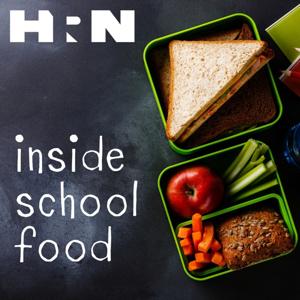


The USDA definition of a “food hub” is loose enough to include many iterations of the concept. Whatever the business model, most hubs aspire to increase access to local whole foods across the socioeconomic spectrum. And there’s no better way to accomplish that than through Farm to School. Today we profile a pioneering hub that is making great strides in serving 18 districts in rural northeastern Iowa, helping school buyers quadruple local purchasing—produce, dairy, pork, and beef.
See Privacy Policy at https://art19.com/privacy and California Privacy Notice at https://art19.com/privacy#do-not-sell-my-info.
Today we welcome the new USDA Deputy Under Secretary for Food, Nutrition and Consumer Services, for another deep dive into conversation about the future of school nutrition programs. While the delay of Child Nutrition Reauthorization can hardly be described as a good thing, it does give us more time to assess where we are and what’s changed in recent months with the emergence of new leaders, data, and research. We ask Dr. Wilson what, if anything, may impact current USDA positions on CNR.
See Privacy Policy at https://art19.com/privacy and California Privacy Notice at https://art19.com/privacy#do-not-sell-my-info.
Inside School Food asked listeners to call in about their favorite back-to-school innovations, and they did, from all over the country. Today, with the help of co-host Dayle Hayes, we bring you six of these messages about fresh ideas that are making a difference. Our selection is highly diverse. Because when you’re growing and improving your program, there’s a multitude of needs to think about, and multitudes of strategies to consider for meeting them.
“Millbrae School District food service staff prepare tomatillo sauce for California Thursday luncheon.”
See Privacy Policy at https://art19.com/privacy and California Privacy Notice at https://art19.com/privacy#do-not-sell-my-info.
To kick off the school year, we are joined by the School Nutrition Association’s newly elected President, Jean Ronnei, and Vice President Lynn Harvey. They take on these roles—and this conversation—at an exceptionally challenging and sensitive time for SNA and the school nutrition community as a whole. On today’s agenda: Is school nutrition really a “battleground”? What’s the difference between “flexibility” and “rollback”? Just how much controversy in school food would fade into the background if reimbursements were to keep up with costs? If students were given enough time to eat? This program was brought to you by Cain Vineyard & Winery.
See Privacy Policy at https://art19.com/privacy and California Privacy Notice at https://art19.com/privacy#do-not-sell-my-info.
Many American children have developed a strong, stubborn preference for
“During childhood we learn what to eat, how to eat, how food should taste. Many children aren’t getting the experience to learn to like (healthy) food.” [11:00]
“It can’t just be school, it starts in the home. As much as we’re focusing on the school nutrition program we have to focus on the barriers for healthy eating for families at home.” [13:00]
–Dr. Julie Menella on Inside School Food
See Privacy Policy at https://art19.com/privacy and California Privacy Notice at https://art19.com/privacy#do-not-sell-my-info.
For decades, fish at school mostly meant one thing: breaded fingers and
“Our mission is to try and get more seafood eaten by our young people.” [14:00]
— Andrew Wilkinson and Melissa Honeywood on Inside School Food
See Privacy Policy at https://art19.com/privacy and California Privacy Notice at https://art19.com/privacy#do-not-sell-my-info.
These days, we hear a lot about districts in well-to-do communities dropping out of federal meals programs. While the numbers are in fact miniscule, the conversation about them is significant. Dwindling revenue from paying students is a grave issue for many. On today’s episode, join Wesley Delbridge, Food and Nutrition Director for Chandler Unified School District, to hear about radical marketing and design solutions that are generating excitement and trust among middle class students and their parents. This program was brought to you by Cain Vineyard and Winery
— Wesley Delbridge on Inside School Food
See Privacy Policy at https://art19.com/privacy and California Privacy Notice at https://art19.com/privacy#do-not-sell-my-info.
Here’s one of the surest signs we have that swift and substantial progress in school food is possible: Beginning this fall, the nation’s largest district will not only be serving on compostable plates, but actually composting them. The introduction of the new tableware is occurring simultaneously with a city-wide ban on most single-use, non-recyclable Styrofoam—a giant first step in Mayor Bill DeBlasio’s ambitious “Zero Waste” campaign. Astonishingly, this story begins just six years ago, with a grassroots collaboration with the city’s Department of Education, spearheaded by artist and NYC parent Debby Lee Cohen. “I think what we learned,” she reflects today, “is that this is how democracy is supposed to work.”
See Privacy Policy at https://art19.com/privacy and California Privacy Notice at https://art19.com/privacy#do-not-sell-my-info.
With so many elements of Child Nutrition Reauthorization 2015 hotly contested, it’s good to know we can be bullish about Farm to School. After a successful first round of USDA grants under CNR 2010, advocates are hoping to leverage strong bipartisan support to triple funding to $15M. But as the Farm to School movement matures, the conversation is not just about new grants. It’s about institutionalizing the presence of local food in schools, and how else this year’s CNR can help that happen. This program was brought to you by Cain Vineyard & Winery.
“Farm to School is simple a bi-partisan issue….it’s one of those issues that works across the isle. It affects child health as much as it does farmer wealth. Since February we’ve continued to get more members of Congress to want to jump on the bill and support it. It’s a real opportunity to make other school meal programs just work better. When kids are growing the food in school gardens and meeting the farmer they have that connection. They’re gonna be more willing to taste and try and like new and healthier foods.” [13:00]
–Helen Dombalis on Inside School Food
“The obstacles [in implementing Farm to School in Kentucky] still lie with procurement and distribution. They present our biggest challenge.” [23:00]
–Tina Garland on Inside School Food
See Privacy Policy at https://art19.com/privacy and California Privacy Notice at https://art19.com/privacy#do-not-sell-my-info.
Is Child Nutrition Reauthorization 2015 moving too fast for you? Join the club. We all feel that way, and it’s still only June. Today’s episode will help. Jacqlyn Schneider, Policy Director for the Senate Agriculture Committee under Ranking Member Debbie Stabenow, is here to walk us through the process. She’ll review some of this huge bill’s many moving parts, and tell us what to expect—and how to weigh in—in the weeks and months to come. This program was brought to you by Cain Vineyard and Winery.
See Privacy Policy at https://art19.com/privacy and California Privacy Notice at https://art19.com/privacy#do-not-sell-my-info.
From the publisher's feed
407 Listeners

576 Listeners

29 Listeners

196 Listeners

70 Listeners
132 Listeners

87 Listeners

93 Listeners
75 Listeners
70 Listeners