
Sign up to save your podcasts
Or

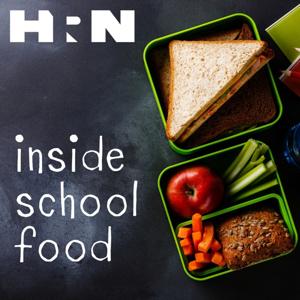


Food trucks are rolling statements about some the values Americans hold dearest: independence, entrepreneurship, and mobility. Authenticity. Creativity. Affordability. With the movement growing so fast across the nation, it was only a matter of time before school food innovators started getting in on it. Today we profile two programs in sunny Florida, where hip new trucks can work year-round, winning teenage converts for healthy school meals.
“The students are more aligned to things they can see being made. They feel that because they can see people working on the truck and the items being assembled that it’s different from what they’re being served in the cafeteria. Some of them are floored to discover that it’s the exact same product.”
–Jennifer Smith on Inside School Food
“Jacksonville has become a stronghold for food trucks. There’s a large buzz around town about them… We use our food trucks not just at school but at community events, to spread the gospel of school food. It’s stealth approach.”
–Brian Giles on Inside School Food
See Privacy Policy at https://art19.com/privacy and California Privacy Notice at https://art19.com/privacy#do-not-sell-my-info.
Whether your sales up or down, there has to be a reason. So what’s behind the participation slump among students who don’t qualify for free or reduced-priced meals? Some school nutrition professionals say it’s a clear case of cause and effect: paying kids don’t like the new menus, so they’re not buying. But a recent report from the Food Resource and Action Center describes a much more complex set of circumstances. So does the experience of one well-to-do Kansas high school, where competitive foods are losing ground to the healthier, reimbursable “deal meal.” This program has been sponsored by The Tabard Inn. located in Washinton DC.
–Jessie Hewins on Inside School Food
“We were anticipating a drop in our a la carte sales, just like all the other schools implementing Smart Snacks. However, our reimbursable meals are up. Part of that is due to the fact that we’ve turned everything inside of the serving area into a potential reimbursable meal. We’re calling it a ‘meal deal.'”
“We encourage the high schools kids to take a whole apple or banana with them, to eat in study hall or before practice, and a lot of them are doing that. It’s the change we want to see. The more popular students are being role models in this, and that’s helping a lot.”
–Amy Droegemeier on Inside School Food
See Privacy Policy at https://art19.com/privacy and California Privacy Notice at https://art19.com/privacy#do-not-sell-my-info.
It’s been more than five years since the inception of FoodCorps, the AmeriCorps division that sends young service members into school gardens, classrooms, cafeterias, and kitchens, where they’re tasked with generating excitement and support for healthy whole food. Today’s guests describe how it’s done. Idealism is the catalyst. But it’s creativity, tenacity, and–most important–humility that really make it work. This program was brought to you by Visit Napa Valley.
See Privacy Policy at https://art19.com/privacy and California Privacy Notice at https://art19.com/privacy#do-not-sell-my-info.
What’s behind the “True Food” revolution in Minneapolis Public Schools? Ambitious purchasing of industrial-strength gadgets—cook-chill tanks, vacuum baggers, a meat shredder, a “gentle mixer,” and a 30-foot-long sous vide cooker—may be costly, but food costs are down, participation is up, and unpronounceable additives are out. This program was brought to you by Rt. 11 Potato Chips.
—Ricardo Abbott on Inside School Food
“When you’re making your own recipes you have control over what goes in that recipe. Everything we make here, we’re very choosy and picky about the products we cook.” [14:00]
–Bertrand Weber on Inside School Food
See Privacy Policy at https://art19.com/privacy and California Privacy Notice at https://art19.com/privacy#do-not-sell-my-info.
This week on Inside School Food, for Martin Luther King, Jr. Day, join Audrey Rowe, Administrator of the Food and Nutrition Service at USDA, in reflection on socioeconomic justice in school nutrition programs–historically, currently, and going forward as we approach Child Nutrition Reauthorization 2015. This program was brought to you by Whole Foods Market.
“Schools and parents need to think about the amount of time students have to eat. In some schools, by the time children get their tray and sit down, they have just 10 minutes to eat. If you have fruits and vegetables that require a little more chew time, they’re not going to get through them!”
“One of the reasons I travel constantly is that I’m able to get the media into the schools to experience what the children are experiencing. I’ve had reporters say, this is not my school lunch; this is so much better!”
–Audrey Rowe on Inside School Food
See Privacy Policy at https://art19.com/privacy and California Privacy Notice at https://art19.com/privacy#do-not-sell-my-info.
There is perhaps no city in the nation more strongly associated with fish than Monterey, CA, home to the world-famous Monterey Bay Aquarium and the setting for John Steinbeck’s Cannery Row. But most of the seafood harvested from local waters is processed in China and sold to international markets. At Monterey Peninsula Unified School District, food service director Jenn Gerard wants to do something about that. Learn how she’s teamed up with a pioneering CSF (community supported fishery) to purchase Pacific Grenadier for her popular fish tacos. This program was brought to you by Tabard Inn.
See Privacy Policy at https://art19.com/privacy and California Privacy Notice at https://art19.com/privacy#do-not-sell-my-info.
We kick off the new year with Dayle Hayes, the activist blogger behind “School Meals That Rock,” a multi-platform social media campaign that draws attention to news of healthy, delicious, sustainable progress in K-12 food service. Last year there was plenty of that kind of news. And there’s lots more to celebrate–along with lots of media negativity to deflect–as we move towards Child Nutrition Reauthorization 2015. Want to join the movement? It’s easy. All you need is a smart phone, a Facebook account, and a board on Dayle’s Pinterest page. This program was brought to you by Whole Foods Market.
“Schools themselves are kind of late getting on Facebook and social media and recognizing promotional opportunities. Many nutritional directors don’t have the self confidence to get on social media and toot their own horn. Many of the bashing going on around school food makes them more hesitant to take those steps.” [05:00]
–Dayle Hayes on Inside School Food
See Privacy Policy at https://art19.com/privacy and California Privacy Notice at https://art19.com/privacy#do-not-sell-my-info.
It took a village to produce New School Cuisine: Nutritional and Seasonal Recipes for School Cooks by School Cooks. This pioneering new book features 78 rigorously tested, fully reimbursable dishes that Vermont children have enthusiastically voted for with their sporks. “The final ingredients added to each recipe,” write the authors, “are dedication, tenacity, patience and kindness. These ingredients infuse the recipes with the hope that we can change lives by helping our students understand food, enjoy food and choose foods that support lifelong health.” This program was brought to you by Brooklyn Slate.
“I can’t open a cookbook now without having a deep appreciation for the people who put it together. Now we know what goes into making somebody’s recipe usable for other people.” [11:00]
— Kathy Alexander on Inside School Food
“Bringing local foods into a school means nothing if the kids won’t eat it.” [28:00]
–Abbie Nelson on Inside School Food
See Privacy Policy at https://art19.com/privacy and California Privacy Notice at https://art19.com/privacy#do-not-sell-my-info.
Big districts have long employed chefs, and smaller ones are increasingly relying on them as consultants. But what happens when a mid-size district hires a classically trained restaurant industry veteran as food service director? In this episode, we talk to two CIA alumni who love the job, and whose scratch-cooked, delicious, USDA-compliant meals programs are in the black. This program was brought to you by Whole Foods Market.
See Privacy Policy at https://art19.com/privacy and California Privacy Notice at https://art19.com/privacy#do-not-sell-my-info.
What’s really behind the controversy over Healthy Hunger Free Kids 2010? According to today’s guests, it’s dollars that don’t make sense. Join Gitta Grether-Sweeney of Portland (OR) Public Schools Nutrition Services and Gary Vonck, a national leader in K-12 food service sales, for their take on rising food and labor costs, diminished revenues, and reimbursement rates that aren’t keeping pace with the required changes in many districts. This program was brought to you by Whole Foods Market.
–Gitta Grether-Sweeney on Inside School Food
“It’s the smaller schools that struggle because they dont have the multiple layers of support.” [26:00]
“Less than 15% of the schools across america send forecasts to their distributors or manufactures of choice – that just kills the communication piece.” [27:00]
–Gary Vonck on Inside School Food
See Privacy Policy at https://art19.com/privacy and California Privacy Notice at https://art19.com/privacy#do-not-sell-my-info.
From the publisher's feed
407 Listeners

576 Listeners
29 Listeners
196 Listeners
70 Listeners
132 Listeners

87 Listeners
93 Listeners
75 Listeners
70 Listeners