
Sign up to save your podcasts
Or

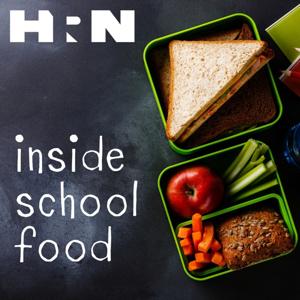


If you’re old enough, you remember the days when “cafeteria ladies” had a craft and the food at school was hand made, right down to the dinner rolls. After decades of moving away from that proud tradition, districts are slowly returning to it. In Maryland, a stand-out “boot camp” for food service workers statewide teaches basic cookery, nutrition science, professional kitchen protocols, and much more. It’s a model for training programs that are emerging all over the nation as schools work their way forward (and back) to more real, fresh food in the cafeteria. This program was brought to you by White Oak Pastures.
–Stewart Eidel on Inside School Food
“We’re trying to be catalysts for the local economy and jump-start it through economic development. which is just a sidebar to all this [school food initiative]” [35:00]
–Jeffrey Proulx on Inside School Food
“Anybody can heat anything up regardless of technique – but to actually have to chop vegetables or whatever the recipe calls for – gives me more pride.” [36:00]
–Becky Anderson on Inside School Food
See Privacy Policy at https://art19.com/privacy and California Privacy Notice at https://art19.com/privacy#do-not-sell-my-info.
School gardens are now being embraced nationwide, as is farm-to-school. But school garden-to-cafeteria? It’s what’s coming next–well-established in some districts, in fact, which offer valuable resources to beginners. Concerned about food safety? Funding? Whether or not to buy student-grown or accept it as a donation? Is it worth the trouble–does it interest children in eating more produce, trying new fruits and veggies? The nation’s two leading experts, from Colorado and Oregon, discuss all this and more. This program was brought to you by White Oak Pastures.
—Andy Nowak on Inside School Food
“What we develop in Denver needs to be a template – the beginning of a conversation in your own county.” [25:00]
“If you put in the effort and there are educational opportunities in place – you see wholeheartedly that kids will make nutritional choices.” [28:00]
–Rick Sherman on Inside School Food
See Privacy Policy at https://art19.com/privacy and California Privacy Notice at https://art19.com/privacy#do-not-sell-my-info.
HAVE IT YOUR WAY through partnerships with nimble small and mid-size processors. Want your own wild-rice meatloaf? A baked falafel made with local beans? Tyson and Schwan’s can’t help, but there are newcomers to K-12 food service who can. In this episode of Inside School Food, we’ll meet two of them and learn how to get healthy, clean-label foods developed or adapted to your specifications through direct processor-SFA collaboration. This program was brought to you by Whole Foods Market.
“I can make your commodity diced chicken taste good in a one pot dish” [15:00]
–Coleen Donnelly on Inside School Food
See Privacy Policy at https://art19.com/privacy and California Privacy Notice at https://art19.com/privacy#do-not-sell-my-info.
School food has been commanding headlines for well over a month, as controversy rages over costs and complications associated with implementation of stricter new nutrition standards. If you’re confused over who’s on what side of this debate, and what it’s really all about, you’re not alone. It’s gotten so political. Today we’re stepping away from all of that to simply look at what the standards are designed to do for kids, and whether or not they’ve been able to do it. We’ll discuss three studies that suggest students–at-risk students especially–are eating more fruits and vegetables and even losing weight. This program was brought to you by Bonnie Plants.
—
See Privacy Policy at https://art19.com/privacy and California Privacy Notice at https://art19.com/privacy#do-not-sell-my-info.
Salad bars aren’t rocket science, but getting them right calls for careful, common-sense assembly with the right ingredients. If you’ve listened to Salad Bars Part 1 (and we suggest that you do), maybe you’re wondering if you can get salad bars to work in your district–or work better. Let’s Move Salad Bars to Schools can help. Need equipment donation? Technical assistance? A community of practice? You’ve come to the right place. This program was brought to you by Bonnie Plants.
“78% of the districts that we surveyed reported increased purchases of fruits and vegetables after implementing a salad bar. The goal here is to provide more access to fruits and vegetables to kids.” [07:00]
–Mara Fleishman on Inside School Food
“With good education and signage – you do not have excess waste at salad bars.” [20:00]
–Ann Cooper on Inside School Food
See Privacy Policy at https://art19.com/privacy and California Privacy Notice at https://art19.com/privacy#do-not-sell-my-info.
Composting and recycling at school isn’t just about eco-friendly waste diversion. It also provides students with a powerful lesson in sound environmental practice that they’ll carry with them for the rest of their lives. The message is simple: what comes from the earth can be returned to enrich it, so it can provide for us again and again. How to get started? Today’s guests, from San Francisco, CA and Northampton, MA, will tell you how: Start small. Champion your early adopters. Develop educational and marketing tools to enlist the support of the entire school community. Or use materials from other districts–there’s lots out there already! Thanks to today’s sponsor, Cain Vineyard & Winery.
“A big part of San Francisco’s ‘Zero Waste’ initiative hopes to be achieved through education… we have a 63% landfill diversion rate in San Francisco schools.” [6:00]
“We prefer starting with the kids and hope the adults catch on… We understand the power that kids have.” [14:20]
— Tamar Hurwitz on Inside School Food
“We did underestimate how difficult it would be to get all of the students to sort their food waste properly; it was difficult to get everyone on board.” [27:30]
— Anna Moore on Inside School Food
See Privacy Policy at https://art19.com/privacy and California Privacy Notice at https://art19.com/privacy#do-not-sell-my-info.
Are you a salad bar skeptic? If you are, you’re not alone. Many a committed K-12 food service director is hesitant to try, out of concern over participation, waste, expense, mess, and food safety. And now salad bars in schools are seemingly even trickier to pull off. How do you insure that kids are meeting their daily fruit and vegetable quotas–and the required weekly balance of green and orange veggies, and beans and peas–if you let them serve themselves? For answers, we will first turn to school salad bar evangelist Rodney Taylor, from Riverside Unified, and two of his talented staff. This program was sponsored by Tabard Inn
Rodney Taylor on Inside School Food
“I have served over 6 million salad bar meals in Riverside. For those who tell you it places children at risk – I’ll tell you I haven’t lost one child yet.” [15:00]
“There’s a level of service we want to be able to provide. Once they [the children] see that you care – it will immediately turn [things] around.” [31:00]
— Ryan Douglas on Inside School Food
See Privacy Policy at https://art19.com/privacy and California Privacy Notice at https://art19.com/privacy#do-not-sell-my-info.
In Jefferson County, Colorado, a better school lunch often starts with better chicken: locally and sustainably grown, without antibiotics, and prepared from scratch. In the world of K-12 food service, this is widely regarded as an Olympian swan dive off a 33-foot-high board–beautiful to behold, but not something you can or should try at home. Today’s guests on Inside School Food explain how they do it (turns out it’s not that hard, if you’ve got ovens and the right supplier), and how their effort impacts student health. This program was sponsored by Tabard Inn.
–Chad Anderson on Inside School Food
See Privacy Policy at https://art19.com/privacy and California Privacy Notice at https://art19.com/privacy#do-not-sell-my-info.
This week’s episode of Inside School Food is the first installment of a series of episodes we’re calling “And Now for Something Completely Different,” in which we profile programs and business models that upend common assumptions about what’s possible in school food. In the schools served by not-for-profit DC Central Kitchen, children formerly accustomed to pizza and breaded chicken fingers eagerly chow down on house-made fresh food that routinely includes beets, cauliflower, and collards. The skilled staff who prepare it are people who have emerged from stressful life circumstances with the help of DCCK culinary job training. For DCCK, good school food is not an end in itself, but a cornerstone to a larger, community agenda. This program was sponsored by Edwards VA Ham
See Privacy Policy at https://art19.com/privacy and California Privacy Notice at https://art19.com/privacy#do-not-sell-my-info.
Today on Inside School Food. we’re talking kitchen equipment—What do we have? What do we need? And how can we go on doing without under new meal-pattern requirements that call for more—and more perishable—produce, that staff need to safely store, prepare, portion, and serve? Jessica Donze Black of the Pew Safe and Healthful Kids’ Food Project and Jon Dickl of Knox County, TN Public Schools discuss widespread infrastructure deficits in school districts coast to coast, and what steps you can take to fund capital improvements while making the most of what you’ve already got. This program was sponsored by Fairway Market.
–Jessica Donze Black on Inside School Food
See Privacy Policy at https://art19.com/privacy and California Privacy Notice at https://art19.com/privacy#do-not-sell-my-info.
From the publisher's feed
407 Listeners

576 Listeners
29 Listeners
196 Listeners
70 Listeners
132 Listeners
87 Listeners
93 Listeners
75 Listeners
70 Listeners