Intentional Growth

Intentional Growth

By Arkona - Intentional GrowthBusinessEntrepreneurshipInvestingManagement
Download on the App Store

Intentional Growth episodes

  • Plan to Sell Your Business
    This week on Life After Business we have the benefit of an appearance from an absolute master, Sam Thompson. This man built up his business, hired the right partners and then sold to them at a price that everybody was happy with. He sold at the perfect time… with time left to spare. It took him seven years of careful planning, but Sam is an example of just how much can be gained by thinking about your exit at the earliest opportunity. He even took heed of the advice from one of our previous guests on the LAB podcast, John Warrillow.
    Sam combined his exit planning with a rock-solid strategy for his next career and basically achieved the ultimate life after business.
    When did he first take on his partners?
    The first partner came on board four years after he started.
    Why did they buy in?
    Sam openly courted partners because he knew he needed them to grow the business. They were all incentivised with bonus shares which proved to be a very effective strategy.
    What were the company sales?
    Approximately $5m for a number of years, then post 9-11 they had to radically change the business model to be less dependant on people flying in. They bought a warehouse and focussed on teambuilding for local businesses.
    Why did he decide to sell?
    There wasn’t one event. He thought about exiting casually, went to seminars, and bought the book Built-to-Sell by John Warrillow. There was agreement among the partners that they needed to do something.
    What was the first thing he did after he decided to sell?
    He empowered his team of employees to have more responsibility by promoting a number of people, and thus safeguarded the value of the business without him.
    How did he cope with the delegation?
    It was tough, but worth it.
    How long did it take?
    Seven years in total.
    How did he prepare himself for life after business?
    He did some research, went to a convention and eventually became certified to be a business intermediary.
    How did they value the business?
    When Sam wanted to sell, the other partners didn’t, so the only way he could exit would be for the partners to buy his share. They arrived at a figure by using the average of an accountant’s valuation and a less conservative valuation from a business broker.
    What were the stumbling blocks?
    The main stumbling block was how much Sam would be missed, but because of the increased responsibility that Sam had given other members of the business, this was eventually overcome.
    What was their agreement?
    Originally there was an SBA loan along with a promissory note of 10%. Basically he got a loan from a bank that was financed using the company cash flow and a personal guarantee on a stream of payments of a certain period of time.
    Would he have got more money from a third party?
    Probably, but the exit option he chose felt better for him and everyone overall.
    What happened next?
    He stayed on for a year first but then said to the partners after six months that it was time to stop – they didn’t need him. All of the key employees stayed on after the sale and the business continued to be successful.
    What would he do differently?
    The transaction went well but maybe he should have used an exit planner.
    Wise words for the road:
    “You want a business attorney when selling a business. They know how to get these dea

    32 min
  • Plan to Sell Your Business
    This week on Life After Business we have the benefit of an appearance from an absolute master, Sam Thompson. This man built up his business, hired the right partners and then sold to them at a price that everybody was happy with. He sold at the perfect time… with time left to spare. It took him seven years of careful planning, but Sam is an example of just how much can be gained by thinking about your exit at the earliest opportunity. He even took heed of the advice from one of our previous guests on the LAB podcast, John Warrillow.
    Sam combined his exit planning with a rock-solid strategy for his next career and basically achieved the ultimate life after business.
    When did he first take on his partners?
    The first partner came on board four years after he started.
    Why did they buy in?
    Sam openly courted partners because he knew he needed them to grow the business. They were all incentivised with bonus shares which proved to be a very effective strategy.
    What were the company sales?
    Approximately $5m for a number of years, then post 9-11 they had to radically change the business model to be less dependant on people flying in. They bought a warehouse and focussed on teambuilding for local businesses.
    Why did he decide to sell?
    There wasn’t one event. He thought about exiting casually, went to seminars, and bought the book Built-to-Sell by John Warrillow. There was agreement among the partners that they needed to do something.
    What was the first thing he did after he decided to sell?
    He empowered his team of employees to have more responsibility by promoting a number of people, and thus safeguarded the value of the business without him.
    How did he cope with the delegation?
    It was tough, but worth it.
    How long did it take?
    Seven years in total.
    How did he prepare himself for life after business?
    He did some research, went to a convention and eventually became certified to be a business intermediary.
    How did they value the business?
    When Sam wanted to sell, the other partners didn’t, so the only way he could exit would be for the partners to buy his share. They arrived at a figure by using the average of an accountant’s valuation and a less conservative valuation from a business broker.
    What were the stumbling blocks?
    The main stumbling block was how much Sam would be missed, but because of the increased responsibility that Sam had given other members of the business, this was eventually overcome.
    What was their agreement?
    Originally there was an SBA loan along with a promissory note of 10%. Basically he got a loan from a bank that was financed using the company cash flow and a personal guarantee on a stream of payments of a certain period of time.
    Would he have got more money from a third party?
    Probably, but the exit option he chose felt better for him and everyone overall.
    What happened next?
    He stayed on for a year first but then said to the partners after six months that it was time to stop – they didn’t need him. All of the key employees stayed on after the sale and the business continued to be successful.
    What would he do differently?
    The transaction went well but maybe he should have used an exit planner.
    Wise words for the road:
    “You want a business attorney when selling a business. They know how to get these dea
    32 min
  • Selling a Family Business
    Chris Goebel spoke to us about the intricacies of operating and then selling a business that included nine other siblings… and he actually did it twice. Read on for some of the highlights of Chris’ story (which is available for download above):
    What was the business?
    The business was split across two companies: one was predominantly airport coach transfers, while the other was focussed on leisure travel.
    How big were the companies?
    At their peak, a total of approximately 400 employees and 175 vehicles spread across four different major airports.
    How did they define the roles for each of the 10 children?
    Age order was the first criteria, then it was an organic process of matching the roles with people’s specialisms.
    Key drivers of business?
    Contract revenue rose from 3% to 21%, which not only provided a useful hedge against seasonal factors like weather and events, it also made the business a more attractive proposition for a buyer.
    What triggered the exit?
    The age of the management team combined with serious interest from two different companies.
    What were the most important aspects of the sale?
    The dollar amount and taking care of the future of the employees.
    How ready were they?
    They had a lot of numbers already in place. The company was so big that they had no choice but to have their financials in good shape.
    How long did it take?
    Six months.
    What happened next?
    The business was sold to one of the bidders but a few years later ended up being sold again to the other bidder. The first takeover was from a private equity firm, but it eventually became part of a publicly listed firm.
    Did the family members stay on?
    After the first takeover, those who wanted to stay on did stay on. They kept hitting their targets and were given the autonomy they wanted. After the takeover from the public company it was more difficult, so some left. Chris stayed for a couple of years but didn’t enjoy the additional scrutiny and reporting requirements of a public company.
    Where did Chris go when he left?
    Chris is now working as a consultant, and using his experience to help smaller businesses with their exit planning.
    How did he cope?
    After only two days he felt bored. It wasn’t long before he embarked upon a career as a consultant.
    Would he have done anything differently?
    -He wishes they’d have planned more in advance and had a longer timeline for the sale.
    -They should have done more to make the sale tax efficient.
    -They should have been more specific about everybody’s roles in the business after the sale(s). It is not enough just to agree that “we need to grow the business”. Exactly how that growth is to be achieved should be mapped out from the very beginning.
    The most common mistake he sees from the businesses he advises:
    “People are surprised that all revenue and profit are not treated the same, therefore, many are ill prepared.”
    “People are surprised that all revenue and profit are not treated the same, therefore, many are ill prepared.”
    Wide words for the road:
    “So many entrepreneurs are involved in building the business and operating it that exit planning is one of those things they realise they have to do, but it’s not a priority. The priority is building the business or maintaining i
    34 min
  • Selling a Business to Your Employees
    What does ESOP actually mean?
    ESOP stands for Employee Stock Ownership Plan.
    This week we talk about a great tax-saving method of exiting a business that can also take care of your employees for years afterwards. Sound too good to be true?
    Andre Schnabl spoke to us about ESOP: a method of selling a business that could save millions in tax, as well as safeguarding the future of the firm. His explanation was fantastically simple so we recommend you take a listen, but if you only have time for the brief highlights of what we talked about, then read on:
    How do the employees fit into it?
    The principle is similar to how an employee contributes a percentage of their monthly paycheck to into a 401K retirement plan. However, the difference is that the ultimate value (and holdings) of their retirement plan is invested into their own employer, rather than whatever stocks, bonds or mutual funds a normal 401K has invested its money in to.
    Now each employee literally has an invested interest in seeing the value and growth of the company grow!
    Why would a company owner want to sell a business in this way?
    There are a multitude of reasons, but to skim the surface, here are some key benefits:
    The owner can receive a market-rate price for their business without actually having to go out to the market.
    The owner can save or ELIMINATE on capital gains tax
    Selling a company to its own employees is a great way of safeguarding the future of the workforce after the owner retires.
    The general flexibility of this kind of deal is useful to help manage the different needs of the many people involved in the sale of a business.
    WHAT ARE YOUR OPTIONS?
    How does the owner get their money in an ESOP?
    Normally they would receive a proportion of the value of the business in cash up front (most of the time via bank financing), and then the rest of it through a note that would be paid out through the company profits in a certain time period and dependent on KPIs (Key Performance Indicators) agreed upon at the time of sale.
    Where does the up-front cash come from?
    There are many ways but the most common is leveraged bank finance (aka bank loan).
    Why would the banks lend money to make this happen?
    Because a trust would be set up to effectively ‘buy’ the company, and the banks would loan the trust a certain amount of money in order to do so. ESOPs have one of the lowest default rates among borrowers – better chance that the bank gets THEIR MONEY BACK!
    Isn’t this risky for the banks?
    Banks actually like these deals. For one, even though the trust itself doesn’t have any assets, the trust’s loan can be secured against existing company assets. Secondly, because ESOPs end up in the hands of employees, this makes banks confident that the future of the firm is sustainable. They figure that if the employees have a stake in it, they’re more likely to drive the business forwards.
    How can this save on tax?
    If the deal is structured correctly, based on section 1042 of the tax code, the business owner can ELIMINATE Capital Gains! Depending on which state you live it this can be up to a 30.9% percent tax savings!
    20% Federal tax rate savings
    3.8% savings on th
    45 min

About Intentional Growth

From the publisher's feed

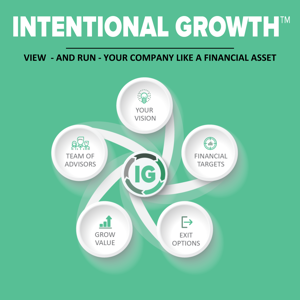
Intentional Growth™ is a podcast is a podcast for entrepreneurs and business owners wanting to view - and run - their company like a financial asset so they can have fun, create wealth, and make an impact. Truly make the entire journey of owning and running a company "worth it".