
Sign up to save your podcasts
Or

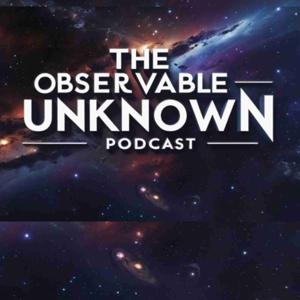

Language does not merely describe reality - it actively constructs it.
In Interlude XXVII of The Observable Unknown, Dr. Juan Carlos Rey of crowscupboard.com examines how language functions as a cognitive and perceptual architecture, shaping not only communication, but memory, attention, identity, and moral reasoning itself. Drawing from linguistics, neuroscience, anthropology, and philosophy, this episode explores how the words we inherit silently sculpt the world we believe we inhabit.
This interlude investigates the Sapir-Whorf hypothesis, modern research in linguistic relativity, and neurocognitive studies showing that language alters perceptual discrimination, emotional regulation, and even pain processing. Listeners are guided through how grammatical tense shapes temporal awareness, how metaphor governs moral judgment, and how naming stabilizes experience - sometimes at the cost of flexibility and insight.
Dr. Rey traces how language organizes perception into categories that feel natural, inevitable, and true - while revealing that these structures are learned, contingent, and culturally encoded. The episode also explores what happens when language breaks down, loosens, or is deliberately reshaped through poetry, ritual, and contemplative practice.
At its core, this interlude asks a deceptively simple question:
The Observable Unknown is a long-form contemplative science podcast hosted by Dr. Juan Carlos Rey of crowscupboard.com, exploring consciousness, neuroscience, myth, and the inner architecture of human experience with intellectual rigor and poetic clarity.
For reflections or questions, email [email protected] or text 3366755836.
 View all episodes
 By Dr. Juan Carlos Rey
5
99 ratings
Language does not merely describe reality - it actively constructs it.
In Interlude XXVII of The Observable Unknown, Dr. Juan Carlos Rey of crowscupboard.com examines how language functions as a cognitive and perceptual architecture, shaping not only communication, but memory, attention, identity, and moral reasoning itself. Drawing from linguistics, neuroscience, anthropology, and philosophy, this episode explores how the words we inherit silently sculpt the world we believe we inhabit.
This interlude investigates the Sapir-Whorf hypothesis, modern research in linguistic relativity, and neurocognitive studies showing that language alters perceptual discrimination, emotional regulation, and even pain processing. Listeners are guided through how grammatical tense shapes temporal awareness, how metaphor governs moral judgment, and how naming stabilizes experience - sometimes at the cost of flexibility and insight.
Dr. Rey traces how language organizes perception into categories that feel natural, inevitable, and true - while revealing that these structures are learned, contingent, and culturally encoded. The episode also explores what happens when language breaks down, loosens, or is deliberately reshaped through poetry, ritual, and contemplative practice.
At its core, this interlude asks a deceptively simple question:
The Observable Unknown is a long-form contemplative science podcast hosted by Dr. Juan Carlos Rey of crowscupboard.com, exploring consciousness, neuroscience, myth, and the inner architecture of human experience with intellectual rigor and poetic clarity.
For reflections or questions, email [email protected] or text 3366755836.

91,028 Listeners

78,657 Listeners

43,891 Listeners

43,563 Listeners
26,975 Listeners
14,379 Listeners

8,750 Listeners

112,006 Listeners
7,221 Listeners
3,362 Listeners

29,230 Listeners
702 Listeners

482 Listeners
1,392 Listeners
8,869 Listeners