
Sign up to save your podcasts
Or

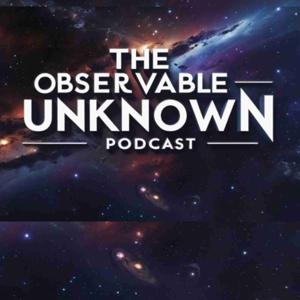

Before words shaped meaning, the human body was already speaking.
In this interlude of The Observable Unknown, Dr. Juan Carlos Rey examines the deep neurological and evolutionary roots of non-verbal communication, revealing how gesture, posture, and movement function as primary instruments of thought rather than mere accompaniments to language.
Drawing on cognitive psychology research by Susan Goldin-Meadow at the University of Chicago, the episode explores how hand gestures often carry knowledge that has not yet reached conscious articulation. Children, it turns out, frequently understand concepts with their bodies before they can explain them in words. Gesture is not decoration. It is cognition in motion.
Neuroscientific work from Giacomo Rizzolatti’s laboratory in Parma and later human studies by Marco Iacoboni at the University of California, Los Angeles demonstrate that observing another person’s movement activates corresponding motor regions in the observer’s own brain. Meaning is not inferred at a distance. It is embodied through resonance.
The episode then moves into human ethology, examining how Desmond Morris and Ray Birdwhistell approached gesture, posture, and spacing as biologically grounded systems shaped by culture but constrained by evolution. Language did not replace gesture. It layered itself onto a far older communicative infrastructure.
Contemporary research on posture, nervous system regulation, and interpersonal synchrony further reveals how bodily alignment influences emotion, trust, and social cohesion. From shared movement to ritualized stillness, bodies that move together often begin to feel together.
This interlude invites listeners to reconsider intelligence itself. Thought may not reside solely in words or even in the brain. It may be distributed across muscle, motion, and space.
The Observable Unknown is written and hosted by Dr. Juan Carlos Rey of crowscupboard.com and drjuancarlosrey.com, exploring consciousness where neuroscience, culture, and lived experience meet.
 View all episodes
 By Dr. Juan Carlos Rey
5
99 ratings
Before words shaped meaning, the human body was already speaking.
In this interlude of The Observable Unknown, Dr. Juan Carlos Rey examines the deep neurological and evolutionary roots of non-verbal communication, revealing how gesture, posture, and movement function as primary instruments of thought rather than mere accompaniments to language.
Drawing on cognitive psychology research by Susan Goldin-Meadow at the University of Chicago, the episode explores how hand gestures often carry knowledge that has not yet reached conscious articulation. Children, it turns out, frequently understand concepts with their bodies before they can explain them in words. Gesture is not decoration. It is cognition in motion.
Neuroscientific work from Giacomo Rizzolatti’s laboratory in Parma and later human studies by Marco Iacoboni at the University of California, Los Angeles demonstrate that observing another person’s movement activates corresponding motor regions in the observer’s own brain. Meaning is not inferred at a distance. It is embodied through resonance.
The episode then moves into human ethology, examining how Desmond Morris and Ray Birdwhistell approached gesture, posture, and spacing as biologically grounded systems shaped by culture but constrained by evolution. Language did not replace gesture. It layered itself onto a far older communicative infrastructure.
Contemporary research on posture, nervous system regulation, and interpersonal synchrony further reveals how bodily alignment influences emotion, trust, and social cohesion. From shared movement to ritualized stillness, bodies that move together often begin to feel together.
This interlude invites listeners to reconsider intelligence itself. Thought may not reside solely in words or even in the brain. It may be distributed across muscle, motion, and space.
The Observable Unknown is written and hosted by Dr. Juan Carlos Rey of crowscupboard.com and drjuancarlosrey.com, exploring consciousness where neuroscience, culture, and lived experience meet.

91,028 Listeners

78,657 Listeners

43,891 Listeners

43,563 Listeners

26,975 Listeners
14,379 Listeners

8,750 Listeners

112,006 Listeners

7,221 Listeners

3,362 Listeners

29,230 Listeners

702 Listeners

482 Listeners
1,392 Listeners
8,869 Listeners