
Sign up to save your podcasts
Or


On February 28, the United States and Israel launched an attack on Iran, killing the Supreme Leader along with other senior leaders of the Islamic Revolutionary Guard Corps (IRGC). In his initial statements following the attack, President Trump signaled that regime change was a potential objective.
Iran responded aggressively, targeting a range of military, civilian, and energy infrastructure across nine countries at the time of recording. Energy facilities have been hit, including a refinery in Saudi Arabia and LNG export facilities in Qatar. The Strait of Hormuz, a strategic chokepoint handling roughly one-fifth of global oil flows and a key corridor for Qatar’s LNG exports, is effectively blocked. Shipping companies and insurers are unwilling to risk moving through the narrow chokepoint amid ongoing missile and drone attacks in the region. Several tankers have also reportedly been struck.
As a result, oil and natural gas prices have risen. If the Strait of Hormuz remains blocked for an extended period, even higher prices are expected.
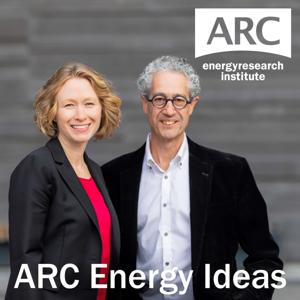
This week on the podcast, Peter and Jackie are joined by Josef Schachter, President and Founder of Schachter Energy Research Services Inc. They discuss the recent events, oil prices, available spare production capacity, and inventories, and what these developments could mean for the Canadian oil and gas industry.
Content referenced on this podcast:
Please review our disclaimer at: https://www.arcenergyinstitute.com/disclaimer/
Check us out on social media:
X (Twitter): @arcenergyinst
LinkedIn: @ARC Energy Research Institute
Subscribe to ARC Energy Ideas Podcast
Apple Podcasts
Amazon Music
Spotify
 View all episodes
 By ARC ENERGY RESEARCH INSTITUTE

4.4
1919 ratings
On February 28, the United States and Israel launched an attack on Iran, killing the Supreme Leader along with other senior leaders of the Islamic Revolutionary Guard Corps (IRGC). In his initial statements following the attack, President Trump signaled that regime change was a potential objective.
Iran responded aggressively, targeting a range of military, civilian, and energy infrastructure across nine countries at the time of recording. Energy facilities have been hit, including a refinery in Saudi Arabia and LNG export facilities in Qatar. The Strait of Hormuz, a strategic chokepoint handling roughly one-fifth of global oil flows and a key corridor for Qatar’s LNG exports, is effectively blocked. Shipping companies and insurers are unwilling to risk moving through the narrow chokepoint amid ongoing missile and drone attacks in the region. Several tankers have also reportedly been struck.
As a result, oil and natural gas prices have risen. If the Strait of Hormuz remains blocked for an extended period, even higher prices are expected.
This week on the podcast, Peter and Jackie are joined by Josef Schachter, President and Founder of Schachter Energy Research Services Inc. They discuss the recent events, oil prices, available spare production capacity, and inventories, and what these developments could mean for the Canadian oil and gas industry.
Content referenced on this podcast:
Please review our disclaimer at: https://www.arcenergyinstitute.com/disclaimer/
Check us out on social media:
X (Twitter): @arcenergyinst
LinkedIn: @ARC Energy Research Institute
Subscribe to ARC Energy Ideas Podcast
Apple Podcasts
Amazon Music
Spotify
1,247 Listeners
401 Listeners

37 Listeners
67 Listeners
95 Listeners

419 Listeners
48 Listeners

29 Listeners
13 Listeners
16 Listeners

84 Listeners
112 Listeners
34 Listeners

15 Listeners

20 Listeners