
Sign up to save your podcasts
Or


Send us Fan Mail
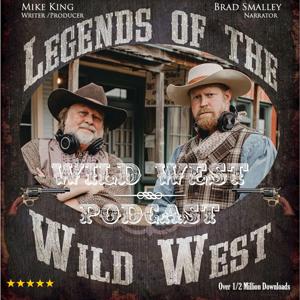
A 17-day march ends with a shock of movement on the open Plains: roughly 300 Cheyenne warriors in line of battle and the US cavalry scrambling to form up before the infantry can even arrive. That’s the doorstep of the Battle of Solomon Fork, the 1857 Cheyenne Campaign, and the third chapter in our five-part series on the early Cheyenne Indian Wars leading toward the Sheridan Winter Campaign era.
We lean on a gripping primary source, a letter written from camp on Solomon’s Fork just after the clash. You’ll hear how fatigue and distance shape everything: Bayard’s battery left miles behind, horses too used up to keep pace, and a plan for carbine volleys replaced by a blunt command that changes the day: “Draw sabers, charge.” The result is a fast, messy pursuit where companies mix together, officers ride shoulder to shoulder, and a single moment of misfire and timing turns into hand-to-hand combat.
James Ewell Brown "Jeb" Stuart's letter doesn’t stop at the fight. It follows the wound, the waiting, and the frontier logistics nobody puts on the monument plaque: delayed medical care, a column forced to pause, and an “ambulance” reduced to two wheels, cushions, and three mules. If you care about Kansas history, Plains Indian Wars history, US Army cavalry tactics, or firsthand accounts that cut through myth, Solomon Fork delivers a human view of how campaigns actually worked.
Subscribe for the rest of the series, share this with a history-minded friend, and leave a review with your take: what detail from Stewart’s letter did you find hardest to shake?
Support the show
If you'd like to buy one or more of our fully illustrated dime novel publications, you can click the link I've included.
 View all episodes
 By Michael King/Brad Smalley

4.5
125125 ratings
Send us Fan Mail
A 17-day march ends with a shock of movement on the open Plains: roughly 300 Cheyenne warriors in line of battle and the US cavalry scrambling to form up before the infantry can even arrive. That’s the doorstep of the Battle of Solomon Fork, the 1857 Cheyenne Campaign, and the third chapter in our five-part series on the early Cheyenne Indian Wars leading toward the Sheridan Winter Campaign era.
We lean on a gripping primary source, a letter written from camp on Solomon’s Fork just after the clash. You’ll hear how fatigue and distance shape everything: Bayard’s battery left miles behind, horses too used up to keep pace, and a plan for carbine volleys replaced by a blunt command that changes the day: “Draw sabers, charge.” The result is a fast, messy pursuit where companies mix together, officers ride shoulder to shoulder, and a single moment of misfire and timing turns into hand-to-hand combat.
James Ewell Brown "Jeb" Stuart's letter doesn’t stop at the fight. It follows the wound, the waiting, and the frontier logistics nobody puts on the monument plaque: delayed medical care, a column forced to pause, and an “ambulance” reduced to two wheels, cushions, and three mules. If you care about Kansas history, Plains Indian Wars history, US Army cavalry tactics, or firsthand accounts that cut through myth, Solomon Fork delivers a human view of how campaigns actually worked.
Subscribe for the rest of the series, share this with a history-minded friend, and leave a review with your take: what detail from Stewart’s letter did you find hardest to shake?
Support the show
If you'd like to buy one or more of our fully illustrated dime novel publications, you can click the link I've included.

44,999 Listeners
4,716 Listeners
1,793 Listeners

1,685 Listeners

2,790 Listeners

1,518 Listeners

4,029 Listeners

6,124 Listeners

19,197 Listeners
3,674 Listeners

19,133 Listeners

2,931 Listeners
788 Listeners
926 Listeners

1,598 Listeners