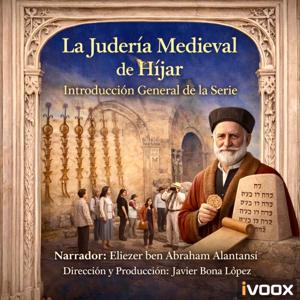
Judería medieval Híjar/Medieval Jewish of Híjar

Judería medieval Híjar/Medieval Jewish of Híjar

Download on the App Store

Judería medieval Híjar/Medieval Jewish of Híjar episodes

  • EPISODIO 12: EL VIAJE ETERNO - LEGADO Y DIÁSPORA
    EPISODIO 12: EL VIAJE ETERNO - LEGADO Y DIÁSPORA
    Serie: La Judería Medieval de Híjar
    Narrador: Eliezer ben Abraham Alantansí
    Dirección y Producción: Javier Bona López
    Resumen
    El Episodio 12 cierra la serie sobre la judería medieval de Híjar narrando el destino de la comunidad tras la expulsión de 1492 y el legado que perdura hasta nuestros días.
    El Último Día: 25 de julio de 1492
    Eliezer ben Abraham Alantansí relata el último día que los judíos de Híjar pasaron en su villa natal. Aproximadamente 150 personas abandonaron sus hogares llevando consigo solo lo esencial: algunos libros sagrados, provisiones y la memoria de generaciones. El rabí pronunció unas palabras finales recordando que, aunque dejaban su tierra, llevaban consigo la Torá, su tradición y su identidad como pueblo de Israel.
    La Diáspora: Caminos que se Bifurcan
    La comunidad se dispersó en múltiples direcciones:
    • Portugal: el país más cercano que aún aceptaba judíos
    • Italia: ciudades como Nápoles, Venecia y Ferrara con comunidades sefardíes establecidas
    • Norte de África: Marruecos, Argelia y Túnez
    • Imperio Otomano: Constantinopla, Salónica y Esmirna, donde el sultán Bayezid II había abierto las puertas a los judíos expulsados
    Eliezer decidió dirigirse al Imperio Otomano, primero a Corfú y luego a Constantinopla.
    Los Libros Viajeros: El Legado de la Imprenta
    Los cinco incunables hebreos impresos en Híjar (1485-1490) viajaron con las familias al exilio y se dispersaron por el mundo. Hoy se conservan aproximadamente 58 ejemplares en bibliotecas y museos de todo el mundo:
    • Biblioteca Nacional de España (Madrid)
    • Biblioteca Nacional de Francia (París)
    • Biblioteca Británica (Londres)
    • Biblioteca Pública de Nueva York
    • Biblioteca de la Universidad Hebrea de Jerusalén
    Estos libros son testimonio tangible de que la judería de Híjar existió y de su contribución cultural.
    Mi Vida en Corfú y Constantinopla: La Labor de Médico
    Gracias al descubrimiento del investigador Noam Siena (Universidad de Minnesota) de una carta de Shaul HaCohen a Isaac Abravanel, sabemos que Eliezer estuvo en Corfú después de la expulsión y posteriormente en Constantinopla, donde sirvió como médico en la corte del sultán.
    En Corfú, Eliezer estableció su práctica médica atendiendo a refugiados sefardíes y a la comunidad local. En 1495 se trasladó a Constantinopla, donde se integró en el barrio judío de Balat y continuó ejerciendo la medicina.
    Aclaración importante: Aunque Eliezer soñó con establecer una imprenta en Constantinopla, esto fue solo un "hermoso sueño" que nunca se materializó. Su labor documentada en el exilio fue exclusivamente como médico en Corfú y Constantinopla
    La Sinagoga Transformada: De Casa de Oración a Ermita
    Tras la expulsión, la sinagoga quedó vacía. En 1517, el duque Luis de Híjar ordenó convertirla en la ermita de San Antonio de Padua (San Antón). Las paredes fueron blanqueadas, las inscripciones hebreas cubiertas, y se instaló un altar cristiano. Durante siglos, la memoria de su origen judío fue olvidada.
    El Redescubrimiento: 2017-2018
    En 2017, un equipo de arqueólogos liderado por Antonio Hernández Pardos y Jesús G. Franco Calvo comenzó excavaciones en la ermita de San Antón. Los hallazgos fueron extraordinarios:
    • La base de la tevá (tribuna elevada central)
    • El hejal (nicho orientado hacia Jerusalén) con yesería mudéjar excepcional
    • Vestigios del matroneo (galería de las mujeres)
    • Pinturas murales con la representación de la menorá (candelabro de siete brazos) e inscripciones en hebreo
    En 2018, el Gobierno de Aragón declaró la antigua sinagoga de Híjar como Bien de Interés Cultural (BIC), reconociéndola como una de las sinagogas medievales mejor conservadas de Europa.
    El Legado Vivo: La Investigación Moderna
    El episodio rinde homenaje a los investigadores que han recuperado la memoria de la judería de Híjar:
    • Noam Siena (Universidad de Minnesota): descubridor de la carta sobre Eliezer en Corfú y Constantinopla
    • Asunción Blasco Martínez (Universidad de Zaragoza): estudios sobre Eliezer y su familia
    • Miguel Ángel Motis Dolader: estudio de 472 páginas sobre la aljama de Híjar
    • Antonio Hernández Pardos: excavaciones arqueológicas de la sinagoga
    • Lucía Conte Aguilar: puesta en valor del patrimonio judío, documental "El legado de Alantansí"
    • Y muchos otros historiadores, bibliólogos y epigrafistas
    Gracias a su trabajo, hoy conocemos los nombres de 236 personas y 71 familias judías de Híjar, sus ocupaciones, redes comerciales y circunstancias de vida.
    El Significado Hoy: Lecciones de Híjar
    Eliezer reflexiona sobre cuatro lecciones fundamentales:
    1 La importancia de la memoria: La historia puede ser olvidada pero también recuperada. Debemos preservar las historias de nuestros antepasados.
    2 La fragilidad de la convivencia: La coexistencia entre judíos, mudéjares y cristianos era frágil y dependía de la tolerancia. Cuando el odio y el fanatismo se apoderan de la sociedad, todos perdemos.
    3 El poder del conocimiento: La tradición intelectual y los libros permitieron a la comunidad sobrevivir y adaptarse en el exilio. El conocimiento es luz y esperanza.
    4 La resiliencia del espíritu humano: Aunque perdieron sus casas y tierras, no perdieron su identidad, fe ni tradición. El pueblo judío sigue vivo más de 500 años después.
    Reflexión Final: El Viaje Continúa
    El viaje de la judería de Híjar no ha terminado. Continúa en:
    • Los libros conservados en bibliotecas de todo el mundo
    • La sinagoga redescubierta y restaurada
    • Las historias investigadas y documentadas
    • Las familias descendientes que viven en Israel, Estados Unidos, América Latina y Europa
    • Todos los que valoran la memoria, la convivencia, el conocimiento y la resiliencia
    Y la memoria de la judería de Híjar vive."
    Créditos
    Narrador: Eliezer ben Abraham Alantansí
    Dirección y Producción: Javier Bona López
    Fuentes Principales
    • Archivos históricos: Archivo Histórico Provincial de Zaragoza, Archivo de la Corona de Aragón, Archivo de la Casa de Alba
    • Incunables: ~58 ejemplares conservados en bibliotecas de España, Francia, Reino Unido, Estados Unidos e Israel
    • Investigadores: Noam Siena, Asunción Blasco Martínez, Miguel Ángel Motis Dolader, Antonio Hernández Pardos, Lucía Conte Aguilar, y otros
    • Declaración BIC: B.O.A. nº 51 de 13 de marzo de 2018
    35 min
  • EPISODE 11: THE APPROACHING SHADOW - PERSECUTION AND OMENS
    EPISODE 11: THE APPROACHING SHADOW - PERSECUTION AND OMENS
    Series: The Medieval Jewish Quarter of Híjar
    Narrator: Eliezer ben Abraham Alantansí
    Direction and Production: Javier Bona López
    SUMMARY
    Episode 11 narrates the gradual deterioration of the situation of Jews in the Iberian Peninsula between 1478 and 1492, told in first person by Eliezer ben Abraham Alantansí.
    THE SPANISH INQUISITION: THE BEGINNING OF TERROR (1478-1480)
    1478: Catholic Monarchs (Ferdinand and Isabella) obtain bull from Pope Sixtus IV authorizing establishment of Spanish Inquisition. Specific target: conversos (Jews converted to Christianity). Suspicion: many "Judaized" in secret (practiced Judaism clandestinely).
    1480: First Inquisition tribunal in Seville. Extension to Córdoba, Jaén, Ciudad Real, Toledo.
    Methods: Interrogations, torture for confessions, obligation to denounce others. Those guilty of "Judaizing" burned at stake in autos de fe (public ceremonies).
    Testimony: Jewish merchant from Zaragoza visits Híjar (1481), tells of auto de fe in Seville. Condemned dressed in sambenitos (yellow tunics with red crosses), tied to stakes, burned alive. "Some were people I knew... their only crime was lighting candles on Shabbat or abstaining from eating pork".
    Danger for Eliezer: Inquisition persecuted not only Judaizing conversos, but also Jews who maintained contact with conversos, taught them Judaism, helped them return to Jewish faith. Eliezer's father executed for participating in circumcision of converso. Eliezer worked with Alfonso Fernández de Córdoba (converso) at printing press. If Inquisition investigated, Eliezer could end up at stake.
    GROWING PRESSURE: FORCED CONVERSIONS AND RESTRICTIONS (1480-1485)
    Pressure increases: laws restricting Jewish activities (prohibition certain professions, obligation to live in separate neighborhoods, special taxes). Intensified conversion campaigns.
    Friar Vicente Ferrer (1413): Dominican preacher travels Kingdom of Aragon (Alcañiz, Caspe, probably Híjar). Charismatic sermons: Judaism false religion, Jesus the Messiah, conversion necessary for salvation.
    Conversions 1414: Several notable Jews of Híjar convert. Mosé Almachor (respected merchant) baptized, takes Christian name Antón. Blow to community.
    Accusations 1486: Rumors in Aragon that Jews buying consecrated hosts to profane them. Absurd but dangerous accusation, fed popular hatred.
    Ducal protection: Duke Juan Fernández de Híjar y Cabrera protects Jews. Enlightened man who values Jews of his lordship. But even with protection, threat felt.
    Synagogue meeting 1487: Rabbi summons community: "We live in difficult times... we must remain firm... maintain our faith... continue observing Torah. If we abandon tradition out of fear, we will have lost not only faith, but also soul".
    CONVERSATIONS IN THE COMMUNITY: STAY OR LEAVE? (1485-1490)
    Urgent conversations in homes, synagogue, market. What to do? Stay or leave? Convert or maintain faith?
    Cousin Moses (1488): "Maybe we should leave... Portugal, Italy, North Africa... where Jews can live in peace". Eliezer responds: "This is our land... here are houses, families, graves... how can we abandon everything?". Moses: "If we stay, what awaits us? Inquisition approaching, expulsion rumors... if we wait too long, maybe too late".
    Mallén family: Decide to convert. Father speaks with Eliezer: "I can't take it anymore. I have small children. I am afraid... If we convert, at least they will be safe". Eliezer: "What will you teach them? What will they know about roots, grandparents' tradition?". Father with tears: "I prefer they live as Christians than die as Jews". Family baptized, changes names, goes to church. But deep down still Jews, probably light Shabbat candles in private.
    ANGUISH WHILE PRINTING: WORKING AGAINST THE CLOCK (1485-1490)
    Eliezer continues working at printing press with sense of urgency, that time running out. Nights in workshop: Alfonso composing types by candlelight, Eliezer reviewing manuscripts, Abraham ben Isaac ben David reciting Torah in low voice.
    Alfonso: "I am converso. My family converted years ago. But I never forgot roots. By printing these books, I feel I preserve something that must not be lost".
    Eliezer: "What we do is more than printing books. We preserve memory. We ensure that, whatever happens, tradition will survive".
    Abraham: "These books will travel. They will reach distant communities. When we are no longer here, when this community no longer exists, books will continue existing, transmitting knowledge, connecting people with Torah".
    Moment of anguish (1489): Printing Pentateuch with Targum and Rashi. Eliezer stops: "What if we don't finish in time? What if expulsion comes before?". Alfonso: "Then we will work faster, day and night. But we will finish this book. Because it is important. It must exist". Work tirelessly. July 1490: finish. Last book. Profound relief but also profound sadness.
    DEATH OF DUKE AND LOSS OF PROTECTION (1490)
    1490: Duke Juan Fernández de Híjar y Cabrera dies. Had been protector: gave refuge, allowed printing press, defended from external pressures. Without him, situation much more precarious.
    Son who inherits title does not have same interest in protecting Jews. Younger, more influenced by Church, more aware of political winds.
    Duke's funeral: Entire Jewish community attends (respect, gratitude). Eliezer feels deep unease: "We were losing something more than protector. We were losing last line of defense".
    Emergency synagogue meeting: Rabbi: "We have lost great friend. Duke Juan was just man who protected us... May his memory be blessed. But now we must be realistic. Without his protection, situation more dangerous. We must be prepared for any eventuality".
    From that moment, sense of urgency intensifies. People make plans: sell properties, send money to relatives in other countries, prepare for worst.
    EXPULSION RUMORS: 1491-1492
    1491: Expulsion rumors increasingly insistent. Catholic Monarchs considering expelling all Jews. Inquisition pressed. Church argued: as long as Jews in Spain, conversos always tempted to return to Judaism.
    At first many don't believe (too extreme, impossible to expel population that lived more than thousand years in peninsula). But rumors become more specific: dates, conditions, choice between converting or leaving country.
    Conversation with Solomon Zalmati (January 1492): Partners in printing press, years working together. Solomon: "I have received news from Valencia. Expulsion edict imminent. Will be matter of weeks, maybe days". Eliezer asks: "What will you do?". Solomon: "I am going to leave. Italy, maybe Ottoman Empire. I have contacts. I can start over. And you?". Eliezer: "I don't know. Part of me wants to stay, resist. But if I stay, maybe they force me to convert. And I cannot do that. I cannot betray my father who died for his faith, my ancestors". Solomon puts hand on shoulder: "Then prepare yourself. Because time is running out".
    THE EDICT OF EXPULSION: MARCH 31, 1492
    March 31, 1492: Promulgation of Edict of Expulsion. Catholic Monarchs sign decree: all Jews must convert to Christianity or leave country before July 31, 1492. Four months to decide future.
    News reaches Híjar: world stops. Rabbi reads edict in synagogue, voice trembling, tears in eyes. Absolute silence. Then spontaneously someone recites Psalm 137: "By the rivers of Babylon, there we sat and wept when we remembered Zion...". All join, recite psalm together, weep together. Life in Híjar over.
    Following days chaotic: People sell properties at ridiculously low prices. Christians take advantage, buy houses/lands/businesses for fraction of real value. Others try to convert goods into gold/silver, but edict prohibits taking gold/silver out. Can only take what they can carry: clothes, books, personal objects.
    Eliezer sells his house (where he lived, studied, worked, dreamed) for almost nothing. Buys provisions for journey. Most painful: leaving behind roots, graves, memories.
    LAST WEEKS: PRESERVING LEGACY
    Community comes together to preserve what can be preserved.
    In synagogue: Pack Torah scrolls, wrap carefully, prepare for journey. Torah must travel with them, wherever they go.
    Rabbi's House library: Pack ancient manuscripts, Halakha codes, commentaries of great masters. Everything they can carry.
    Printed books: Incunabula of printing press. Each family leaving takes at least one book. "Those books were our legacy. Proof that we had existed. Proof that we had contributed to preservation of tradition".
    Last time in synagogue: Eliezer enters at night. Empty. Candles out. Torah scroll ark empty. Sits on bench, looks around, thinks of all Sabbaths, festivities, prayers. Weeps for everything they are losing, for community dispersing, for uncertain future.
    But also feels determination: "Although we were being expelled, forced to leave our land, we were not being defeated. Because we were taking with us our faith, tradition, printed books. And as long as those things existed, as long as Torah was read, as long as sacred texts were studied, Jewish people would survive".
    FINAL REFLECTION: THE SHADOW AND THE LIGHT
    When Eliezer looks back (1478-1492), sees shadow that was approaching: persecution, intolerance, hatred.
    But also sees light: resistance, faith, community united in difficult times. Families clinging to tradition despite pressures. Scholars studying Torah despite danger. Printers printing sacred books knowing time running out.
    Although expelled, although lost houses and lands, did not lose most important: identity, faith, tradition. "Those things cannot be confiscated, burned, destroyed. They travel with us. They live in us. They are transmitted from generation to generation".
    Although history of Jewish quarter Híjar ended 1492, history of Jewish people continued: Portugal, Italy, North Africa, Ottoman Empire. Every place where exiles of Sepharad found refuge.
    "And it continues today. It continues in you, dear listener, if you are descendant of those exiles. It continues in all who study Torah, observe festivities, connect with tradition".
    Final message: "The shadow that was approaching was real. The persecution was real. The pain was real. But the light was also real. And the light, dear listener, always overcomes the darkness".
    DOCUMENTED DATA
    CHRONOLOGY:
    • 1478: Papal bull authorizes Spanish Inquisition
    • 1480: First Inquisition tribunal Seville
    • 1481: First autos de fe
    • 1413: Friar Vicente Ferrer in Alcañiz, Caspe (probably Híjar)
    • 1414: Conversions of notable Jews Híjar (Mosé Almachor → Antón)
    • 1486: Accusations of host profanation in Aragon
    • 1485-1490: Hebrew printing press Híjar operates under ducal protection
    • 1490: Death of Duke Juan de Híjar, loss of protection
    • March 31, 1492: Edict of Expulsion
    • July 31, 1492: Deadline for conversion or departure
    EDICT CONDITIONS:
    • Conversion to Christianity or leave country
    • Deadline: 4 months
    • Prohibited to take gold, silver, coins, weapons
    • Only movable goods, merchandise
    • Property sales at very low prices
    IMPACT ON HÍJAR:
    • Community ~150 people dispersed
    • Synagogue converted to hermitage
    • Printing press closed (last work July 1490)
    • Printed books traveled with exiles
    • Destinations: Portugal, Italy, North Africa, Ottoman Empire
    Narrator: Eliezer ben Abraham Alantansí
    Direction and Production: Javier Bona López
    SOURCES
    • Blasco Martínez, A. (2021), "New data on Eliezer ben Abraham Alantansí, Oscan printer", Argensola, 131
    • París Marqués, A. (2019), "The Jews of Híjar (Teruel) in the 15th century"
    • Motis Dolader, M. A. (2019), "The synagogue and the aljama of the Jewish quarter of Híjar"
    • Laborda, J. (1980), on Duke Juan de Híjar
    • Beinart, H. (1981-2002), on the Spanish Inquisition
    • Netanyahu, B. (1995), on the origins of the Inquisition
    • Suárez Fernández, L. (1964), on the expulsion of Jews from Spain
    • Kamen, H. (1997), "The Spanish Inquisition: a historical revision"
    21 min
  • EPISODIO 11: LA SOMBRA QUE SE APROXIMA - PERSECUCIÓN Y PRESAGIOS
    EPISODIO 11: LA SOMBRA QUE SE APROXIMA - PERSECUCIÓN Y PRESAGIOS
    Serie: La Judería Medieval de Híjar
    Narrador: Eliezer ben Abraham Alantansí
    Dirección y producción: Javier Bona
    RESUMEN
    El Episodio 11 narra el deterioro gradual de la situación de los judíos en la península ibérica entre 1478 y 1492, contado en primera persona por Eliezer ben Abraham Alantansí.
    LA INQUISICIÓN ESPAÑOLA: EL COMIENZO DEL TERROR (1478-1480)
    1478: Reyes Católicos (Fernando e Isabel) obtienen bula del Papa Sixto IV autorizando establecimiento de Inquisición española. Objetivo específico: conversos (judíos convertidos al cristianismo). Sospecha: muchos "judaizaban" en secreto (practicaban judaísmo clandestinamente).
    1480: Primer tribunal Inquisición en Sevilla. Extensión a Córdoba, Jaén, Ciudad Real, Toledo.
    Métodos: Interrogatorios, torturas para confesiones, obligación de denunciar a otros. Culpables de "judaizar" quemados en hoguera en autos de fe (ceremonias públicas).
    Testimonio: Comerciante judío de Zaragoza visita Híjar (1481), cuenta auto de fe en Sevilla. Condenados vestidos con sambenitos (túnicas amarillas con cruces rojas), atados a estacas, quemados vivos. "Algunos eran personas que yo conocía... su único crimen era encender velas en Shabat o abstenerse de comer cerdo".
    Peligro para Eliezer: Inquisición perseguía no solo conversos judaizantes, sino también judíos que mantenían contacto con conversos, les enseñaban judaísmo, les ayudaban a regresar a fe judía. Padre de Eliezer ejecutado por participar en circuncisión de converso. Eliezer trabajó con Alfonso Fernández de Córdoba (converso) en imprenta. Si Inquisición investigaba, Eliezer podía terminar en hoguera.
    LA PRESIÓN CRECIENTE: CONVERSIONES FORZADAS Y RESTRICCIONES (1480-1485)
    Presión aumenta: leyes restringiendo actividades judías (prohibición ciertas profesiones, obligación vivir en barrios separados, impuestos especiales). Campañas de conversión intensificadas.
    Fray Vicente Ferrer (1413): Predicador dominico recorre Reino de Aragón (Alcañiz, Caspe, probablemente Híjar). Sermones carismáticos: judaísmo religión falsa, Jesús el Mesías, conversión necesaria para salvación.
    Conversiones 1414: Varios judíos notables de Híjar se convierten. Mosé Almachor (comerciante respetado) se bautiza, toma nombre cristiano Antón. Golpe para comunidad.
    Acusaciones 1486: Rumores en Aragón de que judíos compraban hostias consagradas para profanarlas. Acusación absurda pero peligrosa, alimentaba odio popular.
    Protección ducal: Duque Juan Fernández de Híjar y Cabrera protege judíos. Hombre ilustrado que valora judíos de su señorío. Pero incluso con protección, amenaza se siente.
    Reunión sinagoga 1487: Rabí convoca comunidad: "Vivimos en tiempos difíciles... debemos permanecer firmes... mantener nuestra fe... seguir observando la Torá. Si abandonamos tradición por miedo, habremos perdido no solo fe, sino también alma".
    CONVERSACIONES EN LA COMUNIDAD: ¿QUEDARSE O PARTIR? (1485-1490)
    Conversaciones urgentes en casas, sinagoga, mercado. ¿Qué hacer? ¿Quedarse o partir? ¿Convertirse o mantener fe?
    Primo Moisés (1488): "Tal vez deberíamos irnos... Portugal, Italia, norte de África... donde judíos pueden vivir en paz". Eliezer responde: "Esta es nuestra tierra... aquí están casas, familias, tumbas... ¿cómo abandonar todo?". Moisés: "Si nos quedamos, ¿qué nos espera? Inquisición se acerca, rumores expulsión... si esperamos demasiado, tal vez sea tarde".
    Familia Mallén: Deciden convertirse. Padre habla con Eliezer: "No puedo más. Tengo hijos pequeños. Tengo miedo... Si nos convertimos, al menos estarán a salvo". Eliezer: "¿Qué les vas a enseñar? ¿Qué van a saber sobre raíces, tradición abuelos?". Padre con lágrimas: "Prefiero que vivan como cristianos a que mueran como judíos". Familia se bautiza, cambia nombres, va a iglesia. Pero en fondo siguen siendo judíos, probablemente encienden velas Shabat en privado.
    LA ANGUSTIA MIENTRAS IMPRIMÍAMOS: TRABAJANDO CONTRA RELOJ (1485-1490)
    Eliezer sigue trabajando en imprenta con sensación de urgencia, de que tiempo se acaba. Noches en taller: Alfonso componiendo tipos a luz de velas, Eliezer revisando manuscritos, Abraham ben Isaac ben David recitando Torá en voz baja.
    Alfonso: "Yo soy converso. Mi familia se convirtió hace años. Pero nunca olvidé raíces. Al imprimir estos libros, siento que preservo algo que no debe perderse".
    Eliezer: "Lo que hacemos es más que imprimir libros. Preservamos memoria. Aseguramos que, pase lo que pase, tradición sobrevivirá".
    Abraham: "Estos libros viajarán. Llegarán a comunidades lejanas. Cuando nosotros ya no estemos, cuando esta comunidad ya no exista, libros seguirán existiendo, transmitiendo conocimiento, conectando personas con Torá".
    Momento de angustia (1489): Imprimiendo Pentateuco con Targum y Rashi. Eliezer se detiene: "¿Y si no terminamos a tiempo? ¿Y si expulsión llega antes?". Alfonso: "Entonces trabajaremos más rápido, día y noche. Pero terminaremos este libro. Porque es importante. Debe existir". Trabajan sin descanso. Julio 1490: terminan. Último libro. Profundo alivio pero también profunda tristeza.
    LA MUERTE DEL DUQUE Y LA PÉRDIDA DE PROTECCIÓN (1490)
    1490: Duque Juan Fernández de Híjar y Cabrera muere. Había sido protector: dio refugio, permitió imprenta, defendió de presiones externas. Sin él, situación mucho más precaria.
    Hijo que hereda título no tiene mismo interés en proteger judíos. Más joven, más influenciado por Iglesia, más consciente de vientos políticos.
    Funeral del duque: Toda comunidad judía asiste (respeto, gratitud). Eliezer siente profunda inquietud: "Estábamos perdiendo algo más que protector. Estábamos perdiendo última línea de defensa".
    Reunión emergencia sinagoga: Rabí: "Hemos perdido gran amigo. Duque Juan fue hombre justo que nos protegió... Que su memoria sea bendita. Pero ahora debemos ser realistas. Sin su protección, situación más peligrosa. Debemos estar preparados para cualquier eventualidad".
    A partir de ese momento, sensación urgencia se intensifica. Gente hace planes: venden propiedades, envían dinero a parientes en otros países, se preparan para lo peor.
    LOS RUMORES DE EXPULSIÓN: 1491-1492
    1491: Rumores expulsión cada vez más insistentes. Reyes Católicos considerando expulsar todos judíos. Inquisición presionó. Iglesia argumentó: mientras haya judíos en España, conversos siempre tentados regresar a judaísmo.
    Al principio muchos no lo creen (demasiado extremo, imposible expulsar población que vivió más de mil años en península). Pero rumores se vuelven más específicos: fechas, condiciones, elección entre convertirse o abandonar país.
    Conversación con Salomón Zalmati (enero 1492): Socios en imprenta, años trabajando juntos. Salomón: "He recibido noticias de Valencia. Edicto expulsión inminente. Será cuestión de semanas, tal vez días". Eliezer pregunta: "¿Tú qué vas a hacer?". Salomón: "Voy a irme. Italia, tal vez Imperio Otomano. Tengo contactos. Puedo empezar de nuevo. ¿Y tú?". Eliezer: "No lo sé. Parte de mí quiere quedarse, resistir. Pero si me quedo, tal vez me obliguen a convertirme. Y eso no lo puedo hacer. No puedo traicionar a mi padre que murió por su fe, a mis antepasados". Salomón pone mano en hombro: "Entonces prepárate. Porque tiempo se acaba".
    EL EDICTO DE EXPULSIÓN: 31 DE MARZO DE 1492
    31 marzo 1492: Promulgación Edicto de Expulsión. Reyes Católicos firman decreto: todos judíos deben convertirse al cristianismo o abandonar país antes 31 julio 1492. Cuatro meses para decidir futuro.
    Noticia llega a Híjar: mundo se detiene. Rabí lee edicto en sinagoga, voz temblando, lágrimas en ojos. Silencio absoluto. Luego espontáneamente alguien recita Salmo 137: "Junto a ríos de Babilonia, allí nos sentábamos y llorábamos al acordarnos de Sión...". Todos se unen, recitan salmo juntos, lloran juntos. Vida en Híjar terminada.
    Días siguientes caóticos: Gente vende propiedades a precios ridículamente bajos. Cristianos aprovechan, compran casas/tierras/negocios por fracción valor real. Otros intentan convertir bienes en oro/plata, pero edicto prohíbe sacar oro/plata. Solo pueden llevarse lo que puedan cargar: ropa, libros, objetos personales.
    Eliezer vende su casa (donde vivió, estudió, trabajó, soñó) por casi nada. Compra provisiones para viaje. Más doloroso: dejar atrás raíces, tumbas, recuerdos.
    LAS ÚLTIMAS SEMANAS: PRESERVAR EL LEGADO
    Comunidad se une para preservar lo que pueda ser preservado.
    En sinagoga: Empaquetan rollos Torá, envuelven con cuidado, preparan para viaje. Torá debe viajar con ellos, dondequiera que vayan.
    Biblioteca Casa del Rabí: Empaquetan manuscritos antiguos, códices Halajá, comentarios grandes maestros. Todo lo que puedan llevar.
    Libros impresos: Incunables de imprenta. Cada familia que parte lleva al menos un libro. "Esos libros eran nuestro legado. Prueba de que habíamos existido. Prueba de que habíamos contribuido a preservación de tradición".
    Última vez en sinagoga: Eliezer entra de noche. Vacía. Velas apagadas. Arca de rollos Torá vacía. Se sienta en banco, mira alrededor, piensa en todos los Shabats, festividades, oraciones. Llora por todo lo que están perdiendo, por comunidad dispersándose, por futuro incierto.
    Pero también siente determinación: "Aunque estábamos siendo expulsados, obligados a abandonar tierra, no estábamos siendo derrotados. Porque llevábamos con nosotros nuestra fe, tradición, libros impresos. Y mientras esas cosas existieran, mientras Torá fuera leída, mientras textos sagrados fueran estudiados, pueblo judío sobreviviría".
    REFLEXIÓN FINAL: LA SOMBRA Y LA LUZ
    Cuando Eliezer mira hacia atrás (1478-1492), ve sombra que se aproximaba: persecución, intolerancia, odio.
    Pero también ve luz: resistencia, fe, comunidad unida en tiempos difíciles. Familias aferradas a tradición a pesar de presiones. Estudiosos estudiando Torá a pesar de peligro. Impresores imprimiendo libros sagrados sabiendo que tiempo se acababa.
    Aunque expulsados, aunque perdieron casas y tierras, no perdieron lo más importante: identidad, fe, tradición. "Esas cosas no pueden ser confiscadas, quemadas, destruidas. Viajan con nosotros. Viven en nosotros. Se transmiten de generación en generación".
    Aunque historia judería Híjar terminó 1492, historia pueblo judío continuó: Portugal, Italia, norte de África, Imperio Otomano. Cada lugar donde exiliados Sefarad encontraron refugio.
    "Y continúa hoy. Continúa en ti, querido oyente, si eres descendiente de aquellos exiliados. Continúa en todos los que estudian Torá, observan festividades, se conectan con tradición".
    Mensaje final: "La sombra que se aproximaba era real. La persecución era real. El dolor era real. Pero la luz también era real. Y la luz, querido oyente, siempre vence a la oscuridad".
    DATOS DOCUMENTADOS
    CRONOLOGÍA:
    • 1478: Bula papal autoriza Inquisición española
    • 1480: Primer tribunal Inquisición Sevilla
    • 1481: Primeros autos de fe
    • 1413: Fray Vicente Ferrer en Alcañiz, Caspe (probablemente Híjar)
    • 1414: Conversiones judíos notables Híjar (Mosé Almachor → Antón)
    • 1486: Acusaciones profanación hostias en Aragón
    • 1485-1490: Imprenta hebrea Híjar opera bajo protección ducal
    • 1490: Muerte duque Juan de Híjar, pérdida protección
    • 31 marzo 1492: Edicto de Expulsión
    • 31 julio 1492: Fecha límite conversión o salida
    CONDICIONES EDICTO:
    • Conversión al cristianismo o abandono país
    • Plazo: 4 meses
    • Prohibido sacar oro, plata, monedas, armas
    • Solo bienes muebles, mercancías
    • Ventas propiedades a precios muy bajos
    IMPACTO HÍJAR:
    • Comunidad ~150 personas dispersada
    • Sinagoga convertida en ermita
    • Imprenta cerrada (última obra julio 1490)
    • Libros impresos viajaron con exiliados
    • Destinos: Portugal, Italia, norte de África, Imperio Otomano
    Narrador: Eliezer ben Abraham Alantansí
    Dirección y producción: Javier Bona
    FUENTES
    • Blasco Martínez, A. (2021), "Nuevos datos sobre Eliezer ben Abraham Alantansí, impresor oscense", Argensola, 131
    • París Marqués, A. (2019), "Los judíos de Híjar (Teruel) en el siglo XV"
    • Motis Dolader, M. A. (2019), "La sinagoga y la aljama de la judería de Híjar"
    • Laborda, J. (1980), sobre el duque Juan de Híjar
    • Beinart, H. (1981-2002), sobre la Inquisición española
    • Netanyahu, B. (1995), sobre los orígenes de la Inquisición
    • Suárez Fernández, L. (1964), sobre la expulsión de los judíos de España
    • Kamen, H. (1997), "La Inquisición española: una revisión histórica"
    20 min
  • EPISODE 10: THE INCUNABULA - SACRED BOOKS ARE BORN IN HÍJAR
    EPISODE 10: THE INCUNABULA - SACRED BOOKS ARE BORN IN HÍJAR
    Series: The Medieval Jewish Quarter of Híjar
    Narrator: Eliezer ben Abraham Alantansí
    Direction and Production: Javier Bona López
    SUMMARY
    Episode 10 narrates the production of the five Hebrew incunabula printed in Híjar between 1485 and 1490, told in first person by Eliezer ben Abraham Alantansí.
    FIVE PRINTED WORKS (1485-1490)
    1 Tur Orah Hayyim (August-September 1485): First part of Arba'á Turim code, daily ritual and festivities, first book printed in Hebrew with printer's mark (rampant lion in shield). Emotional first page, community reaction of amazement.
    2 Nevi'ím Aharoním (1486-1487): Later Prophets (Isaiah, Jeremiah, Ezekiel, 12 Minor Prophets). Technical and spiritual challenge (words resonated with persecution: remnant, exile, return, dry bones).
    3 Pentateuch with Megillot and Haftarot (1487-1488): Torah + 5 Megillot + Haftarot. Complete liturgical compendium. Folio size, two columns. Celebration in synagogue.
    4 Tur Yoré De'á (1487): Second part Arba'á Turim. Kashrut and ritual purity laws. Printer's mark with black border.
    5 Pentateuch with Targum Onkelos and Rashi (July 19 - August 17, 1490): Most ambitious work. Three columns (Hebrew Torah, Aramaic Targum, Hebrew Rashi). Months of composition. Emotional challenge (last book, Duke died 1490, expulsion rumors). Colophon identifying Eliezer, Abraham corrector, Solomon financier.
    THE PRINTING PROCESS
    Detailed description of manual work: composition (letter by letter, hours per page), correction (comparing with manuscripts), inking (leather rollers, right consistency), paper (slightly damp), pressure (uniform), printing, drying, repetition (hundreds, thousands of pages). Exhausting but satisfying: each page would transmit knowledge, preserve tradition.
    MEANING FOR THE COMMUNITY
    Each book had special significance: daily life (Tur OH), prophetic voice (Nevi'ím), synagogue liturgy (Pentateuch+Megillot), sanctification of life (Tur YD), study (Pentateuch+Targum+Rashi). Together: basic library for any Jewish community. Democratization of knowledge.
    FIRST READERS
    Reverence, tears, gratitude. Young student: "I always wanted to study Rashi... now I have my own copy... greatest gift of my life". Rabbi: "These books will transform our community". Silent revolution.
    DISTRIBUTION
    Solomon Zalmati organized with commercial network. Books traveled in caravans: Aragon, Valencia, Castile, Catalonia, southern France, Italy, North Africa. Communities in Spain (Zaragoza, Barcelona, Toledo, Seville). Farther: Portugal, Italy, North Africa. Merchant from Fez (Morocco) came expressly to buy books: "You have created books that will transcend borders, time".
    Survival: ~58 complete copies or fragments in libraries worldwide (National Library Spain, Vatican, British London, Bodleian Oxford, others).
    QUALITY
    High typographical and aesthetic quality: beautiful Hebrew types (Alfonso's design), sharp printing, wide margins, good paper, vignettes, decorative covers, watermarks, rosettes, printer's mark (rampant lion), colophons identifying origin. Scholars praise: "splendid", "notable graphic peculiarities", "object of study".
    CLOSURE (1490)
    July 1490: last work finished. Why no more? Duke Juan died 1490 (no protection), Inquisition pressure increasing (conversos persecuted, Jews watched), expulsion rumors stronger (Catholic Monarchs considering expelling all Jews), atmosphere of fear and uncertainty. Difficult to continue, make plans, maintain hope. Zalmati transferred capital elsewhere. Alfonso considered leaving. Eliezer thought about what to do. Gradual closure: no formal announcement, simply stopped printing. Sad, painful, inevitable.
    ENDURING LEGACY
    Although press closed, legacy endured. Books continued circulating, being studied, loved. Expulsion 1492: Many Jews took books with them to Portugal, Italy, North Africa, Ottoman Empire. Books traveled with exiles, refugees, those who left everything but clung to books, sacred texts, tradition.
    Today: More than 500 years later, books still exist, studied by researchers, admired for beauty and quality, testimony of Jewish community of Híjar. Pride: not only printed books, but books survived, transcended time, borders, persecution, exile.
    Message: "Books are more than paper and ink. Books are memory. Books are identity. Books are resistance. Books are hope".
    FINAL REFLECTION
    Gratitude: For having participated in something so important, for having worked with Solomon Zalmati and Alfonso Fernández de Córdoba, for having lived in community that valued knowledge.
    Pride: For what they achieved, for quality of editions, for legacy left.
    Hope: Although Jewish community dispersed, synagogue converted to church, press closed, books survived. Still exist, studied, transmitting knowledge, connecting people with Jewish tradition.
    Final message: "We, the Jews, are the people of the Book. And as long as books exist, as long as sacred texts are studied, as long as the Torah is read, the Jewish people will survive".
    The Hebrew printing press of Híjar was the second Hebrew printing press in the Iberian Peninsula, the first in the Kingdom of Aragon. Pioneering, innovative, important. But more than that, an act of love, dedication, faith in the future.
    "And that act, dear listener, still resonates today. Still inspires. Still reminds us that, even in the darkest times, we can create light. We can create beauty. We can create legacy".
    DOCUMENTED DATA
    • 5 works printed 1485-1490: Tur OH (1485), Nevi'ím (1486-1487), Pentateuch+Megillot (1487-1488), Tur YD (1487), Pentateuch+Targum+Rashi (July 1490)
    • ~58 surviving copies or fragments in libraries worldwide
    • High quality: beautiful Hebrew types, sharp printing, printer's mark (rampant lion)
    • Closure: Last work July 1490, Duke died 1490, Inquisition pressure, expulsion rumors
    Narrator: Eliezer ben Abraham Alantansí
    Direction and Production: Javier Bona López
    SOURCES
    • Blasco Martínez, A. (2021), "New data on Eliezer ben Abraham Alantansí, Oscan printer", Argensola, 131
    • Offenberg, A. K. (2015), "What do we know about Hebrew printing in Guadalajara, Híjar, and Zamora?"
    • Iakerson, S. (2004-2005, 2012), catalog of Hebrew incunabula
    • Valle, C. del (2011), on Solomon Zalmati
    • Torres Fontes, J. (1984), García Craviotto, F. (1988), Castaño, J. (2010-2011), on Alfonso Fernández de Córdoba
    • París Marqués, A. (2019), "The Jews of Híjar (Teruel) in the 15th century"
    28 min
  • EPISODIO 10: LOS INCUNABLES - LIBROS SAGRADOS NACEN EN HÍJAR
    EPISODIO 10: LOS INCUNABLES - LIBROS SAGRADOS NACEN EN HÍJAR
    Serie: La Judería Medieval de Híjar
    Narrador: Eliezer ben Abraham Alantansí
    Dirección y producción: Javier Bona
    RESUMEN
    El Episodio 10 narra la producción de los cinco incunables hebreos impresos en Híjar entre 1485 y 1490, contado en primera persona por Eliezer ben Abraham Alantansí.
    INTRODUCCIÓN: LOS INCUNABLES
    Incunables son los libros impresos antes del año 1500 ("en la cuna" de la imprenta). Entre 1485 y 1490, la imprenta de Híjar produjo cinco incunables hebreos de enorme importancia, cada uno un proyecto monumental que requirió meses de trabajo.
    PRIMERA OBRA: TUR ORAH HAYYIM (AGOSTO-SEPTIEMBRE 1485)
    Primera sección del código Arba'á Turim de R. Ya'akov ben Asher (nacido Alemania ~1270, llegó a Toledo, murió ~1340). Trata sobre ritual diario y festividades: oraciones, bendiciones, leyes del Shabat, festividades.
    Razones para elegirla: Texto muy demandado, extensión manejable, utilidad práctica inmediata.
    Primera página impresa: Momento emotivo. Alfonso compuso tipos, Eliezer revisó, entintaron, bajaron prensa. Las letras hebreas salieron nítidas, claras, hermosas. Recitaron bendición Shehejeyanu ("que nos has permitido llegar a este momento"). Fue el primer libro impreso en hebreo con marca de impresor (león rampante en escudo).
    Reacción de la comunidad: Asombro y reverencia. Un anciano dijo: "He pasado toda mi vida estudiando en manuscritos copiados a mano... Ahora tengo un libro impreso... Es un milagro".
    SEGUNDA Y TERCERA OBRAS (1486-1487)
    Nevi'ím Aharoním (Profetas Posteriores): Isaías, Jeremías, Ezequiel, 12 Profetas Menores. Desafío técnico (texto largo) y espiritual (palabras resonaban con situación de persecución: remanente que sobreviviría, exilio y retorno, huesos secos que vuelven a la vida). Ejemplar en biblioteca Oliveriana de Pesaro, fragmento en Biblioteca Palatina de Parma.
    Pentateuco con Meguilot y Haftarot: Cinco libros de la Torá + cinco Meguilot (Cantar, Rut, Lamentaciones, Eclesiastés, Ester) + Haftarot (lecturas proféticas). Compendio completo de lecturas litúrgicas del año. Tamaño folio a dos columnas. Celebración en sinagoga: rabí leyó "Bereshit bará Elohim" ("En el principio creó Dios") y dijo: "Este libro es un nuevo comienzo... una nueva forma de preservar la palabra de Dios". Una copia en vitela en Biblioteca Nacional de España.
    CUARTA OBRA: TUR YORÉ DE'Á (1487)
    Segunda sección del Arba'á Turim. Leyes de kashrut (dietéticas), pureza ritual, vida diaria. Libro práctico que responde preguntas concretas sobre alimentación y pureza. La kashrut es forma de santificar la vida diaria, recordar en cada comida que somos el pueblo de Dios.
    Consultado constantemente por rabinos, carniceros kasher, familias. Marca de impresor con orla en negro (variación estética de Alfonso). Una copia en Biblioteca Nacional de España.
    QUINTA OBRA: PENTATEUCO CON TARGUM ONKELOS Y RASHI (JULIO 1490)
    La obra más ambiciosa. Pentateuco completo con:
    • Targum Onkelos: Traducción aramea clásica de la Torá (lengua hablada en época del Segundo Templo)
    • Comentario de Rashi: Rabí Shlomo Itzjaki (siglo XI, Francia), comentarista más importante, indispensable para entender la Torá
    Desafío tipográfico: Composición en tres columnas (centro: texto hebreo Torá; lado: Targum arameo; otro lado: comentario Rashi hebreo). Alfonso trabajó meses en la composición. Eliezer y Abraham ben Isaac ben David revisaron con cuidado extremo.
    Desafío emocional: Sabían que sería probablemente el último libro. Duque Juan de Híjar había muerto en 1490. Rumores de expulsión cada vez más fuertes. Trabajaban contra reloj. Largas noches en el taller, sensación de urgencia pero también de propósito.
    Finalización: 19 julio - 17 agosto 1490 (Tammuz 5250). Colofón: "Esta edición fue realizada en el taller de Eliezer ben Abraham Alantansí en Híjar. Fue corregida por Abraham ben Isaac ben David. Fue financiada por Salomón ben Maimón Zalmati".
    Varias copias: algunas en papel, otras en pergamino (más caro, duradero, prestigioso, para clientes especiales). Hoy se conservan varias copias, seis en pergamino, en bibliotecas importantes de todo el mundo.
    EL PROCESO DE IMPRESIÓN: TRABAJO MANUAL
    Descripción detallada del trabajo meticuloso:
    1 Composición: Alfonso coloca cada tipo (pieza de metal con letra en relieve) en marco "forma", letra por letra, palabra por palabra, línea por línea. Una página podía llevar horas.
    2 Corrección: Eliezer compara cada palabra con manuscrito original. Si hay error, Alfonso deshace composición y corrige.
    3 Entintación: Rodillos de cuero aplican tinta sobre tipos. Consistencia adecuada (ni demasiado líquida ni espesa).
    4 Papel: Hoja ligeramente húmeda sobre tipos entintados (ni demasiado seco ni húmedo).
    5 Presión: Bajan prensa, tornillo gira aplicando presión uniforme (ni demasiado fuerte ni suave).
    6 Impresión: Levantan papel con cuidado. Allí está: la página impresa.
    7 Secado: Cuelgan página para secar sin manchas ni arrugas.
    8 Repetición: Página tras página. Cientos. Miles.
    Trabajo agotador pero profundamente satisfactorio: cada página llegaría a alguien, transmitiría conocimiento, preservaría tradición, conectaría personas con su fe.
    EL SIGNIFICADO DE CADA OBRA PARA LA COMUNIDAD
    • Tur Orah Hayyim: Libro de la vida diaria, conexión con ritmo sagrado del tiempo judío
    • Nevi'ím Aharoním: Voz de los profetas, recordatorio de justicia y esperanza
    • Pentateuco con Meguilot y Haftarot: Libro de la sinagoga, lecturas litúrgicas
    • Tur Yoré De'á: Libro de la santificación de la vida diaria
    • Pentateuco con Targum y Rashi: Libro del estudio, profundización en la Torá
    Juntos formaban biblioteca básica para cualquier comunidad judía. Los habían hecho accesibles, impresos, multiplicados, distribuidos.
    LOS PRIMEROS LECTORES: REVERENCIA Y EMOCIÓN
    Venían al taller con reverencia, tomaban libros con cuidado como objetos sagrados, los abrían lentamente, admiraban tipografía, pasaban dedos sobre letras.
    Muchos lloraban de emoción y gratitud. Por primera vez tenían acceso a libros que antes solo existían en manuscritos raros y caros.
    Joven estudiante: "Yo siempre quise estudiar el comentario de Rashi. Pero en nuestra sinagoga solo hay un manuscrito... Ahora tengo mi propio ejemplar. Puedo estudiar cuando quiera... Es el regalo más grande que he recibido en mi vida".
    Rabí de comunidad vecina: "Estos libros van a transformar nuestra comunidad. Van a permitir que más personas estudien. Van a elevar el nivel de conocimiento".
    Democratización del conocimiento: Ya no era necesario ser rico para tener acceso a textos sagrados. Revolución silenciosa que transformaría la vida judía para siempre.
    LA DISTRIBUCIÓN: RUTAS COMERCIALES Y COMUNIDADES LEJANAS
    Salomón Zalmati organizó distribución con su red de contactos comerciales. Libros viajaban en caravanas por rutas comerciales: Aragón, Valencia, Castilla, Cataluña, sur de Francia, Italia, norte de África.
    Comunidades en España: Zaragoza, Barcelona, Toledo, Sevilla recibieron ejemplares.
    Más lejos: Portugal (comunidades florecientes), Italia (gran interés por libros hebreos), norte de África (comunidades sefardíes con lazos peninsulares).
    Comerciante de Fez (Marruecos): Vino expresamente a Híjar para comprar libros. Antes de partir dijo: "Estos libros van a viajar conmigo a través del Mediterráneo... a Fez... en una tierra lejana... Ustedes han hecho algo extraordinario. Han creado libros que trascenderán fronteras, que trascenderán el tiempo".
    Supervivencia: Hoy, más de 500 años después, libros dispersos por todo el planeta. Biblioteca Nacional de España, Biblioteca Apostólica Vaticana, Biblioteca Británica de Londres, Bodleian Library de Oxford, otras instituciones. ~58 ejemplares completos o fragmentos sobrevivientes.
    LA CALIDAD DE NUESTRAS EDICIONES
    Alta calidad tipográfica y estética:
    • Tipos hebreos hermosos, claros, legibles, elegantes (diseñados por Alfonso)
    • Impresión nítida
    • Márgenes amplios
    • Papel de buena calidad
    • Viñetas, portadas decorativas, filigranas, rosetas
    • Marca del impresor: león rampante en escudo
    • Colofones identificando origen: "Impreso en Híjar por Eliezer ben Abraham Alantansí"
    Estudiosos han elogiado: "espléndidos", "peculiaridades gráficas notables", "objeto de estudio".
    No solo imprimir libros, sino imprimir libros hermosos, dignos de textos sagrados, obras de arte además de vehículos de conocimiento.
    EL CIERRE DE LA IMPRENTA (1490)
    Julio 1490: terminaron de imprimir Pentateuco con Targum y Rashi. Última obra.
    ¿Por qué no imprimieron más?
    • Duque Juan de Híjar murió en 1490 (sin su protección, situación más precaria)
    • Presión de la Inquisición cada vez mayor (conversos perseguidos, judíos vigilados)
    • Rumores de expulsión cada vez más fuertes (Reyes Católicos considerando expulsar a todos los judíos)
    • Ambiente de miedo e incertidumbre
    Difícil seguir trabajando, hacer planes a largo plazo, mantener esperanza. Zalmati trasladó capital a otros lugares. Alfonso consideró irse. Eliezer pensó en qué haría si expulsión se hacía realidad.
    Cierre gradual: No hubo cierre formal ni anuncio. Simplemente dejaron de imprimir. Triste, doloroso, pero inevitable.
    EL LEGADO DURADERO
    Aunque imprenta se cerró, su legado perduró. Libros siguieron circulando, siendo estudiados, siendo amados.
    Expulsión 1492: Muchos judíos que abandonaron España llevaron consigo los libros impresos en Híjar. Los llevaron a Portugal, Italia, norte de África, Imperio Otomano. Libros viajaron con exiliados, refugiados, aquellos que dejaron todo atrás pero se aferraron a sus libros, textos sagrados, tradición.
    Hoy: Más de 500 años después, libros siguen existiendo, siendo estudiados por investigadores, admirados por belleza y calidad, testimonio de comunidad judía de Híjar.
    Orgullo: No solo que imprimieron libros, sino que esos libros sobrevivieron, trascendieron tiempo, fronteras, persecución y exilio.
    Mensaje: "Los libros son más que papel y tinta. Los libros son memoria. Los libros son identidad. Los libros son resistencia. Los libros son esperanza".
    REFLEXIÓN FINAL
    Gratitud: Por haber participado en algo tan importante, por haber trabajado con Salomón Zalmati y Alfonso Fernández de Córdoba, por haber vivido en comunidad que valoraba conocimiento.
    Orgullo: Por lo que lograron, por calidad de ediciones, por legado que dejaron.
    Esperanza: Aunque comunidad judía de Híjar fue dispersada, sinagoga convertida en iglesia, imprenta cerrada, los libros sobrevivieron. Siguen existiendo, siendo estudiados, transmitiendo conocimiento, conectando personas con tradición judía.
    Mensaje final: "Nosotros, los judíos, somos el pueblo del Libro. Y mientras los libros existan, mientras los textos sagrados sean estudiados, mientras la Torá sea leída, el pueblo judío sobrevivirá".
    La imprenta hebrea de Híjar fue la segunda imprenta hebrea de la península ibérica, la primera del Reino de Aragón. Fue pionera, innovadora, importante. Pero más que eso, fue un acto de amor, de dedicación, de fe en el futuro.
    "Y ese acto, querido oyente, sigue resonando hoy. Sigue inspirando. Sigue recordándonos que, incluso en los tiempos más oscuros, podemos crear luz. Podemos crear belleza. Podemos crear legado".
    DATOS DOCUMENTADOS
    CINCO OBRAS IMPRESAS (1485-1490):
    9 Tur Orah Hayyim (Elul 5245 / agosto-septiembre 1485): Primera parte Arba'á Turim, ritual diario y festividades, primera obra con marca de impresor hebreo
    10 Nevi'ím Aharoním (1486-1487): Profetas Posteriores, ejemplar en biblioteca Oliveriana de Pesaro, fragmento en Biblioteca Palatina de Parma
    11 Pentateuco con Meguilot y Haftarot (¿1487-1488?): Torá + 5 Meguilot + Haftarot, tamaño folio a dos columnas, copia en vitela en Biblioteca Nacional de España
    12 Tur Yoré De'á (1487): Segunda parte Arba'á Turim, leyes kashrut y pureza ritual, marca con orla en negro, copia en Biblioteca Nacional de España
    13 Pentateuco con Targum Onkelos y Rashi (19 julio - 17 agosto 1490): Tammuz 5250, tres columnas, corregida por Abraham ben Isaac ben David, financiada por Salomón Zalmati, varias copias conservadas (seis en pergamino)
    SUPERVIVENCIA: ~58 ejemplares completos o fragmentos (Biblioteca Nacional España, Vaticana, Británica Londres, Bodleian Oxford, otras)
    CALIDAD: Alta calidad tipográfica, tipos hebreos bien diseñados, impresión nítida, viñetas decorativas, marca del impresor (león rampante)
    CIERRE: Última obra julio 1490, muerte duque Juan 1490, presión Inquisición, rumores expulsión, no hay publicaciones después de 1490
    Narrador: Eliezer ben Abraham Alantansí
    Dirección y producción: Javier Bona
    FUENTES
    • Blasco Martínez, A. (2021), "Nuevos datos sobre Eliezer ben Abraham Alantansí, impresor oscense", Argensola, 131
    • Offenberg, A. K. (2015), "What do we know about Hebrew printing in Guadalajara, Híjar, and Zamora?"
    • Iakerson, S. (2004-2005, 2012), catálogo de incunables hebreos
    • Valle, C. del (2011), sobre Salomón Zalmati
    • Torres Fontes, J. (1984), García Craviotto, F. (1988), Castaño, J. (2010-2011), sobre Alfonso Fernández de Córdoba
    • París Marqués, A. (2019), "Los judíos de Híjar (Teruel) en el siglo XV"

    26 min
  • EPISODE 9: THE DREAM OF THE PRINTING PRESS - GUTENBERG ARRIVES IN HÍJAR
    EPISODE 9: THE DREAM OF THE PRINTING PRESS - GUTENBERG ARRIVES IN HÍJAR
    Series: The Medieval Jewish Quarter of Híjar
    Narrator: Eliezer ben Abraham Alantansí
    Direction and Production: Javier Bona López
    SUMMARY
    Episode 9 narrates the establishment of the Hebrew printing press of Híjar between 1485 and 1486, told in first person by Eliezer ben Abraham Alantansí, the main printer.
    NARRATOR'S INTRODUCTION
    Eliezer introduces himself as a member of the Alantansí family from Huesca. His father, Abraham Alantansí, was notary of the aljama of Huesca but was executed by the Inquisition in Zaragoza for participating in the circumcision of a converso. After this tragedy, Eliezer fled to Híjar, where he found refuge under the protection of Duke Juan Fernández de Híjar y Cabrera (named duke in April 1483). He studied medicine at the Hospital of the Holy Cross of Híjar and trained as a scribe and text corrector at the Rabbi's House.
    THE DISCOVERY OF GUTENBERG (1485)
    A Jewish merchant from Valencia brings news about Gutenberg's invention and the movable type printing press. Eliezer learns that a Passover Haggadah had been printed in Hebrew in Guadalajara in 1482, the first Hebrew printing press in the Iberian Peninsula. The news awakens in him a dream: to print Jewish sacred books to preserve tradition in times of persecution.
    THE MEETING WITH SOLOMON ZALMATI (1485)
    Solomon ben Maimon Zalmati arrives in Híjar, a North African Jew established in Xàtiva. He was a merchant, Hebrew poet and editor with extensive business experience. In 1456 he had obtained safe-conduct to bring his family from Tlemcen. In 1473 he had obtained royal license to search for treasures in Puebla-Tornesa and Benicasim. In 1483 he had participated as a capital partner in a printing project in Valencia, financing the works of Bishop Jaime Pérez.
    Zalmati proposes to Eliezer to establish a Hebrew printing press in Híjar. Eliezer would contribute knowledge of texts and correction; Zalmati would contribute capital, commercial contacts and materials. Thus is born the partnership that would establish the first Hebrew printing press in the Kingdom of Aragon.
    THE MEETING WITH ALFONSO FERNÁNDEZ DE CÓRDOBA (1486)
    Zalmati introduces Eliezer to master typographer Alfonso Fernández de Córdoba, a converso born in Córdoba. Alfonso was a goldsmith and typographer who had worked in Valencia since 1476, contributing to the printing of the Valencian Bible. Since 1479 a death sentence hung over him (reasons unclear), so he had fled to Murcia.
    In 1483 he had signed a contract in Valencia to publish the works of Bishop Jaime Pérez, with Zalmati as capital partner. In 1485 he terminated his commitments in Valencia, and in 1486 both he and Zalmati moved to Híjar, where the duke offered protection far from the Inquisition.
    Alfonso accepts the project with these emotional words: "I am a converso. My family converted to Christianity. But I have not forgotten my roots. And if I can contribute to preserving the Jewish tradition, if I can help the sacred texts reach more people, I will do so with pride".
    THE PROCESS OF ESTABLISHING THE PRINTING PRESS
    Location: Duke Juan de Híjar offers a space in the dependencies of the ducal castle: a large basement, with high ceilings, well lit, under direct protection of the duke.
    Materials:
    • Paper: Zalmati obtains it from Italy, from specialized mills, negotiating with suppliers and organizing transport
    • Ink: Alfonso prepares the formula mixing soot, linseed oil and resins to achieve durable ink
    • Hebrew types: Alfonso, as an expert goldsmith, designs and casts movable types in an alloy of lead, tin and antimony. Eliezer collaborates by showing him Hebrew manuscripts and explaining the shapes of the letters. The types must be beautiful and reflect the holiness of the texts.
    Printer's mark: Alfonso creates an identifying emblem: a shield with a rampant lion outlined in black, inscribed in a shield outlined in red ink. The lion alludes to the Lion of Judah and is similar to the coat of arms of Zaragoza.
    ORGANIZATION OF THE WORKSPACE
    • Press: Rustic wooden screw press with large screw to apply pressure
    • Composition table: Alfonso places types one by one in a frame called "form"
    • Correction table: Eliezer and Abraham ben Isaac ben David review each page comparing it with original manuscripts
    • Assistants: Family members and young people from the community prepare paper, ink types and hang pages to dry
    THE COMMUNITY'S ENTHUSIASM
    The community reacts with amazement and hope. An elderly traditional scribe visits the workshop and, upon seeing the movable types, exclaims with tears: "This is a miracle. This is the work of the Almighty". The rabbi blesses the enterprise and reminds them that the Jewish people are the people of the Book, and that preserving and spreading sacred texts is a mitzvah (commandment).
    There is a sense of urgency: the pressure of the Inquisition increases, rumors of expulsion circulate, and everyone feels that time is running out.
    THE IMPORTANCE OF THE BOOK IN JEWISH TRADITION
    Eliezer reflects on the meaning of the book in Judaism:
    • The Torah: Foundation of faith, constitution of the people, source of law and ethics
    • The Talmud: Compilation of centuries of rabbinic discussions, expression of collective wisdom
    • The commentaries: Rashi (11th century), Maimonides (12th century) and other masters
    Traditional manuscripts were unique, expensive and fragile. The printing press allows producing multiple copies, spreading knowledge and ensuring the survival of tradition even if communities are destroyed. It is a way to preserve memory, ensure continuity and resist persecution.
    FINAL REFLECTION
    Eliezer expresses pride in having contributed to the preservation of tradition, gratitude towards Zalmati, Alfonso and the duke, sadness for knowing that time was running out, but above all hope. The books printed in Híjar between 1485 and 1490 traveled around the world and more than five hundred years later still exist in important libraries.
    The episode concludes with this reflection: "The book is more than paper and ink. The book is memory. The book is identity. The book is resistance. The book is hope".
    DOCUMENTED
    • Eliezer ben Abraham Alantansí: Born Huesca 1450s, father Abraham (aljama notary) executed by Inquisition, refugee in Híjar, medical training Hospital Holy Cross
    • Solomon ben Maimon Zalmati: North African Jew, merchant, poet, established Xàtiva, safe-conduct 1456, treasure license 1473, capital partner Valencia 1483
    • Alfonso Fernández de Córdoba: Converso, goldsmith, typographer, Valencia since 1476, Valencian Bible, death sentence 1479, arrival Híjar 1486
    • Duke Juan de Híjar: Named duke April 1483, protected Jews, printing workshop in palace
    • Printing press established: Around 1485-1486
    • First Hebrew printing press in the Kingdom of Aragon, second in the Iberian Peninsula (after Guadalajara 1482)
    • Printer's mark: Rampant lion in shield
    Narrator: Eliezer ben Abraham Alantansí
    Direction and Production: Javier Bona López
    SOURCES
    • Blasco Martínez, A. (2021), "New data on Eliezer ben Abraham Alantansí, Oscan printer", Argensola, 131
    • Valle, C. del (2011), on Solomon Zalmati
    • Torres Fontes, J. (1984), García Craviotto, F. (1988), Castaño, J. (2010-2011), on Alfonso Fernández de Córdoba
    • Laborda, J. (1980), on Duke Juan de Híjar
    • Offenberg, A. K. (2015), "What do we know about Hebrew printing in Guadalajara, Híjar, and Zamora?"
    • París Marqués, A. (2019), "The Jews of Híjar (Teruel) in the 15th century"
    23 min
  • EPISODIO 9: EL SUEÑO DE LA IMPRENTA - GUTENBERG LLEGA A HÍJAR
    EPISODIO 9: EL SUEÑO DE LA IMPRENTA - GUTENBERG LLEGA A HÍJAR
    Serie: La Judería Medieval de Híjar
    Narrador: Eliezer ben Abraham Alantansí
    Dirección y producción: Javier Bona
    RESUMEN
    El Episodio 9 narra el establecimiento de la imprenta hebrea de Híjar entre 1485 y 1486, contado en primera persona por Eliezer ben Abraham Alantansí, el impresor principal.
    PRESENTACIÓN DEL NARRADOR
    Eliezer se presenta como miembro de la familia Alantansí de Huesca. Su padre, Abraham Alantansí, fue notario de la aljama de Huesca pero fue ejecutado por la Inquisición en Zaragoza por participar en la circuncisión de un converso. Tras esta tragedia, Eliezer huyó a Híjar, donde encontró refugio bajo la protección del duque Juan Fernández de Híjar y Cabrera (nombrado duque en abril de 1483). Estudió medicina en el Hospital de la Santa Cruz de Híjar y se formó como escriba y corrector de textos en la Casa del Rabí.
    EL DESCUBRIMIENTO DE GUTENBERG (1485)
    Un comerciante judío de Valencia trae noticias sobre la invención de Gutenberg y la imprenta de tipos móviles. Eliezer se entera de que en Guadalajara se había impreso una Hagadá de Pésaj en hebreo en 1482, la primera imprenta hebrea de la península ibérica. La noticia despierta en él un sueño: imprimir libros sagrados judíos para preservar la tradición en tiempos de persecución.
    EL ENCUENTRO CON SALOMÓN ZALMATI (1485)
    Llega a Híjar Salomón ben Maimón Zalmati, un judío norteafricano establecido en Játiva. Era comerciante, poeta hebreo y editor con amplia experiencia empresarial. En 1456 había obtenido salvoconducto para traer a su familia desde el Tremecén. En 1473 había conseguido licencia real para buscar tesoros en Puebla-Tornesa y Benicasim. En 1483 había participado como socio capitalista en un proyecto de imprenta en Valencia, financiando las obras del obispo Jaime Pérez.
    Zalmati propone a Eliezer establecer una imprenta hebrea en Híjar. Eliezer aportaría el conocimiento de los textos y la corrección; Zalmati aportaría el capital, los contactos comerciales y los materiales. Nace así la sociedad que establecería la primera imprenta hebrea del Reino de Aragón.
    EL ENCUENTRO CON ALFONSO FERNÁNDEZ DE CÓRDOBA (1486)
    Zalmati presenta a Eliezer al maestro tipógrafo Alfonso Fernández de Córdoba, un converso nacido en Córdoba. Alfonso era orfebre y tipógrafo que había trabajado en Valencia desde 1476, contribuyendo a la estampación de la Biblia valenciana. Desde 1479 pesaba sobre él una pena de muerte (motivos no claros), por lo que había huido a Murcia.
    En 1483 había firmado contrato en Valencia para publicar las obras del obispo Jaime Pérez, con Zalmati como socio capitalista. En 1485 dio por terminados sus compromisos en Valencia, y en 1486 tanto él como Zalmati se trasladaron a Híjar, donde el duque ofrecía protección lejos de la Inquisición.
    Alfonso acepta el proyecto con estas palabras emotivas: "Yo soy converso. Mi familia se convirtió al cristianismo. Pero yo no he olvidado mis raíces. Y si puedo contribuir a preservar la tradición judía, si puedo ayudar a que los textos sagrados lleguen a más personas, lo haré con orgullo".
    EL PROCESO DE ESTABLECER LA IMPRENTA
    Ubicación: El duque Juan de Híjar ofrece un espacio en las dependencias del castillo ducal: un sótano amplio, con techos altos, bien iluminado, bajo protección directa del duque.
    Materiales:
    • Papel: Zalmati lo consigue de Italia, de molinos especializados, negociando con proveedores y organizando el transporte
    • Tinta: Alfonso prepara la fórmula mezclando hollín, aceite de linaza y resinas para lograr una tinta duradera
    • Tipos hebreos: Alfonso, como orfebre experto, diseña y funde los tipos móviles en una aleación de plomo, estaño y antimonio. Eliezer colabora mostrándole manuscritos hebreos y explicando las formas de las letras. Los tipos deben ser hermosos y reflejar la santidad de los textos.
    Marca del impresor: Alfonso crea un emblema identificador: un escudo con un león rampante contorneado en negro, inscrito en un escudo delineado en tinta roja. El león alude al León de Judá y es similar al escudo de Zaragoza.
    ORGANIZACIÓN DEL ESPACIO DE TRABAJO
    • Prensa: Tórculo rústico de madera con tornillo grande para aplicar presión
    • Mesa de composición: Alfonso coloca los tipos uno por uno en un marco llamado "forma"
    • Mesa de corrección: Eliezer y Abraham ben Isaac ben David revisan cada página comparándola con manuscritos originales
    • Ayudantes: Miembros de la familia y jóvenes de la comunidad preparan el papel, entintan los tipos y cuelgan las páginas para secar
    EL ENTUSIASMO DE LA COMUNIDAD
    La comunidad reacciona con asombro y esperanza. Un anciano escriba tradicional visita el taller y, al ver los tipos móviles, exclama con lágrimas: "Esto es un milagro. Esto es obra del Altísimo". El rabí bendice la empresa y recuerda que el pueblo judío es el pueblo del Libro, y que preservar y difundir los textos sagrados es una mitzvá (mandamiento).
    Hay un sentido de urgencia: la presión de la Inquisición aumenta, circulan rumores de expulsión, y todos sienten que el tiempo se acaba.
    LA IMPORTANCIA DEL LIBRO EN LA TRADICIÓN JUDÍA
    Eliezer reflexiona sobre el significado del libro en el judaísmo:
    • La Torá: Fundamento de la fe, constitución del pueblo, fuente de ley y ética
    • El Talmud: Compilación de siglos de discusiones rabínicas, expresión de sabiduría colectiva
    • Los comentarios: Rashi (siglo XI), Maimónides (siglo XII) y otros maestros
    Los manuscritos tradicionales eran únicos, caros y frágiles. La imprenta permite producir múltiples copias, difundir el conocimiento y asegurar la supervivencia de la tradición incluso si las comunidades son destruidas. Es una forma de preservar la memoria, asegurar la continuidad y resistir la persecución.
    REFLEXIÓN FINAL
    Eliezer expresa orgullo por haber contribuido a la preservación de la tradición, gratitud hacia Zalmati, Alfonso y el duque, tristeza por saber que el tiempo se acababa, pero sobre todo esperanza. Los libros impresos en Híjar entre 1485 y 1490 viajaron por todo el mundo y más de quinientos años después todavía existen en bibliotecas importantes.
    El episodio concluye con esta reflexión: "El libro es más que papel y tinta. El libro es memoria. El libro es identidad. El libro es resistencia. El libro es esperanza".
    DATOS DOCUMENTADOS
    • Eliezer ben Abraham Alantansí: Nacido Huesca década de 1450, padre Abraham (notario aljama) ejecutado por Inquisición, refugiado en Híjar, formación medicina Hospital Santa Cruz
    • Salomón ben Maimón Zalmati: Judío norteafricano, comerciante, poeta, establecido Játiva, salvoconducto 1456, licencia tesoros 1473, socio capitalista Valencia 1483
    • Alfonso Fernández de Córdoba: Converso, orfebre, tipógrafo, Valencia desde 1476, Biblia valenciana, pena de muerte 1479, llegada Híjar 1486
    • Duque Juan de Híjar: Nombrado duque abril 1483, protegió judíos, taller imprenta en palacio
    • Imprenta establecida: Hacia 1485-1486
    • Primera imprenta hebrea del Reino de Aragón, segunda de la península ibérica (tras Guadalajara 1482)
    • Marca del impresor: León rampante en escudo
    Narrador: Eliezer ben Abraham Alantansí
    Dirección y producción: Javier Bona
    FUENTES
    • Blasco Martínez, A. (2021), "Nuevos datos sobre Eliezer ben Abraham Alantansí, impresor oscense", Argensola, 131
    • Valle, C. del (2011), sobre Salomón Zalmati
    • Torres Fontes, J. (1984), García Craviotto, F. (1988), Castaño, J. (2010-2011), sobre Alfonso Fernández de Córdoba
    • Laborda, J. (1980), sobre el duque Juan de Híjar
    • Offenberg, A. K. (2015), "What do we know about Hebrew printing in Guadalajara, Híjar, and Zamora?"
    • París Marqués, A. (2019), "Los judíos de Híjar (Teruel) en el siglo XV"
    21 min
  • EPISODE 8: THE RABBI'S HOUSE - CENTER OF KNOWLEDGE
    EPISODE 8: THE RABBI'S HOUSE - CENTER OF KNOWLEDGE
    The Medieval Jewish Quarter of Híjar
    Narrator: Eliezer ben Abraham Alantansí
    Direction and Production: Javier Bona López
    This episode explores the Rabbi's House of Híjar, the intellectual and spiritual center of the Jewish community. The narrator Eliezer ben Abraham Alantansí introduces himself as a scribe and corrector of Hebrew texts, and narrates his personal experiences in this sacred space where the Torah was studied, questions of Halakha (Jewish law) were debated, young people were taught, and knowledge was transmitted from generation to generation.
    MAIN CONTENT
    Narrator's introduction: Eliezer ben Abraham Alantansí introduces himself as a scribe and corrector of Hebrew texts who lived in Híjar before the expulsion of 1492. He has been the narrator of the entire series about the medieval Jewish quarter of Híjar.
    Location and connection with the synagogue: The Rabbi's House was located next to the synagogue in the San Antón neighborhood. It was directly connected to the synagogue through internal doors and passages. The rabbi could pass from his house of study to the synagogue without going outside. It was like an extension of the synagogue, a sacred space dedicated to study and the transmission of knowledge.
    Current state: The Rabbi's House stood until the 1970s. It was destroyed decades ago. Today it has disappeared from the physical landscape of Híjar, but its memory remains.
    Function: Intellectual center of the community. Place where the Torah was studied, questions of Halakha (Jewish law) were debated, young people were taught, knowledge was transmitted from generation to generation.
    Halakha: Jewish law. Not just a set of rules, but the practical expression of Jewish faith. It is how religion is lived day to day. Understanding and interpreting Halakha requires deep study, rigorous debate, and wisdom.
    Encounters with the chief rabbi: Eliezer narrates his personal encounters with the chief rabbi, an elderly man with a long white beard and eyes bright with intelligence. The rabbi taught him to see beyond words, that each letter had meaning, that each word could be interpreted in multiple ways, that the study of the Torah was like peeling an onion: each layer revealed new meanings.
    Discussions about sacred texts: Rigorous debates where authorities were cited (Rashi, Maimonides), arguments were made with logic, truth was sought. Discussions that lasted hours about interpretations of the Talmud. They were not abstract academic exercises, but debates with real consequences for the religious practice of the community.
    Teaching young people: Young people learned Hebrew, to read the Torah, to write in Hebrew, to understand the fundamentals of faith. The rabbi taught through explanations, stories, questions. He encouraged young people to think, to question, to seek deeper meanings. Socratic method: awakening thought, igniting curiosity, teaching to be thinkers.
    Importance of study in Jewish tradition: The Talmud says: "The study of the Torah is equivalent to all other commandments." Dedicating time to studying the Torah is as important as any other religious practice. Through study one connects with divine wisdom, understands how to live according to God's will, transmits tradition to future generations.
    The library of the Rabbi's House: Valuable collection of Hebrew manuscripts. Some very old (centuries), others more recent (copied by scribes from the community itself). Written on parchment (more durable, animal skin) or paper (more modern, less durable). Manuscripts decorated with illuminated initials, artistic borders, marginal drawings. Works of art that declared that the content was sacred.
    Library content:
    1 Torah: Complete text of the Five Books of Moses + commentaries (Rashi, Abraham Ibn Ezra, Maimonides)
    2 Talmud: Most important treatises. Compilation of rabbinic discussions from the first centuries. Debates about Torah interpretation, law application, resolution of contradictions
    3 Halakha treatises: Maimonides' Mishneh Torah (complete codification of Jewish law organized by topics)
    4 Jewish philosophy: Maimonides, Judah Halevi. Deep questions: reason vs. faith, nature of God, purpose of human life
    5 Kabbalah: Jewish mysticism, search for hidden meanings in sacred texts
    6 Liturgical poetry: Piyyutim. Poems sung in synagogue during festivities
    Importance of the library: Intellectual treasure of the community. Represented centuries of Jewish wisdom. Continuity of tradition. Bridge between past and present. Repository of memory. Treasure of wisdom.
    Comparison with Abraham Seneor's House (Segovia): Abraham Seneor (1412-1493): rabbi, banker, politician, patriarch of the Coronel family, last Crown rabbi of Castile. Large house in prominent place in Jewish quarter. Two floors, courtyard, cellar. Amalgamation of existing buildings. After his death, divided into three dwellings. Today houses the Educational Center of the Jewish Quarter of Segovia. Similarity with Híjar: both were houses of important rabbis, centers of intellectual life. Difference: Seneor's House larger because Segovia was larger and more important community.
    Rabbi's House in Ávila: Located in Callejón de las Nieves (formerly Synagogue Hospice). Important in intellectual life of Ávila community. Today converted into hotel. Popular tradition maintains the name "Rabbi's House."
    Toledo - Capital of Jewish knowledge: "New Jerusalem." At least 11 synagogues in late Middle Ages. Multiple rabbis' houses. Home to scholars, Talmudists, chief rabbis, financiers. Center of Hebrew manuscript production. Flourishing Jewish intellectual life. Although Híjar was much smaller, the function of the Rabbi's House was similar: center of study, transmission of knowledge, connection with Jewish tradition.
    Spiritual refuge: Atmosphere of reverence, concentration, connection with the divine. The study of the Torah was not a purely intellectual activity, but a form of prayer, a way to connect with God. The Talmud says: "When two Jews study the Torah together, the Shekhinah —the divine presence— is between them." In the Rabbi's House this presence was felt. Study was not an academic exercise, but an act of devotion.
    Transmission as spiritual act: Each generation receives the Torah from the previous generation, studies it, interprets it, transmits it to the next. Unbroken chain going back to Moses on Mount Sinai. Eliezer felt he was a link in a chain extending into the past and into the future.
    Refuge in times of persecution: In the last years (pressure of the Inquisition, persecution of conversos, imminent expulsion), the Rabbi's House became an even more important refuge. Place where they could be themselves, speak freely, express beliefs without fear, connect with faith, tradition, identity. The study of the Torah gave strength, reminded them who they were, connected them with something eternal that could not be destroyed by persecution or expulsion.
    Hebrew printing press of Híjar: Located next to the Rabbi's House (or as part of it). Main cultural legacy of the Jewish community of Híjar. One of the earliest in the Iberian Peninsula. Between 1485 and 1491 produced valuable incunabula. Revolutionary: allowed texts to be reproduced in quantity, disseminate knowledge, give access to books that were previously only in unique manuscripts. Connection with Rabbi's House: both were centers of knowledge transmission (oral vs. written). Eliezer worked at the printing press as text corrector: reviewed proofs, compared with original manuscripts, ensured there were no errors.
    Final reflection - Legacy: The Rabbi's House was destroyed decades ago, disappeared from the physical landscape, but its legacy remains. It was a center of study, teaching, transmission of knowledge. Place where young people learned to think, question, seek truth. Place where scholars debated deep questions. Spiritual refuge where connection with the divine was made. Part of network of rabbis' houses extending throughout the Iberian Peninsula (Toledo, Segovia, Ávila, Híjar).
    Importance of study: Central to Jewish tradition. Not a luxury, but an obligation. Way to connect with God. Way to live according to divine will. The Rabbi's House was where this importance was fully realized. Study as act of devotion. Learning as awakening of thought.
    Transmission from generation to generation: Most important thing about the Rabbi's House: it was a place of transmission (knowledge, tradition, identity, faith). Chain going back thousands of years. Chain that, despite expulsion, persecution, centuries of dispersion, continues to this day. When someone studies the Torah, reads a commentary by Maimonides, debates about Halakha, they are participating in this chain. They are connected with scholars of Híjar, rabbis of Toledo, masters of Babylon, Moses on Mount Sinai.
    Closing: Although the Rabbi's House no longer exists physically, its spirit remains. Its importance remains. Its legacy remains. It was a place where Jewish life flourished, where the future was built through study, debate, transmission of tradition.
    Narrator: Eliezer ben Abraham Alantansí
    Direction and Production: Javier Bona López
    DOCUMENTARY SOURCES
    • París Marqués, A., "Los judíos de Híjar (Teruel) en el siglo XV: Aproximación biográfica y documentos", Zaragoza, Institución Fernando el Católico, 2019
    • Motis Dolader, M. A., "La sinagoga y la aljama de la judería de Híjar: morfología y dinámica socioeconómica", 2019
    • Blasco Martínez, A., "Las sinagogas de Aragón: datos de los últimos diez años", 2003
    • Riera i Sans, J., "Els poders publics i les sinagogues. Segles XIII-XV", 2006
    • Joseph R. Hacker, "Jewish Book Owners and Their Libraries in the Iberian Peninsula, Fourteenth–Fifteenth Centuries", in The Late Medieval Hebrew Book in the Western Mediterranean, Brill, 2015
    • Official website Jewish Quarter of Híjar: https://juderiadehijar.com/
    • Casa de Abraham Seneor, Segovia: https://www.turismodesegovia.com/
    KEY DATA
    • Rabbi's House: Next to synagogue, directly connected to it
    • Destroyed: 1970s
    • Function: Intellectual center, Torah study, Halakha debates, teaching young people, library
    • Abraham Seneor (Segovia): 1412-1493, last Crown rabbi of Castile
    • Toledo: "New Jerusalem", at least 11 synagogues in late Middle Ages
    • Hebrew printing press of Híjar: 1485-1491, one of the earliest in the peninsula
    • Library: Torah, Talmud, Halakha, Jewish philosophy, Kabbalah, liturgical poetry
    • Commentators: Rashi, Abraham Ibn Ezra, Maimonides, Judah Halevi
    Narrator: Eliezer ben Abraham Alantansí
    Direction and Production: Javier Bona López
    Shalom.
    20 min
  • EPISODIO 8: LA CASA DEL RABÍ - CENTRO DE SABER
    EPISODIO 8: LA CASA DEL RABÍ - CENTRO DE SABER
    Serie: La Judería Medieval de Híjar
    Narrador: Eliezer ben Abraham Alantansí
    Dirección y Producción: Javier Bona López
    Este episodio explora la Casa del Rabí de Híjar, el centro intelectual y espiritual de la comunidad judía. El narrador Eliezer ben Abraham Alantansí se presenta como escriba y corrector de textos hebreos, y narra sus experiencias personales en este espacio sagrado donde se estudiaba la Torá, se debatían cuestiones de Halajá (ley judía), se enseñaba a los jóvenes y se transmitía el conocimiento de generación en generación.
    CONTENIDO PRINCIPAL
    Presentación del narrador: Eliezer ben Abraham Alantansí se presenta como escriba y corrector de textos hebreos que vivió en Híjar antes de la expulsión de 1492. Ha sido el narrador de toda la serie sobre la judería medieval de Híjar.
    Ubicación y comunicación con la sinagoga: La Casa del Rabí estaba ubicada junto a la sinagoga en el barrio de San Antón. Estaba comunicada directamente con la sinagoga mediante puertas y pasajes internos. El rabí podía pasar de su casa de estudio a la sinagoga sin salir al exterior. Era como una extensión de la sinagoga, un espacio sagrado dedicado al estudio y la transmisión del conocimiento.
    Estado actual: La Casa del Rabí se alzaba hasta los años 70 del siglo XX. Fue destruida hace décadas. Hoy ha desaparecido del paisaje físico de Híjar, pero su memoria permanece.
    Función: Centro intelectual de la comunidad. Lugar donde se estudiaba la Torá, se debatían cuestiones de Halajá (ley judía), se enseñaba a los jóvenes, se transmitía el conocimiento de generación en generación.
    Halajá: La ley judía. No es solo un conjunto de reglas, sino la expresión práctica de la fe judía. Es cómo se vive la religión en el día a día. Comprender e interpretar la Halajá requiere estudio profundo, debate riguroso y sabiduría.
    Encuentros con el rabí principal: Eliezer narra sus encuentros personales con el rabí principal, un hombre de edad avanzada con barba larga y blanca y ojos brillantes de inteligencia. El rabí le enseñó a ver más allá de las palabras, que cada letra tenía significado, que cada palabra podía ser interpretada de múltiples maneras, que el estudio de la Torá era como pelar una cebolla: cada capa revelaba nuevos significados.
    Discusiones sobre textos sagrados: Debates rigurosos donde se citaban autoridades (Rashi, Maimonides), se argumentaba con lógica, se buscaba la verdad. Discusiones que duraban horas sobre interpretaciones del Talmud. No eran ejercicios académicos abstractos, sino debates con consecuencias reales para la práctica religiosa de la comunidad.
    Enseñanza a los jóvenes: Los jóvenes aprendían hebreo, a leer la Torá, a escribir en hebreo, a comprender los fundamentos de la fe. El rabí enseñaba mediante explicaciones, historias, preguntas. Animaba a los jóvenes a pensar, a cuestionar, a buscar significados más profundos. Método socrático: despertar el pensamiento, encender la curiosidad, enseñar a ser pensadores.
    Importancia del estudio en la tradición judía: El Talmud dice: "El estudio de la Torá es equivalente a todos los otros mandamientos." Dedicar tiempo a estudiar la Torá es tan importante como cualquier otra práctica religiosa. A través del estudio se conecta con la sabiduría divina, se comprende cómo vivir según la voluntad de Dios, se transmite la tradición a las generaciones futuras.
    La biblioteca de la Casa del Rabí: Colección valiosa de manuscritos hebreos. Algunos muy antiguos (siglos), otros más recientes (copiados por escribas de la propia comunidad). Escritos en pergamino (más duradero, piel de animal) o papel (más moderno, menos duradero). Manuscritos decorados con iniciales iluminadas, orlas artísticas, dibujos marginales. Obras de arte que declaraban que el contenido era sagrado.
    Contenido de la biblioteca:
    1 Torá: Texto completo de los Cinco Libros de Moisés + comentarios (Rashi, Abraham Ibn Ezra, Maimonides)
    2 Talmud: Tratados más importantes. Compilación de discusiones rabínicas de los primeros siglos. Debates sobre interpretación de la Torá, aplicación de la ley, resolución de contradicciones
    3 Tratados de Halajá: Mishneh Torah de Maimonides (codificación completa de la ley judía organizada por temas)
    4 Filosofía judía: Maimonides, Judá Halevi. Cuestiones profundas: razón vs. fe, naturaleza de Dios, propósito de la vida humana
    5 Cábala: Mística judía, búsqueda de significados ocultos en textos sagrados
    6 Poesía litúrgica: Piyyutim. Poemas cantados en sinagoga durante festividades
    Importancia de la biblioteca: Tesoro intelectual de la comunidad. Representaba siglos de sabiduría judía. Continuidad de la tradición. Puente entre pasado y presente. Depósito de memoria. Tesoro de sabiduría.
    Comparación con Casa de Abraham Seneor (Segovia): Abraham Seneor (1412-1493): rabino, banquero, político, patriarca de la familia Coronel, último rabino de la Corona de Castilla. Casa grande en lugar destacado del barrio judío. Dos pisos, patio, sótano. Amalgamación de edificios existentes. Después de su muerte, dividida en tres viviendas. Hoy alberga el Centro Didáctico de la Judería de Segovia. Similitud con Híjar: ambas eran casas de rabinos importantes, centros de vida intelectual. Diferencia: Casa de Seneor más grande porque Segovia era comunidad más grande y más importante.
    Casa del Rabí en Ávila: Ubicada en Callejón de las Nieves (anteriormente Hospicio de la Sinagoga). Importante en vida intelectual de la comunidad. Hoy convertida en hotel. Tradición popular mantiene el nombre "Casa del Rabino".
    Toledo - Capital del saber judío: "Nueva Jerusalén". Al menos 11 sinagogas en Medievo tardío. Múltiples casas de rabinos. Hogar de eruditos, talmudistas, rabinos principales, financieros. Centro de producción de manuscritos hebreos. Vida intelectual judía floreciente. Aunque Híjar era mucho más pequeña, la función de la Casa del Rabí era similar: centro de estudio, transmisión de conocimiento, conexión con tradición judía.
    Refugio espiritual: Atmósfera de reverencia, concentración, conexión con lo divino. El estudio de la Torá no era actividad puramente intelectual, sino forma de oración, forma de conectar con Dios. El Talmud dice: "Cuando dos judíos estudian la Torá juntos, la Shekhiná —la presencia divina— está entre ellos." En la Casa del Rabí se sentía esta presencia. El estudio no era ejercicio académico, sino acto de devoción.
    Transmisión como acto espiritual: Cada generación recibe la Torá de la generación anterior, la estudia, la interpreta, la transmite a la siguiente. Cadena ininterrumpida que se remonta a Moisés en el Monte Sinaí. Eliezer sentía que era un eslabón en una cadena que se extendía hacia el pasado y hacia el futuro.
    Refugio en tiempos de persecución: En los últimos años (presión de la Inquisición, persecución de conversos, expulsión inminente), la Casa del Rabí se convirtió en refugio aún más importante. Lugar donde podían ser ellos mismos, hablar libremente, expresar creencias sin miedo, conectar con fe, tradición, identidad. El estudio de la Torá daba fuerza, recordaba quiénes eran, conectaba con algo eterno que no podía ser destruido por persecución o expulsión.
    Imprenta hebrea de Híjar: Ubicada junto a la Casa del Rabí (o como parte de ella). Principal legado cultural de la comunidad judía de Híjar. Una de las más tempranas de la península ibérica. Entre 1485 y 1491 produjo valiosos libros incunables. Revolucionaria: permitía reproducir textos en cantidad, difundir conocimiento, dar acceso a libros que antes solo estaban en manuscritos únicos. Conexión con Casa del Rabí: ambas eran centros de transmisión de conocimiento (oral vs. escrita). Eliezer trabajó en la imprenta como corrector de textos: revisaba pruebas, comparaba con manuscritos originales, aseguraba que no hubiera errores.
    Reflexión final - Legado: La Casa del Rabí fue destruida hace décadas, desapareció del paisaje físico, pero su legado permanece. Fue centro de estudio, enseñanza, transmisión de conocimiento. Lugar donde jóvenes aprendían a pensar, cuestionar, buscar verdad. Lugar donde eruditos debatían sobre cuestiones profundas. Refugio espiritual donde se conectaba con lo divino. Parte de red de casas rabínicas que se extendía por toda la península ibérica (Toledo, Segovia, Ávila, Híjar).
    Importancia del estudio: Central en tradición judía. No es lujo, es obligación. Forma de conectar con Dios. Forma de vivir según voluntad divina. La Casa del Rabí era donde esta importancia se realizaba plenamente. Estudio como acto de devoción. Aprendizaje como despertar del pensamiento.
    Transmisión de generación en generación: Lo más importante sobre la Casa del Rabí: era lugar de transmisión (conocimiento, tradición, identidad, fe). Cadena que se remonta a miles de años. Cadena que, a pesar de expulsión, persecución, siglos de dispersión, continúa hasta hoy. Cuando alguien estudia la Torá, lee un comentario de Maimonides, debate sobre Halajá, está participando en esta cadena. Está conectado con eruditos de Híjar, rabinos de Toledo, maestros de Babilonia, Moisés en Monte Sinaí.
    Cierre: Aunque la Casa del Rabí ya no existe físicamente, su espíritu permanece. Su importancia permanece. Su legado permanece. Fue un lugar donde la vida judía florecía, donde el futuro se construía a través del estudio, del debate, de la transmisión de tradición.
    Narrador: Eliezer ben Abraham Alantansí
    Dirección y Producción: Javier Bona López
    FUENTES DOCUMENTALES
    • París Marqués, A., "Los judíos de Híjar (Teruel) en el siglo XV: Aproximación biográfica y documentos", Zaragoza, Institución Fernando el Católico, 2019
    • Motis Dolader, M. A., "La sinagoga y la aljama de la judería de Híjar: morfología y dinámica socioeconómica", 2019
    • Blasco Martínez, A., "Las sinagogas de Aragón: datos de los últimos diez años", 2003
    • Riera i Sans, J., "Els poders publics i les sinagogues. Segles XIII-XV", 2006
    • Joseph R. Hacker, "Jewish Book Owners and Their Libraries in the Iberian Peninsula, Fourteenth–Fifteenth Centuries", en The Late Medieval Hebrew Book in the Western Mediterranean, Brill, 2015
    • Web oficial Judería de Híjar: https://juderiadehijar.com/
    • Casa de Abraham Seneor, Segovia: https://www.turismodesegovia.com/
    DATOS CLAVE
    • Casa del Rabí: Junto a sinagoga, comunicada directamente con ella
    • Destruida: Años 70 del siglo XX
    • Función: Centro intelectual, estudio de Torá, debates de Halajá, enseñanza a jóvenes, biblioteca
    • Abraham Seneor (Segovia): 1412-1493, último rabino de la Corona de Castilla
    • Toledo: "Nueva Jerusalén", al menos 11 sinagogas en Medievo tardío
    • Imprenta hebrea de Híjar: 1485-1491, una de las más tempranas de la península
    • Biblioteca: Torá, Talmud, Halajá, filosofía judía, Cábala, poesía litúrgica
    • Comentaristas: Rashi, Abraham Ibn Ezra, Maimonides, Judá Halevi
    Narrador: Eliezer ben Abraham Alantansí
    Dirección y Producción: Javier Bona López
    Shalom.
    19 min
  • EPISODE 7: THE SYNAGOGUE OF HÍJAR - THE HEART OF THE COMMUNITY
    EPISODE 7: THE SYNAGOGUE OF HÍJAR - THE HEART OF THE COMMUNITY
    Series: The Medieval Jewish Quarter of Híjar
    Narrator: Eliezer ben Abraham Alantansí
    Direction and Production: Javier Bona López
    SUMMARY
    This episode narrates the history of the synagogue of Híjar, from its construction and renovation in 1410 to its archaeological rediscovery in 2017. It is an extraordinary testimony of how a Jewish sacred building survived five hundred years transformed into a Christian church, preserving under the layers of time the elements that identify it as one of the treasures of European Sephardic heritage.
    MAIN CONTENT
    1. Construction and renovation of 1410: Ecclesiastical license from Archbishop García Fernández de Heredia. Document preserved in the Diocesan Archive of Zaragoza. Very old building that needed repair. Prosperous community with resources to invest in its synagogue.
    2. Architecture: Single almost rectangular nave (140 m²). Three pointed diaphragm arches dividing the nave into 4 sections. Gable wooden roof on beams and decorated brackets. Maximum height 11 meters. Typical Aragonese construction 14th-15th centuries: plastered adobe with formwork. Modest but beautiful and functional architecture.
    3. Liturgical elements:
    • The Tevá (theva): Raised wooden platform in the center of the hall. Square platform of ~6 m² with mortar pavement. Foundation structure with footings. Railing, canopy, 4 iron pillars, 2 wooden staircases. From here the hazan directed prayer and read the Torah.
    • The Hejal (archa rolli / aron qodés): Tabernacle that housed the Torah scrolls. Located on south wall (wall of the mizrah, oriented toward Jerusalem). Niche or closet closed with curtains. Framed by extraordinary plasterwork: large alfiz, carved plaster with astonishing precision. Gothic flamboyant decoration (fish bladders, thistles) + Islamic composition (symmetry, repetition). Masterpiece of Mudejar art.
    • The Matroneo (women's gallery): Upper floor or adjoining building on north wall. Window communicating with main prayer hall. Segregated space where women followed the liturgy.
    4. Wall paintings: Menorah (7-branched candlestick) painted large-scale. Sephardic model: rounded arms with balls, 3 cups per arm, chalice and flower, candle. Inscriptions in Hebrew (blessings, divine invocation). Messianic symbolism: hope in reestablishment of the people in the Land of Israel. Context: Christian harassment (pogroms 1391, conversions 1413-1414, Inquisition).
    5. Life in the synagogue: Three daily prayers: shacharit (morning), mincha (afternoon), arvit/maariv (night). Minyan: quorum of 10 adult men. Shabbat: most important day (Friday night, Saturday morning). Weekly Torah reading: liturgical, educational, community, identity act. Festivities: Rosh Hashanah, Yom Kippur, Sukkot, Pesach. Also place for Talmud study, community meetings, Hebrew teaching.
    6. 1492: The transformation: Edict of Expulsion: synagogue left empty. Building passes to Dukes of Híjar: warehouse, stable, shelter. 1517: Will of Luis de Híjar (first Count of Belchite, February 7) orders perpetual mass in church of San Antonio de Padua "which was formerly the synagogue of the Jews" (direct, unequivocal testimony). Before 1524: temporarily houses Franciscans. 1524: Definitive consecration as Christian church. Walls whitewashed, hejal walled up, tevá dismantled, Christian altar installed. 500 years of oblivion.
    7. 2017: The discovery: January 2017: Consolidation works (building threatens collapse). Government of Aragon authorizes archaeological intervention. Archaeologists: Antonio Hernández Pardos and Jesús G. Franco Calvo. Findings: Base of the tevá (mortar pavement, foundation structure). Hollow of walled-up hejal (alfiz decorated in carved plaster). Window of matroneo. Wall paintings (menorah, Hebrew inscriptions). Excavations 2017-2019: definitive confirmation. March 2018: Declaration as Site of Cultural Interest (BIC) - highest protection in Spain. Recognition: One of the 16 best-preserved medieval synagogues in Europe. Only one in the Crown of Aragon with liturgical elements in situ.
    8. Meaning today: Memory does not die: history remains and can be rediscovered. Jewish heritage is everyone's heritage (Híjar, Aragon, Spain). Responsibility to preserve, study, transmit. Opportunity for heritage management: building + environment (San Antón neighborhood/Jewish quarter). Houses with 15th-century architectural elements contemporary with the synagogue.
    9. Final reflection: Invitation to visit the hermitage of San Antonio Abad. Exercise of imagination: close eyes, imagine space 500 years ago. Tevá, hejal, men praying, women in gallery, voices in song, light, menorah. Although building has changed, memory remains there. Buildings are transformed, religions change, but human memory is eternal. Synagogue of Híjar: living testimony of eternal memory.
    DOCUMENTARY SOURCES
    • Antonio Hernández Pardos, "La sinagoga medieval de Híjar (Teruel): un monumento al descubierto", Artigrama, no. 34, 2019, pp. 473-478
    • Antonio Hernández Pardos and Jesús G. Franco Calvo, "La antigua sinagoga de Híjar. Claves de un monumento excepcional", Caminreal, Acrótera, 2019
    • Blasco Martínez, A., "Las sinagogas de Aragón: datos de los últimos diez años", 2003
    • Motis Dolader, M. A., "La sinagoga y la aljama de la judería de Híjar: morfología y dinámica socioeconómica", 2019
    • París Marqués, A., "Los judíos de Híjar (Teruel) en el siglo XV: Aproximación biográfica y documentos", 2019
    • Riera i Sans, J., "Els poders publics i les sinagogues. Segles XIII-XV", 2006
    • Diocesan Archive of Zaragoza, Register of Common Acts and Orders, 1410
    • Archaeological excavations 2017-2019
    • Will of Luis de Híjar, February 7, 1517
    • BIC Declaration, Government of Aragon, March 2018
    KEY DATA
    • 1410: License for synagogue renovation
    • 1492: Expulsion of Jews, synagogue empty
    • 1517: Will of Luis de Híjar ("was formerly the synagogue of the Jews")
    • 1524: Consecration as Christian church
    • 2017: Start of archaeological excavations
    • 2018: BIC Declaration
    • 140 m²: Prayer hall surface
    • 11 m: Maximum height
    • 6 m²: Tevá surface
    • 16 synagogues: Best preserved in Europe (Híjar is one of them)
    • Only one: In Crown of Aragon with liturgical elements in situ
    Narrator: Eliezer ben Abraham Alantansí
    Direction and Production: Javier Bona López
    Shalom.
    21 min

About Judería medieval Híjar/Medieval Jewish of Híjar

From the publisher's feed

Judería medieval de Híjar/The Medieval Jewish Quarter of Híjar