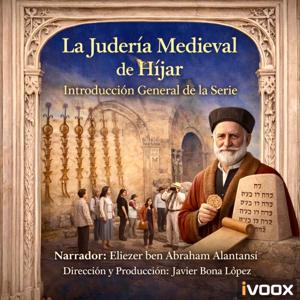
Judería medieval Híjar/Medieval Jewish of Híjar

Judería medieval Híjar/Medieval Jewish of Híjar

Download on the App Store

Judería medieval Híjar/Medieval Jewish of Híjar episodes

  • EPISODIO 7: LA SINAGOGA DE HÍJAR - EL CORAZÓN DE LA COMUNIDAD
    EPISODIO 7: LA SINAGOGA DE HÍJAR - EL CORAZÓN DE LA COMUNIDAD
    Serie: La Judería Medieval de Híjar
    Narrador: Eliezer ben Abraham Alantansí
    Dirección y Producción: Javier Bona López
    RESUMEN
    Este episodio narra la historia de la sinagoga de Híjar, desde su construcción y reforma en 1410 hasta su redescubrimiento arqueológico en 2017. Es un testimonio extraordinario de cómo un edificio sagrado judío sobrevivió quinientos años transformado en iglesia cristiana, conservando bajo las capas del tiempo los elementos que lo identifican como uno de los tesoros del patrimonio sefardí europeo.
    CONTENIDO PRINCIPAL
    1. Construcción y reforma de 1410
    • Licencia eclesiástica del arzobispo García Fernández de Heredia (1410)
    • Documento conservado en Archivo Diocesano de Zaragoza
    • Edificio muy viejo, necesitaba reparación en materiales y cimentación
    • Comunidad próspera con recursos para invertir en su sinagoga
    2. Arquitectura: yeso y madera
    • Nave única casi rectangular, 140 m² de superficie
    • 3 arcos diafragma apuntados dividiendo la nave en 4 tramos
    • Techumbre de madera a dos aguas sobre jacenas y canes decorados
    • Altura máxima: 11 metros
    • Construcción típica aragonesa siglos XIV-XV: tapial de yeso con encofrado
    • Arquitectura modesta pero hermosa y funcional
    3. Elementos litúrgicos
    La Tevá (theva):
    • Tribuna elevada de madera en el centro de la sala
    • Plataforma cuadrada de ~6 m², con pavimento de argamasa
    • Estructura de cimentación con zapatas
    • Barandilla, dosel, 4 pilares de hierro, 2 escalerillas de madera
    • Desde aquí el hazan dirigía la oración y leía la Torá
    El Hejal (archa rolli / aron qodés):
    • Tabernáculo que albergaba los rollos de la Torá
    • Ubicado en muro sur (muro de la mizrah, orientado a Jerusalén)
    • Nicho o armario cerrado con cortinas
    • Enmarcado por una yesería extraordinaria: alfiz de grandes dimensiones, yeso tallado con precisión asombrosa
    • Decoración gótico flamígero (vejigas de pez, cardinas) + composición islámica (simetría, repetición)
    • Obra maestra del arte mudéjar
    El Matroneo (galería de mujeres):
    • Planta superior o edificio contiguo en muro norte
    • Ventanal comunicando con sala de oración principal
    • Espacio segregado donde las mujeres seguían la liturgia
    4. Pinturas murales: símbolos de esperanza
    • Menorá (candelabro de 7 brazos) pintada a gran tamaño
    • Modelo sefardí: brazos redondeados con bolas, 3 copas por brazo, cáliz y flor, candela
    • Inscripciones en hebreo (bendiciones, invocación divina)
    • Simbolismo mesiánico: esperanza en restablecimiento del pueblo en Tierra de Israel
    • Contexto: hostigamiento cristiano (pogroms 1391, conversiones 1413-1414, Inquisición)
    5. Vida en la sinagoga
    • 3 oraciones diarias: shajarit (mañana), minjá (tarde), arvit/maariv (noche)
    • Minyan: quórum de 10 hombres adultos
    • Shabat: día más importante (viernes noche, sábado mañana)
    • Lectura semanal de la Torá: acto litúrgico, educativo, comunitario, identitario
    • Festividades: Rosh Hashaná, Yom Kippur, Sukkot, Pésaj
    • También lugar de estudio del Talmud, reuniones comunitarias, enseñanza del hebreo
    6. 1492: La transformación
    • Edicto de Expulsión: sinagoga queda vacía
    • Edificio pasa a duques de Híjar: almacén, establo, refugio
    • 1517: Testamento de Luis de Híjar (primer conde de Belchite, 7 febrero)
    ◦ Manda fundar misa perpetua en iglesia de San Antonio de Padua
    ◦ "que antes era sinoga de los judíos" (testimonio directo, inequívoco)
    • Antes de 1524: alberga temporalmente franciscanos
    • 1524: Consagración definitiva como iglesia cristiana
    • Muros encalados, hejal tapiado, tevá desmontada, altar cristiano instalado
    • 500 años de olvido
    7. 2017: El descubrimiento
    • Enero 2017: Obras de consolidación (edificio amenaza hundimiento)
    • Gobierno de Aragón autoriza intervención arqueológica
    • Arqueólogos: Antonio Hernández Pardos y Jesús G. Franco Calvo
    • Hallazgos:
    ◦ Base de la tevá (pavimento argamasa, estructura cimentación)
    ◦ Hueco del hejal tapiado (alfiz decorado en yeso tallado)
    ◦ Ventanal del matroneo
    ◦ Pinturas murales (menorá, inscripciones hebreas)
    • Excavaciones 2017-2019: confirmación definitiva
    • Marzo 2018: Declaración BIC (Bien de Interés Cultural) - máxima protección en España
    • Reconocimiento: Una de las 16 sinagogas medievales mejor conservadas de Europa
    • Única en Corona de Aragón con elementos litúrgicos in situ
    8. Significado hoy
    • La memoria no muere: historia permanece y puede ser redescubierta
    • Patrimonio judío es patrimonio de todos (Híjar, Aragón, España)
    • Responsabilidad de conservar, estudiar, transmitir
    • Oportunidad para gestión del patrimonio: edificio + entorno (barrio San Antón/judería)
    • Viviendas con elementos arquitectónicos siglo XV coetáneos a la sinagoga
    9. Reflexión final
    • Invitación a visitar la ermita de San Antonio Abad
    • Ejercicio de imaginación: cerrar ojos, imaginar espacio hace 500 años
    • Tevá, hejal, hombres orando, mujeres en galería, voces en canto, luz, menorá
    • Aunque edificio ha cambiado, la memoria sigue allí
    • Edificios se transforman, religiones cambian, pero memoria humana es eterna
    • Sinagoga de Híjar: testimonio vivo de memoria eterna
    FUENTES DOCUMENTALES
    • Antonio Hernández Pardos, "La sinagoga medieval de Híjar (Teruel): un monumento al descubierto", Artigrama, núm. 34, 2019, pp. 473-478
    • Antonio Hernández Pardos y Jesús G. Franco Calvo, "La antigua sinagoga de Híjar. Claves de un monumento excepcional", Caminreal, Acrótera, 2019
    • Blasco Martínez, A., "Las sinagogas de Aragón: datos de los últimos diez años", 2003
    • Motis Dolader, M. A., "La sinagoga y la aljama de la judería de Híjar: morfología y dinámica socioeconómica", 2019
    • París Marqués, A., "Los judíos de Híjar (Teruel) en el siglo XV: Aproximación biográfica y documentos", 2019
    • Riera i Sans, J., "Els poders publics i les sinagogues. Segles XIII-XV", 2006
    • Archivo Diocesano de Zaragoza, Registro de Actos Comunes y de Ordenes, 1410
    • Excavaciones arqueológicas 2017-2019
    • Testamento de Luis de Híjar, 7 febrero 1517
    • Declaración BIC, Gobierno de Aragón, marzo 2018
    DATOS CLAVE
    • 1410: Licencia reforma sinagoga
    • 1492: Expulsión judíos, sinagoga vacía
    • 1517: Testamento Luis de Híjar ("antes era sinoga de los judíos")
    • 1524: Consagración como iglesia cristiana
    • 2017: Inicio excavaciones arqueológicas
    • 2018: Declaración BIC
    • 140 m²: Superficie sala oración
    • 11 m: Altura máxima
    • 6 m²: Superficie tevá
    • 16 sinagogas: Mejor conservadas de Europa (Híjar es una de ellas)
    Narrador: Eliezer ben Abraham Alantansí
    Dirección y Producción: Javier Bona López
    Shalom.

    19 min
  • EPISODE 6: THE JEWISH LINEAGES OF HÍJAR
    EPISODE 6: THE JEWISH LINEAGES OF HÍJAR
    Series: The Medieval Jewish Quarter of Híjar
    Narrator: Eliezer ben Abraham Alantansí
    Direction and Production: Javier Bona López
    In this moving episode of the series "The Medieval Jewish Quarter of Híjar," Eliezer ben Abraham Alantansí immerses us in the intimate life of the Jewish families who formed the vibrant aljama of Híjar in the 15th century. Beyond the general overview of the community, the narrator respectfully and nostalgically rescues the names and legacies of specific lineages that wove a network of identity, commerce, and solidarity.
    He begins with his own family, the Alantansí, marked by tragedies and displacements, reflecting the vulnerability and resilience of the Jews in the face of anti-Jewish violence. In Híjar, he found refuge among distant relatives, a testament to the strong sense of belonging that transcended generations and distances. Alongside them, the episode introduces us to the Zalmati, merchants and partners in the Hebrew printing press, whose commercial network enabled the dissemination of sacred texts throughout Aragón, despite the ominous shadow of the Inquisition.
    The strategic union between families such as the Chinillo and Abenforna reveals how marriage consolidated commercial alliances and strengthened the economy of the aljama. The Almacarén, Mallén, and Abenfanya families complete this web of merchants who, with commercial and legal skills, connected Híjar with nearby towns, showing a community integrated into broad and diverse economic networks.
    The narrative also honors artisans and scholars: Mossé Zurralla, a kosher butcher respected by both Jews and Christians, symbolizes daily coexistence and cultural exchange; Simuel Aburrabe, a Talmudist, represents the spiritual depth and moral authority that kept Jewish tradition alive; Abraham ben Isaac ben David, a text corrector, ensured the accuracy and beauty of the incunabula printed in the aljama.
    A singular figure is Alfonso Fernández de Córdoba, a convert and master typographer, whose art in the Hebrew printing press reflects the complex reality of identities among Jews, converts, and Christians, and the collaboration that transcended religious boundaries.
    Eliezer invites us to remember these names and families when we walk through the San Antón neighborhood in Híjar, recalling that behind every surname were lives made of love, work, faith, and solidarity. The expulsion of 1492 broke this network, forcing many into exile or conversion, but the memory of these lineages remains alive in their scattered descendants.
    This episode is a heartfelt tribute to collective memory, a call to preserve the identity and history of the Jews of Híjar as a fundamental part of the cultural and human legacy of Aragón and the world. Shalom.
    Narrator: Eliezer ben Abraham Alantansí
    Direction and Production: Javier Bona López
    20 min
  • EPISODIO 6: LOS LINAJES JUDÍOS DE HÍJAR
    EPISODIO 6: LOS LINAJES JUDÍOS DE HÍJAR
    Serie: La Judería Medieval de Híjar
    Narrador: Eliezer ben Abraham Alantansí
    Dirección y Producción: Javier Bona López
    En este emotivo episodio de la serie "La Judería Medieval de Híjar", Eliezer ben Abraham Alantansí nos sumerge en la vida íntima de las familias judías que formaron la vibrante aljama de Híjar en el siglo XV. Más allá de la visión general sobre la comunidad, el narrador rescata con respeto y nostalgia los nombres y legados de linajes concretos que tejieron una red de identidad, comercio y solidaridad.
    Comienza con su propia familia, los Alantansí, marcada por tragedias y desplazamientos, reflejo de la vulnerabilidad y resistencia de los judíos ante la violencia antijudía. En Híjar encontró acogida entre parientes lejanos, una muestra del fuerte sentido de pertenencia que traspasaba generaciones y distancias. Junto a ellos, el episodio nos presenta a los Zalmati, comerciantes y socios en la imprenta hebrea, cuya red comercial permitió la difusión de textos sagrados por toda Aragón, pese a la sombra ominosa de la Inquisición.
    La unión estratégica entre familias como los Chinillo y Abenforna revela cómo el matrimonio consolidaba alianzas comerciales y fortalecía la economía de la aljama. Los Almacarén, Mallén y Abenfanya completan este entramado de comerciantes que, con habilidades comerciales y jurídicas, conectaban Híjar con villas cercanas, mostrando una comunidad integrada en redes económicas amplias y diversas.
    El relato también honra a artesanos y eruditos: Mossé Zurralla, carnicero kasher respetado tanto por judíos como cristianos, simboliza la convivencia cotidiana y el intercambio entre culturas; Simuel Aburrabe, talmudista, representa la profundidad espiritual y la autoridad moral que mantenían viva la tradición judía; Abraham ben Isaac ben David, corrector de textos, asegura la precisión y belleza de los incunables impresos en la aljama.
    Una figura singular es Alfonso Fernández de Córdoba, converso y maestro tipógrafo, cuyo arte en la imprenta hebrea refleja la compleja realidad de identidades entre judíos, conversos y cristianos, y la colaboración que trascendía las fronteras religiosas.
    Eliezer nos invita a recordar estos nombres y familias cuando caminemos por el barrio de San Antón en Híjar, recordando que detrás de cada apellido hubo vidas hechas de amor, trabajo, fe y solidaridad. La expulsión de 1492 rompió esta red, forzando a muchos al exilio o a la conversión, pero la memoria de estos linajes sigue viva en sus descendientes dispersos.
    Este episodio es un conmovedor homenaje a la memoria colectiva, un llamado a preservar la identidad y la historia de los judíos de Híjar como parte fundamental del legado cultural y humano de Aragón y del mundo. Shalom.
    SNarrador: Eliezer ben Abraham Alantansí
    Dirección y Producción: Javier Bona López
    Fuentes:
    • "LOS JUDÍOS DE HÍJAR (TERUEL) EN EL SIGLO XV", Amparo París Marqués, Fuentes Históricas Aragonesas 90
    • Documentos notariales del siglo XV
    • Web: http://juderiadehijar.com
    18 min
  • EPISODE 5: FESTIVITIES AND CELEBRATIONS
    EPISODE 5: FESTIVITIES AND CELEBRATIONS
    Series: The Medieval Jewish Quarter of Híjar
    Narrator: Eliezer ben Abraham Alantansí
    Direction and Production: Javier Bona López
    In this moving episode of the series "The Medieval Jewish Quarter of Híjar," Eliezer ben Abraham Alantansí immerses us in the spiritual heart of his community through its Jewish festivities, which marked the sacred rhythm of life in the Jewish quarter. Beyond the daily routine, these celebrations were the soul that united families, reminded them of their identity, and connected them with the divine and their ancestral history.
    Shabbat, the weekly day of rest, was the fundamental pillar. Every Friday at sunset, the lighting of the candles by the women transformed the neighborhood, inaugurating 24 hours of peace, prayer, and family togetherness. The synagogue filled with voices and songs, and the Shabbat dinner became a moment of joy and gratitude, a refuge of unity in the face of external pressures.
    The annual calendar continued with festivities full of symbolism and emotion. Rosh Hashanah, the Jewish New Year, was a solemn day of reflection and repentance, marked by the piercing sound of the shofar and the hope for a sweet year. Ten days later, Yom Kippur represented the ultimate spiritual purification, a rigorous fast and collective confessions that freed the soul. Then came Sukkot, the Feast of Tabernacles, which filled homes with joy and gratitude, recalling the exile in the desert and the abundance of the harvest.
    Hanukkah, the Festival of Lights in December, celebrated a miracle of hope and resistance with the progressive lighting of candles, games, and songs—a luminous balm in times of persecution. Pesach, the Jewish Passover, was the most significant celebration, deeply commemorating the liberation from Egypt through the Seder, where every food and story rekindled collective memory and the yearning for freedom.
    Finally, Shavuot commemorated the giving of the Torah, with nights of study and dairy foods, strengthening the bond with divine law and the community.
    However, these festivities also evoked nostalgia and vulnerability, for in 1492, with the threat of expulsion, each celebration was an act of spiritual resistance. In their last Pesach in Híjar, amid tears, the community reaffirmed its identity and hope, passing on a legacy that endures to this day.
    This episode shows us how the Jewish festivities of Híjar not only structured time but were a beacon of light and memory in the face of adversity, a triumph of the human spirit that remains alive in every candle lit and every story told. Shalom.
    Narrator: Eliezer ben Abraham Alantansí
    Direction and Production: Javier Bona López
    Sources:
    • Jewish tradition (Hebrew calendar and festivities)
    • "THE JEWS OF HÍJAR (TERUEL) IN THE 15TH CENTURY," Amparo París Marqués, Fuentes Históricas Aragonesas 90
    • Website: http://juderiadehijar.com
    22 min
  • EPISODIO 5: FESTIVIDADES Y CELEBRACIONES
    EPISODIO 5: FESTIVIDADES Y CELEBRACIONES
    Serie: La Judería Medieval de Híjar
    Narrador: Eliezer ben Abraham Alantansí
    Dirección y Producción: Javier Bona López
    En este emotivo episodio de la serie "La Judería Medieval de Híjar", Eliezer ben Abraham Alantansí nos sumerge en el corazón espiritual de su comunidad a través de sus festividades judías, que marcaban el ritmo sagrado de la vida en la judería. Más allá del día a día, estas celebraciones eran el alma que unía a las familias, les recordaba su identidad y les conectaba con lo divino y su historia ancestral.
    El Shabat, el descanso semanal, era el pilar fundamental. Cada viernes al atardecer, el encendido de las velas por las mujeres transformaba el barrio, inaugurando 24 horas de paz, oración y convivencia familiar. La sinagoga se llenaba de voces y cantos, y la cena de Shabat se convertía en un momento de alegría y gratitud, un refugio de unión frente a las presiones externas.
    El calendario anual continuaba con festividades cargadas de simbolismo y emoción. Rosh Hashaná, el Año Nuevo judío, era un día solemne de reflexión y arrepentimiento, marcado por el penetrante sonido del shofar y la esperanza de un año dulce. Diez días después, Yom Kippur representaba la máxima purificación espiritual, un ayuno riguroso y confesiones colectivas que liberaban el alma. Siguió Sukkot, la Fiesta de las Cabañas, que llenaba de alegría y gratitud los hogares, recordando el exilio en el desierto y la abundancia de la cosecha.
    Janucá, la Fiesta de las Luces en diciembre, celebraba un milagro de esperanza y resistencia con el encendido progresivo de velas, juegos y canciones, un bálsamo luminoso en tiempos de persecución. Pésaj, la Pascua Judía, era la celebración más significativa, rememorando con profunda espiritualidad la liberación de Egipto a través del Séder, donde cada alimento y relato reavivaba la memoria colectiva y el anhelo de libertad.
    Finalmente, Shavuot conmemoraba la entrega de la Torá, con noches de estudio y alimentos lácteos, fortaleciendo el vínculo con la ley divina y la comunidad.
    Sin embargo, estas festividades también evocaban nostalgia y vulnerabilidad, pues en 1492, con la amenaza de expulsión, cada celebración era un acto de resistencia espiritual. En su último Pésaj en Híjar, entre lágrimas, la comunidad reafirmó su identidad y esperanza, transmitiendo un legado que perdura hasta hoy.
    Este episodio nos muestra cómo las festividades judías de Híjar no solo estructuraban el tiempo, sino que eran un faro de luz y memoria frente a la adversidad, una victoria del espíritu humano que sigue viva en cada vela encendida y cada historia contada. Shalom.
    Narrador: Eliezer ben Abraham Alantansí
    Dirección y Producción: Javier Bona López
    Fuentes:
    • Tradición judía (calendario hebreo y festividades)
    • "LOS JUDÍOS DE HÍJAR (TERUEL) EN EL SIGLO XV", Amparo París Marqués, Fuentes Históricas Aragonesas 90
    • Web: http://juderiadehijar.com
    21 min
  • EPISODE 4: "COEXISTENCE OF THREE CULTURES: JEWS, MUDÉJARES, AND CHRISTIANS"
    EPISODE 4: "COEXISTENCE OF THREE CULTURES: JEWS, MUDÉJARES, AND CHRISTIANS"
    Series: The Medieval Jewish Quarter of Híjar
    Narrator: Eliezer ben Abraham Alantansí
    Direction and Production: Javier Bona López
    Eliezer explores the coexistence of the three religious communities in Híjar: Jews, Mudéjares, and Christians. He describes the geography of coexistence (three separate but connected neighborhoods), the Azaguán as the entrance to the Jewish quarter, and meeting points such as the market. He narrates stories of professional collaboration: Jewish doctors attending to all three communities (since 1312), Mudéjar artisans working on the synagogue (1410), intercultural trade. But he also explores tensions: pogroms of 1391 (Híjar survived), forced conversions of 1413-1414 following the Disputation of Tortosa and the sermons of Vicente Ferrer, the small window of the Rabbi’s House where converts listened to Jewish prayers. The Inquisition (1480) and the Edict of Expulsion (1492) put an end to coexistence. Eliezer recounts the last day: farewells with Christian and Mudéjar neighbors, leaving Híjar with printed books, the memory of coexistence. Final reflection on lessons for today: living with difference, respecting the other, building bridges.
    MAIN THEMES
    • Geography of coexistence: Three neighborhoods (Christian, Mudéjar, Jewish) separated but connected
    • The Azaguán: Entrance to the Jewish quarter, "No entry. One goes to it."
    • Meeting points: Market, trade, daily interactions
    • Professional collaboration: Jewish doctors, Mudéjar artisans, economic networks
    • Tensions and conflicts: Pogroms 1391, forced conversions 1413-1414, Inquisition 1480
    • Edict of Expulsion 1492: Impossible decision, last day, farewells
    • Memory and lessons: Complex but real coexistence, hope for today
    DOCUMENTED CHARACTERS AND EVENTS
    • Jewish doctor hired for the Hospital of the Holy Cross (1312)
    • Mudéjar artisans renovating the synagogue (1410)
    • Anti-Jewish pogroms in Castile and Aragon (1391) – Híjar survived
    • Vicente Ferrer and forced conversions (1413-1414)
    • Disputation of Tortosa (1413-1414)
    • Salomón Zalmati testifies before the Inquisition in Valencia (1490)
    • Edict of Expulsion (March 31, 1492)
    • Departure from Híjar (July 31, 1492)
    • Christian wool merchant (farewell)
    • Mudéjar woman selling ceramics (gift of a jug)
    SOURCES
    • "The Medieval Jewish Quarter of Híjar: History, Heritage, and Research"
    • "THE JEWS OF HÍJAR (TERUEL) IN THE 15TH CENTURY," Amparo París Marqués, Fuentes Históricas Aragonesas 90
    • Website: http://juderiadehijar.com
    Narrator: Eliezer ben Abraham Alantansí
    Direction and Production: Javier Bona López
    Shalom.
    23 min
  • EPISODIO 4: "COEXISTENCIA DE TRES CULTURAS: JUDÍOS, MUDÉJARES Y CRISTIANOS"
    EPISODIO 4: "COEXISTENCIA DE TRES CULTURAS: JUDÍOS, MUDÉJARES Y CRISTIANOS"
    Narrador: Eliezer ben Abraham Alantansí
    Dirección y Producción: Javier Bona López
    Eliezer explora la coexistencia de las tres comunidades religiosas en Híjar: judíos, mudéjares y cristianos. Describe la geografía de la convivencia (tres barrios separados pero conectados), el Azaguán como entrada a la judería, y los puntos de encuentro como el mercado. Narra historias de colaboración profesional: médicos judíos atendiendo a las tres comunidades (desde 1312), artesanos mudéjares trabajando en la sinagoga (1410), comercio intercultural. Pero también explora las tensiones: pogroms de 1391 (Híjar sobrevivió), conversiones forzosas de 1413-1414 tras la Disputa de Tortosa y las prédicas de Vicente Ferrer, la ventanilla de la Casa del Rabí donde conversos escuchaban oraciones judías. La Inquisición (1480) y el Edicto de Expulsión (1492) ponen fin a la convivencia. Eliezer narra el último día: despedidas con vecinos cristianos y mudéjares, la salida de Híjar con libros impresos, la memoria de la convivencia. Reflexión final sobre lecciones para hoy: vivir con la diferencia, respetar al otro, construir puentes.
    TEMAS PRINCIPALES
    • Geografía de la convivencia: Tres barrios (cristiano, mudéjar, judío) separados pero conectados
    • El Azaguán: Entrada a la judería, "No se pasa. A él se va."
    • Puntos de encuentro: Mercado, comercio, interacciones cotidianas
    • Colaboración profesional: Médicos judíos, artesanos mudéjares, redes económicas
    • Tensiones y conflictos: Pogroms 1391, conversiones forzosas 1413-1414, Inquisición 1480
    • Edicto de Expulsión 1492: Decisión imposible, último día, despedidas
    • Memoria y lecciones: Convivencia compleja pero real, esperanza para hoy
    PERSONAJES Y EVENTOS DOCUMENTADOS
    • Médico judío contratado para Hospital de la Santa Cruz (1312)
    • Artesanos mudéjares reformando la sinagoga (1410)
    • Pogroms antijudíos en Castilla y Aragón (1391) - Híjar sobrevivió
    • Vicente Ferrer y conversiones forzosas (1413-1414)
    • Disputa de Tortosa (1413-1414)
    • Salomón Zalmati testifica ante la Inquisición en Valencia (1490)
    • Edicto de Expulsión (31 de marzo de 1492)
    • Salida de Híjar (31 de julio de 1492)
    • Comerciante cristiano vendedor de lana (despedida)
    • Mujer mudéjar vendedora de cerámica (regalo de jarra)
    Narrador: Eliezer ben Abraham Alantansí
    Dirección y Producción: Javier Bona López
    FUENTES
    • "La judería medieval de Híjar: historia, patrimonio e investigación"
    • "LOS JUDÍOS DE HÍJAR (TERUEL) EN EL SIGLO XV", Amparo París Marqués, Fuentes Históricas Aragonesas 90
    • Web: http://juderiadehijar.com
    Narrador: Eliezer ben Abraham Alantansí
    Dirección y Producción: Javier Bona López
    Shalom.
    21 min
  • EPISODE 3: "THE WOMEN OF THE JUDERÍA"
    EPISODE 3: "THE WOMEN OF THE JUDERÍA"
    Eliezer dedicates a full episode to the role of women in the aljama. He describes how they hold a predominant place in the medieval Jewish family, their role in the home, in the economy, and as transmitters of religious and cultural tradition. He narrates stories of women (Raquel the weaver, Miriam the merchant), the shared patio as a female space, the lighting of Shabat candles, weddings from the female perspective, the Chevra Kadisha and mourning, economic and educational vulnerability, and a story of resilience during a famine. He concludes by honoring women as "the invisible heart of the aljama."
    MAIN THEMES
    • Predominant place in the family: Women as the constant heart of the home
    • Architecture looking inward: Reflection of the female role
    • Raquel: Daily life of a woman weaver, mother of four children
    • The shared patio: Space for work, meeting, and female community
    • Miriam: Woman merchant selling fabrics at the market
    • Transmitters of tradition: Religious education of the children
    • Lighting of Shabat candles: Sacred act that begins the day of rest
    • Weddings: Preparations, dress, food, spiritual preparation, women's circle
    • Female Chevra Kadisha: Preparation of deceased women's bodies
    • Shivá: Mourning period, community support
    • Vulnerability: Educational, economic, political limitations
    • Resilience: Story of famine and collective survival
    • Three generations: Final image of young, adult, and elderly women in the patio
    MENTIONED CHARACTERS
    • Raquel: Weaver’s wife, mother of four children (three girls, one boy)
    • Miriam: Fabric merchant in the plaza
    • Sara: Neighbor in the shared patio
    • Young woman from the Chinillo family: Bride at a wedding
    • Young man from the Abenforna family: Groom at a wedding
    • Elderly woman of the neighborhood: Keeper of memory, tells famine story
    • Female Chevra Kadisha: Group of women who prepare bodies for burial
    KEY MOMENTS
    Typical day of Raquel: Rising before dawn, lighting fire, preparing breakfast, cleaning house, washing clothes in the shared patio, teaching prayers to the children.
    Shared patio: Women washing clothes, talking, sharing gossip, worries, advice, laughter, and tears. Female solidarity.
    Lighting of Shabat candles: The woman lights two candles, covers her eyes, recites blessing: "Baruj atá Adonai... lehadlik ner shel Shabat." Shabat begins at home, with the woman’s hands.
    Wedding: Months of preparation, blue silk dress embroidered with silver, special food, mother-daughter spiritual preparation, wedding day with traditional songs, women’s circle dancing.
    Funeral: Chevra Kadisha washes the body with pure water, wraps it in a white shroud, recites psalms. Seven-day Shivá, women bring food, share memories of the deceased.
    Famine story: Women sharing the little they had, inventing ways to stretch food, supporting each other emotionally. "Women are the backbone of this community."
    Final image: Shared patio, three generations of women washing clothes, talking, laughing, singing. Weavers of lives, families, and community.
    VULNERABILITY AND STRENGTH
    Limitations: Without formal education (majority), no participation in aljama governance, economic vulnerability of widows.
    Power: Female networks in patios and kitchens, role as mothers and educators, participation in family economy, constant presence, tireless work, unbreakable resilience.
    FINAL REFLECTION
    "Raquel, Miriam, Sara, and all the others whose names we do not know, whose names were lost in the silence of the archives, but whose lives, whose work, whose strength, whose resilience left an indelible mark on this community. This episode is for them. In their honor. In their memory. They were strong. They were resilient. They were essential. And without them, the medieval judería of the town would not have been what it was."
    Narrator: Eliezer ben Abraham Alantansí
    Direction and Production: Javier Bona López
    SOURCES
    "THE JEWS OF HÍJAR (TERUEL) IN THE 15TH CENTURY"
    Author: Amparo París Marqués
    Aragonese Historical Sources 90
    Web: http://juderiadehijar.com
    24 min
  • EPISODIO 3: "LAS MUJERES DE LA JUDERÍA"
    EPISODIO 3: "LAS MUJERES DE LA JUDERÍA"
    Eliezer dedica un episodio completo al papel de las mujeres en la aljama. Describe cómo ocupan un lugar predominante en la familia judía medieval, su rol en el hogar, en la economía, y como transmisoras de tradición religiosa y cultural. Narra historias de mujeres (Raquel la tejedora, Miriam la comerciante), el patio compartido como espacio femenino, el encendido de velas de Shabat, bodas desde la perspectiva femenina, la Chevra Kadisha y el duelo, la vulnerabilidad económica y educativa, y una historia de resiliencia durante una hambruna. Concluye honrando a las mujeres como "el corazón invisible de la aljama".
    TEMAS PRINCIPALES
    • Lugar predominante en la familia: Las mujeres como corazón constante del hogar
    • Arquitectura que mira hacia dentro: Reflejo del papel femenino
    • Raquel: Vida cotidiana de una mujer tejedora, madre de cuatro hijos
    • El patio compartido: Espacio de trabajo, encuentro y comunidad femenina
    • Miriam: Mujer comerciante que vende telas en el mercado
    • Transmisoras de tradición: Educación religiosa de los niños
    • Encendido de velas de Shabat: Acto sagrado que inicia el día de descanso
    • Bodas: Preparativos, vestido, comida, preparación espiritual, círculo de mujeres
    • Chevra Kadisha femenina: Preparación de cuerpos de mujeres fallecidas
    • Shivá: Período de luto, apoyo comunitario
    • Vulnerabilidad: Limitaciones educativas, económicas, políticas
    • Resiliencia: Historia de hambruna y supervivencia colectiva
    • Tres generaciones: Imagen final de mujeres jóvenes, adultas y ancianas en el patio
    PERSONAJES MENCIONADOS
    • Raquel: Esposa de tejedor, madre de cuatro hijos (tres niñas, un niño)
    • Miriam: Comerciante de telas en la plaza
    • Sara: Vecina en el patio compartido
    • Joven de familia Chinillo: Novia en una boda
    • Joven de familia Abenforna: Novio en una boda
    • Anciana del barrio: Guardiana de memoria, cuenta historia de hambruna
    • Chevra Kadisha femenina: Grupo de mujeres que preparan cuerpos para entierro
    MOMENTOS CLAVE
    Día típico de Raquel: Levantarse antes del amanecer, encender fuego, preparar desayuno, limpiar casa, lavar ropa en patio compartido, enseñar oraciones a los niños.
    Patio compartido: Mujeres lavando ropa, conversando, compartiendo chismes, preocupaciones, consejos, risas y lágrimas. Solidaridad femenina.
    Encendido de velas de Shabat: La mujer enciende dos velas, cubre sus ojos, recita bendición: "Baruj atá Adonai... lehadlik ner shel Shabat." El Shabat comienza en el hogar, con las manos de la mujer.
    Boda: Preparativos de meses, vestido de seda azul bordado con plata, comida especial, preparación espiritual madre-hija, día de la boda con canciones tradicionales, círculo de mujeres bailando.
    Funeral: Chevra Kadisha lava el cuerpo con agua pura, envuelve en sudario blanco, recita salmos. Shivá de siete días, mujeres traen comida, comparten recuerdos de la difunta.
    Historia de hambruna: Mujeres compartiendo lo poco que tenían, inventando maneras de estirar la comida, apoyándose emocionalmente. "Las mujeres son la columna vertebral de esta comunidad."
    Imagen final: Patio compartido, tres generaciones de mujeres lavando ropa, conversando, riendo, cantando. Tejedoras de vidas, familias y comunidad.
    VULNERABILIDAD Y FUERZA
    Limitaciones: Sin educación formal (mayoría), sin participación en gobierno de la aljama, vulnerabilidad económica de viudas.
    Poder: Redes femeninas en patios y cocinas, papel como madres y educadoras, participación en economía familiar, presencia constante, trabajo incansable, resiliencia inquebrantable.
    REFLEXIÓN FINAL
    "Raquel, Miriam, Sara, y todas las demás cuyos nombres no conocemos, cuyos nombres se perdieron en el silencio de los archivos, pero cuyas vidas, cuyo trabajo, cuya fuerza, cuya resiliencia, dejaron una huella indeleble en esta comunidad. Este episodio es para ellas. En su honor. En su memoria. Fueron fuertes. Fueron resilientes. Fueron esenciales. Y sin ellas, la judería medieval de la villa no habría sido lo que fue."
    FUENTES
    "LOS JUDÍOS DE HÍJAR (TERUEL) EN EL SIGLO XV"
    Autor: Amparo París Marqués
    Fuentes Históricas Aragonesas 90
    Web: http://juderiadehijar.com
    23 min
  • EPISODE 2: "THE ALJAMA OF ONE HUNDRED FIFTY SOULS"
    EPISODE 2: "THE ALJAMA OF ONE HUNDRED FIFTY SOULS"
    Eliezer presents a detailed portrait of the Jewish community: 150 inhabitants distributed in 40 houses around the synagogue. He describes the entrance through the Azaguán, the professions (weavers, butchers, tanners, silversmiths, merchants), the role of women, the main families (Chinillo, Abenforna, Almacarén), the synagogue as the community heart, the facilities (kosher butcher shop, tavern), daily life (Shabat, births, weddings, funerals), the emerging tensions with Christians, and the protection of Duke Juan Fernández de Híjar y Cabrera (1483).
    MAIN THEMES
    • The Azaguán: Main entrance to the Jewish quarter, a narrow street connecting two worlds
    • 150 souls, 40 houses: Small but united community
    • Diverse trades: Beyond rabbis and moneylenders (weavers, butchers, tanners, silversmiths)
    • Real characters: Mossé Zurralla (weaver/butcher), Simuel Aburrabe (talmudist)
    • Merchant families: Chinillo, Abenforna, Almacarén, Mallén, Abenfanya
    • Women: The invisible heart of the community
    • The synagogue: Center of prayer, study, and community life
    • The jazán: Cantor who leads the prayers
    • Community facilities: Kosher butcher shop, tavern, oven (possible)
    • Daily life: Shabat, births (brit milá), weddings, funerals (shivá)
    • Tensions: Complaints about Jewish shops on Christian streets
    • Ducal protection: Juan Fernández de Híjar y Cabrera (1483)
    MENTIONED CHARACTERS
    • Mossé Zurralla: Weaver turned kosher butcher (1482)
    • Simuel Aburrabe: Expert talmudist, supervises the kosher butcher shop
    • Guillén Remírez: Christian tanner who buys kosher meat
    • Families: Chinillo, Abenforna, Almacarén, Mallén, Abenfanya
    • Juan Fernández de Híjar y Cabrera: Duke since 1483
    DESCRIBED LOCATIONS
    • The Azaguán: Narrow street entrance to the Jewish quarter
    • Plaza de San Antón: Center of the Jewish neighborhood
    • Synagogue: Renovated in 1410, best preserved in the Crown of Aragon
    • Rabbi’s House: Directly connected to the synagogue
    • Kosher butcher shop: Serves Jews and Christians
    • Shared courtyards: Where women wash clothes
    • Jewish cemetery: Outside the town
    KEY HISTORICAL FACTS
    • 150 Jewish inhabitants, 40 houses
    • Synagogue renovated in 1410
    • Kosher butcher shop also used by Christians
    • Loans at 16% interest (regulated by the Crown)
    • Duke appointed in 1483
    • Coexistence of three cultures (Jews, Christians, Mudéjars)
    • Emerging tensions in the mid-15th century
    Narrator: Eliezer ben Abraham Alantansí
    Direction and Production: Javier Bona López
    SOURCES
    "THE JEWS OF HÍJAR (TERUEL) IN THE 15TH CENTURY"
    Author: Amparo París Marqués
    Aragonese Historical Sources 90
    Web: http://juderiadehijar.com
    25 min

About Judería medieval Híjar/Medieval Jewish of Híjar

From the publisher's feed

Judería medieval de Híjar/The Medieval Jewish Quarter of Híjar