
Sign up to save your podcasts
Or

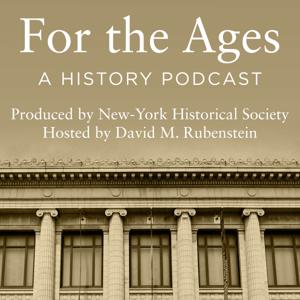

While the Supreme Court is often presented in American history as a protector of civil liberties, its record across the centuries provides a more complex picture. While the short period of the 1930s to the 1970s saw the Court end segregation and safeguard both free speech and the vote, during the preceding period, the Court largely ignored or suppressed basic rights for many Americans. The succeeding period, too, saw a retreat and even regression on gains made toward racial justice. Prizewinning author and professor of history Orville Vernon Burton charts the Court’s racial jurisprudence, discussing the many cases involving America’s racial minorities and the impact of individual rulings.
Recorded on July 6, 2023
 View all episodes
 By The New York Historical

4.6
364364 ratings
While the Supreme Court is often presented in American history as a protector of civil liberties, its record across the centuries provides a more complex picture. While the short period of the 1930s to the 1970s saw the Court end segregation and safeguard both free speech and the vote, during the preceding period, the Court largely ignored or suppressed basic rights for many Americans. The succeeding period, too, saw a retreat and even regression on gains made toward racial justice. Prizewinning author and professor of history Orville Vernon Burton charts the Court’s racial jurisprudence, discussing the many cases involving America’s racial minorities and the impact of individual rulings.
Recorded on July 6, 2023

38,505 Listeners

6,778 Listeners

3,988 Listeners

9,201 Listeners
1,133 Listeners

1,573 Listeners

3,815 Listeners
1,105 Listeners

757 Listeners

785 Listeners

32,314 Listeners

165 Listeners

8,566 Listeners

15,942 Listeners

817 Listeners