
Sign up to save your podcasts
Or

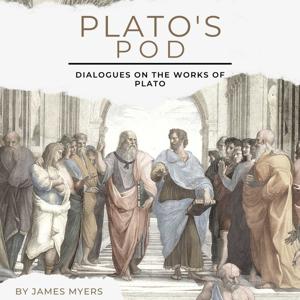

Our choice and use of words has a profound effect on the operation of justice, and a particular legal dispute now before the United States Supreme Court hangs on the meaning of three words. In this episode, Plato’s Pod host James Myers explores what eight of Plato’s works have to say about the meaning of words, and the ways that words shape constitutions, justice, and governments in our time as they did in Plato’s time, 24 centuries earlier. Socrates was executed because his jury judged him guilty of two words – impiety and corruption – which we now interpret very differently, and it’s an ancient example of how justice and injustice can still hinge on word meanings. The justices of the Supreme Court will soon render a decision on the meaning and usage of three words that have evolved from 1789 to 1977, and from 1977 to 2025. If we wrote our laws with a lengthy preamble setting out the lawmakers’ meaning and intent, as the Athenian in Plato’s Laws suggests, then justice might not be as difficult to establish at later times as it now is.
 View all episodes
 By James Myers

4.2
99 ratings
Our choice and use of words has a profound effect on the operation of justice, and a particular legal dispute now before the United States Supreme Court hangs on the meaning of three words. In this episode, Plato’s Pod host James Myers explores what eight of Plato’s works have to say about the meaning of words, and the ways that words shape constitutions, justice, and governments in our time as they did in Plato’s time, 24 centuries earlier. Socrates was executed because his jury judged him guilty of two words – impiety and corruption – which we now interpret very differently, and it’s an ancient example of how justice and injustice can still hinge on word meanings. The justices of the Supreme Court will soon render a decision on the meaning and usage of three words that have evolved from 1789 to 1977, and from 1977 to 2025. If we wrote our laws with a lengthy preamble setting out the lawmakers’ meaning and intent, as the Athenian in Plato’s Laws suggests, then justice might not be as difficult to establish at later times as it now is.

15,251 Listeners

3,420 Listeners
868 Listeners

3,240 Listeners

6,738 Listeners

112,321 Listeners

6,066 Listeners

50,344 Listeners
3,305 Listeners

15,629 Listeners