
Sign up to save your podcasts
Or



Based on Podcast App listening data
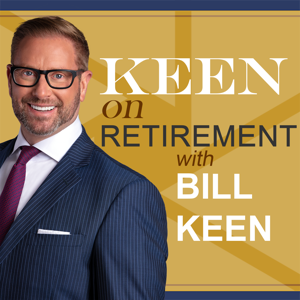
In this first of two presentations, I spend about 20 minutes and introduce several new Keen Wealth Advisors team members and share our business philosophy. I think it's important for our clients to know how we operate our firm and understand the culture that we purposely create.
Most of us have put together a jigsaw puzzle at some point in our life. But if I asked you, "What is the most important piece of the puzzle?" how would you answer?
Well, my co-host Steve hit me cold with that question and it led to a great discussion about the importance of vision and clarity in building a successful financial plan and living a fulfilling life.
In today's episode, we also share a few of our favorite quotes and discuss some of the lessons learned behind them. We even got a few chuckles from sharing some "funny" quotes about money.
As we near the end of the year, I want to thank you for being part of the Keen on Retirement community and taking the time to listen to our podcasts and read our blog posts. We are truly grateful for the opportunity to work with you and we look forward to an amazing 2017.
At Keen Wealth Advisors, we spend a lot of time helping you build financial security. Yet all that financial security could become secondary when you feel a lump in the breast, the car behind you on the freeway doesn't stop in time, or you slip on the ice in the winter and your whole world becomes directed to your immediate health care needs. If that happens, your focus turns to trying to get the best medical care possible.
In today's episode, we discuss how to get the best medical care possible and share simple things you can do to make better healthcare choices. Our guest is Leslie Michelson. For several decades, Leslie has been at the forefront of helping people get the best healthcare possible.
Leslie is the author of The Patient's Playbook and host of The No-Mistake Zone Podcast. I highly recommend both.
I think you'll appreciate this show as we touch on the importance of having a primary care physician, how to ensure you are on top of the right medications and treatment options, and how to rally a team of physicians so that you have the best folks talking of you when the situation arises.
One lesson that was driven home again during the recent 24-hour news cycle surrounding the election was, "Don't believe everything you read and hear."
Regardless of your political persuasion, what you hear on the campaign trail often differs markedly from what happens after the election. It's similar in the financial markets. Scary headlines one day could turn into "the markets are on their way to new highs" the next day.
The recent election night is a great example of how things can turn on a dime. When it became clear that Donald Trump was performing much better than the polls had suggested, the financial futures market, which trades pretty much 24 hours a day, started dropping rapidly. The markets were not expecting Mr. Trump to win. But then before the regular trading markets opened up on Wednesday morning, the numbers had completely turned around and the markets opened higher.
The initial knee-jerk reaction to the election in the financial markets was negative, but less than 12 hours later, it had turned positive.
I always stress to our clients not to make snap judgments when it comes to your investing and your financial plan. The 24-hour news cycle encourages people to make snap judgments because it's designed to create scary headlines that drive viewers and increase advertising. We do our best at Keen Wealth Advisors to be a voice of reason during these headline-driven times.
In today's episode, we take a look at how to deal with the 24-hour news cycle and discuss how Donald Trump's presidency may affect your financial future.
Thanks to the aging Baby Boomer generation, about one in every seven Americans is 65 years or older. That number is expected to continue rising for decades to come, according to the U.S. Department of Health and Human Services.
As we age, it's important to make sure we have a plan in place. And not just a financial plan. Having a will, of course, is important. But we also need to have a plan to take care of ourselves and our loved ones in case we get sick or begin to experience diminished cognitive ability. These issues can occur slowly over time and difficult to assess.
These are not fun questions to address, but it's best to address them while you can and not wait until you have to. In today's episode, we tackle some tough questions so you can be prepared if the need arises.
As you know, the name of our podcast is Keen On Retirement. Normally, we talk about things like Social Security and retirement income. But today we're going to talk about the fun part of retirement.
Our guest today is Mark Wolf. Mark is a close personal friend of mine for nearly 20 years. I'm very fortunate to call him a friend. He also has a long history in the travel industry, and he is an expert on cruising.
Carissa and I returned from a European cruise a few weeks ago. It made me think about how nice it would be to have someone come on the show, especially someone as close as Mark, to talk about spending some time cruising in your retirement.
Mark has 50 years of experience in the travel industry and he shares some tips and pointers on how to get the most our of your cruising experience. Whether you've been on a cruise before or not, Mark has some great ideas and thoughts on how to make your next cruise your best cruise.
Dr. Daniel Crosby is one of the country's leading authorities on behavioral investing. He joins the show today to discuss some of the key learnings from his new book, The Laws of Wealth. We review some of the rules of behavioral self-management and cover some key ideas to remember so we can all make sound financial decisions.
One of the most important things we do at Keen Wealth Advisors is educating and helping our clients and listeners to be engaged in the planning process. I believe in lifetime learning, and that's why we reached out to Dr. Crosby and asked him to be on the show. We like to collaborate with the best of the best, find out what's working and bring those ideas to our clients through our podcast and our meetings.
As Dr. Crosby said on the podcast, "Behavioral finance tries to account for the messiness of imperfect human decision-making and amend it to make it a little bit closer to perfect."
Should you delay taking social security payments? When you're retired, should you still try to "save" money each month and put it in a bank account just like you did before you retired?
Those are just a couple of the questions we address in today's show that were prompted from what our client's are asking us.
As we meet with our clients, we enjoy learning what questions they have and what issues are concerning them. So today, our episode is devoted to discussing some of the common questions we're hearing right now from our clients.
Do I have enough money to retire comfortably? That's the most common question I get asked. And my answer is always the same--let's go through the financial planing process, put a plan together, and see what the numbers indicate.
In today's show, we take you behind the curtain and discuss our financial planning process. You'll learn what goes into a plan, how numbers are calculated, and how they are personalized for each of our clients.
Chances are you've received a call from the "IRS" saying you owe money and that you have to pay up immediately.
This type of "IRS" scam can be spotted pretty quickly if you are armed with some basic information.
As you'll learn in today's show, there are ways to protect yourself from these frauds. So please listen in as we discuss how you can avoid being the victim of a scammer.
From the publisher's feed

39,029 Listeners

1,980 Listeners

801 Listeners

1,314 Listeners
456 Listeners

544 Listeners

754 Listeners

550 Listeners

695 Listeners

3,062 Listeners

3,155 Listeners
575 Listeners

929 Listeners

830 Listeners

1,072 Listeners