
Sign up to save your podcasts
Or

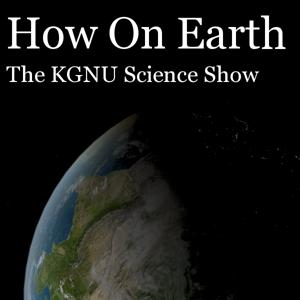


COP25 Postmortem (start time: 3:35) Earlier this month many nation’s leaders, as well as scientists, environmental activists, companies and others gathered in Madrid for a two-week United Nations climate summit. The conference, called COP25, is rooted in the 2015 Paris Agreement, which is a blend of pledges from about 200 nations to dramatically slash their planet-warming emissions. Next year’s meeting is when signatory nations will update their actual commitments. So, what happened at the recent climate summit, and what’s next? How On Earth host Susan Moran today interviews two scientists who attended COP25. Tashiana Osborne is a PhD candidate in atmospheric and oceanic science at the Scripps Institution of Oceanography, at UC San Diego. And Sarah Whipple is a PhD candidate in ecology at Colorado State University.
Hosts: Susan Moran, Joel Parker
Listen to the show here:
Voyager Passes Through the Heliopause (Starts 1:00) LASP scientist Fran Bagenol explains how the over 40 year old Voyager Mission, that launched in the 1970s is still providing incredible surprises, including passing through the border between the solar system and “outer space.” As part of making that journey, the Voyager spacecraft have passed through cosmic plasma that has temperatures of 60,000 F. Bagenol will explain how that’s possible . . . and why Voyager could pass through that incredible heat unscathed. Fiske Planetarium will present a special show about Voyager in March.
Boulder Xmas Bird Count (Starts 13:45) Naturalists Steve Jones and Scott Seevers explain how to join Boulder’s December 15th Xmas bird count, and why the scientific data gathered by citizens during this event is so important. All ages are welcome , and all regions have these counts, from Boulder to beyond. For more info, go here.
Host/Producer/Engineer: Shelley Schlender
COP25 & Climate Change (start time: 1:07): Next month (Dec. 2-13), the United Nations global climate change summit, known as COP25, will take place in Madrid. Many scientists, environmental nonprofits, students, activists will also attend side events related to the UN sustainable development goals (SDG). The goal of COP over the years has been to reduce emissions of planet-warming gases. The talks stem from the landmark 2015 Paris Agreement, which essentially is a mix of pledges from about 200 nations to dramatically cut their greenhouse emissions. The countries are not legally bound to meet their targets, but they are supposed to report their progress to the UN. Under the Obama administration, the U.S. vowed to reduce emissions about 28 percent below 2005 levels, by 2025. But earlier this month, the Trump administration announced that it will begin a year-long process to withdraw the U.S. from the international accord. The stakes are extremely high.
How On Earth’s Susan Moran and guest-host Tom Yulsman discuss COP25 and what’s at stake with Gillian Bowser, an ecologist and research scientist at Colorado State University who has studied international climate and biodiversity conventions and has attended several COP summits; and Tashiana Osborne, a PhD candidate at the Scripps Institution of Oceanography at the University of California, San Diego, who is studying the effects of atmospheric rivers, and who will attend COP25. Tom Yulsman, a CU Boulder journalism professor and blogger, offers his expertise as a climate-focused science journalist.
Hosts: Susan Moran, Tom Yulsman
Listen to the show here:
BUZZ: Inside the Minds of Thrill-Seekers, Daredevils and Adrenaline Junkies. We speak with clinical psychologist and author, Ken Carter about his new book BUZZ, and high-sensation seekers who can’t get enough “new” and love to seek out more. Carter is a consultant for the Denver Science Museum’s Extreme Sports exhibit, running through spring 2020. He speaks at the Boulder Bookstore Wednesday Nov 6th. Check out his sensation-seeking survey on how to rate your own thrill-seeking . . . or chill-seeking, personality.
Host, Producer, Engineer: Shelley Schlender
How To [starts at 4:30] Our guest for this episode is Randall Munroe, perhaps best known for his comic xkcd, and author of the books “What If” and “Thing Explainer”. Randall has figured out how to do many things, so he wrote a new book appropriately called “How To”, which promises to provide absurd scientific advice for common real world problems. Absurd? Sometimes. (well, often actually) Amusing and informative? Definitely. Have you ever wanted to build a lava moat? Have you ever wondered what kind of gas mileage your house would get on the highway? What are the energy requirements and logistics of boiling vs. freezing a river? And what about landing an airplane on a submarine? All of those questions and more (pirates!) are addressed in “How To”, and we talk about some of them in this episode of How on Earth.
Host, Producer, Engineer: Joel Parker
Listen to the show:
Almost Human – The Story of Julius, the Chimpanzee Caught Between Two Worlds (Extended Version) by Alfred Fidjestøl. This is the full version of the interview.
Almost Human: The Story of Julius, the Chimpanzee Caught Between Two Worlds. In this fall pledge drive show, we feature Alfred Fidjestøl‘s new biography about one of Europe’s most famous chimpanzees.
(We’ll broadcast the full interview with Alfred Fijestol at a later date.)
Hosts: Shelley Schlender & Chip Grandits
We talk with University of Colorado Scholar in Residence Jorge Perez-Gallego about many non-traditional paths one might take after getting a science Ph.D. as well as CU’s Grand Challenge and the fascinating intersection of science and art through the Nature, Environment, Science & Technology (NEST) Studio for the Arts.
Host, Producer, Engineer: Joel Parker
Listen to the show:
Beth interviews neuroscientist and addiction researcher Scott Swartzwelder who talks about his research on reversing alcohol-induced brain damage in young rats. In past work, Professor Swartzwelder and colleagues have identified specific areas of the brain damaged by drinking, especially in adolescent rats. In this interview, he describes, how this damage occurs, and amazingly, how treatment later in life can actually reverse it.
Hosts: Beth Bennett & Angele Sjong
Listen to the show:
From the publisher's feed

91,018 Listeners
78,398 Listeners

43,827 Listeners

38,012 Listeners

43,362 Listeners
26,829 Listeners

3,386 Listeners
1,642 Listeners
937 Listeners
505 Listeners
6,432 Listeners
366 Listeners

111,865 Listeners
6,375 Listeners

15,904 Listeners