
Sign up to save your podcasts
Or

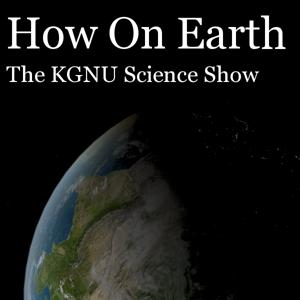


This week on How On Earth, we produced the entire show out of the studio, explaining one brief glitch. Beth gives a short update on the way the corona virus infects cells and how this entry point can affect people taking blood pressure medications. In our feature interview, Beth talks with Professor Mark Opp, who studies sleep in his lab at the University of Colorado here in Boulder (interview starts at about 10 minutes). He’s especially interested in the interaction between sleep and our immune systems. Not that long ago, people didn’t think there was any relationship between the two, but our understanding of both systems has evolved.
Host: Beth Bennett
Listen to the show:
This week on How on Earth we start with an update on the corona virus, focusing on treatments and vaccines. At 12 minutes, we begin our interview with Bob Frank, author of Under the Influence, Putting Peer Pressure to Work. This book explains how we could redirect trillions of dollars annually in support of carbon-free energy sources, all without requiring painful sacrifices from anyone. Dr Frank has developed some novel strategies relying on peer pressure to get people to change their actions so as to reduce carbon emissions and climate change. He also details many prior and successful examples of this type of peer pressure. You can see more at the publisher’s website.
Hosts: Beth Bennett & Angele Sjong
Listen to the show:
Backcountry Skiing & Wildlife (Starts 1:00) Margaret Hedderman reports on how off-trail use of wilderness areas is causing increasing harm to wildlife . . . and what to do instead.
Ice Age Bone Fire (starts 6:15) We join Archeologist John Hoffecker and a team of volunteers to recreate a Paleolithic campfire. This “campfire” was used over 20,000 years ago in bitter cold areas of the North, where trees were scarce, and the fuel for making campfires depended on the ability to burn bones. Special thanks to the volunteers who helped with this project — Josh Steinsiek, Dustin Goodew of Arapahoe Meat Company, Outdoorspeople Lin and Henry Ballard, Amber O’Hearn and Siobhan Huggins.
Executive Producer: Beth Bennett
Listen to the show:
Space Mining [starts at 9:20] Stars have been called “diamonds in the sky,” but there are other valuable and more accessible resources up there. Asteroids might be the next gold rush, though for resources other than gold, if there are ways to actually get there and mine them. Can we do that? And, even if we can, does it make economic and environmental sense to do it? Joining us for this episode of How on Earth is Dr. Matt Beasley, a Senior Program Manager at Southwest Research Institute, and he is a planetary scientist who has been involved in the development of space mining concepts.
Executive Producer: Beth Bennett
Listen to the show:
Stem cell science v. hype (start time: 00:57) Clinics offering stem cell therapies and other forms of so-called regenerative medicine are cropping up in many states, including Colorado. Practitioners of stem cells, are touting them as repairing damaged cartilage, tendons and joints, and even treating diseases such as Parkinson’s and Alzheimer’s. While the science looks promising, it seriously lags the marketing of stem cell therapies. Last year the FDA, which has yet to regulate the clinics, issued a warning about stem cell therapies.
Science for the Rest of Us (start time: 16:38) At a time our own government leaders vilify science and reinvent facts, it seems as important as ever that journalists and the public at large grasp and translate scientific research. A new book, The Craft of Science Writing, offers tips on how to find credible experts (whether on the corona virus or vaccines or climate change), separate truth from spurious assertions, and make sense of scientific studies. The book is aimed at science writers, but it can be a guidepost for anyone who wants to make science more accessible. Alex Witze, a science writer who co-authored the book Island On Fire: The Extraordinary Story of a Forgotten Volcano, is a contributor to the new book. She discusses the art of decoding and appreciating science with hosts Susan Moran and Joel Parker.
Hosts: Susan Moran, Joel Parker
Listen to the show here:
This week Beth and Angele talk with David Owen about his book, Volume Control, in which he explores the surprising science of hearing and the remarkable technologies that can help us hear better. In the book, he argues that failing to take care of our hearing comes with a huge social cost. He demystifies the science of hearing while encouraging readers to get the treatment they need for hearing loss and protect the hearing they still have.
Executive Producer: Beth Bennett
Listen to the show:
This week, Beth and Angele speak with with Brenda Ekwurzel in the studio. Brenda is the director of climate science for the Union of Concerned Scientists. She was in Boulder for a panel on Air Quality and Climate Change. She spoke about some Colorado issues e.g. wildfire and drought, and assigning responsibility for specific events to fossil fuel producers. She is a widely quoted expert on climate change, and co-authored the UCS guide Cooler Smarter: Practical Steps for Low-Carbon Living. For more information you can visit her website.
Hosts: Angele Sjong and Beth Bennett
Listen to the show:
This week on How on Earth, we speak with Dr John Newman, geriatrician and geoscientist at the Buck Institute. He describes his recent research in mice, showing that both memory and muscle improve in animals eating a high fat diet. To see more details on these experiments, you can visit the lab website.
Hosts: Angele Sjong & Beth Bennett
Listen to the show:
Today’s show features the following interviews, by How On Earth’s Susan Moran and guest host Ted Wood.
Audubon’s Climate Watch (start time: 4:03) Starting on Jan. 14, the Audubon Society will launch a month-long citizen science program to better understand how birds are responding to climate change. This comes at a time when, according to a 2019 Audubon report, up to two-thirds of North American birds are vulnerable to extinction due to climate change. But the Climate Watch program is one of many opportunities to protect birds. Alison Holloran, executive director of Audubon Rockies, discusses the program and how you can get involved.
Conservation on the Edges (start time: 13:26) Charismatic predators like polar bears, grizzlies, and tigers, get lots of attention, and for good reason. But many lesser known species, particularly those living in extreme environments–including muskoxen, wild yaks, takins and saigas–are also important species. They have been the research focus of Joel Berger, a professor of wildlife conservation at Colorado State University. He’s also senior scientist at Wildlife Conservation Society. Berger’s latest book is Extreme Conservation: Life at the Edges of the World.
Hosts: Susan Moran, Ted Wood
Listen to the show here:
This week on How on Earth, Angele and Beth distill some of the top science news of the past year and decade, ranging from the first image of a black hole, as seen here, to DNA sequencing of ancient genomes, some new hominid ancestors, advances in AI, and more!
Hosts: Beth Bennett & Angele Sjong
Listen to the show:
From the publisher's feed

91,018 Listeners
78,398 Listeners

43,827 Listeners

38,012 Listeners

43,362 Listeners
26,829 Listeners

3,386 Listeners

1,642 Listeners

937 Listeners

505 Listeners

6,432 Listeners
366 Listeners

111,865 Listeners

6,375 Listeners

15,904 Listeners