
Sign up to save your podcasts
Or

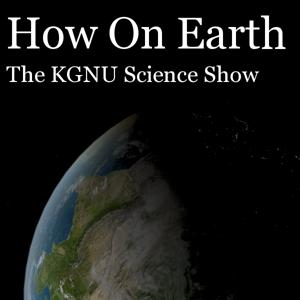


Boulder, Colorado has a rich culture of science, as the home for serveral prestigious national laboratories, a thriving technology industry, the flagship campus of the University of Colorado and various joint ventures between them. As a science enthusiast, where might you go to find a community of like minded people? Must you work in a lab? Teach at a university? Enroll as a student? Well now Boulder has Science On Tap, a monthly opportunity for science enthusiasts and beer lovers to come together and discover the latest and greatest research in science and technology that is happening along the Front Range. With us in the studio is Chelsea Thompson who was instrumental in bringing Science On Tap to Boulder.
Hosts: Chip Grandits, Joel Parker
Listen to the show:
Roger the Fragrance Free Barber (Starts 3:25) Artificial fragrances in shampoos, colognes, lotions. deodorant, laundry detergent and more nearly led Roger the Barber, to give up his profession, due to his chemical sensitivities. Then he opened his own, fragrance free, shop. He caters to clients who prefer a fragrance free environment . . . and educates people about what fragrance free means.
Shelly Miller – Clean Indoor Air – (Starts 10:35) CU Boulder Professor Shelly Miller warns that ingredients in common consumer products sometimes add hazardous chemicals to indoor air. Miller discusses CU Boulder’s Fragrant Free Initiative and the six classes of chemicals that can be hazardous, whether they’re fragrant or odorless, including fire retardants in clothes and furniture.
Host/Producer: Shelley Schlender
Listen to the show:
This week on How on Earth, Beth interviews Pete Brown, author of Miracle Brew, the story of how beer is made of 4 seemingly simple components, but really from an amazing complexity of science and art. The New York Times recently reviewed Miracle Brew. Here’s what they said: A magisterial tour of fearsome science and vast brewery history leavened with cheery anecdotes, humor, vivid you-are-there prose and a clever eye for personality . . . His rhapsodies about the meaning of life and the meaning of beer are stirring. . . .His expertise and insight will leave you with a glimmer of infinity every time you hold a bottle of it in your hand.
Hosts: Beth Bennett, Susan Moran
Listen to the show:
For this end-of-the-year/start-of-the-year How on Earth show, we look back to 2017 with clips from some of our features from the past year: selections about tracking methane leaks, ketogenic diets, using MDMA to treat PTSD, gravitational waves, the solar eclipse, space missions, and the politicization of science. Those are just a few of the topics we covered in 2017, which also included: the continuation of the Our Microbes, Ourselves series, global warming and climate change, research about aging, mutant proteins, how humans have altered nature, future technologies, nuclear tests and the Van Allen belts, biofuels, extinctions following an asteroid impact, monorails, life expectancy in America, observing stellar occultations by objects in the distant solar system, space shields for satellites, virtual colonoscopies, the Search for Extraterrestrial Intelligence (SETI), chronic fatigue syndrome, protecting pollinators, testing our drinking water, cancer, the Long Now foundation, citizen science, fracking, and more!
Hosts: Joel Parker, Susan Moran
Listen to the show:
This week on How on Earth, Beth finishes the interview with Miriam Kalamian, author of Keto for Cancer. This encyclopedic volume lays out the groundwork for using a ketogenic diet to treat cancer. But, as the author points out, the diet, which starves cancer cells, should be used in conjunction with other therapies. To see the book, go to https://www.chelseagreen.com/keto-for-cancer; to see Miriam’s website go to https://www.dietarytherapies.com/
Hosts: Beth Bennett & Chip Grandits
Listen to the show:
Healthy . . . But Missing Gut Microbes (Starts 3:25) Practically everyone on the planet now knows that animals have microbes in their guts. This is a new field of exploration, and top researchers emphasize that we need to learn much more before making any blanket statements about the total effect of the gut microbiome. Nevertheless, it’s become politically correct to advocate specific diets to eat, for the sake of healthy gut microbes, and to assume that all animals “need” gut microbes. That’s one reason the research from CU-Boulder evolutionary biologist Toby Hammer is so fascinating. Hammer has discovered a number of animals that probably don’t need microbes in their guts – ranging from some insects to some animals as large as, well, a panda bear. It all began with Hammer’s research into caterpillars . . .
Host: Chip Grandits
This week on How on Earth, we started speaking with Miriam Kalamian, author of the newly released Keto for Cancer. The interview starts at 11′ 30″, but unfortunately we lost the connection after only 5 minutes. You can link to her book at http://www.chelseagreen.com/keto-for-cancer and we will have her back to hear the full story! For the remainder of the show we linked to the BBC Science in Action segment on building proteins from novel DNA sequences.
Hosts: Beth Bennett and Chip Grandis
Listen to the show:
The Unnatural World (start time: 6:58): It’s an audacious topic for a book: the planet, and audacious individuals who are working to save — actually, to remake — human civilization and our home on Earth. David Biello is the science curator at TED and a contributing editor at Scientific American. His debut book, The Unnatural World: The Race to Remake Civilization in Earth’s Newest Age (Scribner), will be out in paperback next month. It explores how we have altered “nature” in so many ways, from burning fossil fuels and warming the oceans and atmosphere, to tearing down tropical rain forests, to killing off so many species. In this newest epoch, dubbed by many the Anthropocene, humans are not just messing things up; they are also inventing solutions, as Biello notes. Daring optimists in his book include Elon Musk and his Tesla electric cars and trucks.
Hosts: Chip Grantis, Susan Moran
Listen here to the show:
Lancet Countdown on Climate Change (starts 3:45) Respectable science journals no longer debate whether human activity causes climate change, or even if it can be reversed to prevent human suffering. They now scramble to figure out what will be the cost and who will pay. The bill will be payable in lost lives and livelihoods. The British Medical Journal, The Lancet has assembled an interdisciplinary team of scientists to help tally this enormous global bill. On October 30th they released their 2017 Lancet Countdown on Health and Climate Change. The report concludes that the delayed response to climate change over the past 25 years has already jeopardized human lives and livelihoods, and the impacts must be assessed in terms of global public health. One of the contributors to that report is local climate scientist, Max Boykoff, a fellow at CIRES in Boulder, where he directs the Center for Science and Technology Policy Research.
Hosts: Shelley Schlender and Chip Grandits
This week on How on Earth, Beth interviews Sy Montgomery and Liz Thomas, co-authors of Tamed and Untamed: Close Encounters of the Animal Kind: Some amazing stories of their experiences with animals throughout the animal kingdom, ranging from domestic animals (chickens are smarter than we thought!) to wild animals to invertebrates. the 2-3 page format of their book makes for easy reading! See their book at http://www.chelseagreen.com/tamed-and-untamed
Host: Beth Bennett
Listen to the show:
From the publisher's feed

91,018 Listeners
78,398 Listeners

43,827 Listeners

38,012 Listeners

43,362 Listeners
26,829 Listeners

3,386 Listeners
1,642 Listeners
937 Listeners
505 Listeners

6,432 Listeners
366 Listeners

111,865 Listeners

6,375 Listeners

15,904 Listeners