
Sign up to save your podcasts
Or

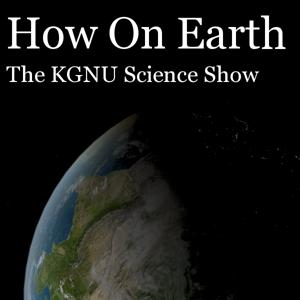


This week on How on Earth we look at the scientific research into the lifespans of Americans.
Mortality trends in America (start time 4:05): We speak with Andrea Tilstra, who co-authored a recent paper on mortality trends in America. Tilstra is a co-author of a recent study published in the International Journal of Epidemiology. Her team’s paper is titled “Explaining recent mortality trends among younger and middle-aged White Americans.”
Life expectancy in America (start time 12:40): Next, we speak with Jay Olshansky, who ten years ago first predicted the recently observed drop in life expectancy in America. Olshansky is a world renowned expert in the Science of Aging. As for his crystal ball – well, it has little to do with magic, and more to do with his understanding about how our cells work, and how they age. It also helps that he understands statistics.
Hosts: Alejandro Soto, Joel Parker, Shelley Schlender
Listen to the show:
Chasing Shadows [starts at 9:40] Astronomy is a science that depends on watching things happen in the universe that we don’t have control over: supernovae, formation of stars, orbits of planets, and the spectacle of solar eclipses. You can’t grab a distant galaxy and bring it into the lab for experiments, so astronomers have to depend on studying the light that fortuitously comes to them from distant objects. However, by studying just that light, we can learn much about the objects in the universe and how they formed and evolved. For example, studying solar eclipses have taught us about the corona of the sun and about general relativity. To make those observations and measurements, scientists have to chase the shadow and set up their laboratory in remote places to catch it. In this edition of How on Earth we talk with one such shadow-chaser: astronomer Dr. Marc Buie from the Boulder office of the Southwest Research Institute. Marc organized a set of expeditions around the Earth to observe occultations of the Kuiper belt object 2014 MU69, which is is the next flyby target of the New Horizons space mission that flew past Pluto in July 2015. He explains the science of occultations, what can be gleaned from these shadowy observations of 2014 MU69, and talks about planning for observation expeditions to remote places around the world.
Hosts: Joel Parker, Chip Grandits
Listen to the show:
Space Shield for Satellites (starts 1:00) An invisible radio wave pollution makes a “space shield” that protects orbiting satellites from Van Allen Belt radiation. Dan Baker, head of CU-Boulder’s Laboratory for Atmospheric and Space Physics (LASP) explains how his team figured out the man-made source of the mysterious space shield.
Virtual Colonoscopy Option Improves Cancer Screening Rates (starts 6:32) Colon cancer kills 50,000 Americans each year. Death rates would go down if more people did preventative screenings. But one out of three people balk at the traditional colonoscopy. According to a new study in the journal, Radiology, when insurance pays for either a regular OR a virtual colonoscopy, 48% of the people who avoid screenings agree to get tested. Lead author, University of Madison’s Dr. Maureen Smith, explains.
Virtual Colonoscopy – Dr. Bill Blanchet (starts 10:10) One of the earliest providers of virtual colonoscopies in the Rocky Mountain region is Bill Blanchet, Front Range Preventative Imaging. Blanchet explains why he offers this modern form of colon cancer screening to his patients.
Host / Producer : Shelley Schlender
Today’s show offers the following feature:
Hosts: Susan Moran, Joel Parker
Listen to the show:
On the first day of the summer pledge drive, Beth interviews Dr Brittany Demmitt, a behavioral molecular geneticist. Her recent study used a powerful genetic tool, identical twins, to show that the micro biome in the mouth is influenced by both genes and environment.
Hosts:Beth Bennett, Chip Grantis, Joel Parker
Listen to the show:
This August 21st, some parts of the Earth will be plunged into darkness in the middle of the day. It will be a solar eclipse; the moon’s shadow will cross the United States from Oregon to South Carolina, with the path closest to Colorado passing through Wyoming and Nebraska.
There have been many eclipses across the US, but there was a particularly special one nearly 140 years ago on July 29th, 1878. That eclipse came at a time in American history of western expansion, industrial growth, new inventions and World’s Fairs, and a young country wanting to establish itself on the international stage of science and technology.
Our guest today is David Baron, author of a book about that eclipse. The book is “American Eclipse: A Nation’s Epic Race to Catch the Shadow of the Moon and Win the Glory of the World”. David joins us to talk about that eclipse, the people involved in observing it, and its part in Colorado history.
Hosts: Joel Parker, Susan Moran
Listen to the show:
We offer two feature interviews on today’s show.
Renewable Energy Debate (start time: 3:20): A bitter scientific debate, as reported in the Washington Post, has surfaced among two scientific groups that are both pushing to decarbonize U.S. electricity generation. On one side are experts such as Boulder mathematician Christopher Clack, who contends in a new analysis that the U.S. can cut its carbon emissions by nearly 80%, using existing technologies, by 2030. On the other side of this feud is Mark Jacobson, an atmospheric scientist and engineer at Stanford University. He claims the nation can move to 100% renewable energy by 2055. This week, in a peer-reviewed analysis published in the Proceedings of the National Academies of Sciences, Clack and colleagues call Jacobson’s vision of 100% renewables unrealistic, and says his calculations and modeling are full of errors. Jacobson and his group have countered Clack et al’s analysis is full of errors. Dr. Clack, founder of Vibrant Clean Energy and with NOAA and the University of Colorado Boulder when he conducted this research, talks with host Shelley Schlender about the science, the debate, and what it means for the pursuit of clean energy.
Hosts: Susan Moran, Shelley Schlender
Listen here to the show:
We offer two features on today’s show:
Testing Drinking Water (start time: 14:00): Two years ago Flint, Mich., turned the issue of lead in drinking water from a little known, or distant-past, hazard into a national scandal. Human error and coverups resulted in many Flint homes showing staggeringly high levels of lead in their drinking water. What happened in Flint has afflicted other cities. Water districts, which are required to monitor a sampling of homes in their districts for lead in drinking water, are stepping up efforts to prevent more Flints from happening. Here in Colorado, water districts use soda ash and other chemicals to keep their water from being overly corrosive, which was the problem in Flint. How On Earth’s Shelley Schlender interviews Michael Cook, district manager of the Little Thompson Water District at the Carter Lake Water Filtration Plant near Loveland. The plant was recently out of compliance, meaning that samples from water district have shown higher levels of lead than what the state health department considers safe. Cook discusses what the district has done. (Boulder has its own water-filtration plant and has not been out of compliance at least in recent years. But all water districts must address similar concerns.)
Hosts: Maeve Conran, Susan Moran
Listen to the show:
With graduation season is upon us, or in many cases in the rearview mirror, today’s edition of How on Earth is the second of a two-part “Graduation Special”. Our guests in the studio today are scientists who recently graduated with – or soon will receive – their Ph.D. They talk about their thesis research, their grad school experiences, and what they have planned next.
Abby Koss – CU Boulder, Chemistry and Biochemistry
Matteo Crismani – CU Boulder, Department of Astrophysical and Planetary Sciences
Callie Fiedler – CU Boulder, Electrical Engineering
Host / Producer / Engineer : Joel Parker
Listen to the show:
With graduation season is upon us, or in many cases in the rearview mirror, today’s edition of How on Earth is the first of a two-part “Graduation Special”. Our guests in the studio today are scientists who recently graduated with – or soon will receive – their Ph.D. They talk about their thesis research, their grad school experiences, and what they have planned next.
Morgan Rehnberg – CU Boulder, Department of Astrophysical and Planetary Sciences
David Horvath – Colorado School of Mines, Department of Geophysics
Joseph Lee – CU Boulder, Department of Atmospheric and Oceanic Sciences
Host / Producer / Engineer : Joel Parker
Listen to the show:
From the publisher's feed

91,018 Listeners
78,398 Listeners

43,827 Listeners

38,012 Listeners

43,362 Listeners
26,829 Listeners

3,386 Listeners
1,642 Listeners
937 Listeners
505 Listeners

6,432 Listeners
366 Listeners

111,865 Listeners

6,375 Listeners

15,904 Listeners