
Sign up to save your podcasts
Or

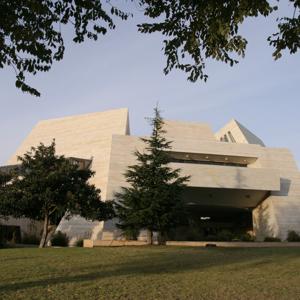


After the Fire: The Lasting Message of Lag BaOmer, by Rav Dovid Gottlieb.
What's the true meaning of Lag BaOmer and how can we take that message with us throughout the year?
Shiur given at Kehillat Haela (RBS).
Mah Ahavti: The Fourth Chapter of Tehillim, by Rav Yitzchak Etshalom
In this, the fourth shiur in this series, we explore the notion of contextuality and authorship as regards Tehillim. We then study the text of the fourth chapter with an eye towards the four goals in any study of Tehillim - (1) the meaning of the words (2) the poetic structure of the psalm (3) the message of the psalm and (4) its place at that point in the liturgy, along with one added consideration - why this chapter is one of the two that is partially skipped - and why it is the first half that is deliberately elided on some days. This shiur was given in anticipation of the celebration of Yom Yerushalayim, the 56th anniversary of the reestablishment of Jewish sovereignty over our eternal capitol.
What does the psalmist mean when he rues thinking "all men are deceitful" (כל האדם כזב)?
Source sheet >>
Shavuot | Mi-macharat Ha-Shabbat Revisited, by Rav Yitzchak Etshalom
The fiercest intra-Jewish dispute in the first half of the first century CE was over control of the calendar. The flashpoint of this disagreement revolved around two words in Vayikra 23, where the Omer was to be offered ממחרת השבת. Whereas our tradition dictates that the "שבת" in question is the first day of פסח, regardless of which day of the week on which it falls, the sectarians held that "שבת" meant "Shabbat" and, therefore, argued that the Omer ought to be offered on a Sunday and, seven weeks later, Shavuot be celebrated on a Sunday. We explore the range of rabbinic arguments in favor of the traditional interpretation, from the Talmudic era through the Rishonim and one recent one - along with a new proposal.
Source sheet >>
Lo Lanu: The Third Chapter of Tehillim, by Rav Yitzchak Etshalom
One of the highlights and most debated points regarding the celebration of Yom haAtzmaut is the recitation of Hallel (Tehillim 113-118). In this, the third shiur in this series, we explore the recurring polemic against idolatry in Tanakh along with the background to "skipped Hallel". We then study the text of the third chapter with an eye towards the four goals in any study of Tehillim - (1) the meaning of the words (2) the poetic structure of the psalm (3) the message of the psalm and (4) its place at that point in the liturgy, along with one added consideration - why this chapter is one of the two that is partially skipped - and why it is the first half that is deliberately elided on some days. This shiur was given on our 75th יום העצמאות.
Source sheet >>
Shiur given in commemoration of the eighth yahrzeit, at Cong. Rinat Yisrael (Teaneck, NJ)
Recollections of Rav Aharon Lichtenstein zt"l - on His 8th yahrzeit, by Rav Moshe Taragin
Tazria | אם לנקבה ואם למקרא: Limitations and Flexibility in Reading and Interpreting the Text of the Torah, by Rav Yitzchak Etshalom
The opening passage in פרשת תזריע, the rule of the יולדת, includes an awkward word when detailing the duration of her impurity when giving birth to a girl: וטמאה שבעים כנדתה. The key word שבעים, is vocalized "Shevu'ayim" (i.e. "a pair of weeks") and that is, indeed, the Halakha. A curious passage in the Sifra seems to include a proposal that the word be read "Shiv'im" - (70) which would extend her period of impurity by 8 weeks. The defense is first presented as a structural consideration - and then is anchored in the phrase "יש אם למקרא" - which seems to mean "we interpret the word exclusively as it is vocalized" - yet a careful look at the text of the Midrash Halakha proves to be puzzling. In this shiur, we try to unravel the puzzle.
Source sheet >>
BeTzeit Yisrael MiMitzrayim: The Second Chapter of Tehillim, by Rav Yitzchak Etshalom
One of the highlights - and perhaps the ultimate purpose - of the Seder evening is the recitation of Hallel (Tehillim 113-118), the first two chapters of which are sung at the end of Maggid. We explore the general framework of Hallel, the rabbinic discussion about its authorship and the various "Hallels" that we have in our liturgy. We then study the text of the second chapter with an eye towards the four goals in any study of Tehillim - (1) the meaning of the words (2) the poetic structure of the psalm (3) the message of the psalm and (4) its place at that point in the liturgy. The shiur includes an introduction to the literary analysis of Biblical poetry introduced by Aryeh Strauss and by Meir Weiss.
Source sheet >>
Pesach | Hallelu Avdei Hashem, by Rav Yitzchak Etshalom
What is the message behind the first chapter of Hallel?
One of the highlights - and perhaps the ultimate purpose - of the Seder evening is the recitation of Hallel (Tehillim 113-118), the first two chapters of which are sung at the end of Maggid. We explore the general framework of Hallel, the rabbinic discussion about its authorship and the various "Hallels" that we have in our liturgy. We then study the text with an eye towards the four goals in any study of Tehillim - (1) the meaning of the words (2) the poetic structure of the psalm (3) the message of the psalm and (4) its place at that point in the liturgy.
Source sheet >>
Pesach | The Meaning of Matzah: Between Becoming and Being, by Rav Chanoch Waxman
Shiur given at the Etzion Foundation Annual Dinner, March 20, 2023
From the publisher's feed
Ranked by our users in the last 21 days

559 Listeners

36 Listeners
649 Listeners

221 Listeners

201 Listeners

1,985 Listeners
235 Listeners

3 Listeners

450 Listeners

1,218 Listeners

3,214 Listeners
145 Listeners

87 Listeners

103 Listeners

906 Listeners