
Sign up to save your podcasts
Or

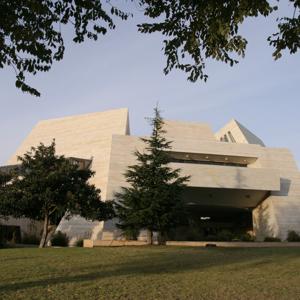


Special sicha with Rav Yonasan Sacks, Rosh Yeshiva, Beis Medrash L'Talmud, Lander College
Feb 8, 2023
We thank Rav Sacks for coming to speak with our talmidim.
Yitro | On The Third Day: Echoes of Moriah at Sinai, by Rav Yitzchak Etshalom
Why the three-day waiting period before the theophany at Sinai?
The exciting, frightening preparatory period before the great theophany at Sinai is defined by the Divine Command: "Be ready for the third day..." We explore the motif of the three-day anticipatory period in Tanakh, from Akeidat Yitzchak to the eschatological vision of Hoshea - and solve a mysterious Midrash along the way.
Source sheet >>
Rabbenu Yonah's Four Kitot 16: The Overall Evil in Slandering Others, by Rav Gidon Rothstein
Rabbenu Yonah's general introduction to lashon hara, why it is treated as so significantly bad a set of sins.
Tu Bishvat | The Well-Rooted Righteous Man, by Rav Yitzchak Etshalom
In honor of טו בשבט, we examine the opening chapter of Tehillim which uses the tree as a metaphor for the righteous person. Familiar passages from Yirmiyah and later on in Tehillim (92) are invoked to build a broader picture of this metaphor and to explain the placing of this Mizmor at the beginning of the book of praises (Tehillim).
Source sheet >>
Rabbenu Yonah's Four Kitot 15: Final Thoughts on Chanifa, by Rav Gidon Rothstein
Various commentators showing how far we should go to avoid giving the impression that wrong is right.
Beshalach | Moshe: Catalyst for Redemption, by Rav Yitzchak Etshalom
The text interrupts the narrative of the Exodus to highlight Moshe's taking Yosef's bones up from Egypt, per the oath that was administered by Yosef to his brothers at his deathbed. We explore both the explicit mention as well as the unusual placement of this note in the text by looking at other actions that Moshe took that seem to foreshadow the redemptive process. A closer look suggests that he may have been doing more than merely prefacing the redemption - he may have become an active agent to spur God's involvement in the redemptive process. The roots of this role may be found in the narrative surrounding Moshe's own salvation at the sea, as we discuss at the end of the shiur. The shiur was given in memory of טוביה בן יואל צבי הלוי ז"ל
Source sheet >>
The Challenges of Teaching Tzniut & the Challenges of Being Tzanua, with Rabbanit Shayna Goldberg
Originally aired on the Orthodox Conundrum Podcast
Tzniut, or modesty, is one of the most controversial issues in the Orthodox world today. Indeed, different people see the issue of modesty through different lenses. Some wonder about how to teach students and children about tzniut so that they’ll be more inclined to follow the halachot and established Orthodox customs; others ask questions from the opposite vantage point, wondering about whether tzniut is an inherently oppressive system that leads to an unhealthy body image, increases a sense of counterproductive shame, and completely ignores the need for self-expression. Some people look at tzniut as representative of a woman's role in Judaism, and others see that attitude as an unhealthy and repressive obsession.
With this in mind, Rabbi Scott Kahn invited Shayna Goldberg to have a difficult but necessary conversation about the challenges that surround the issue of tzniut.
The topics they discuss include whether we need to redouble our efforts to emphasize that tzniut applies to men as well as to women; why it seems that many women find tzniut more challenging and repressive than other aspects of Torah Judaism; what is a healthy way to teach tzniut without turning it into an obsession; to what degree societal factors influence our perception of what is considered modest behavior; the difficulty in that women are told to downplay their sexuality, whereas this very requirement itself sexualizes them; the fact that the laws of tzniut that women are told to follow were codified by men; whether following tzniut undermines self-expression; the reality that we often use the yardstick of modesty to declare whether someone is religious; and more.
To visit the Deracheha website, go to https://www.deracheha.org/.
Ashkenazim and Sefardim: The Goals of Talmud Study, special lecture by Rabbi Dr. Jeffrey Woolf
On methodological and cultural differences and their practical applications
Rabbi Prof. Jeffrey Woolf is an internationally known scholar, lecturer and public figure. He serves as an Associate Professor in the Talmud Department at Bar-Ilan University where he specializes in the History of Halakhah, Medieval and Renaissance Jewish History, and the inter-action between Judaism, Islam and Christianity. He is the director of Bar Ilan's Institute for the Study of Post-Talmudic Halakhah.Beshalach | A Thought on the Parasha, by Rabbi Aharon Lopiansky, followed by Q+A with the overseas talmidim
Rabbi Aharon Lopiansky is the Rosh HaYeshiva of the Yeshiva of Greater Washington – Tiferes Gedaliah, accepting the position in July of 2014. He studied and received rabbinic ordination from the Mir Yeshiva of Jerusalem. In Israel, Rabbi Lopiansky taught at Aish HaTorah from 1983-1990, and then taught at the Mir for five years before assuming the post of Rosh Yeshiva of the Yeshiva Gedolah of YGW in 1995.
Rabbenu Yonah's Four Kitot 14: Finishing R. Yonah's Flatterers, by Rav Gidon Rothstein
The rest of RY"s Flatterers. Four more types of refusing to step up and call out evil, and what's wrong with it. The importance of at least recognizing evil when it occurs.
From the publisher's feed
Ranked by our users in the last 21 days

559 Listeners

36 Listeners
649 Listeners

221 Listeners

201 Listeners

1,985 Listeners

235 Listeners

3 Listeners

450 Listeners
1,218 Listeners

3,214 Listeners
145 Listeners

87 Listeners

103 Listeners

906 Listeners