
Sign up to save your podcasts
Or

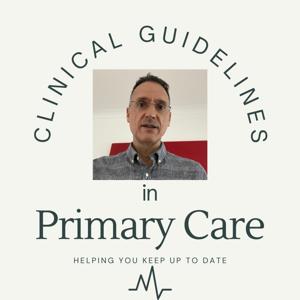

My name is Fernando Florido and I am a GP in the United Kingdom. In today’s episode I look at the NICE guidelines: “Stable angina: management” (CG126), and summarise it from a Primary Care perspective.
By way of disclaimer, I am not giving medical advice; this video is intended for health care professionals, it is only my interpretation of the guidelines and you must use your clinical judgement.
There is a YouTube version of this and other videos that you can access here:
The full NICE Guideline on “Stable angina: management” (CG126), can be found here:
Intro / outro music: Track: Halfway Through — Broke In Summer [Audio Library Release]
Free Download / Stream: https://alplus.io/halfway-through
Transcript
Hello everyone and welcome. I am Fernando Florido, a GP in the United Kingdom.
Today, we'll be looking at the NICE guidelines on the management of stable angina, specifically from a primary care perspective. Proper management of angina can have a huge impact on patients' lives and that's why I'm excited to share the latest evidence-based recommendations from NICE. However, it's important to note that I'm here to provide information and interpretation of the guidelines, not medical advice. Always use your clinical judgement when treating your patients.
If you prefer a video format, there’s also a YouTube version of these episodes. The link is in the episode description.
By the way, I'll be sharing a fictitious clinical case created by chat GPT, together with their treatment management. This will give you the opportunity to see practical guidelines in action and understand how they can be applied in real-life situations
So, with that said, let's dive in!"
We will start by addressing the following:
1. To diagnose stable angina, we follow different guidelines set out by NICE on recent-onset chest pain of suspected cardiac origin. There are also different guidelines for unstable angina and NSTEMI and acute coronary syndromes.
2. We’ll explain to patients the factors that can provoke angina such as exertion, emotional stress, exposure to cold, and eating a heavy meal.
3. We should also explore any misconceptions and implications for activities, cardiovascular risk, and life expectancy.
4. We will need to advise the patient to seek medical help if there is a sudden worsening in the frequency or severity of their angina.
5. We should give lifestyle advice and psychological support and address self-management skills such as pacing their activities and goal setting, concerns about the impact of stress, anxiety, or depression, and advice about physical exertion including sexual activity.
In terms of General principles of treatment, we will say that:
· Age alone should not exclude patients from treatment.
· In terms of Preventing and Treating Episodes of Angina:
o We will offer a short-acting nitrate to prevent and treat episodes of angina.
o We will advise people that they should use it immediately before any planned exercise or exertion.
o We will explain the possible side effects, such as flushing, headache and light-headedness and to sit down or find something to hold on to if feeling lightheaded and
o We will advise them to repeat the dose after 5 minutes if necessary and call an emergency ambulance if the pain has not gone.
· In respect of Drugs for Secondary Prevention of Cardiovascular Disease:
o We will consider aspirin 75 mg daily, taking into account the risk of bleeding and comorbidities.
o We will consider ACE inhibitors for people with stable angina and diabetes.
o We will offer both antihypertensive treatment and statin therapy in line with the respective NICE guideline on the subject.
· Regarding Dietary Supplements:
o We will not offer vitamin or fish oil supplements and we will inform patients that there is no evidence that they help stable angina.
When it comes to general treatment recommendations:
· Optimal drug treatment for the initial management of stable angina should consist of one or two anti-anginal drugs as necessary plus drugs for secondary prevention of cardiovascular disease.
· The aim of anti-anginal drug treatment is to prevent episodes of angina, while the aim of secondary prevention treatment is to prevent cardiovascular events such as heart attacks and strokes.
· We will review the response to treatment, including any side effects, 2 to 4 weeks after starting or changing drug treatment and
· We will titrate the dose up to the maximum tolerated dose.
So let’s have a look at the Drugs for treating stable angina:
· We should offer either a beta blocker or a calcium channel blocker as first-line treatment. The decision on which drug to use should be based on comorbidities, contraindications, and the person's preference.
· If the patient cannot tolerate the beta blocker or calcium channel blocker, we will consider switching to the other option.
· If the person's symptoms are not satisfactorily controlled on a single drug, we will consider either switching to the other option or using a combination of the two.
· When combining a calcium channel blocker with a beta blocker, we will use a dihydropyridine calcium channel blocker, for example, slow release nifedipine, amlodipine, or felodipine.
· It's essential to remember not to offer anti-anginal drugs other than beta blockers or calcium channel blockers as first-line treatment.
· If the person cannot tolerate beta blockers and calcium channel blockers, or both are contraindicated, we will consider monotherapy with one of the following drugs:
o a long-acting nitrate,
o ivabradine,
o nicorandil, or
o ranolazine.
o Deciding which drug to use should be based on comorbidities, contraindications, the person's preference, and drug costs.
· Adding a third anti-anginal drug those whose angina is controlled with two anti-anginal drugs is not recommended.
· However, it's worth considering adding a third anti-anginal drug only when the symptoms are not controlled with two anti-anginal drugs. Deciding which drug to use should be based on comorbidities, contraindications, the person's preference, and drug costs.
Now let’s discuss the recommendations on revascularisation procedures when symptoms are not satisfactorily controlled with optimal medical treatment. And these procedures would be either a coronary artery bypass graft [CABG] or a percutaneous coronary intervention [PCI])
In addition, we can offer coronary angiography to guide our treatment strategy.
The main purpose of revascularisation is to improve the symptoms of stable angina. However, it is important to explain to the patient that repeat revascularisation may be necessary after either CABG or PCI, and the rate is lower after CABG. Stroke is uncommon after either CABG or PCI, and the incidence is similar between the two procedures.
We will offer CABG in suitable patients if symptoms are not controlled with medical treatment, and PCI is not appropriate.
We will offer PCI to suitable patients if symptoms are not controlled with medical treatment, and CABG is not appropriate.
We will take into account that PCI may be more cost-effective than CABG.
However, in Multivessel Disease, we need to be aware of the potential survival advantage of CABG over PCI for those who have diabetes or are over 65 years or have anatomically complex three-vessel disease.
If symptoms are controlled with medical treatment, prognosis without further intervention should be discussed with their cardiologist.
In terms of Pain interventions, we should not offer transcutaneous electrical nerve stimulation (TENS), enhanced external counterpulsation (EECP), and acupuncture.
Now, let’s address Stable angina that has not responded to treatment:
In these cases, it's important to provide comprehensive re-evaluation and advice. This may include:
· exploring the impact of symptoms on their quality of life, and reviewing the diagnosis while considering non-ischaemic causes of pain.
· Additionally, it's essential to review drug treatment and consider future drug treatment and revascularisation options.
· It's also important to acknowledge the limitations of treatment and explain the self-management of the pain. Specific attention should be given to the role of psychological factors in pain, and skills to modify cognitions and behaviours associated with pain.
Cardiac syndrome X
In people with angiographically normal coronary arteries and continuing anginal symptoms, we need to consider a diagnosis of cardiac syndrome X. This condition can be challenging to diagnose, and additional testing may be necessary.
If a patient is diagnosed with suspected cardiac syndrome X, we will continue drug treatment for stable angina only if it improves their symptoms.
We will not routinely offer secondary prevention drugs in suspected cardiac syndrome X. This is because the effectiveness of these drugs in this population is uncertain, and they may cause unnecessary side effects.
Right, so now, let’s have a look at our fictitious clinical case created by chat GPT:
The Patient is John Smith, a 55-year-old man who has just been diagnosed with stable angina.
John has a history of hypertension, high cholesterol, and type 2 diabetes, which is well-controlled with metformin 1000mg twice daily. He has been experiencing chest pain and shortness of breath during exertion for the past 6 months. He is a non-smoker and leads an active lifestyle, but his symptoms are affecting her ability to exercise.
Recent test results: John's most recent blood pressure reading was 148/86 mmHg. His cholesterol levels were 5.8 mmol/L (224 mg/dL), with LDL cholesterol of 3.9 mmol/L (151 mg/dL) and HDL cholesterol of 1.4 mmol/L (54 mg/dL). His HbA1c level was 6.5% (48 mmol/mol).
How should he be treated?
In terms of preventing and treating episodes of angina, we offered John short-acting nitrates to be used immediately before any planned exercise or exertion in the form of a sublingual GTN spray. We advised him to repeat the dose after 5 minutes if necessary and call an emergency ambulance if the pain had not gone. We explained the possible side effects of the medication, such as flushing, headache, and light-headedness, and advised him to sit down or find something to hold on to if feeling lightheaded.
In respect of drugs for secondary prevention of cardiovascular disease, we started John on aspirin 75mg daily, taking into account his risk of bleeding. We also considered ACE inhibitors for John, as he has stable angina and diabetes and he was started on a small dose of lisinopril 2.5 mg daily. In terms of statin therapy, he was started on atorvastatin 80 mg daily for secondary prevention in line with NICE guidance on the subject.
We advised him that there is no evidence to support the use of dietary supplements such as vitamin or fish oil supplements in treating stable angina, and therefore did not prescribe them. The patient was also lifestyle advice.
For treating John's stable angina, both a beta blocker and a calcium channel blocker were considered as first-line treatment. Because of the patient’s concerns on erectile dysfunction, we decided to use a small dose of a CCB, felodipine 2.5mg daily as he had no contraindications to using this medication. We will titrate it against his symptoms up to the maximum tolerated dose.
John's case will be reviewed 2 to 4 weeks after starting his new medication to assess his response to treatment, including any side effects. We will also monitor his blood pressure, cholesterol, and HbA1c levels to ensure they are within the recommended targets.
In conclusion, the management of stable angina requires a comprehensive approach that addresses both the underlying cardiovascular disease and the patient's individual risk factors. By following the general principles of treatment and tailoring the treatment plan to the patient's specific needs, we can help to reduce the risk of cardiovascular events and improve their quality of life.
Please keep in mind that this is only a summary and my interpretation of the guideline.
We have come to the end of this episode. I hope that you have found it useful. Thank you for listening and good-bye
 View all episodes
 By Juan Fernando Florido Santana

4
22 ratings
My name is Fernando Florido and I am a GP in the United Kingdom. In today’s episode I look at the NICE guidelines: “Stable angina: management” (CG126), and summarise it from a Primary Care perspective.
By way of disclaimer, I am not giving medical advice; this video is intended for health care professionals, it is only my interpretation of the guidelines and you must use your clinical judgement.
There is a YouTube version of this and other videos that you can access here:
The full NICE Guideline on “Stable angina: management” (CG126), can be found here:
Intro / outro music: Track: Halfway Through — Broke In Summer [Audio Library Release]
Free Download / Stream: https://alplus.io/halfway-through
Transcript
Hello everyone and welcome. I am Fernando Florido, a GP in the United Kingdom.
Today, we'll be looking at the NICE guidelines on the management of stable angina, specifically from a primary care perspective. Proper management of angina can have a huge impact on patients' lives and that's why I'm excited to share the latest evidence-based recommendations from NICE. However, it's important to note that I'm here to provide information and interpretation of the guidelines, not medical advice. Always use your clinical judgement when treating your patients.
If you prefer a video format, there’s also a YouTube version of these episodes. The link is in the episode description.
By the way, I'll be sharing a fictitious clinical case created by chat GPT, together with their treatment management. This will give you the opportunity to see practical guidelines in action and understand how they can be applied in real-life situations
So, with that said, let's dive in!"
We will start by addressing the following:
1. To diagnose stable angina, we follow different guidelines set out by NICE on recent-onset chest pain of suspected cardiac origin. There are also different guidelines for unstable angina and NSTEMI and acute coronary syndromes.
2. We’ll explain to patients the factors that can provoke angina such as exertion, emotional stress, exposure to cold, and eating a heavy meal.
3. We should also explore any misconceptions and implications for activities, cardiovascular risk, and life expectancy.
4. We will need to advise the patient to seek medical help if there is a sudden worsening in the frequency or severity of their angina.
5. We should give lifestyle advice and psychological support and address self-management skills such as pacing their activities and goal setting, concerns about the impact of stress, anxiety, or depression, and advice about physical exertion including sexual activity.
In terms of General principles of treatment, we will say that:
· Age alone should not exclude patients from treatment.
· In terms of Preventing and Treating Episodes of Angina:
o We will offer a short-acting nitrate to prevent and treat episodes of angina.
o We will advise people that they should use it immediately before any planned exercise or exertion.
o We will explain the possible side effects, such as flushing, headache and light-headedness and to sit down or find something to hold on to if feeling lightheaded and
o We will advise them to repeat the dose after 5 minutes if necessary and call an emergency ambulance if the pain has not gone.
· In respect of Drugs for Secondary Prevention of Cardiovascular Disease:
o We will consider aspirin 75 mg daily, taking into account the risk of bleeding and comorbidities.
o We will consider ACE inhibitors for people with stable angina and diabetes.
o We will offer both antihypertensive treatment and statin therapy in line with the respective NICE guideline on the subject.
· Regarding Dietary Supplements:
o We will not offer vitamin or fish oil supplements and we will inform patients that there is no evidence that they help stable angina.
When it comes to general treatment recommendations:
· Optimal drug treatment for the initial management of stable angina should consist of one or two anti-anginal drugs as necessary plus drugs for secondary prevention of cardiovascular disease.
· The aim of anti-anginal drug treatment is to prevent episodes of angina, while the aim of secondary prevention treatment is to prevent cardiovascular events such as heart attacks and strokes.
· We will review the response to treatment, including any side effects, 2 to 4 weeks after starting or changing drug treatment and
· We will titrate the dose up to the maximum tolerated dose.
So let’s have a look at the Drugs for treating stable angina:
· We should offer either a beta blocker or a calcium channel blocker as first-line treatment. The decision on which drug to use should be based on comorbidities, contraindications, and the person's preference.
· If the patient cannot tolerate the beta blocker or calcium channel blocker, we will consider switching to the other option.
· If the person's symptoms are not satisfactorily controlled on a single drug, we will consider either switching to the other option or using a combination of the two.
· When combining a calcium channel blocker with a beta blocker, we will use a dihydropyridine calcium channel blocker, for example, slow release nifedipine, amlodipine, or felodipine.
· It's essential to remember not to offer anti-anginal drugs other than beta blockers or calcium channel blockers as first-line treatment.
· If the person cannot tolerate beta blockers and calcium channel blockers, or both are contraindicated, we will consider monotherapy with one of the following drugs:
o a long-acting nitrate,
o ivabradine,
o nicorandil, or
o ranolazine.
o Deciding which drug to use should be based on comorbidities, contraindications, the person's preference, and drug costs.
· Adding a third anti-anginal drug those whose angina is controlled with two anti-anginal drugs is not recommended.
· However, it's worth considering adding a third anti-anginal drug only when the symptoms are not controlled with two anti-anginal drugs. Deciding which drug to use should be based on comorbidities, contraindications, the person's preference, and drug costs.
Now let’s discuss the recommendations on revascularisation procedures when symptoms are not satisfactorily controlled with optimal medical treatment. And these procedures would be either a coronary artery bypass graft [CABG] or a percutaneous coronary intervention [PCI])
In addition, we can offer coronary angiography to guide our treatment strategy.
The main purpose of revascularisation is to improve the symptoms of stable angina. However, it is important to explain to the patient that repeat revascularisation may be necessary after either CABG or PCI, and the rate is lower after CABG. Stroke is uncommon after either CABG or PCI, and the incidence is similar between the two procedures.
We will offer CABG in suitable patients if symptoms are not controlled with medical treatment, and PCI is not appropriate.
We will offer PCI to suitable patients if symptoms are not controlled with medical treatment, and CABG is not appropriate.
We will take into account that PCI may be more cost-effective than CABG.
However, in Multivessel Disease, we need to be aware of the potential survival advantage of CABG over PCI for those who have diabetes or are over 65 years or have anatomically complex three-vessel disease.
If symptoms are controlled with medical treatment, prognosis without further intervention should be discussed with their cardiologist.
In terms of Pain interventions, we should not offer transcutaneous electrical nerve stimulation (TENS), enhanced external counterpulsation (EECP), and acupuncture.
Now, let’s address Stable angina that has not responded to treatment:
In these cases, it's important to provide comprehensive re-evaluation and advice. This may include:
· exploring the impact of symptoms on their quality of life, and reviewing the diagnosis while considering non-ischaemic causes of pain.
· Additionally, it's essential to review drug treatment and consider future drug treatment and revascularisation options.
· It's also important to acknowledge the limitations of treatment and explain the self-management of the pain. Specific attention should be given to the role of psychological factors in pain, and skills to modify cognitions and behaviours associated with pain.
Cardiac syndrome X
In people with angiographically normal coronary arteries and continuing anginal symptoms, we need to consider a diagnosis of cardiac syndrome X. This condition can be challenging to diagnose, and additional testing may be necessary.
If a patient is diagnosed with suspected cardiac syndrome X, we will continue drug treatment for stable angina only if it improves their symptoms.
We will not routinely offer secondary prevention drugs in suspected cardiac syndrome X. This is because the effectiveness of these drugs in this population is uncertain, and they may cause unnecessary side effects.
Right, so now, let’s have a look at our fictitious clinical case created by chat GPT:
The Patient is John Smith, a 55-year-old man who has just been diagnosed with stable angina.
John has a history of hypertension, high cholesterol, and type 2 diabetes, which is well-controlled with metformin 1000mg twice daily. He has been experiencing chest pain and shortness of breath during exertion for the past 6 months. He is a non-smoker and leads an active lifestyle, but his symptoms are affecting her ability to exercise.
Recent test results: John's most recent blood pressure reading was 148/86 mmHg. His cholesterol levels were 5.8 mmol/L (224 mg/dL), with LDL cholesterol of 3.9 mmol/L (151 mg/dL) and HDL cholesterol of 1.4 mmol/L (54 mg/dL). His HbA1c level was 6.5% (48 mmol/mol).
How should he be treated?
In terms of preventing and treating episodes of angina, we offered John short-acting nitrates to be used immediately before any planned exercise or exertion in the form of a sublingual GTN spray. We advised him to repeat the dose after 5 minutes if necessary and call an emergency ambulance if the pain had not gone. We explained the possible side effects of the medication, such as flushing, headache, and light-headedness, and advised him to sit down or find something to hold on to if feeling lightheaded.
In respect of drugs for secondary prevention of cardiovascular disease, we started John on aspirin 75mg daily, taking into account his risk of bleeding. We also considered ACE inhibitors for John, as he has stable angina and diabetes and he was started on a small dose of lisinopril 2.5 mg daily. In terms of statin therapy, he was started on atorvastatin 80 mg daily for secondary prevention in line with NICE guidance on the subject.
We advised him that there is no evidence to support the use of dietary supplements such as vitamin or fish oil supplements in treating stable angina, and therefore did not prescribe them. The patient was also lifestyle advice.
For treating John's stable angina, both a beta blocker and a calcium channel blocker were considered as first-line treatment. Because of the patient’s concerns on erectile dysfunction, we decided to use a small dose of a CCB, felodipine 2.5mg daily as he had no contraindications to using this medication. We will titrate it against his symptoms up to the maximum tolerated dose.
John's case will be reviewed 2 to 4 weeks after starting his new medication to assess his response to treatment, including any side effects. We will also monitor his blood pressure, cholesterol, and HbA1c levels to ensure they are within the recommended targets.
In conclusion, the management of stable angina requires a comprehensive approach that addresses both the underlying cardiovascular disease and the patient's individual risk factors. By following the general principles of treatment and tailoring the treatment plan to the patient's specific needs, we can help to reduce the risk of cardiovascular events and improve their quality of life.
Please keep in mind that this is only a summary and my interpretation of the guideline.
We have come to the end of this episode. I hope that you have found it useful. Thank you for listening and good-bye

701 Listeners

504 Listeners

298 Listeners

26 Listeners

1,150 Listeners
367 Listeners

251 Listeners

8 Listeners

21 Listeners

437 Listeners

375 Listeners

8,447 Listeners

325 Listeners

3,858 Listeners

6 Listeners