
Sign up to save your podcasts
Or

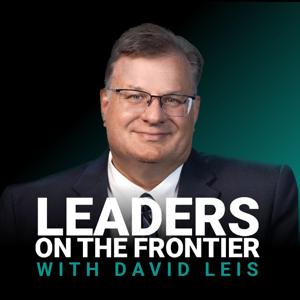


Canada is not secure, and according to Lieutenant-Colonel (Ret.) David Redman, the risks and our "enemies" are already here.
Redman, who served in the Canadian Armed Forces for 27 years, reveals just how weak Canada's border is, our failing immigration enforcement, and explains how the courts and policing systems are not keeping up with reality.
He raises serious concerns about known threats operating freely in Canada, questions whether Canada is properly prioritizing its own military before sending billions to Ukraine, and warns that allies like the United States may act to protect their own interests regardless of Canada’s position.
What does it take to get Canada back in control of its borders, its laws, and its national security?
Did a New Brunswick court just shift the land claims debate in Canada?
A new ruling is raising major questions about how Aboriginal title interacts with private property—and whether Canada’s courts are starting to draw clearer lines after dangerous uncertainty.
Join David Leis live with law professor Bruce Pardy, as he breaks down the New Brunswick decision, how it compares to B.C., and what it could mean for property owners across the country.
Is this a turning point for property rights or just the beginning of a bigger legal battle?
Is public land still truly public?
Most Canadians don’t think twice about Crown land—it’s where people hunt, fish, camp, and get away from the city. But that access is becoming a real point of tension.
David Leis is joined by Jesse Zeman of the BC Wildlife Federation and Chris Heald of the Manitoba Wildlife Federation to talk about what’s changing on Crown lands across Canada, and why more people are worried they’re slowly getting locked out.
They break down new policy shifts, conservation rules, and land-use decisions that could affect everyday Canadians, not just hunters and anglers. If access keeps shrinking, it changes how families use the land, how communities connect with nature, and who gets to enjoy Canada’s outdoors at all.
Frustration with Ottawa is growing, emotions are running high, and the separation movement in Alberta appears more divided and chaotic than ever. Court decisions, political infighting, and questions about leadership and strategy are leaving many Albertans asking: what’s actually going on?
Is there a real plan behind the movement—or is this spiraling out of control? And instead of dismissing the anger, should Canada be addressing the policy issues driving people toward separation in the first place?
Join David Leis live with Cory Morgan, author and contributor with the Western Standard, and Marco Navarro-Genie, VP of Research at Frontier Centre, as they unpack the growing tensions, the political fallout, and what could happen next.
Former BC Finance Minister Mike de Jong has spent years inside government making real budget decisions during economic stress and crisis periods in British Columbia. He reflects on what actually worked in office, balancing budgets, managing deficits, and dealing with the political pressure that comes with long-term planning.
He also breaks down where policy is creating roadblocks today, especially around housing, LNG, investment, and uncertainty over land and regulation. But it’s not just criticism, he also explains what a realistic path forward looks like if governments focus again on growth, investment, and clear rules.
Another pipeline promise but will this one actually get built?
Alberta Premier Danielle Smith and Prime Minister Mark Carney say a new oil pipeline from Alberta through B.C. is moving ahead, with construction expected to begin in 2027. But after years of delays, political battles, and cancelled projects, many Canadians are asking: is this finally happening, or is it another empty promise?
How would a new pipeline impact Canada’s economy, energy security, jobs, and cost of living? And what obstacles still stand in the way?
Join David Leis live with Dan McTeague, President of Canadians for Affordable Energy, and Chris Bloomer, former CEO of the Canadian Energy Pipeline Association, as they break down what this project could mean for Canada’s future and share policy solutions.
U.S. Ambassador to Canada Pete Hoekstra joins David Leis for a blunt conversation about trade, pipelines, critical minerals, China, and why the U.S. is growing frustrated with Canada’s direction.
Hoekstra says America wants to partner with Canada, grow prosperity, protect freedoms, and build major projects together, but warns the relationship is being tested by harmful policies, trade barriers, and political decisions coming out of Ottawa.
He says the U.S. is taking Canada’s words seriously and shares what closer ties with China could mean for Canada’s future.
Is Canada’s immigration system out of control and why does it feel like no one is fixing it?
Housing costs are climbing, services are stretched, and more Canadians are asking the same question: what changed, and can this still be fixed?
Join David Leis live with Riley Donovan, researcher and journalist, and Marco Navarro-Genie, VP of Research at Frontier Centre, as they break down what’s really going on, why it matters right now, and what policy changes could actually turn things around.
There’s a lot happening right now with Aboriginal land claims and policies like DRIPA, but most Canadians aren’t sure what it actually means. Does it affect private property? Does it create uncertainty for homeowners or investors?
Join David Leis live with Tom Isaac, B.C. lawyer focused on Aboriginal law, and Bruce Hallsor, real estate lawyer, as they walk through what’s happening, what it means in plain language, and what Canadians should be watching for next.
If you own property, plan to, or care about where the country is headed, this one matters.
Life in Canada is getting more expensive, and a lot of people are asking why.
David Leis talks with former trade minister Ed Fast about what’s happening with Canada’s economy right now—from trade with the U.S. to rising costs at home.
They break down why Canada is struggling to keep up in a fast-changing world, and what it means for jobs, prices, and the future. You'll want to hear this.
From the publisher's feed

2,165 Listeners

369 Listeners

456 Listeners
46 Listeners

5,300 Listeners
121 Listeners

2,374 Listeners
173 Listeners

1,187 Listeners

218 Listeners

18 Listeners

5 Listeners

241 Listeners
458 Listeners
1 Listeners