
Sign up to save your podcasts
Or

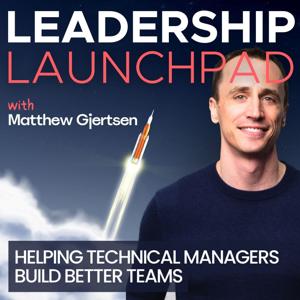


In this episode of Leadership Launchpad, the conversation explores why giving and receiving feedback is challenging, especially for technical managers. The discussion focuses on evolutionary and social reasons behind feedback anxiety and emphasizes the importance of a structured approach to feedback. Drawing from lessons in the book Minimum Viable Manager, listeners are introduced to actionable strategies, including the SBI (Situation, Behavior, Impact) and COIN feedback models. The episode outlines a three-step plan for building a high-feedback culture: starting by asking for feedback, giving reinforcing feedback, and finally delivering redirecting feedback. Practical examples and phased implementation advice offer a roadmap for leaders to improve team performance and foster trust.
Timestamps of Important Moments:
In this episode of Leadership Launchpad, Matt Gjertsen delves into the importance of setting expectations for technical leaders and their teams. He explains why clear expectations are vital for productivity, motivation, and engagement, referencing research from Gallup’s Q12 survey and Daniel Pink’s book Drive. The discussion covers practical frameworks such as commander's intent for defining tasks and team working agreements to clarify communication norms. Gjertsen also touches on common challenges new managers face, particularly those transitioning from star individual contributors to leadership roles, and highlights the cognitive science behind how people process complex information at work. This episode is part two of a four-part series based on Gjertsen's book and focuses on the actionable steps leaders can take to cultivate clarity and alignment within their teams.
Important Timestamps
In this episode of Leadership Launchpad, listeners are introduced to key concepts from the book Minimum Viable Manager. The episode focuses on the importance of building trust within technical teams, emphasizing it as the foundational element for productive conflict and high performance. Drawing on real-world examples such as Ford’s turnaround under Alan Mulally and research initiatives like Google’s Project Aristotle, the episode explains what trust means, why it matters, and actionable ways technical managers can strengthen team connections. Strategies include using connection-building questions in meetings and developing personal user manuals to foster better working relationships. This is the first in a four-part series that breaks down essential management responsibilities and practical steps for new and aspiring leaders.
Important Timestamps:
In this episode, Susan Stone, CEO of Blue Current, discusses the company's journey in developing high-performance, silicon-based solid-state batteries for electric vehicles and energy storage. She shares insights on the technical and cultural challenges of scaling from R&D to commercialization, emphasizing the importance of communication, cross-team collaboration, and creating flexible feedback loops. Stone also addresses leadership development, sharing practical advice for new managers on the value of context, over-communication, and being open to asking questions. The conversation covers strategies for navigating rapid organizational change, aligning teams during key transitions, and balancing the needs of individual contributors with leadership paths.
Important Timestamps
This episode of Leadership Launchpad delves into the leadership principle known as "the line," a concept discussed by Travis Kalanick, founder of Uber, during his conversation on the David Senra podcast. The episode explains how leaders can find the balance between too few and too many rules within their teams and organizations. Drawing from real-world examples at companies like Uber, City Storage Systems (now Atoms), and Netflix, the discussion breaks down the dangers of both chaos and excessive control, and offers insights into how leaders can foster innovation while maintaining necessary structure. Listeners will also hear practical advice for technical managers on communicating expectations, building effective processes, and developing leadership skills that influence where "the line" is drawn in their teams.
Important Timestamps
In this episode, Gabrielle Rufrano, a doctoral candidate in Industrial and Organizational Psychology at Clemson University, shares insights from her experiences in both large organizations like NASA and fast-paced startups in the energy sector. She discusses the fundamentals of industrial and organizational psychology, emphasizing the importance of evidence-based practices and organizational culture. Gabrielle compares the structured, mission-driven culture at NASA with the more flexible but less unified environment of a startup, highlighting how organizational maturity and resources impact the implementation of research-backed development practices. She also explores the gap between academic research and practical application in industry, and how both sides can improve collaboration for better workplace outcomes.
Timestamps
In this episode, Shan Mohta, co-founder and CEO of Vendra, discusses his journey building a manufacturing platform aimed at streamlining the process of ordering custom parts in the US, with a focus on aerospace and defense. Shan Mohta shares how Vendra leverages software to match customer designs with the best-fit suppliers, improving supply chain resilience and reducing lead times. He provides insights into his leadership style, shaped by experiences at major tech companies and startups, emphasizing accessibility and decision-making empowerment for his team. The discussion also covers the early pivots in Vendra’s product direction, the value of direct and constructive feedback, and lessons learned from collaborating with both large and small manufacturing customers.
Important Timestamps
In this episode, Rich Phipps, former manager of technicians and development tests at SpaceX’s McGregor test facility and a veteran submariner, shares his leadership journey from the Navy to SpaceX. He discusses transitioning from a technician to a leadership role, the differences and similarities between leading in the military and in a high-tech environment, and the importance of influence, communication, and trust. Rich outlines how his teams tackled challenges such as team integration, career progression, and minimizing workplace distractions. He also provides a definition of leadership that has guided his approach, emphasizing aligning diverse skills towards a shared mission. Listeners gain practical insights into fostering collaboration between engineers and technicians, building meaningful workplace relationships, and creating clear career development paths in dynamic, fast-paced organizations.
Important Timestamps
This episode of Leadership Launchpad celebrates a milestone: surpassing the 200th episode mark.
The conversation features a recap of top insights and leadership lessons from previous standout guests, including Steph Bertmer (Pinterest), Megan Galloway (EverLeader), Matt Kuda (Voyager Technologies), Holly Betke (StockX), General John Teichert (Edwards Air Force Base), Jesse Kleekamp (K2 Space), Brian Manning (ZonaSpace), Ian Marrone (Apex), Paul Cotillion (Applied Atomics), and Casey Hanrahan (Terraform Industries).
Key topics include leading through change, the importance of transparency, building influence, the challenges of management, hiring rigor, coaching conversations, and embracing autonomy as a leader.
Important TimestampsIn this episode of Leadership Launchpad, Lindy Elkins-Tanton, Director of the Berkeley Space Sciences Laboratory and Principal Investigator of NASA’s Psyche mission, shares insights on leading high-stakes, technical teams. She explains the objectives and significance of the Psyche mission—humanity’s first deep exploration of a metal-rich asteroid—and offers a detailed look at her role as principal investigator. The discussion covers leadership challenges, including leading with responsibility but limited authority, fostering open communication, and the value of surfacing problems early. Elkins-Tanton also addresses the unique pressures placed on teams during COVID-19 and strategies for maintaining effective collaboration across dispersed workforces. The episode concludes with reflections on the scientific mysteries of asteroid 16 Psyche and the excitement of pioneering new frontiers in space science.
Timestamps for Key Moments:
From the publisher's feed

1,334 Listeners

565 Listeners

285 Listeners

83 Listeners

10,122 Listeners

163 Listeners

4 Listeners