
Sign up to save your podcasts
Or

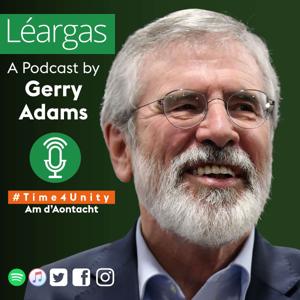


AN OPEN LETTER TO MY ORANGE NEIGHBOURS
A Chairde,
Now that the British Secretary of State - recently landed among us – has banned the Portadown Lodge march on Garvaghy Road all of us should take time for a quiet reflection. Time also to be thankful that the stand-off was peaceful.
You and the people of Garvaghy Road deserve credit for that.
All thinking people want to see our society moving beyond the sectarian hatred that has cursed us for so long.
Division in our country was created and is exploited to keep us apart. This is our home place. Your homeland as well as mine. The land of the Orange and the Green and many others as well.
We have a deeply toxic past and a troubled present. But we have the opportunity to build a peaceful shared future.
Many of us disagree with aspects of what the loyal orders believe in and they disagree with us. But there is no harm in that if we can respect and tolerate our differences.
We recognise that you are an integral part of the culture and heritage of some of our Protestant and unionist fellow citizens. And an important dimension of the deep well of our wider history. And our future on this island.
2,507 notified parades took place this year up to March 2026. Only 137 had restrictions imposed on them and 51 of these were connected to weekly parades in Portadown relating to Drumcree.
That means that the vast majority of Orange and Loyal Order parades - 2,370 - took place without any controversy or issue.
The Outdoor Relief Riots
Following the Wall Street crash in 1929 and the economic crisis it created unemployment across the North stood at approximately 40%, with nationalist areas especially hard hit because of decades of discrimination. Life was hard for working people, including working class Protestants. Poverty was endemic. A survey conducted in the 1930s concluded that 36% of the population was in absolute poverty. That meant they had little food, clothing or fuel to sustain health. Belfast children from unemployed families were on average two to three inches shorter and ten pounds slighter than those in middle class areas.
The welfare scheme at that time was called ‘Outdoor Relief.’ To qualify an unemployed person had to work on public employment schemes, paving roads, digging up roads, laying pipes, digging ditches and so on. Those unable to carry out this physical work were often reduced to starvation. The scheme was administered for the Stormont regime by 27 local Board of Guardians whose relief rate was half that of similar schemes in Britain.
Michael Farrell in his exceptional book ‘The Orange State’ records how; “Single men who got no work, single girls, widows and orphans had either to live off their relations or to go into the workhouse.”
Save Moore Street – Buy the Terrace!
The Moore St. Preservation Trust is holding a rally on Saturday, November 7th, at 1 p.m. to support the campaign to protect one of the most important sites in Ireland’s history. Moore Street is where the leaders of the 1916 Easter Rising met for the last time following the retreat from the burning GPO.
The Moore St. Preservation Trust, the families of the Signatories to the Proclamation and others have opposed plans by a British developer Hammerson to destroy much of this Battlefield site.
I would urge readers to join the Moore St. Preservation Trust on November 7 in demanding that the Irish Government take Moore Street into public ownership and secure, protect and build a 1916 Historical Cultural Quarter for future generations.
There will be music, street theatre and much more as we stand together for Moore Street. Join us to demand action, protect our history and secure Moore Street’s future.
No Pasarán- They Shall not Pass
Sunday’s rally on the Garvaghy Road was amazing, wonderful. Over many years of activism, I have attended countless rallies but Sunday was special. It lifted the spirits of the thousands who were there. From the speakers, to the musicians, to the thousands standing and applauding, and to the many more watching on social media, the overwhelming message and focus of the rally was about the future. A better future. A different future. A new future in which the rights of all are respected.
The mood was also defiant and determined. Given the implications of the disastrous decision by the Parades Commission that was to be expected. But it was also positive. A community refusing to allow the past to dictate its future. With one voice those present were rejecting supremacism. Asserting loudly and clearly that bigotry and sectarianism have no place in our society. Instead, they want the promise of the Good Friday Agreement, of equality and parity of esteem. Of respect. Of rights.
The Battle of Cable Street
Sunday marked the 90th anniversary of the ‘Battle of Cable Street’ in the East End of London in 1936. Its historic importance is in the resistance of the working class people of that part of London to a march by Oswald Mosley’s British Union of Fascists (BUF) into a mostly Jewish community. Its contemporary significance lies in the parallels with contentious parades here, and in particular the solidarity of those standing with the residents of the Garvaghy Road.
The 1930s saw the rise of fascism across Europe and in Britain. Thousands of people were fleeing persecution in fascist Italy and Nazi Germany. The concentration camps, first established in 1933 in Germany, were already full of trade unionists, Jews, left wing activists, the disabled, homosexuals, and political opponents of fascism. The East End of London saw an influx of Jewish refugees
The Great Depression of 1929 had caused huge hardship for working people. The fascists were intent on exploiting the refugees and scapegoating them as the source of the problems facing working people. A tactic still used today.
"We have him back!" - Brave Frank Stagg
On 24 and 25 October a deeply evocative play about the death in February 1976 of hunger striker Frank Stagg will be presented in Ionad Eileen Howell – St. Comgalls, Divis Street in Belfast. The play is written by Brían MacSuibhne and is set in Leigue Cemetery, Ballina, Co. Mayo where Frank was initially buried by the Irish state after stealing his body and then reburied beside his fellow Mayo hunger striker Michael Gaughan.
The play is a historically accurate and deeply human account of the events surrounding the three funerals of Frank Stagg. George Stagg, Franks brother, will speak on both nights. He says the play “conveys my brother Frank with honesty, dignity and accuracy. It honours not only his sacrifice, but the pain, courage and determination of our family in the face of Frank’s treatment even after his death.” Almost two years after the Irish state buried Frank against the family’s wishes in a grave which they then concreted over, George and some comrades successfully extracted Frank’s coffin and on a cold and wet November night reburied him beside his friend and comrade Michael Gaughan.
The play has been developed with the co-operation of the Stagg family.
“We Have Him Back! tells the story of a mother watching her son die, a wife confronting official falsehoods, a sister struggling to understand, and a brother whose love and resolve would not allow history to be buried in silence. Weaving documented conversations, world and national news, music, and life in 1970s rural Ireland Grounding the personal tragedy into a wider historical moment.”
Tickets are available at:
https://www.ticketsource.com/whats-on?q=Frank+Staggg
Garvaghy Road – No Going Back.
As I write this column the situation on the Garvaghy Road is no closer to resolution. The Orange Order wants to walk through a nationalist community. The residents say no.
Outside of political unionism there has been widespread anger and shock at the decision of the Parades Commission to make a determination to facilitate that march. In July the Commission had said no to a march. What changed? If it was wrong for the Orange to march in July, or for the last 28 years, why is it ok in September? The Commission needs to explain this. Clearly and publicly.
The PSNI also needs to publish and explain its advice to the Parades Commission. The PSNI Chief Constable has a case to answer.
So too with the British Secretary of State. Flying in from Wales to his Castle here to treat us to meaningless NIO double speak is insulting to us all. Including the Orange. The sooner we get the British government out of our affairs the better. But in the meantime let’s try not to get too angry at the usual NIO scripted PR platitudes and patronising sound bites.
I was on Garvaghy Road thirty years ago during all those dark days. I was back on Sunday. Fair play to the folks there, to the Residents’ Coalition and its leaders and to all who made a stand in support of the people of Garvaghy Road. Very well done.
Gaza - Largest concentration camp in World
In 2009 I visited the Gaza Strip. The Israeli siege of the Palestinian territory had been going on for around four years. Gaza was at that time the largest open air prison in the world. Twenty-one years later and it has been blasted beyond recognition by Israel and is now the largest concentration camp in the world. An estimated 75,000 Palestinians are dead, including over 20,000 children. Thousands more lie buried beneath the rubble.
The genocide began three years ago next week. The anger of many in the world at Israel was witnessed last week in the United Nations when many of the delegates walked out when Netanyahu got up to speak.
To its shame the Irish government chose to stay. Later in his speech Taoiseach Micheál Martin told the General Assembly that, “when the full truth of what has happened - what is still happening - in Gaza is finally known, when the evidence is gathered, when the testimonies are heard, when the true horrors are finally and fully revealed, it will shame the world. Nobody will be able to say that we did not know. Let it not be said that we did not act.”
Another Poll
Once upon a time elites ‘read the runes’ as a way of foretelling the future. For some it was about interpreting symbols carved into stones or bones. For others it involved reading the entrails of animals. The practice is called haruspicy and it was about predicting the future.
Today, we have opinion polling to discern the mood of people and their likely attitude to specific issues, mostly but not exclusively in respect of elections.
Hardly a week goes passed without a media broadcaster, newspaper or academic institution producing an opinion poll. I have a healthy scepticism of polls. Long experience North and South has led me to question their accuracy, especially when looking at the Sinn Féin vote. However, they can be a useful barometer of the public mood at a given time and of possible emerging trends.
Opinion polls have also focussed on the related issues of Irish Unity and a referendum on Irish Unity.
Micheál bottled it
As Fianna Fáil this year marks its 100th birthday, where does it stand on the issue of Irish Unity? According to its Constitution, Fianna Fáil’s first aim is; “To secure in peace and agreement the unity of Ireland and its people.” Very worthy but has the party in or out of government during the last century actually done anything to achieve it?
Currently, while the conversation on unity is daily taking place An Taoiseach Micheál Martin is seen by many as the greatest impediment to progress. When asked he waffles and generally dissembles.
Ethnic Cleansing of Palestinians
Imagine, if at any point during the decades of conflict, the RUC and British Army had invaded Ballymacarrett/Short Strand in East Belfast and forcibly evicted its residents and systematically destroyed every home, shop, school, St. Mathew’s, and tore up the roads, sewage and water infrastructure. Imagine too if this policy had been applied to other nationalist areas like Crossmaglen or the Bogside.
This is the reality of life for the Palestinian people of the west Bank at this time. A new report by B’Tselem – an Israeli human rights organisation - is a damning indictment of Israeli aggression and apartheid against the Palestinians. It records, in its detailed 200 page report, entitled ‘The Elimination Project,’ that as of June this year 64 Shepherding communities have been forcibly expelled from their homes. In the last 20 months the Israeli military has also displaced 33,000 Palestinians from the Jenin, Tulkarm and Nur Shams refugee camps. It destroyed homes, buildings and infrastructure.
Imagine, if at any point during the decades of conflict, the RUC and British Army had invaded Ballymacarrett/Short Strand in East Belfast and forcibly evicted its residents and systematically destroyed every home, shop, school, St. Mathew’s, and tore up the roads, sewage and water infrastructure. Imagine too if this policy had been applied to other nationalist areas like Crossmaglen or the Bogside.
This is the reality of life for the Palestinian people of the west Bank at this time. A new report by B’Tselem – an Israeli human rights organisation - is a damning indictment of Israeli aggression and apartheid against the Palestinians. It records, in its detailed 200 page report, entitled ‘The Elimination Project,’ that as of June this year 64 Shepherding communities have been forcibly expelled from their homes. In the last 20 months the Israeli military has also displaced 33,000 Palestinians from the Jenin, Tulkarm and Nur Shams refugee camps. It destroyed homes, buildings and infrastructure.
The B’Tselem report is available: https://www.btselem.org//
Buíochas
I consider it a great honour for me to have a column published by the Belfast Media Group. I don’t know how many people pay heed to my musings but I am grateful to have a platform to write about whatever takes my fancy. Thats’ what the Andersontown News and The Irish Echo do. They provide an alternative viewpoint to the line promolgated by the establishment media. An inclusive community based response.
You don’t have to agree with the editorial line all the time but I for one, and many many others have an affinity with our Andytown News that we will never have with other newspapers. A newspaper of its own is a mighty asset for any community to have.
Indepth conversation with the new MLA for West Tyrone, Paul Boggs.
The Dis-United Kingdom.
Several weeks ago British PM Andy Burnham sparked a furious debate over future constitutional change and Irish Unity with his crass comment that it was ‘off the table.’
The Unionist parties were delighted.
Fast forward two weeks and an endorsement of a united Ireland by US President Donald Trump has ignited another energetic conversation around the issue. Speaking during his visit President Trump, sitting beside An Taoiseach Micheál Martin, whose opposition to planning for unity is well known, said he would love to see a united Ireland – it would be a ‘fantastic thing.’ He repeated this several times over the following two days.
The unionist parties were not delighted.
President Trump’s remarks are welcome, even though this column profoundly differs with him on many other matters, especially US foreign policy including the genocide against the Palestinian people.
President Trump’s comments reflect broad north American sentiment and particularly that of Irish America towards Irish reunification. Since the days of President Clinton, who played an important role in the peace process and the Good Friday Agreement, there has been a bi-partisan approach on Capitol Hill. Successive American administrations have reflected a more positive and progressive position on Ireland. This bodes well for the future.
Kieran Nugent – The First Blanketman
Several hundred former political prisoners gathered in Ionad Eileen Howell – St. Comgall’s on Saturday for the launch of a new book - ‘Kieran Nugent – The First Blanketman’ edited by Danny Morrison. It was an emotional event with former comrades recalling Kieran’s courage and heroism in the face of a brutal prison regime. Kieran’s daughters Rae and Eileen and grandchildren Michael John, and Michael were present.
50 years ago, on 14 September 1976, Kieran was the first Republican political prisoner to be sent to the H-Blocks. Britain’s criminalisation strategy was determined that Republican prisoners would no longer be classified as political. That meant political prisoners wearing a criminal uniform and acquiescing to the prison regime.
Desmond Greaves Summer School
Last week I wrote in advance about participating in the Desmond Greaves Summer School. A packed Unite Trade Union Hall in Dublin on Sunday was the venue. The clár dealt with a number of important issues including a talk by Ray Bassett and me about the importance of the Good Friday Agreement.
I want to thank Anthony Coughlan, Kevin McCorry, Daltún Ó Ceallaigh and all of those who organised the 36th summer school for their invitation to take part.
A Process of Perpetual Change
This weekend I will be in Dublin for the 36th Desmond Greaves Weekend Summer School. It begins in the UNITE Trade Union Hall, in Middle Abbey St, on Friday evening the 11 September and runs over Saturday and Sunday. The discussions range from the state of the European Union, to the place of the nation state, migration and asylum policy, to China and the Good Friday Agreement. My contribution on the Sunday, along with former Irish Ambassador to Canada, Ray Bassett, will be to discuss the Good Friday Agreement.
The summer school has been taking place annually and seeks to reflect the legacy of historian and activist C Desmond Greaves. His books and writings have been a significant influence on my own politics. His two biographies on Liam Mellows and James Connolly are as important and influential today as they were when first published almost 60 years ago. His ‘The Irish Crisis’ is equally important.
Siúlóid an Taoisigh - The Chieftain’s Walk
To be honest I find it difficult to comprehend that next March it will be ten years since the death of my friend and comrade Martin McGuinness. For more years than I care to remember we were comrades in struggle seeking to advance our republican objective of national self-determination, build Sinn Féin as a radical, activist based, republican party, and at the same time contributing to the creation of a peace process to end decades of conflict.
This Sunday the ninth Chieftain’s Walk will take place in Derry in Martin’s memory and to raise money for charity.
The first year the Walk went to the Stone Fort of Grianán of Aileach on the Inishowen peninsula. It was one of Martin’s favourite places in the world. He would walk there, no matter the weather, and whenever the opportunity presented itself. I walked there with him on many occasions. It is a place of quiet beauty with amazing panoramic views. On one side you can see Derry City in the distance. Grianán also overlooks Inishowen, Inch Island and there is a dramatic view of Lough Foyle and especially Lough Swilly. But it was a taxing walk – long and very challenging for many.
Sign the Moore St Petition
The Moore St. Preservation Trust held an informative night in the Pearse Institute in Dublin last week to discuss the future of Moore St and the ongoing efforts to save the iconic 1916 battlefield site that is threatened by bad government policy and developers.
Dublin Cllr Janice Boylan chaired the event which included Cllr Mícheál Mac Donncha who is Secretary of the Trust and Ray Bateson, author of ‘Battle of Moore Street / Cath Shráid Uí Mhórdha’, a bilingual history of the final battle of the Easter Rising.
Moore Street is unique. It is a place of enormous historical importance, and the campaign to protect it is about ensuring that this unique part of our revolutionary history is preserved for generations to come. It is also about creating a historic cultural quarter around the GPO on a par with that of other states internationally. In the USA, in South Africa, and in countless other states across the globe governments have invested in preserving their past to remind current and future generations of the heroism and of the principles of struggle that previous generations fought for and which continue to help shape their future.
If you would like to support campaign to save Moore St. by bringing it into
public ownership and by developing a historic 1916 Cultural Quarter then sign the petition here: https://c.org/4nfjJMtzjv
Comhghairdeas Katie Taylor
Finally, comhghairdeas to Katie Taylor. Her determination, individual strength of character is an example to everyone. It was her last night boxing in front of a packed 80,000 Croke Park. She did it in style. She won it convincingly. Well; done Katie.
Andy Burnham is a Unionist
Should we have been surprised by British Prime Minister Andy Burnham’s crass assertion last week that the issue of the unity referendum promised in the Good Friday Agreement, “is one issue that will be off the table.”?
Two months ago as I watched Burnham address the media outside10 Downing St, on the day he replaced Keir Starmer, I wrote that he; “like every British Prime Minister governs in the interests of the English establishment. He like his predecessors is a Unionist.”
For as far back as England’s involvement in Ireland its policies have always been determined by British national interests. Not the interests of the Irish people.
Drumcree – Unionism Stuck in the Past
In the early hours of Sunday 6 July 1997 I remember vividly driving back from an event in Tralee, County Kerry because of the growing tension over Unionist demands to march down the Garvaghy Road. I arrived home as David Blevins for Sky News broke the news that hundreds of British soldiers and RUC had swamped the nationalist streets of Garvaghy Road. Protestors were swept aside and the Orange Order got its march. There were widespread civil disturbances as nationalist areas reacted to the developments. 1997 was the last year a march took place. The Parade Commission decisions and the opposition of the local community had seen to that.
Last week Drumcree and the Garvaghy Road jumped back into the media headlines when the High Court in Belfast quashed a determination by the Parades Commission to ban this year’s Drumcree march. It did so because of a procedural flaw in how that decision was reached.
The High Court decision did not clear the way for an Orange Order parade to proceed down the Garvaghy Road. But it did lead to an increase in the sectarian bombast that has long been part and parcel of political unionism in the northern state. The UUP, DUP and TUV have all united to claim “a massive victory for unionism and loyalism” and to demand that the Orange Order be able to march through the nationalist Garvaghy Road area. They want to turn the clock back to the ‘No surrender’ ‘Not an Inch’ ethos of the Orange State. They want a return to the old order.
That will not happen. Nationalists and non-unionists are looking to the future not the past. The nationalist community of the Garvaghy Road area is greater now than it was in 1997. It has lived in peace for almost 30 years. It deserves to be able to continue to do so and there is no desire within that community to facilitate a sectarian Orange march.
Paddy Elliott
The Elliott’s and the Adams’s were cousins. They still are. Maybe second or third cousins by this generation. But back in the day my Granny Adams was a Begley. So was Paddy Elliott’s mammy. And Gerry Begley’s Daddy. Brother and sisters. Paddy and Gerry were six or seven years older than me. They were inseparable when I was growing up.
I was living in Abercorn Street North with my Granny. Gerry Begley lived in the same street. I think Paddy was reared in Gibson Street, but he spent a lot of time in Abercorn Street North. There were very few cars in those days so the streets belonged to the children. Especially during the summer. Girls and boys. Dogs. Hopscotch and Marlies. Skipping songs, swings on the lamp posts, rounders, street soccer with a ball made from a sock filled with newspapers, hurling and handball.
Ballina Commemoration will remember the Hunger Strikers
This Sunday the national hunger strike commemoration will commence at 2.30pm in Ballina, County Mayo. The starting point is at Bunree Road Industrial Estate F26V243.
The event will mark 45 years since the 1981 hunger strike in which ten men died. It will also remember all of those Irish republicans who died on hunger strike and especially the resolve and courage of three Mayo hunger strikers Michael Gaughan (1974), Frank Stagg (1976), and Jack McNeela (1940).
Looking back five decades after the commencement of the blanket protest in September 1976 and the two hunger strikes that took place in 1980 and 1981, I remain awed by the tenacity and determination of those who endured five years of brutality, violence, deprivation and abuse in the H-Blocks and Armagh Women’s prison before embarking on that most challenging of all personal undertakings – the hunger strike.
Irish Traveller Heritage Strategy
The Traveller Community has contributed hugely to the preservation of Ireland’s native culture particularly our music and song tradition. Christy Moore, among others has always acknowledged and recognised this. In particular, the songs of John Reilly. The late Tom Munnelly did mighty work collecting and recording this aspect of our heritage. Now the Heritage Council has published Ireland’s first Traveller Heritage Strategy 2026-2030, setting out a national framework to support Traveller cultural heritage.
It is available here: https://www.paveepoint.ie/first-traveller-heritage-strategy/
Death of Eithne Vallely
A few weeks ago I wrote a piece for this column - The Little Lost Bird and the Blue Butterfly – about an art exhibition in Féile an Phobail by John B Vallely, a renowned artist from Armagh City. His exhibition focussed on the children killed at Wounded Knee by the US army in 1890 and the Israeli genocide in Gaza in which over 20,000 Palestinian children have been murdered.
Sadly, Brian’s wife Eithne was killed last Friday morning in a road accident. Eithne was a well-known and popular traditional musician and teacher. Along with her husband she founded the Armagh Pipers Club in 1966. She was an outstanding Irish woman.
I want to extend my deepest condolences to Brian, to their children, grandchildren and the wider Vallely clan. Ar dheis Dé go raibh a hanam.
The Chieftain’s Walk
On Sunday 13 September The Chieftain’s Walk in Derry in memory of Martin McGuinness will take place. All money raised goes to charitable causes. Sign up and take part. I will return to this in next week’s column with more details.
Anger Is Not A Strategy!
Monday’s Irish Times has an editorial dealing with the possibility of the collapse of the Northern Assembly at Stormont. This is the latest media driven piece of speculation in recent weeks – based on nothing other than the view of the authors - that Sinn Féin plans to bring down the Executive and Assembly. No evidence is presented to support this opinion.
Thoughts on the Unity Agenda
Declan Kearney has published a timely piece in An Phoblacht - Time for a New Initiative On Irish Unity. He argues for a national consensus and cites the Agreement between me and John Hume in 1993. Declan’s proposition led me to revisit a little book I published in 1998. ‘A Pathway to Peace.’ It was my view at that time on how to achieve Unity; the need for peace with justice; the role of the Irish government; the importance of reaching out to our unionist neighbours; and the need to develop a strategy for Irish nationalists.
Meeting Friends of Sinn Féin International
A couple of weeks ago I had the pleasure of doing a zoom meeting with supporters who are part of Friends of Sinn Féin International. This is a subscription based support network for supporters of Sinn Féin. In return for an annual subscription they get a number of benefits including regular email updates from the party, access to the An Phoblacht archives and a discount from the Sinn Féin Shop plus briefings during the course of the year with senior leaders in the party.
From the publisher's feed
Current Affairs, Politics, Irish Unity, History and Culture.
1,339 Listeners

189 Listeners
180 Listeners
51 Listeners
141 Listeners
344 Listeners
134 Listeners
306 Listeners
282 Listeners

10 Listeners

108 Listeners
75 Listeners

53 Listeners

521 Listeners

50 Listeners