
Sign up to save your podcasts
Or

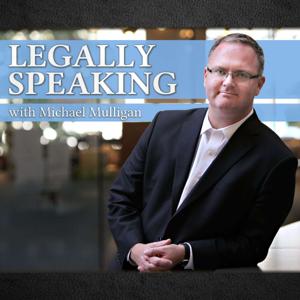


This week on Legally Speaking with Michael Mulligan:
Who is in jail and why? In Canada, the responsibility for jailing adults is divided between the federal and provincial governments. The federal government is responsible for penitentiaries, where people serve sentences longer than two years. The provinces are responsible for jails for people serving shorter sentences and for people who are in jail waiting for their trial.
In British Columbia, 63% of people in provincial jails are waiting for their trial. 36% of people are serving sentences and 1% have been detained by the Canadian Border Services Agency. There has been a long-term trend increasing the percentage of people in jail waiting for trial.
69% of the people in provincial jails have either a mental health or substance use disorder. 42% have both a mental health and substance use disorder.
In British Columbia, 35% of people in provincial jails are indigenous. Indigenous people make up 5-6% of the population in British Columbia.
The cost of keeping someone in a provincial jail is $259 per day. This is less than the $318 per day cost to keep someone in a federal penitentiary where more rehabilitation programs are available.
The cost of detaining someone in a provincial jail to wait for their trial is $7,770 per month.
As discussed on the show, this $7,770 per month cost provides an important reference point when assessing the cost of mental health and addictions services that can reduce the number of people committing offences and ending up in jail.
Also on the show, a BC Supreme Court decision to recognize an order from a court in Pakistan and return a 12-year-old boy despite objections from the child’s mother who alleged the order was made in accordance with Sharia law rather than in accordance with the best interest of the child.
The governing provisions of the BC Family Law Act are found in Part 4, Division 7 of the Act: Extraprovincial Matters Respecting Parenting Arrangements. Judges are directed not to make findings of fact on disputed evidence or to decide the merits of the case beyond what is necessary to determine the issues of territorial jurisdiction.
The idea of these provisions is to avoid parents bringing children to BC from other jurisdictions to re-argue custody decisions.
The mother in the case alleged that the court in Pakistan was applying Sharia law which directs that fathers should be given custody of male children, aged seven or more.
In rejecting the mother’s claims that the order from the court in Pakistan shouldn’t be followed, the BC Supreme Court judge deciding the case considered the fact that the court in Pakistan had not given custody to the father when the child turned seven.
There was conflicting expert evidence concerning how courts in Pakistan integrate Sharia law with the best interests of the child.
Follow this link for a transcript of the show and links to the cases discussed.
This week on Legally Speaking with Michael Mulligan:
The MV Zim Kingston lost 109 containers, near Vancouver Island, containing everything from yoga mats to car parts and chemicals. Some of the containers, and their contents, have been washing up on Vancouver Island beaches.
One of the legal issues raised by this is the legal right to salvage material.
With thanks to Darren Williams, an expert in marine law, the legal status of the shipping containers is discussed on the show.
The starting point is that the shipping containers are personal property. This does not change because they fell off the ship as the owners haven't abandoned the property.
In addition to the potential hazard, opening or entering a container could amount to a tort referred to as “trespass to chattels”.
There are circumstances where a shipping container could be “salvaged” by someone who located it. Before attempting to salvage a wreck, however, the salvor must contact the owner before touching the property or, if the owner is unknown or can’t be contacted, the Receiver of Wreck must be contacted. The Receiver of Wreck has authority pursuant to the Canadian Wrecked, Abandoned or Hazardous Vessels Act.
The concept of salvage involves saving a vessel or cargo from loss, rather than just taking something that is on the breach. Where a person engages in the salvage of a vessel or cargo, they may be entitled to reasonable costs and expenses for the salvage. If the Receiver of Wreck is unable to find an owner of the vessel or cargo, the person who salvages it may be awarded the wreck or the money from its sale.
Returning to the containers that fell off the MV Zim Kingston, someone who locates one should call the Canadian Coast Guard at 1-800-889-8852.
Also on the show, October 27 was the first National Duty Counsel Day recognizing the important work performed by Duty Counsel.
In BC, Duty Counsel are private lawyers who are retained, for a modest fee, by the Legal Services Society, to provide summary advice and assistance to people with criminal, family, or immigration law issues, who cannot afford a lawyer and who would otherwise be in court on their own. They can be found at Provincial Court locations around BC on days when recently arrested people or those with family or child protection matters are first attending court.
Duty Counsel can’t conduct trials but can help with bail hearings, guilty pleas, efforts to negotiate family law issues, or the provision of summary advice.
Information concerning the availability of Duty Counsel is available by calling 1-866-577-2525.
Finally, on the show, a Supreme Court Judge granted a statutory injunction ordering a restaurant to close because of repeated failures to check the COVID-19 vaccination status of customers, as is required by a Public Health Order.
The restaurant had been fined, on multiple occasions, and had its business licence revolved, for failing to comply with the Public Health Order.
As a result of the injection, the police will ensure that the restaurant remains closed.
Follow this link for a transcript of the show and links to the cases discussed.
This week on Legally Speaking with Michael Mulligan:
In 2012 the self-defence provisions of the Criminal Code were rewritten.
The new provisions only permit self-defence to apply if the act in question was “reasonable in the circumstances”.
When deciding if an act is reasonable in the circumstances, the new section provides a non-exhaustive list of things to be considered by a judge or jury:
The long, non-exhaustive, list of factors that must be considered makes it hard to predict what a judge or jury will conclude.
In the case discussed, a man, unfortunately, named Mr. Khill, was charged with murder. Mr. Khill was asleep in bed when he was woken up by his wife who heard a noise outside. Mr. Khill looked out the window and saw the interior light on his truck was on. He went to investigate carrying a loaded shotgun.
When Mr. Khill got to his truck, he saw someone in the passenger side and yelled “Hey, hands up!” The person, who had apparently been breaking into the truck, turned towards Mr. Khill and raised his arms in a way that caused Mr. Kill to believe he was holding a gun. Mr. Khill shot the man, twice, killing him. A search of the deceased revealed a knife in his pocket, but no gun.
At his murder trial, the jury acquitted Mr. Khill.
The Crown appealed and was successful in having a new trial ordered because the trial judge had not explained what “the person’s role in the incident” meant in the list of reasonableness factors for the jury. The majority of the Supreme Court of Canada upheld the order for a new trial, concluding that “the incident” could include things before the actual confrontation such as the decision to bring a shotgun when investigating the truck being broken into.
As a result, Mr. Khill will need to stand trial a second time.
Also on the show, a case involving a claim of negligence for failing to locate a colony of bats roosting in the attic of a house that was sold.
The house sale included a Property Disclosure Statement certifying various things including any known rodents.
The judge concluded that the seller didn’t know about the bats, was not negligent in not knowing about them, and the Property Disclosure Statement was not inaccurate because bats are not rodents.
Finally, a case involving an appeal from a waived in drug trafficking charge is discussed. The concept of waiving a charge can only occur where an accused person is pleading guilty.
Follow this link for a transcript of the show and links to the cases discussed.
This week on Legally Speaking with Michael Mulligan:
The BC Court of Appeal, BC Supreme Court, and BC Provincial Court issued a joint release advising that all judges and judicial officers, in all the courts in BC, have received two doses of vaccine for COVID-19.
The courts further advised that, as of November 22, all court staff and all contractors accessing the secure (non-public) areas of courthouses thought BC will all be required to have received two doses of COVID-19 vaccine.
Because attendance at court is often not voluntary it is particularly important the judges and court staff be vaccinated to reduce the risk that members of the public will not be infected with COVID-19 when attending court.
In addition, a judge presiding over a 25-day murder trial decided to make it a requirement that prospective jurors be vaccinated to be eligible to serve to reduce the chance of a mistrial being caused by a COVID-19 outbreak.
Also, on the show, a new program organized by Pro Bono BC: free family law mediation. Senior family law lawyers, and other family law mediators, are providing free assistance for families of up to 3 people with an annual income of less than $65,000 and for families of 4 or more with an annual income of less than $85,000.
Other pro-bono services, in Victoria, are provided at the Law Center. This program is provided by the University of Victoria and is located at the courthouse. Law students provide a range of services for people who are ineligible for legal aid with supervision from experienced instructors and lawyers in the community.
Finally, several first nations people who were convicted of criminal contempt for blocking roads to protest the construction of the Trans Mountain Pipeline were denied funding for their conviction appeal.
The BC Court of Appeal judge hearing the application concluded that the conviction appeal, premised on poorly defined claims that the appellants were following first nations law, had little merit.
Despite evidence that there was funding available from a go-fund-me campaign, the appellants were successful in having counsel appointed to argue their sentence appeal.
The Criminal Code has provisions that require judges to consider sentencing options other than jail, with special consideration for first nations offenders.
Follow this link for a transcript of the show and links to the cases discussed.
This week on Legally Speaking with Michael Mulligan
The Provincial and Supreme Court in British Columbia recently introduced practice directives requiring lawyers to indicate the proper gender pronoun for themselves, and their clients, before each hearing.
Lawyers have been directed to indicate if they, and the client, wish to be referred to as he/him/his, she/her/hers or they/them/their.
This was the subject of controversy at the recent BC Law Society annual general meeting where some lawyers were calling for more debate with respect to this direction.
Of interest, in the BC Supreme Court, judges are referred to as either My Lady or My Lord and the practice direction doesn’t require judges to advise which they prefer.
In the BC Provincial Court, all judges are referred to as Your Honour.
Several years ago, some BC Supreme Court Judges attempted to adopt Your Honour but were directed to return to either My Lady or My Lord.
Also on the show, the provincial government is seeking the civil forfeiture of a $3 million Vancouver penthouse that was being used as a nightclub in violation of COVID-19 rules.
The owner of the penthouse is alleged to have had hundreds of unmasked people in the penthouse, on multiple occasions.
The police attended the penthouse on multiple occasions and seized things including DJ equipment, a dance pole, and a $5 bill found at the base of the dance pole.
Unlike in criminal cases, civil forfeiture proceedings only require proof on a balance of probabilities.
If the civil forfeiture proceedings are successful, the province could take the penthouse and things seized from it by the police.
Similar proceedings are also possible for businesses that are failing to abide by the requirement to check the vaccine status of customers.
Legally Speaking with Michael Mulligan is live on CFAX 1070 every Thursday at 10:30 am. It’s also available on Apple Podcasts or wherever you get your podcasts.
Follow this link for a transcript of the show and links to the cases discussed.
This week on Legally Speaking with Michael Mulligan:
The mayors of Victoria and Esquimalt, who serve as co-chairs of the Victoria and Esquimalt Police Board, have issued a press release suggesting that to prevent police officers from being assaulted and to reduce criminal activity by mentally ill people, more people should be kept in jail before they have a trial.
In Canada, people are presumed to be innocent.
There is also a constitutional right not to be denied reasonable bail without just cause.
The presumption of innocence would have little meaning if accused people were routinely kept in jail without a trial.
Despite the presumption of innocence, a judge can require someone to remain in jail before their trial if it’s necessary to ensure they attend court, to preserve public safety, or to ensure confidence in the criminal justice system.
When someone is released, either the police or a judge can impose conditions on them. These will often include conditions such as reporting to a bail supervisor, not possessing weapons, or not contacting other people. The conditions are intended to address concerns about attending court or to protect public safety.
In Victoria, there has been an increase in property and other crimes associated with an increased population of homeless people who often suffer from mental illness and or drug addiction.
There is also a significant unmet need for mental health and addiction treatment services.
Proactively providing these services, rather than waiting for people to be arrested, and then seeking to have them kept in jail before their trial, would reduce both crime and confrontations with the police.
Putting someone who is mentally ill into jail for a few months will not cure their underlying mental illness or make the community safer in the long run. They will simply be released, without having received treatment, and the cycle will repeat.
Also on the show, a BC Court of Appeal decision involving the Snaw-Naw-As First Nation and the Vancouver Island rail line that runs from Nanaimo to Port Alberni is discussed.
In 1907 10.78 acres of the Snaw-Naw-As reserve was taken as a right of way for the rail line and $650 was paid as compensation.
The rail line has fallen into disrepair and has not been operational for 10 years.
The Court of Appeal has given the federal government 18 months to pay for the repair of the rail line and, failing that, the Snaw-Naw-As First Nation will be able to apply for the land to be returned to them because it is no longer being used for the purpose that the right of way permits.
Follow this link for a transcript of the show and links to the cases discussed.
This week on Legally Speaking with Michael Mulligan:
Some people opposed to the requirement to be vaccinated for COVID-19 to attend non-essential businesses such as restaurants and bars have suggested that they have a right to do these things because of the BC Human Rights Code.
While the BC Human Rights Code does have a provision that precludes discrimination in the provision of service based on various factors including physical or mental disability, this is subject to “bona fide and reasonable justification” for denying service.
It is also uncertain if a refusal to get vacated would constitute a physical or mental disability.
More significantly, it’s important to remember that the Human Rights Code is only a piece of provincial legislation.
In British Columbia, there COVID-19 Related Measures Act became law on July 8, 2020. This act continues ministerial orders that were originally made pursuant to the Emergency Program Act. It also allows for new ministerial orders to be added to address COVID-19.
Section 2 of the COVID-19 Related Measures Act specifies that in the event of a conflict with any other act of regulation, the COVID-19 Related Measures Act, and regulations under the act prevail.
Therefore, if a ministerial order preventing unvaccinated people from attending non-essential businesses was found to conflict with some provision of the Human Rights Code, the ministerial order would prevail.
It is therefore exceedingly unlikely there will be a successful Human Rights Code claim to permit unvaccinated people into non-essential businesses.
Also on the show, a judicial review has found a decision of the Cowichan Valley Regional District to refuse permission to build a home to be unreasonable.
The Cowichan Valley Regional District relied upon the Local Government Act and the Riparian Areas Protect Act to deny approval for a home to be built on Cowichan Lake.
The judge on the judicial review concluded that while the Riparian Areas Protect Act permitted development within 30 meters of the lake to be restricted if it would cause “harmful alteration, disruption of natural features, functions and conditions that support fish like processes in the riparian assessment area”, that it was unreasonable to use this justification to prohibit any development in that area.
As a result, the couple wishing to build a new home will be allowed to do so.
Follow this link for a transcript of the show and links to the cases discussed.
This week on Legally Speaking with Michael Mulligan:
Anti-vaccination protesters have been holding up copies of the Canadian Charter of Rights and Freedoms and arguing that it prohibits restrictions on unvaccinated people entering restaurants, bars, gyms, and other locations.
British Columbia, and several other provinces, are implementing systems to provide digital proof of vaccination against COVID-19 in parallel with restrictions on unvaccinated people attending to a range of non-essential service locations where transmission could occur.
One of the Charter sections frequently reference by anti-vaccination advocates is section 7, which provides that “Everyone has the right to life, liberty and security of the person and the right not to be deprived thereof except in accordant with principles of fundamental justice.”
The legal meaning of this important protection is not so expansive as to prevent anyone from being encouraged or even compelled, to do anything they don’t like.
The rights and freedoms protected by the Charter have legal meanings that are explained in court decisions considering them. It is necessary to review these decisions to determine how the language in the Charter is likely to be interpreted in future cases.
In addition, Section 1 of the Charter says the following “The Canadian Charter of Rights and Freedoms guarantees the rights and freedoms set out in it subject only to such reasonable limits prescribed by law as can be demonstrably justified in a free and democratic society.”
It is therefore exceedingly unlikely that the Charter would be interpreted in such a way that would afford unvaccinated people the right to engage in non-essential activity that puts other people at greater risk of infection with COVID-19.
The Charter also doesn’t prohibit laws intended to protect individuals themselves. Examples of these include seatbelt law, helmet laws for bicycles and motorcycles, and laws that prohibit the personal possession of dangerous drugs.
Also on the show, the BC Court of Appeal has expanded the circumstances in which a marriage annulment can be obtained.
To obtain an annulment based on a failure to consummate a marriage, it’s necessary to establish that the failure to consummate the marriage was the result of a physical inability or psychological incapacity to do so.
The case the Court of Appeal dealt with involved a Sikh couple who were married in a civil ceremony prior to live together because doing otherwise would be contrary to their religion. They put off consummating the marriage until they could also have a traditional Gurdwara ceremony, on religious grounds. Before that occurred, the couple separated.
The Court of Appeal concluded that sincerely held religious belief can constitute a “psychological incapacity” to facilitate an annulment.
Finally, on the show, in response to ongoing COVID-19 challenges, the Provincial Court has now facilitated either the person disputing a Motor Vehicle Act ticket, or the police officer who issued it, applying to appear in court by use of MS Teams, or telephone.
This change, like some others prompted by COVID-19, will add to general efficiency and will facilitate access to the court at a lower cost. People will be able to dispute tickets without needing to travel to the location they were issued or taking more time away from work. Police, who may be subject to transfer will be able to attend court at a lower cost.
Follow this link for a transcript of the show and links to the cases discussed.
This week on Legally Speaking with Michael Mulligan:
Since the beginning of COVID, civil jury trials have been suspended in British Columbia.
Unlike criminal jury trials, which are constitutionally required as an option for people facing more than 5 years in jail, there is no similar protection for civil jury trials.
While civil jury trials were the norm at the time of confederation, their use has decreased. One of the reasons for this is the cost of conducting a jury trial. The party requesting a civil jury trial needs to pay the costs, which can run into thousands of dollars. Ordinarily, the party who wins at trial would, ultimately, pay the additional costs.
Recently, in BC, most civil jury trials are requested by ICBC when defending claims. This may have some strategic advantages for ICBC because of how civil jury trials work. Juries cannot be given any instructions with respect to how damages for pain and suffering should be determined. With no guidelines, the amounts awarded can be unusually low, or high.
Where the amount of very high, this can be appealed to the Court of Appeal. When the amount is very low, this is argued to be the jury just not believing the person was seriously injured.
In BC, civil juries are comprised of 8 people and, after three hours of deliberation, 6 of the 8 are sufficient to render a verdict. This is because civil cases are decided on a balance of probabilities, and not proof beyond a reasonable doubt.
Some provinces, including Alberta, have restricted civil jury trials to categories of cases where community values may be the most important including malicious prosecution, wrongful imprisonment and claims for breach of promise to marry.
An example of a breach of promise to marry case, from BC, is discussed on the show.
In addition to bringing community values to the justice system, allowing jury trials can also be valuable in permitting ordinary people to participate and share their experiences with the community.
The BC government is accepting submissions with respect to what should be done with civil juries until September 30, 2021. Submissions can be emailed to [email protected]
A report with respect to civil jury trials has also been prepared.
Also on the show, the BC Court of Appeal considers how much more money a man who failed to pay income taxes for more than a decade should need to pay before being discharged from bankruptcy.
Declaring bankruptcy does not ensure that someone will be discharged either quickly, or without needing to pay back more money over many years. In the case discussed, after several years in bankruptcy, the man was ordered to pay an additional $45,000 over five years, at a rate of no less than $750 / month.
Finally, a case involving a BC employment contract that provided for adjudication in Ontario is discussed. The clause would have made it more expensive and difficult for the BC employee to sue for wrongful dismissal.
The employee in the case was fired with 30 days of notice, after working for more than a decade as a counsellor. The judge concluded that the clause was unenforceable for several reasons including that it was unconscionable, that there was no consideration provided when the clause was added to the contract, and because it didn’t say that Ontario jurisdiction was exclusive.
Follow this link for a transcript of the show and links to the cases discussed.
This week on Legally Speaking with Michael Mulligan:
In British Columbia, the Wills, Estates and Succession Act sets out requirements for a will to be valid. These include a requirement that a will be signed by the will-maker as well as two or more witnesses.
In a case discussed on the show, a 76-year-old woman was living in a care facility and provided instructions to her lawyer to draft a new will. Unfortunately, the appointment to sign the will was scheduled for March 20, 2020. The appointment was cancelled because the care home the woman was living at prohibited residents from leaving, or visitors from attending, because of COVID.
Sadly, the woman passed away before the will was signed. She had no children, and her husband had predeceased her.
In a previous will, from 2014, a large portion of the woman’s estate would have gone to the Kelowna General Hospital Foundation. In accordance with her instructions, the new will that was drafted, but not signed, did not include the Kelowna General Hospital Foundation but, instead, left most of the estate to the woman’s nephew and nice-in-law.
According to the correspondence with her lawyer, the woman was clear that she did not wish to leave any money to the Kelowna General Hospital Foundation because she had no connection to the organization. She indicated that this had been a suggestion by her late husband.
The Wills, Estates and Succession Act allows a court to “cure deficiencies” in a will that would otherwise be invalid. One of the things that a judge needs to be satisfied of in order to exercise this authority is that the will must represent fixed and final intentions regarding the disposal of property upon death.
The Kelowna General Hospital Foundation argued that the unsigned will should not be relied upon because in a note to her lawyer, after reviewing the draft will the woman said, “no charities at this time.”
Despite this, the judge hearing the case concluded that the unsigned will did represent the woman’s fixed and final intentions and found it to be valid even though it hadn’t been signed or witnessed.
Also on the show, the University of Victoria is resisting a proposed class action seeking refunds of parking pass fees for the period of March 16, 2020, to August 31, 2020. After selling the parking passes, the university closed the campus because of COVID.
The university was successful in an application to permit it to make an argument to have the claim dismissed, prior to a hearing to determine if the case should be certified as a class action. The practical implication of this is that the student acting as the proposed representative plaintiff could be ordered to pay thousands of dollars in costs if the university is successful. If a case is certified as a class action, the representative plaintiff is no longer at risk of being ordered to pay the costs of the defendant.
Finally, on the show, an unsuccessful judicial review of a Human Rights Tribunal decision. The case involved an academic advisor who was fired from his job at UBC because he was using gay dating apps to meet people, including students, at the university. UBC took the position that this was a conflict of interest. The academic advisor argued that this was discrimination based on sexual orientation.
The judge hearing the case found that while the evidence in the case could have supported inferences of discrimination, that this was not sufficient to overturn the decision of the Human Rights Tribunal. To reverse this kind of decision the judge would need to be satisfied that it was patently unreasonable.
Follow this link for a transcript of the show and links to the cases discussed.
From the publisher's feed

433 Listeners

408 Listeners

210 Listeners

207 Listeners
76 Listeners

36 Listeners

67 Listeners

106 Listeners

86 Listeners

451 Listeners
50 Listeners

112 Listeners

8,430 Listeners

34 Listeners

47 Listeners