
Sign up to save your podcasts
Or

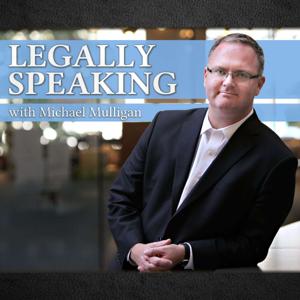


This week on Legally Speaking with Michael Mulligan:
An increasing number of jurisdictions, including New York, Quebec, France, and Israel are prohibiting people who are not vaccinated for COVID-19 from being in public places where people are in close contact, such as restaurants, bars, concerts, and museums.
In Canada, the federal government has announced that it will be providing electronic vaccine passports to facilitate international travel, as well as provincial restrictions such as those being imposed in Quebec.
In British Columbia, the Public Health Act provides authority to prohibit people who have not been vaccinated from engaging in activities or entering places such as restaurants. These provisions are found in section 16 of the Public Health Act.
Other possible restrictions would include not permitting unvaccinated people from attending in-person classes at universities or residing in university student housing. The University of Ottawa has made COVID-19 vaccination mandatory for students, staff, and faculty.
Section 15 of the Public Health Act is also discussed on the show. This section makes it an offence for anyone to “willingly cause a health hazard, or act in a manner that the person knows, or ought to know, will cause a health hazard.”
Also on the show: pepper spray is a prohibited weapon in Canada. This means that simply possessing pepper spray can result in a criminal conviction, even if it’s not used. Because the theoretical maximum penalty for possession of a prohibited weapon is 10 years in jail, someone who is not a Canadian citizen could end up being deported, without a hearing, if convicted of this offence.
The regulation that makes pepper spray a prohibited weapon described what is prohibited in this way:
1. Any device designed to be used for the purpose of injuring, immobilizing or otherwise incapacitating any person by the discharge therefrom of
(a) tear gas, Mace or other gas; or
(b) any liquid, spray, powder or other substance that is capable of injuring, immobilizing or otherwise incapacitating any person.
The BC Court of Appeal has considered this section and concluded that even though something like Mace, which is designed for self-defence, is prohibited, bear repellant, which may be the same substance in a larger bottle, would not be prohibited because it’s not “designed” to injure or immobilize a person.
Even though bear spray may not be a prohibited weapon, it could still be a weapon and therefore constitute an offence if someone were to carry it in a concealed manner, or for a dangerous purpose.
A sentencing decision involving pepper spray is also discussed on the show. It involved an altercation between an 86-year-old and a 57-year-old man shopping at Costco in Vancouver. Following an alleged elbow bump in a doorway, the 86-year-old man pepper-sprayed the 57-year-old man. Despite having pepper spray in his eyes, the 57-year-old ran after the 86-year-old and pushed him with both hands from behind.
The 86-year-old man fell, hit his head, and died. The 57-year-old was convicted by a jury of manslaughter and sentenced to 18 months in jail.
This case may have formed part of the basis for the federal government’s rejection of Alberta’s recent request to legalize pepper spray for self-defence.
Follow this link for a transcript of the show and links to the cases discussed.
This week on Legally Speaking with Michael Mulligan:
The former Clerk of the BC Legislative Assembly, Craig James, was successful in having one of the charges he was facing dismissed.
Mr. James was charged on a six-count direct indictment.
To be charged by direct indictment, either the Attorney General or Deputy Attorney General need to provide their consent. When this happens, an accused person no longer has the right to elect what kind of trial they wish to have and there can no longer be a preliminary inquiry to determine if there is enough evidence to proceed to trial.
Five of the charges on the direct indictment alleged specific wrongdoing, such as obtaining a benefit from the purchase and use of a trailer and wood splitter paid for with public funds.
The first charge, on the direct indictment, alleged that between September 10, 2011, and November 21, 2018, he did “commit breach of trust in connection with the duties of his office by using his position to advance his own personal interests of the public good, contrary to section 122 of the Criminal Code.”
The trial judge agreed that there were several challenges created by this charge.
The charge duplicated the other five charges, without adding anything new. It would have made the trial more complex for the jury and ran afoul of a principle that a charge should generally relate to a single transaction.
As a result, the trial judge exercised her authority to quash the count and manage the trial in a way that would be fair to Mr. James.
Also on the show, the BC Court of Appeal has concluded that the Motor Vehicle Act provisions that make it an offence to “hold” an electronic device while driving are not restricted to holding a device in your hands.
The driver in question had a phone wedged between his leg and the seat.
The Court of Appeal concluded that the ordinary grammatical meaning of the word “hold” and found that it can include “physically grasping, carrying, or supporting an electronic device with any part of one’s body in a position in which the device may be used.”
Finally, on the show, a judge has approved a settlement of a class action against Cathay Pacific Airways Limited as a result of a 2018 data breach that affected 9.4 million passengers worldwide.
Approximately 230,000 passengers were covered by the BC class action.
As a result of the data breach, names, passport numbers, credit card numbers, and other sensitive data were exposed online.
When there is a proposed settlement of a class action a judge needs to determine if the settlement would be in the interest of the class members.
The judge is also required to approve legal fees and an honorarium for the person who served as the representative plaintiff and needed to spend time assisting with the case.
In the case discussed, a settlement of $1.55 million was approved and the representative plaintiff was provided with an additional $1,500 honorarium.
Follow this link for a transcript of the show and links to the cases discussed.
This week on Legally Speaking with Michael Mulligan:
The City of New Westminster cancelled a meeting room rental that had been booked by The Redeemed Church of God for a "Youth Conference".
The City of New Westminster has a booking policy that “restricts or prohibits user groups if they promote racism, hate, violence, censorship, crime or unethical pursuits.”
Following an email complaint that the Youth Conference would be an anti-LGBTQ event, the City of New Westminster made some online inquiries and determined that a speaker at the event had a large profile on social media and recent Facebook postings expressing anti-LGBTQ views.
As a result, The City of New Westminster cancelled the room rental.
The Redeemed Church of God complained about the cancellation and ultimately filed a petition in the BC Supreme Court to, amongst other things, ask that the cancellation be judicially reviewed and reversed.
The request for judicial review was denied on the basis that the room rental was a contractual arrangement and not subject to judicial review.
The judge hearing the case did, however, find that the City of New Westminster had breached The Redeemed Church of God’s right to freedom of expression because the city didn’t take sufficient steps to inform itself about the anticipated content of the Youth Conference to permit a balancing of competing rights to be conducted before making the decision to cancel the room booking.
Also on the show, a decision from the BC Court of Appeal will allow a defamation claim against a former employee of a Vancouver cryptocurrency company to proceed to trial.
The former employee had previously been successful in having the case dismissed pursuant to the Protection of Public Participation Act.
This act, which was introduced in 2019, is intended to prevent unmeritorious civil claims from being used to prevent public criticism.
The Court of Appeal concluded that the judge who dismissed the claim made a mistake in dismissing the claim because, if defamation is proven, damages are presumed to have occurred.
Finally, another Court of Appeal decision dealing with a sentence appeal by a Métis woman who was sentenced to nine months in jail for an assault causing bodily harm conviction is discussed.
The appeal was premised in part on an argument that the sentencing judge had failed to give adequate consideration to the woman’s background, which is expressly required by section 718.2 (e) of the Criminal Code.
That section requires that “all available sanctions, other than imprisonment, that are reasonable in the circumstances and consistent with the harm done to victims or to the community should be considered for all offenders, with particular attention to the circumstances of Aboriginal offenders.”
In this case, the Court of Appeal concluded that that judge was not required to do more than they had, given the absence of information concerning the impact the woman’s Métis heritage had on her difficult background.
Follow this link for a transcript of the show and links to the cases discussed.
This week on Legally Speaking with Michael Mulligan:
A City of Victoria Councillor was caught on video offering money to a tow truck driver and arguing with an RCMP office, in an unsuccessful attempt to dissuade the tow truck driver from removing cars associated with a logging blockade that has been enjoined by a BC Supreme Court injunction.
This activity is discussed in the context of the reasons for judgment granting the injunction.
In his reasons for judgment, the judge referenced section 423 (1) of the Criminal Code. That section makes it a criminal offence to block or obstruct a highway or to watch or beset a person’s place of work, for the purpose of compelling someone to abstain from doing anything that they have the legal right to do.
The judge pointed out that an injunction against committing what would already be a criminal offence is possible where the criminal conduct affects the exercise of a private right.
Also on the show, the Justice Centre for Constitutional Freedoms, a right-wing legal advocacy group, was caught using a private detective to conduct surveillance on the Chief Justice of the Court of Queen’s Bench in Manitoba.
The Justice Centre for Constitutional Freedoms was litigating a case, with the Chief Justice, on behalf of seven Manitoba churches, arguing that their right to worship and assemble was violated by COVID-19 restrictions.
The Justice Centre’s Litigation Director claimed responsibility for the decision.
For his part, the Chief Justice, who spotted the surveillance, advised that he would continue to hear the case. He surmised that it was an effort to gather evidence about his compliance with COVID health restrictions.
The surveillance efforts apparently included the judge’s home and cottage.
Finally, on the show, a new government website that provides information concerning the process to pay, or dispute, various kinds of tickets is discussed.
Tickets can be issued for provincial, federal, and municipal offences and each of these has a different process to pay or dispute it.
Follow this link for a transcript of the show and links to cases discussed.
This week on Legally Speaking with Michael Mulligan:
After accepting $40,000 for expenses, a surrogate mother is asking to be declared the mother of a four-year-old, and obtain access to the child, on the basis that she claims to have become pregnant as a result of an affair with the child’s father, rather than through the use of a home artificial insemination kit.
For his part, the father has admitted to having an affair with the surrogate mother but alleges that this occurred only after the birth of the child.
The surrogate mother has presented records of having terminated two pregnancies, prior to becoming pregnant as a surrogate, where she listed the father of the four-year-old as an emergency contact. She claims that these pregnancies were a result of an affair with the father.
For the first two years of the child’s life, her parents permitted the surrogate mother to spend time with her. This relationship between the parties faltered when the surrogate mother demanded $100,000 and a fixed visitation schedule.
A trial to determine if the surrogate mother should be listed as a parent of the child, and obtain access to her, is scheduled for later in the year.
While awaiting trial, the surrogate mother applied for interim access to the child. This application was denied by a judge following an assessment of the best interests of the child. The judge concluded that the child’s best interests were served by stability, pending the outcome of the trial.
Also on the show, the destruction of churches, a Captain Cook statue, and a totem pole and how these could relate to sections 21 and 718.2 of the Criminal Code.
Section 21 of the Criminal Code is concerned with parties to an offence. Anyone who does or omits to do anything for the purpose of aiding any person to commit an offence or abets any person in committing an offence is a party to an offence.
Section 718.2 (a) (i) makes it an aggravating factor on sentencing that an offence was motivated by bias, prejudice or hate based on race, national or ethnic origin, language, colour, religion, sex, age, mental or physical disability, sexual orientation, or gender identity or expression, or on any other similar factor.
Finally, section 96 of the Constitution Act 1867 provides for the federal appointment of Superior Court Judges.
Superior Court judges can only be removed from office by the Governor General on address of the Senate and House of Commons.
This prevents Superior Court Judges from being fired for making decisions the government doesn’t like.
The independence that this provides could be undermined if the government could transfer the jurisdiction of Superior Court judges to different kinds of judges it could fire or otherwise control.
A recent Supreme Court of Canada decision concluded that, for this reason, the province of Quebec was not permitted to transfer jurisdiction over claims up to $85,000 to Quebec’s provincial court.
This decision is likely to have implications for British Columbia’s effort to transfer jurisdiction over claims relating to the new ICBC no-fault system to the Civil Resolution Tribunal. Adjudicators who make decisions in the Civil Resolution Tribunal are on short-term government contracts and could be fired, or not have their contracts renewed if the government was unhappy with decisions they were making.
Follow this link for a transcript of the show and links to the cases discussed.
This week on Legally Speaking with Michael Mulligan:
In 1976, when Canada eliminated the death penalty for murder, the compromise was a mandatory life sentence for people convicted of murder.
One of the circumstances where mandatory life sentences can result in an excessively long period of time in jail is for people who are subject to long periods of domestic abuse who eventually kill their partner.
Recently, in Alberta, a woman who was seriously abused by her husband for almost thirty years eventually shot him while he was sleeping. The abuse included ordering the wife around with a gun and threatening to kill her if she left the marriage.
Crown Counsel charged the woman with first-degree murder but eventually agreed to accept a guilty plea to manslaughter on the condition that she would agree to an 18-year jail sentence.
Because a conviction for first-degree murder requires a life sentence, with no possibility of parole for 25 years, the woman agreed.
In some cases, battered women syndrome has been recognized as a basis for self-defence, even where the abusive partner wasn’t a threat at the time of the killing. How this would be viewed by a jury on the facts of a particular case would always be uncertain.
When there is a guilty plea and agreement between the lawyers involved concerning the sentence to be imposed, a judge is required to impose the sentence unless doing so would bring the administration of justice into disrepute. This is a very high standard and is intended to encourage cases to be resolved by negotiations.
Following the sentencing, there was public backlash on the basis that the sentence was excessive, given what precipitated the killing. An online petition to reduce the sentence collected almost 24,000 signatures.
On appeal, a new lawyer acting for the woman is arguing that the petition is evidence that the sentence does bring the administration of justice into disrepute and should be reduced.
There is no mandatory minimum sentence for manslaughter.
Also on the show, following the resignation of Julie Payette as Governor General, the Chief Justice of the Supreme Court of Canada took over as Administrator, fulfilling the Governor General’s responsibilities.
Authority for the Chief Justice to take over these responsibilities is derived from the Letters Patent, 1947, issued by King George VI.
In this capacity, the Chief Justice is giving Royal Assent to bills, and would also be responsible for things such as dissolving parliament for a general election, choosing a Prime Minister to form a government, and reading the Speech from the Throne.
This second job could become awkward if the Chief Justice was later hearing a challenge to the legislation, he had delivered a Speech from the Throne about and then provided royal assent for.
Finally, a prosecution in Hong Kong for violating China’s national security law has demonstrated how the Chinese Communist Party has dissolved a justice system that was previously similar to the one we have in Canada.
The case involves a man charged with sedition and terrorism offences for riding a motorcycle while carrying a flag with a pro-democracy slogan on it.
The security law allows the government to pick which judges can hear the case, deny the man a jury trial, hold him in jail until his trial, and subject him to a maximum sentence of life in prison if convicted.
Follow this link for a transcript of the show and links to the cases discussed.
This week on Legally Speaking with Michael Mulligan:
Budway, a Vancouver marijuana store, has been using a logo similar to the Subway sandwich logo. Budway also had a mascot in the form of a submarine sandwich filled with cannabis leaves, with bloodshot, half-open eyes.
Subway sued Budway, alleging various breaches of the Trademarks Act.
One of the issues in the case was whether what Budway was doing amounted to “passing off” This can occur if consumers could be misled into believing that something is being manufactured, sold, or performed by a different company.
Last year, Toys “R” US sued another Vancouver marijuana store called Herbs “R” US. In that case, while Toys “R” US was successful in proving that their goodwill was being depreciated by Herbs “R” US, they failed to prove that Herbs “R” US was engaged in passing off because even a casual consumer would not think the same company that sold toys was also selling marijuana.
Subway was successful in their passing off claim because the Subway trademark was related to the sale of things including cookies, muffins, and pastries.
Budway was selling marijuana edibles, including cookies and brownies, and has posted an online video promoting Munchie Monday with 10% off all edibles.
Subway was awarded $15,000 in damages plus $25,000 in legal costs.
Also on the show, the Highlands District Community Association was unsuccessful in the BC Court of Appeal challenging the decision of the Mines Inspector to approve a mine in the District of Highlands.
Unlike other kinds of development, municipalities don’t decide if a mine can be built. That decision is made by the Mines Inspector: a provincial government official.
The community association argued that the Mines Inspector was obliged to consider the climate change implications of permitting the mine.
On a judicial review of an administrative decision, judges are not permitted to just make whatever decision they think would be best. Judges can only overturn an administrative decision, such as the one to permit the mine, if they conclude the decision was unreasonable, or if there was no authority to make the decision.
In this case, the Court of Appeal agreed that climate change was important and found that the Mines Inspector would be permitted to consider it, however, all three judges agreed that the Mines Inspector’s decision was not made unreasonable by his decision not to seek out evidence about how the proposed mine would impact climate change.
Finally, on the show, a Supreme Court of Canada case involving how privacy interest should be weighed against the principle that courts are to be open and transparent.
The case involved an application by the estate of a wealthy Toronto couple, who was murdered in 2017, to keep the estate file private.
The Supreme Court of Canada concluded that the file should not be sealed because ensuring court decisions were open to the public was important and an essential feature of a democracy. It’s important that the public be able to know what’s happening when courts make decisions.
The Supreme Court of Canada did find that, in limited circumstances, court proceedings could be sealed when allowing access would undermine the dignity of individuals involved by permitting access to private information that was so sensitive that it could be said to strike at the biographical core of the individual.
Follow this link for a transcript of the show and links to the cases discussed.
This week on Legally Speaking with Michael Mulligan:
The BC Supreme Court has inherent jurisdiction to control its own process. This includes the authority to find people who breach court orders to be in contempt. The purpose of this is to uphold the rule of law.
The rule of law requires people to comply with court orders, even if they don’t agree with them.
If people were permitted to decide which laws they wished to comply with, the strongest mob would prevail, and the result would be anarchy.
There are two different forms of contempt that can apply when a court order is breached: civil contempt, and criminal contempt.
Criminal contempt involves the element of public defiance of a court order with intent, knowledge or recklessness that doing so will undermine the authority of the court.
Unlike with civil contempt, where the objective is ensuring compliance with the order, a sentence for criminal contempt includes punishment for the behaviour.
A recent BC Supreme Court case, discussed on the show, clarifies the procedure for criminal contempt proceedings and makes clear that the provincial Attorney General does not have the authority to decide if such prosecution should occur.
In British Columbia, starting with a contempt proceeding for people who were blocking access to the Everywoman’s Health Centre, in contravention of a court order, a practice of the court “inviting” the Attorney General to undertake prosecutions for criminal contempt developed.
In the current case, six individuals who were involved in a blockade of the Vancouver Port Authority, contrary to a court order, in furtherance of a dispute over a natural gas pipeline, were arrested. The court hearing the case concluded that the contempt appeared to be criminal in nature and thus invited the Attorney General to conduct the prosecution.
Rather than doing so, however, the Attorney General took the position that he had the authority to assess the prosecution in the same way as might occur when the police submit a report and recommend criminal prosecution. This kind of assessment involves both a consideration of the strength of the case, and whether prosecution would be in the public interest.
The Attorney General declined to prosecute the people who had been blocking the port in violation of the court order, citing public interest considerations.
The court, in the recent decision, has made clear that the Attorney General doesn’t have authority to decide if a criminal contempt prosecution should proceed. The court has control of the process, and if the Attorney General doesn’t accept the invitation to conduct the prosecution, the court may consider other measures, such as appointing a special counsel to present the case.
Also on the show, a 72-year-old widow ends up with a $166,702.73 bill for removing 324 tonnes of contaminated soil as a result of an underground oil tank leaking.
After an initial victor at trial, when a judge concluded the cleanup contract was unconscionable, pursuant to the Business Practices and Consumer Protection Act, this finding was overturned on appeal.
Finally, the Supreme Court of Canada has provided further guidance on when unpaid child support arrears should be reduced. Two takeaways from the case were that a person paying child support, who has a change of financial circumstances, needs to share this information in a timely way and that continuing to pay what is possible, from a reduced income, will demonstrate good faith.
Follow this link for a transcript of the show and links to the cases discussed.
This week on Legally Speaking with Michael Mulligan:
Annaca Kobayashi, a 19-year-old woman from Langford, falsely reported to the police that a young man she knows had threatened her with a knife and sexually assaulted her.
A police investigation, including a review of a video recording where she claimed to have been threatened with the knife, revealed her story to be false.
Only after a third police interview did Ms. Kobayashi, who had a boyfriend at the time, admit that she made the story up.
The young man who was falsely accused spoke to the police and advised that Ms. Kobayashi and he had consensual sex.
Ms. Kobayashi was charged with public mischief for making the false report to the police. She eventually entered a guilty plea and received a conditional discharge with 24 months of probation and 50 hours of community work service.
A conditional discharge means that, if a period of probation is successfully completed, the person will be deemed not to have been convicted of a criminal offence and, after a period of time, the record of the conviction will automatically be removed from the CPIC computer system.
The test for a conditional discharge is whether avoiding a criminal conviction would be both in the best interests of the offender and not contrary to the public interest.
A conviction for threatening someone with a knife and sexually assaulting them would result in many years in jail.
Also on the show, the BC Court of Appeal overturned a conviction for sexual interference and sexual assault as a result of the trial judge reversing the burden of proof.
The case involved a complainant testifying that she was sexually assaulted, and the accused testifying that he did not do it.
The judge relied on the fact that the accused could not explain why the complainant would lie in order to convict him.
The accused person, in a criminal case, is not required to explain why a complainant would lie. To require this is to reverse the burden of proof.
As a result, a new trial has been ordered.
Finally, the BC Court of Appeal has allowed an 84-year-old man to remain in a trailer park he had been living at for more than a decade.
The trailer park was owned by the man’s brother. The brother had an agreement with the man that he could live in the trailer park for the rest of his life in exchange for providing work and services.
When the brother died, his executors attempted to evict the man, unless is began paying $350 per month is pad rent.
The Court of Appeal referenced the Manufactured Home Park Tenancy Act which provides for tenancy relationships to be made orally and defines rent broadly to include not just money but “value or a right given or agreed to be given” in return for the right of possession.
As a result, the Court of Appeal referred the case to the director of the Manufactured Home Park Tenancy Act to determine if a tenancy exists.
Follow this link for a transcript of the episode and links to the cases discussed.
This week on Legally Speaking with Michael Mulligan:
Duress is a defence, sometimes referred to as an excuse, for the commission of a criminal offence.
The rationale for the defence is the idea of moral involuntariness.
These are the requirements for the defence:
Once the accused person demonstrates that there is an “air of reality” with respect to each element of the defence, the Crown would need to prove that the defence does not apply.
In the case discussed, the accused, and his brother, were on the same unit in jail as a man known as Big Newf.
Big Newf demanded that the accused smuggle drugs into the jail. If the accused didn’t do this Big Newf, who had a reputation for violence, would harm the accused, or his brother.
Big Newf arranged for a surety to help the accused get bail and then the person acting as a surety had the accused swallow and insert drug packages into his rectum. The accused was then required to turn himself into the police to get readmitted to jail.
The accused did not think he had any safe avenue of escape because Big Newf, and his associates, had access to his brother who was still in jail.
The trial judge, and the Ontario Court of Appeal, both concluded that the Crown had not proven that the defence of duress did not apply.
Also on the show, the BC Court of Appeal upholds an 11-year jail sentence, for a man with no previous record, who plead guilty to trafficking in carfentanil.
The man had been selling drugs online and shipping the drugs via Canada Post. Online advertising for the drugs included statements such as “one of the premium Fentanyl vendors in Western Canada.”, “carfentanil … [w]hen used responsibly … is proven to be very safe”, and “we have the best stealth period”.
Finally, on the show, a BC Court of Appeal decision increasing the wrongful dismissal award in favour of an articling student who was fired by her principal is discussed.
The court described the lawyer’s conduct as “high-handed, malicious, arbitrary or highly reprehensible misconduct that departs to a marked degree from ordinarily standards of decent behaviour.”
The fired student was awarded $118,934 in general damages, $25,000 in punitive damages, $50,000 in aggravated damages, and $10 for breaching an articling agreement.
Follow this link for a transcript of the show and links to the cases discussed.
From the publisher's feed

433 Listeners

408 Listeners
210 Listeners

207 Listeners

76 Listeners

36 Listeners

67 Listeners

106 Listeners

86 Listeners

451 Listeners
50 Listeners

112 Listeners

8,430 Listeners

34 Listeners

47 Listeners