
Sign up to save your podcasts
Or

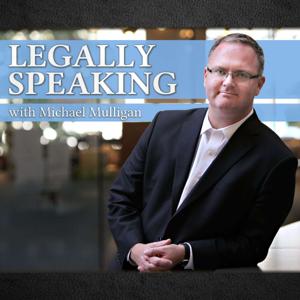


This week on Legally Speaking with Michael Mulligan:
Several churches in the Fraser Valley have been refusing to comply with COVID-19 health rules and have been conducting in-person services.
The churches have started a legal challenge to the public health orders on the basis that they believe them to be unconstitutional given constitutional protection for “freedom of conscience and religion”.
This, and related constitutional protections, are subject to “such reasonable limits prescribed by law as can be demonstrably justified in a free and democratic society”.
Ultimately, the courts will need to decide if the prohibition on in-person religious services meets this test.
Prior to the matter being decided, the province of British Columbia, and Dr. Henry, asked the Chief Justice of the BC Supreme Court for an interim injunction to order the churches to stop conducting the in-person services, until the case had been decided.
There is a three-part test to determine if an interim injunction should be issued:
1. Has the applicant demonstrated there is a fair question to be tried?
2. Will the applicant suffer irreparable harm if an injunction is not granted?
3. Does the balance of convenience favour the granting of an injunction?
Chief Justice Hinkson determined that while the first two parts of the test for an interim injunction had been met, including a finding that there could be irreparable harm including deaths, the third part of the test had not been met.
His reasons for reaching this conclusion included the fact that the Public Health Act already permits large fines, and jail sentences, to be imposed where orders are not followed, and the fact that British Columbia failed to prosecute people who were alleged to have been intentionally violating a previous injunction to stop blockading the port in Vancouver.
Chief Justice Hinkson quoted from a decision of Justice Tammen who found that the people intentionally breaching the injunction to stop blockading the port were engaged in a direct attack on the rule of law.
Also discussed on the show is a recent BC Court of Appeal decision dealing with the definition of a motor-assisted cycle.
The BC Motor Vehicle Act, and associated regulations, exempt some motor-assisted cycles from the need for insurance and the need for a licence to operate them.
Unfortunately, the rules are dated, and ambiguous.
In the case discussed, the 3 Court of Appeal judges split 2 – 1 on whether a new trial was required.
In order to encourage people to use an alternative, electric, transportation options it would be desirable for the provincial government to update and clarify the regulations to clearly include devices that did not exist when the current regulations were created.
Without clarity, people using newer electric transportation devices may be subject to very large fines where were intended to discourage people from operating large traditional vehicles without insurance.
For links to the cases discussed, follow this link.
This week on Legally Speaking with Michael Mulligan:
What happens when someone, repeatedly, pretends to be a medical doctor, despite repeated injunctions and fines being imposed? They go to jail.
The College of Physicians and Surgeons of British Columbia is responsible for bringing applications to the BC Supreme Court to stop someone who is not qualified from using titles like “Dr.” or “Physician”.
In the case discussed on the show, Ms. Ezzati pretended to be a doctor and performed medical procedures on 18 separate days, on over 30 individuals, despite repeated orders to stop. The judge found that she has caused harm to all of these individuals and exposed them all to the risk of more serious and potentially life-threatening harm.
Ms. Ezzati was found to be in possession of brochures, resumes, and other material, indicating that she was pretending to be a doctor. She failed to pay fines that were imposed and pretended to have COVID-19 to avoid attending a court hearing.
As a result of this conduct, which went on for three years, the judge eventually sentenced Ms. Ezzati to 6 months in jail.
Also, on the show, a recent Supreme Court of Canada case involving the concept of good faith, in the context of contracts, is discussed. The Supreme Court of Canada has dealt with several cases recently where it has expanded the concepts of honesty, and good faith, in contractual dealings.
The most recent case involved a contract with a Vancouver regional district to truck garbage to disposal sites. The contract allowed the district to select which of three sites the garbage would be trucked to and provided for different payments depending on how far the garbage was hauled.
The district decided to use a disposal site closer to Vancouver, which resulted in the garbage disposal company making less money.
Even though the contract specified a target profit for the garbage disposal company, the Supreme Court of Canada found that the concept of good faith didn’t require the district to have the garbage trucked further in order to increase the profit of the company. The court concluded that the district had made the decision to choose a closer site for legitimate reasons: to save money on hauling.
Good faith does not require a party to a contract to make decisions that are contrary to its legitimate interests.
Finally, on the show, in the context of 1716 overdose deaths in British Columbia in 2020, the province has asked the federal government to decriminalize the possession of small amounts of drugs so that a medical rather than law enforcement approach can be implemented.
The number of people who died of overdoses in British Columbia increased by 74% over 2019 and was significantly more than the number of people who died of COVID-19.
COVID-19 likely contributed to the sharply increased number of overdose deaths. People are more likely to use drugs when they become unemployed, are more likely to use drugs alone due to COVID-19, and mitigation measures such as increased unemployment benefits facilitate the purchase of drugs.
This week on Legally Speaking with Michael Mulligan:
In 1999 the Supreme Court of Canada, in a case called Gladue, set out principles to be considered when indigenous people are involved in the criminal justice system. Judges were directed to consider all available sanctions other than imprisonment and to pay particular attention to the circumstances of aboriginal offenders.
Despite the admonishments from the Supreme Court of Canada, the overrepresentation of aboriginal people in jail has continued to increase.
Aboriginal people make up slightly less than 5% of the Canadian population. In 2001, 17.59% of people in federal penitentiaries were aboriginal. By 2020, this percentage had increased to 30.04%.
A recent Ontario decision is discussed on the show. The judge in the case overturned a lower court decision to detain an aboriginal person while they awaited trial. The judge made clear that it’s a serious error of law not to consider Gladue principles at a bail hearing.
Despite being charged with several serious offences, the judge concluded that the aboriginal person should be released pending trial taking into account their background which included enduring a horrible childhood marked by physical and sexual abuse, as well as discrimination at being a two-spirited person.
The judge considered the recent opportunity the person had for housing and viewed their background in the context of trauma, and mental illness, including fetal alcohol syndrome, ADD, PTSD, anxiety, depression, and alcohol and drug addiction.
The decision is an important reminder of why it’s important to pay careful attention to the circumstances of aboriginal people involved in the justice system, at all stages of proceedings.
In order to ensure that judges are aware of Gladue considerations, it would be wise to ensure that inquiries are made at an early stage to determine if someone identifies as aboriginal.
Court files that involve an allegation of violence in an intimate relationship are indicated with a letter “K” so that consideration can be given to special factors that can arise in cases of that kind. A similar system could be adopted, perhaps by adding a letter “G” when an accused person is aboriginal.
Particularly, given the increased use of video and audio connections in response to COVID-19, making an inquiry to determine if the accused is aboriginal would be a wise practice.
Also discussed on the show is a case involving an unsuccessful claim for medical malpractice after a surgical wisdom tooth extraction resulted in permanent, debilitating, facial pain.
While the plaintiff agreed that the doctor had used reasonable care in conducting the procedure, her claim was based on the fact that the doctor had not warned her of the rare possibility of such permanent and debilitating pain.
While it was common ground that no such warning was provided, the claim was still not successful because the trial judge, and the Court of Appeal, concluded that even with such a warning the plaintiff would have proceeded with the surgery.
The legal test is whether a reasonable person would still have agreed to the medical procedure if they were advised of the risk. In this case, the plaintiff had terrible pain from her wisdom tooth, before the surgery and nothing else was able to alleviate this.
Finally, on the show, the BC Court of Appeal confirms that absent extraordinary circumstances judges cannot impose probationary conditions that banish people from a community. In the case being considered a condition that required someone to stay 100km away from a home they had broken into was reduced to 100 meters.
Follow this link for links to the cases discussed.
This week on Legally Speaking with Michael Mulligan:
Google has agreed to settle a Canadian Class Action based on an alleged breach of privacy arising from the collection and transmission of Android smartphone data. The data in question consists of the identification number or code of the cell towers used to connect Android phones.
The Cell ID Data would identify the Android phone by unit serial number and could if considered alongside significant additional data obtained from other sources, assist someone in deducing the identity and location of an Android phone user. The data at issue was transmitted to Google from January through December of 2017.
Once a class action has been certified, a proposed settlement must be reviewed by a judge to determine if it is in the interest of the class members. Fees for counsel who conducted the class action much also be approved by a judge.
Here, the settlement of $1 million was approved. This amount will be distributed to class members who are identified. In addition, two representative plaintiffs, who spent time assisting with the class action, received an honorarium of $2,000 and $500 in accordance with the time and work they spent helping with the class action.
Also, on the show, the difference between murder and manslaughter is discussed in the context of a recent case from Nanaimo where a drug dealer that tormented one of his drug-addicted clients was finally beaten to death by the client.
What would otherwise be Murder can be reduced to manslaughter if the killing was the result of provocation from “a wrongful act or insult that is of such a nature as to be sufficient to deprive an ordinary person of self-control.”
In 2015 the Zero Tolerance for Barbaric Cultural Practices Act added an additional requirement to this partial defence to murder which required the wrongful act of insult to also be a criminal offence punishable by more than five years of imprisonment. The intention of the change was to ensure murder convictions for honour killings.
In a previous British Columbia case, however, a judge concluded that the addition of the requirement that the act of insult also constitutes this kind of criminal offence could result in battered women, and others, being convicted of murder and sentenced to life in jail if they were to finally respond to some form of intolerable abuse that would not, itself, constitute a crime. As a result, in British Columbia, the requirement that the wrongful act or insult also be a crime punishable by more than five years of imprisonment was found to be unconstitutional.
Follow this link for a transcript of the episode and links to the cases discussed.
This week on Legally Speaking with Michael Mulligan:
A BC Supreme Court Judge describes the BC COVID-19 public health orders as “fraught with inconsistency and ambiguity” and that it’s “not surprising that reasonable people can reasonably disagree about their interpretation and application in any given circumstance.”
This case is one of many that have arisen where separated parents disagree about the interpretation of the orders and how they should be applied in the context of children spending time at both parents’ homes.
The particular case was made more complicated because the orders seem to assume traditional family structures. In the case discussed the separated father, who had care of the two young children in question half the time, had become an adherent of polyamory. He described this as “a belief that all genders are equal and that loving, negotiated, individualized, consensual, and egalitarian relationships can include more than the Judeo-Christian ‘normality’ of a monogamous heterosexual couple.”
In accordance with this, the father’s new partner has a husband with whom she spends slightly more than half of her time. All three parties to this relationship were supportive of the arrangement.
Because of how the COVID-19 orders are drafted, the result of this scenario is that the husband’s apartment became a “vacation accommodation” for his new partner despite this being completely at odds with the ordinary meaning of this term.
Having worked through various ambiguous and difficult to interpret provisions of the orders, the judge concluded that the father’s relationship was not in breach of them, and that the mother should stop withholding access to the children.
It would seem that the government is aware that the orders in question are ambiguous as they have posted a notice on the government web site that says, “Do not look for loopholes or excuses to gather.”
The judge in the case also pointed out that the premier of BC, relying on advice from his Minister of Heath, was obliged to change his plans for Christmas Day at home with his wife, son and her daughter-in-law when it was pointed out to him that such a gathering would be in breach of the orders.
Also discussed in the episode is the case of a man who was convicted of murder in the year 2000. He has maintains his innocence and is still in jail. He blames his conviction on the ineffective assistance of two lawyers: one at his trial and the other on his appeal.
The Court of Appeal clearly had a concern with how the man’s second lawyer conducted himself as it asked the Law Society to investigate the lawyer, who was eventually required to stop practicing.
The man who was convicted was applying for permission to use records the Law Society collected in the course of investigating the lawyers in question. This application was, however, denied by a judge who needed to weigh the importance of the documents against claims of privilege by the Law Society.
The records collected by the Law Society, when investigating the lawyers, would include privileged information concerning other clients of the lawyers in question.
The man will need to advance his renewed application for leave to appeal to the Supreme Court of Canada, or to the Minister of Justice, without the benefit of the Law Society records.
Follow this link for a transcript of the episode and links to the cases discussed.
This week on Legally Speaking with Michael Mulligan:
The Supreme Court of Canada has granted the Crown leave to appeal a BC Supreme Court decision that found a new law that required people accused of various sexual offences to provide advance notice of records they wish to rely on to the complaint and Crown to be unconstitutional.
The law in question was passed following the Jian Ghomeshi case where the complainant’s credibility was undermined by email messages, they had sent that contradicted their evidence at trial.
The BC Supreme Court judge that found the advance notice law to be unconstitutional said the following: “The danger that the complainant’s evidence may be tailored, consciously or unconsciously, is not illusory. This is why witnesses are almost invariably excluded from the courtroom until they have given their evidence.”
Also discussed is a BC Provincial Court decision that deals with the process and test to be applied when an accused person provides a cash deposit to be released on bail and then breaches their conditions of release.
When this occurs, the Crown can make an application for forfeiture of the money and the accused person would be given an opportunity to show cause why this should not occur. There is a presumption that when bail conditions are breached, cash bail will be forfeited upon application by the Crown.
Finally, a BC Supreme Court decision is discussed which was concerned with the requirements for radar readings to be accepted on a prosecution for speeding.
Evidence of the following is required:
1. That the particular equipment used was properly operated by a qualified person;
2. That the equipment function and accuracy were tested with whatever tests were required or suggested for it;
3. That the tests or procedures indicated the equipment was operating properly; and
4. That those tests indicated that the equipment was capable of accurately registering the speed of an alleged offending vehicle.
In the particular case being considered the evidence on these points was very brief and general, however, it was not challenged at trial in any way and, as a result, was found to be sufficient to permit consideration of the radar speeding reading.
Follow this link for a transcript of the episode and links to the cases discussed.
This week on Legally Speaking with Michael Mulligan:
Provisions of the British Columbia Public Health Act allow for the enforcement of public health orders by means other than the imposition of fines.
If someone is refusing to comply with an order to remain in quarantine or isolation, a judge can issue a warrant for their arrest and to require that they remain detained in a location and on conditions determined by the judge. When someone is arrested pursuant to such an order there is provision for the detention to be reviewed by a judge as soon as reasonably possible, but no later than 7 days from the start of the detention.
Section 114 of the Public Health Act also allows for the provincial government to make regulations that would require people to participate in preventive measures, such as receiving a vaccine or to prohibit people who have not taken a preventive measure from entering a place, working with a class of people, or in a class of occupations.
While the provincial government has indicated that it does not plan to require vaccinations, it would not be surprising if people who chose not to be vaccinated would not be permitted to work at or attend, places where people at high risk from COVID-19 are such as hospitals or long-term care homes.
Also on the show: a recent case from the Supreme Court of Canada has expanded the concept of the “duty of honest performance” with respect to contracts.
The case involved a small property maintenance company in Ontario that had a contract to perform winter maintenance for a condominium complex. The contract said that it could be cancelled with 10-days of notice. Despite this, members of the condominium complex knowing mislead the owner of the maintenance company suggesting that the contract would be continued.
The Supreme Court of Canada concluded that, while there was no obligation to give more than 10-days of notice, intentionally misleading a party to the contract was not permitted by the duty of honest performance. In reaching this conclusion the majority of the Supreme Court of Canada considered the civil law abuse of rights framework and used this to inform their analysis of the common law duty of honest performance.
Finally, on the show, a class action was certified against the Province of British Columbia for harm caused by keeping inmates in solitary confinement.
Two groups of imamates were included: those who were kept in solitary confinement for at least fifteen consecutive days, and those who suffered from mental illness and were placed in solitary confinement.
An argument by the Province of British Columbia that provincial jails don’t have “solitary confinement”, but rather “separate confinement” or “segregation” was not accepted by the court.
Follow this link for a transcript of the show and links to the cases discussed.
Rather than using collection agencies to collect COVID-19 related fines, the province of BC shouldn’t be sending $1,000 COVID-19 benefits to people who have outstanding fines for breaching orders of the Provincial Health Officer.
As the payment are gratuitous, they could simply be withheld to pay outstanding fines for breaching orders made pursuant to the Public Health Act.
The idea that someone who has received a fine for having a house party during the COVID-19 pandemic would receive a $1,000 payment from the government which would then need to be recovered by a collection agency, doesn’t make a lot of sense.
Also discussed on the show is a judicial recount from the West Vancouver-Sea to Sky Electoral District. The initial count resulted in a 41-vote difference between the Liberal, and the Green Party candidate.
Ambiguous ballots included someone who only wrote: “Donald Trump” next to a candidate’s name and someone else who drew a swastika next to a candidate’s name. The “Donald Trump” didn’t count, but the swastika did. The swastika was “close to the line” according to the judge but he concluded it conformed in shape with a cross and indicated an intention.
Ultimately, the recount didn’t change the outcome with the Liberal candidate ending up with a 60-vote lead.
The judge contrasted how carefully the recount was conducted, with all involved being gracious including the unsuccessful candidate, with Donald Trump’s “all-capitals tweets rather than evidence.”
Another case, from the Court of Appeal, dealing with the payment of real estate commissions, where a home sale doesn’t complete is discussed. The “standard form” listing agreement used by real estate agents makes commissions payable upon a sale contract being entered into, even if the sale doesn’t complete.
Prospective sellers, and purchasers, should be aware of this. A seller may be required to pay two commissions to sell a property if the first sale doesn’t complete. A buyer, who doesn’t complete, could end up being ordered to pay for the extra commission. Sellers may wish to modify the “standard form” agreement to avoid this so as to make a commission payable only upon completion of a sale.
Finally, the BC Provincial Court, and the BC Supreme Court, have issued practice directions requiring parties to indicate what pronoun they prefer: eg. Mr. / Ms. / Mx. or Counsel.
Despite this, and unlike the BC Provincial Court, where judges are addressed as “Your Honour”, in the BC Supreme Court, and in the BC Court of Appeal, “My Lady” and “My Lord” is still used.
Judges in the BC Supreme Court, and the BC Court of Appeal, should either adopt a practice of advising whether they prefer “My Lady” or “My Lord” or, in the alternative, “Your Honour” should be adopted in all of these courts, for all judges.
Follow this link for a transcript of the episode and links to the cases discussed.
Renowned constitutional lawyer Joe Arvay passed away unexpectedly at the age of 71. Over the course of a remarkable career focused on public interest constitutional litigation he had a profound impact on the lives of many people.
A few of the many cases he was involved with are discussed on the show, ranging from the Little Sisters bookstore case, that dealt with freedom of expression and equality rights to one of his most recent cases involving civil forfeiture of property that might be used, in the future, for criminal activity.
R. v. Henry was a case involving a man wrongfully convicted of 10 sexual offences for which he was designated a dangerous offender and kept in jail for almost 27 years. His wrongful conviction was caused by the Crown not disclosing 30 witness statements that would have undermined already problematic identification evidence, as well as key forensic evidence. The Crown also concealed evidence of another suspect who had been arrested twice in the vicinity of the attacks.
Mr. Arvay was successful in obtaining compensation for Mr. Henry as a constructional remedy, without having to prove that the prosecutor who withheld the evidence acted with malice. Prior to this case, no compensation would have been available unless the wrongfully convicted person was able to provide the Crown was motivated by an improper purpose.
The high threshold was intended to protect prosecutorial discretion over matters such as the decision to prosecute someone or not. The Supreme Court of Canada accepted Mr. Arvay’s argument that there is no discretion concerning the obligation to provide disclosure of evidence once a prosecution is undertaken.
Another notable case discussed on the show is Canada (Attorney General) v. Bedford. In this case, the Supreme Court of Canada struck down several of the prostitution laws that existed at the time. The court accepted that the legal prohibitions made life more dangerous for sex workers by preventing them from taking steps to ensure their safety. This was found to contravene section 7 of the Charter that protects the security of the person.
Carter v. Canada (Attorney General) is also discussed on the show. In this case, the Supreme Court of Canada concluded that the assisted suicide prohibitions were unconstitutional to the extent that they prohibited physician-assisted death for a competent adult person who (1) clearly consents to the termination of life and (2) has a grievous and irremediable medical condition (including an illness, disease or disability) that causes enduring suffering that is intolerable to the individual in the circumstances of his or her condition.
This case reversed an earlier Supreme Court of Canada decision and is an example of Mr. Arvay not accepting an older decision as being immutable. The Supreme Court of Canada agreed that earlier decisions could be revised in two circumstances: (1) where a new legal issue is raised; and (2) where there is a change in the circumstances or evidence that fundamentally shifts the parameters of the debate.
The final case discussed was ongoing at the time of Mr. Arvay’s death. It involved the British Columbia civil forfeiture legislation which permitted property to be taken by the government on the basis that it is likely to be used, in the future, for criminal activity.
Mr. Arvay was successful at trial in having these provisions struck down as being unconstitutional. The trial judge used an example of a person being convicted of dangerous driving, serving their sentence, purchasing a new car, and having the government take the new car on the basis that it was likely they would drive dangerously again in the future.
Follow this link for a transcript of the episode and links to the cases discussed.
Mr. Big investigations involve tricking a suspect into believing they are being recruited into a fictitious criminal organization. Often a large number of undercover RCMP officers are involved.
Typically, the undercover police officers will spend months having the suspect perform tasks for the fictitious criminal organization, paying them to do so.
Eventually, the suspect will be introduced to the fictitious boss of the fictitious criminal organization who will tell the suspect that they need to tell them about the real crime that is actually being investigated so that loose ends can be tied up or so that Mr. Big can protect the suspect.
Variations of this technique have been used hundreds of times in Canada.
Unfortunately, it can be so corrosive that multiple innocent people have confessed to committing crimes out of either fear of the fictitious criminal organization, a desire to join it and continue making money or in order to get continued attention.
As a result, the Supreme Court of Canada has made Mr. Big confessions presumptively inadmissible. To be used the Crown now needs to establish that the probative value of the confessions exceeds its prejudicial effect, and the operation didn’t constitute an abuse of process.
In the case discussed on the show, the fact that the RCMP facilitated the suspect breaching court orders he was subject to, without judicial authorization, was not found to be an abuse of process.
Also discussed is an appeal from a conviction for first-degree murder. The appeal is based on gestures alleged to have been made by one of the jurors to the family of the deceased child during the course of the trial.
A rarely used provision of the Criminal Code that permits live evidence to be heard on an appeal is being utilized so as to permit the cross-examination of various people who observed the gestures.
The section only permits witnesses who would have been compellable at the trial to testify at the appeal. Therefore, relying on a decision in a case from 1995 where a juror had an affair with a suspect in a murder trial, while the case was going on, the juror who made the gestures cannot be called as a witness.
Finally, at the Surrey courthouse, a number of sheriffs who were responsible for transporting prisoners tested positive for COVID-19. Court staff, including Crown Counsel, were notified and advised to self-isolate and get testing. No notice was, however, provided to other lawyers who had been at the courthouse at the same time out of a desire to provide privacy for the sheriffs.
This has caused a great deal of concern as the people who were not notified weren’t able to take timely steps to ensure their safety and the safety of their families.
Courthouses could adopt practices similar to restaurants and keep a record of people who attend each day, along with phone numbers or email addresses so as to facilitate rapid notifications if there is potential exposure.
Follow this link for a transcript of the episode and links to the cases discussed.
From the publisher's feed

433 Listeners

408 Listeners
210 Listeners

207 Listeners
76 Listeners

36 Listeners

67 Listeners

106 Listeners

86 Listeners

451 Listeners
50 Listeners

112 Listeners

8,430 Listeners

34 Listeners

47 Listeners