
Sign up to save your podcasts
Or


You know how most D&D characters are born fully formed at level one — parents dead, personality optional, and a backstory written five minutes before initiative?
Yeah — not today.
Today we're rolling childhood trauma on random tables, getting adopted by gnomes after fatal alchemy accidents, committing crimes we didn't commit, and possibly dying before Session One even starts. Because life path character creation doesn't just ask:
"Who are you?"
It asks:
"What if your wizard got fired, drafted, divorced, marooned, or eaten by bureaucracy before the campaign began?"
So grab some dice — we're not building characters. We're speedrunning their entire existential crisis.
Show NotesThis episode explores life path character creation systems — an alternative to traditional menu-driven D&D character building — examining how different RPGs integrate backstory directly into mechanics and narrative identity.
The hosts contrast standard Dungeons & Dragons character creation, where mechanics and story can exist independently, with life path approaches that embed history into character structure and development. Instead of assembling a build from selectable options, lifepath systems simulate formative experiences through randomized or semi-structured progression.
Life path creation is framed as a form of "session negative one" — a prologue where the character's life unfolds before play begins. Characters might be recruited, drafted, fired, injured, or otherwise transformed during creation, sometimes even dying before gameplay begins (famously in Traveller). This approach produces characters with rich histories and emotional weight while removing optimization control — emphasizing emergent narrative over build efficiency.
The conversation examines multiple implementations:
D&D (Xanathar's Guide)Random tables generate birthplace, family structure, and life events. These tools help players — especially newcomers — construct organic backstories and roleplaying hooks without mechanical impact.
Pathfinder (Ultimate Campaign)A background generator integrates story and mechanics through traits, flaws, and narrative modifiers tied to ancestry, upbringing, and experiences — encouraging characters built from story outward rather than optimization inward.
TravellerPresented as the canonical lifepath system, characters advance through four-year career terms determined by rolls and stats. Players attempt education, military service, or careers and face survival checks, advancement, injury, debt, or social gain — producing veterans shaped by experience rather than archetype selection.
Across systems, the hosts emphasize that lifepath creation trades predictability for storytelling power — generating flawed, surprising, and memorable characters that feel lived-in before session one begins.
The episode ultimately frames lifepaths as a creativity engine:
Because sometimes you wanted to be an astronaut — and instead you lost a leg in character creation.
Key TakeawaysLife path character creation vs traditional D&D character creation
"Session Negative One" storytelling approach
Randomization encourages emergent roleplay
Optimization vs storytelling tension
D&D Xanathar's system — narrative only
Pathfinder background generator — mechanical integration
Traveller — full simulation lifepath model
Ideal use cases
Core philosophical takeaway
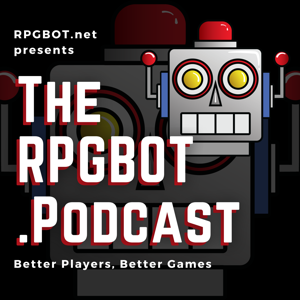
Welcome to the RPGBOT Podcast. If you love Dungeons & Dragons, Pathfinder, and tabletop RPGs, this is the podcast for you.
Support the show for free: Rate and review us on Apple Podcasts, Spotify, or any podcast app. It helps new listeners find the best RPG podcast for D&D and Pathfinder players.
Level up your experience: Join us on Patreon to unlock ad-free access to RPGBOT.net and the RPGBOT Podcast, chat with us and the community on the RPGBOT Discord, and jump into live-streamed RPG podcast recordings.
Support while you shop: Use our Amazon affiliate link at https://amzn.to/3NwElxQ and help us keep building tools and guides for the RPG community.
Meet the HostsTyler Kamstra – Master of mechanics, seeing the Pathfinder action economy like Neo in the Matrix.
Randall James – Lore buff and technologist, always ready to debate which Lord of the Rings edition reigns supreme.
Ash Ely – Resident cynic, chaos agent, and AI's worst nightmare, bringing pure table-flipping RPG podcast energy.
Join the RPGBOT team where fantasy roleplaying meets real strategy, sarcasm, and community chaos.
How to Find Us:
In-depth articles, guides, handbooks, reviews, news on Tabletop Role Playing at RPGBOT.net
Tyler Kamstra View all episodes
 By RPGBOT.net

4.7
7878 ratings
You know how most D&D characters are born fully formed at level one — parents dead, personality optional, and a backstory written five minutes before initiative?
Yeah — not today.
Today we're rolling childhood trauma on random tables, getting adopted by gnomes after fatal alchemy accidents, committing crimes we didn't commit, and possibly dying before Session One even starts. Because life path character creation doesn't just ask:
"Who are you?"
It asks:
"What if your wizard got fired, drafted, divorced, marooned, or eaten by bureaucracy before the campaign began?"
So grab some dice — we're not building characters. We're speedrunning their entire existential crisis.
Show NotesThis episode explores life path character creation systems — an alternative to traditional menu-driven D&D character building — examining how different RPGs integrate backstory directly into mechanics and narrative identity.
The hosts contrast standard Dungeons & Dragons character creation, where mechanics and story can exist independently, with life path approaches that embed history into character structure and development. Instead of assembling a build from selectable options, lifepath systems simulate formative experiences through randomized or semi-structured progression.
Life path creation is framed as a form of "session negative one" — a prologue where the character's life unfolds before play begins. Characters might be recruited, drafted, fired, injured, or otherwise transformed during creation, sometimes even dying before gameplay begins (famously in Traveller). This approach produces characters with rich histories and emotional weight while removing optimization control — emphasizing emergent narrative over build efficiency.
The conversation examines multiple implementations:
D&D (Xanathar's Guide)Random tables generate birthplace, family structure, and life events. These tools help players — especially newcomers — construct organic backstories and roleplaying hooks without mechanical impact.
Pathfinder (Ultimate Campaign)A background generator integrates story and mechanics through traits, flaws, and narrative modifiers tied to ancestry, upbringing, and experiences — encouraging characters built from story outward rather than optimization inward.
TravellerPresented as the canonical lifepath system, characters advance through four-year career terms determined by rolls and stats. Players attempt education, military service, or careers and face survival checks, advancement, injury, debt, or social gain — producing veterans shaped by experience rather than archetype selection.
Across systems, the hosts emphasize that lifepath creation trades predictability for storytelling power — generating flawed, surprising, and memorable characters that feel lived-in before session one begins.
The episode ultimately frames lifepaths as a creativity engine:
Because sometimes you wanted to be an astronaut — and instead you lost a leg in character creation.
Key TakeawaysLife path character creation vs traditional D&D character creation
"Session Negative One" storytelling approach
Randomization encourages emergent roleplay
Optimization vs storytelling tension
D&D Xanathar's system — narrative only
Pathfinder background generator — mechanical integration
Traveller — full simulation lifepath model
Ideal use cases
Core philosophical takeaway
Welcome to the RPGBOT Podcast. If you love Dungeons & Dragons, Pathfinder, and tabletop RPGs, this is the podcast for you.
Support the show for free: Rate and review us on Apple Podcasts, Spotify, or any podcast app. It helps new listeners find the best RPG podcast for D&D and Pathfinder players.
Level up your experience: Join us on Patreon to unlock ad-free access to RPGBOT.net and the RPGBOT Podcast, chat with us and the community on the RPGBOT Discord, and jump into live-streamed RPG podcast recordings.
Support while you shop: Use our Amazon affiliate link at https://amzn.to/3NwElxQ and help us keep building tools and guides for the RPG community.
Meet the HostsTyler Kamstra – Master of mechanics, seeing the Pathfinder action economy like Neo in the Matrix.
Randall James – Lore buff and technologist, always ready to debate which Lord of the Rings edition reigns supreme.
Ash Ely – Resident cynic, chaos agent, and AI's worst nightmare, bringing pure table-flipping RPG podcast energy.
Join the RPGBOT team where fantasy roleplaying meets real strategy, sarcasm, and community chaos.
How to Find Us:
In-depth articles, guides, handbooks, reviews, news on Tabletop Role Playing at RPGBOT.net
Tyler Kamstra
30,109 Listeners
14,846 Listeners

35,611 Listeners

7,795 Listeners

4,841 Listeners
176 Listeners
10,290 Listeners
10,250 Listeners
10,636 Listeners
183 Listeners
53 Listeners
3,263 Listeners
216 Listeners
6 Listeners