
Sign up to save your podcasts
Or

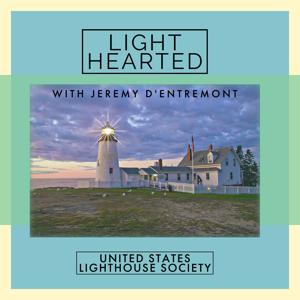


This is part two of a two part interview with Richard Cummins, a native of Ireland who worked as a lighthouse keeper in that country for a decade. He spent time at the very famous Fastnet Rock Lighthouse; at Hook Head, the oldest operating lighthouse in the world, and some other well known light stations – more than 20 in all.
Here’s a video tour of Fastnet Rock Lighthouse, one of the places where Richard served as a keeper.
A Tour of the Fastnet Lighthouse from Peter Cox on Vimeo.
Some beautiful footage of Fastnet:
Click here for more fascinating short films of Irish lighthouses.
Use the player below to listen to the podcast:
Richard Cummins is a native of Ireland who, for about 10 years ending in 1989, worked as a lighthouse keeper in that country. He spent time at the very famous Fastnet Rock Lighthouse; at Hook Head, the oldest operating lighthouse in the world, and some other well known light stations – more than 20 in all.
After his time as a lighthouse keeper he’s worked as a photographer and his photos have been published in National Geographic and other publications. You can see Richard’s photographic work online at art.com and many other websites. He’s also known for the remarkable ships in bottles and other nautical models he’s built, which you can see on his Facebook page.
This is part one of a two-part interview. The second part will be released in two days, on February 3.
Use this player to listen to the podcast:
The U.S. Lighthouse Society podcast “Light Hearted” was launched in June 2019. The podcast’s name refers to people who have lighthouses in their hearts. It’s the only podcast that’s devoted to the subject of lighthouses. Since it was launched, 100 episodes have featured interviews with lighthouse keepers, authors, historians, and preservationists — and much more.
This retrospective includes clips of interview highlights from the first 20 months of “Light Hearted,” along with never-heard-before outtakes.
Elizabeth Spires was born in Lancaster, Ohio, and she now lives in Baltimore, Maryland. She has always admired the poetry of Emily Dickinson, and by the time she was twelve she had decided to be a writer. When she was in college at Vassar, she began writing poetry seriously. That led to the publication of seven collections of poetry for adults, most recently A Memory of the Future, which was a New York Times Best Poetry Book of the Year.
Elizabeth has written seven children’s books include The Mouse of Amherst, The Big Meow, and I Heard God Talking to Me, which was about the Nashville outsider artist William Edmonson. Her work has won many awards. Among others, she’s been the recipient of a Guggenheim Fellowship, two fellowships from the National Endowment for the Arts, and the Maryland Author Award from the Maryland Library Association. I Heard God Talking To Me was named a School Library Journal Best Book of the Year.
Elizabeth Spires’ new children’s book, Kate’s Light, tells the true story of Kate Walker, the renowned keeper of Robbins Reef Lighthouse in New York Harbor. She lived at Robbins Reef for 33 years (1886-1919) and was known for her many rescues.
The book Kate’s Light is illustrated by Emily Arnold McCully, a Caldecott Medal winner.
Kirkus Reviews said this about Kate’s Light: “Kate comes alive through the combined talents of Spires and McCully, and their portrayal highlights how an ordinary woman can excel and pave the way for others by virtue of her dedication and fortitude.”
Publishers Weekly had this to say: “Caldecott Medalist McCully’s vivid ink and watercolor spreads bring to life the storms and waves that made Walker’s work necessary, and brim with visual information about the lighthouse and the people who depended on it.
“Chapter book–style writing by Spires (The Big Meow) provides ample context and many anecdotes. An intrepid heroine in a lonely place, Walker had grit that makes for gripping reading.”
Like his father before him, young Joseph Hindley went to work in the textile mills of New Bedford, Massachusetts. Looking for a more adventurous life, he spent some time in the Coast Guard. He then entered the Lighthouse Service. He had a long career as a lighthouse keeper that spanned from the late 1920s to 1972, when he retired as the last civilian keeper in the New England region. He served at offshore stations early in his career: Whale Rock (RI), Butler Flats (MA), and Sakonnet Point (RI).
In 1950, Hindley and his family moved to Gay Head Light Station at the western end of the island of Martha’s Vineyard, Massachusetts. The Hindley family spent six years at Gay Head, leaving when the light was automated in 1956. The keepers’ house was demolished a short time later.
The Hindleys moved on to Nobska Point Light in Woods Hole on Cape Cod, where Joseph served the rest of his career.
In 1967, while Hindley was at Nobska Point, he was honored with a Gallatin Certificate from the Coast Guard as one of the last three civilian lighthouse keepers in New England.
He retired in 1972 as the very last civilian keeper in the New England region.
This episode features reminiscences of life at the lights in an interview with Betty Hindley Hatzikon, Joseph Hindley’s daughter.
Listen to the podcast by using the player below.
Pemaquid Point Lighthouse is one of the most frequently visited attractions on the Maine coast, receiving about 100,000 visitors each year. The point, at the entrance to Muscongus Bay to the east and Johns Bay to the west, was the scene of many shipwrecks through the centuries. In May 1826, Congress appropriated $4,000 for the building of a lighthouse at Pemaquid Point. The original tower didn’t last long, and a new 30-foot-tall conical stone tower was built in 1835.
In March 1940, residents voted at a town meeting to authorize Bristol’s selectmen to purchase the property, except for the lighthouse tower. The surrounding property became the town’s Lighthouse Park, and the keeper’s house was later converted into the Fishermen’s Museum, which opened in 1972.
In May 2000, the lighthouse tower was licensed by the Coast Guard to the American Lighthouse Foundation. A chapter of the foundation, the Friends of Pemaquid Point Lighthouse, was formed. The group soon restored the entryway to the tower and began holding open houses.
Trudy Irene Scee completed a Ph.D at the University of Maine. In addition to being an historian and journalist, she’s also an educator and photographer. She has seventeen books in print. In her new book Pemaquid Point Lighthouse, she uncovers the fascinating story of this iconic Maine location, as well as the light keepers and their families, from the construction of the first lighthouse through the present day.
Listen to the podcast here:
This is part 2 of a two part interview with Dianne Wolfer, author of the award-winning children’s book Lighthouse Girl. The book tells the true story of Fay Catherine Howe, daughter of the lighthouse keeper at Breaksea Island in Western Australia, during World War I.
Around 30,000 soldiers left Australian shores to fight in World War I, and the sight of Fay Howe waving to them from the island became a symbol of hope for many of the departing soldiers.
Part 2 also features an interview with Fay Howe’s son, Don Watson, along with his wife, Peg, and their daughter Denise.
Dianne Wolfer’s website
Listen to the podcast here:
Dianne Wolfer is an award-winning children’s author who lives on the south coast of Western Australia. A teacher who has worked in Tokyo, Japan, as well as in Nepal in addition to schools in her native Australia, she pens novels for children and young adults that focus on life in modern Australia and Pacific countries. Her 2009 book Lighthouse Girl won the 2010 West Australian Young Readers’ Book Award for Picture Books and has been adapted into a stage play.
Lighthouse Girl tells the poignant true story of Fay Catherine Howe, who was the daughter of the lighthouse keeper at Breaksea Island in Western Australia. Around 30,000 soldiers left Australian shores to fight in World War I, and in late 1914 a fleet of 36 troop ships left Albany bound for Egypt and Gallipoli. Fifteen-year-old Fay was adept at signal communications, and as the men waited on their ships to leave Albany, she communicated with many of them using semaphore flags or Morse code. She relayed their messages to Albany, and from there they were routed to the men’s families.
The sight of Fay Howe waving to them from the island became a symbol of hope for the departing soldiers. For many of those men, their contact with Fay was their last connection to their home country. Dozens of them wrote cards and letters to Fay from overseas, sometimes addressed to the “little girl on Breaksea Island.”
This is part one of two. Part two also includes an interview with Faye’s son, Don Watson. It will be posted on January 6.
Dianne Wolfer’s website
Listen to the podcast here:
Filmmaker Rob Apse was born and raised in Reading, Massachusetts, but he spent summers on the coast of Maine and at Great East Lake in New Hampshire, boating, fishing, and exploring. After graduating from Ithaca College with a degree in Cinema Production, he’s worked almost 10 years in creative marketing. After realizing he had a passion for documentary storytelling, he opened his own marketing studio, Wandergroove, helping small businesses and nonprofits tell their story.
He’s spent five years working on his new documentary, The Last Lightkeepers. It focuses on a number of people in the world of lighthouse preservation – members of nonprofit organizations, historians, lighthouse owners, and others. The film is now available for viewing on Amazon.
A portion of the proceeds from the film are going to Friends of Portsmouth Harbor Lighthouses for the preservation of Whaleback Lighthouse in Kittery, Maine.
“The film is gorgeous and important, in that it gives visual voice to an extremely powerful and essential act of preservation — making sure that lighthouses are still there for future generations to not only see, but also learn about their history.” – Best selling author Eric Jay Dolin
Trailer for The Last Lightkeepers:
The Last Lightkeepers // Feature Launch Introduction from wandergroove on Vimeo.
Also in this episode is a discussion with lighthouse aficionado Dwight Berry about the lighthouses of the Outer Banks in North Carolina.
Dwight offers tips for visiting the lighthouses and for other things to do in the area.
Listen to the podcast:
In March 1871, Congress appropriated funds for a lighthouse on the east side of California’s San Pablo Strait. It was decided that East Brother Island, about 1000 feet offshore on the east side of the strait, would be a good location. The style chosen was the handsome Stick Style design developed by architect Paul Pelz and used for several other West Coast lighthouses around the same time; a square wooden tower was attached to a six-room keepers’ dwelling. On March 1, 1874, a fourth-order lens was put into operation for the first time.
The light station was automated and de-staffed in the summer of 1969. The building deteriorated for a decade until the Coast Guard granted a license for restoration to a new nonprofit organization, East Brother Light Station, Inc. The lighthouse was lovingly restored with the help of much volunteer labor, and by late 1980 the doors were opened for overnight guests. This year, the COVID-19 pandemic forced the bed and breakfast operation to close down at the end of June. The resident caretakers left and a longtime board member, Desiree Heveroh, interviewed in this episode, moved in as the resident “keeper.”
Next is another installment of Florida Lighthouse History with Ralph Krugler. Ralph is the historian for the Hillsboro Lighthouse Preservation Society, and also a volunteer for the U.S. Lighthouse Society. Today’s subject is the interesting life of Alfred Alexander Berghell, the first keeper at Hillsboro Inlet.
From the publisher's feed
23,733 Listeners
26,160 Listeners
1,565 Listeners
4,760 Listeners

111,865 Listeners
1,344 Listeners

896 Listeners

295 Listeners
3,418 Listeners
18,046 Listeners
18,952 Listeners
10,823 Listeners
1,171 Listeners