
Sign up to save your podcasts
Or

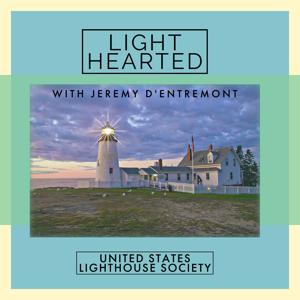


Kinnaird Head Lighthouse is in Fraserburgh, a town in Aberdeenshire in northeastern Scotland. The original navigational light at Kinnaird Head was a simple lantern placed in a tower of a sixteenth century castle in 1787, installed by Thomas Smith of Edinburgh. The engineer Robert Stevenson—Thomas Smith’s son-in-law and the grandfather of the famous writer Robert Louis Stevenson—improved the lighthouse in 1822 and 1823, and there were further improvements in the early 1850s by Robert’s son, Alan Stevenson.
The old lighthouse keeper’s house and other buildings are now home to the Museum of Scottish Lighthouses. The museum tells the story of the Northern Lighthouse Board, the engineers who built the lights and the keepers who tended them.
Lynda McGuigan is the museum manager with overall responsibility for the whole site including the staff, the lighthouse, the castle, and of course the museum itself.
Michael Strachan is the collections manager and also a published historian. He is responsible for displaying and taking care of the museum’s nationally recognized lighthouse collection, and he is the author of three books including Scottish Lighthouses: An Illustrated History and Kinnaird Head Lighthouse: An Illustrated History.
Museum of Scottish Lighthouses
Museum Shop
This is the first of two episodes dealing with Scottish topics. Episode 66 will be posted on Wednesday, June 18, and will feature the Museum of Scottish Lighthouses.
The North Carr Lightship is the last remaining light vessel in Scotland. The first light vessel stationed near the North Carr rocks on the SE coast went on station in 1887. Only two years later it was replaced by a more substantial vessel. The third and final North Carr Lightship was built in Glasgow for the Northern Lighthouse Board in 1933. After its retirement in 1975, the lightship was sold to the North East Fife District Council.
In January 2002 it was moved to Victoria Dock in Dundee. In 2010, Taymara, a Dundee-based maritime charity, stepped in and took ownership. The work to stabilize the vessel is well underway, as the ravages of time and salt water continue to affect the integrity of the 86-year-old structure. Sam McKillop is the Project Administrator and Engineering Lead for the lightship restoration.
Also featured in this episode is a conversation with Dwight Berry of Maryland, a lighthouse enthusiast who discusses the lighthouses that can be visited in the vicinity of Baltimore.
Click here to learn more about Taymara and the lightship.
Point Betsie Light Station is on the northeast side of Lake Michigan, north of the city of Frankfort. The lighthouse, built of cream city brick from Milwaukee, began service in 1858. The station was greatly enlarged in 1894 to about triple its original size. Point Betsie and Sherwood Point became the last light stations on Lake Michigan to be fully automated and de-staffed in 1983. In 2004, ownership of the property was transferred to Benzie County. Friends of Point Betsie Lighthouse has cared for the property under a partnership agreement.
In addition to a small number of paid staff, Point Betsie Lighthouse has around twenty-five volunteers working as tour guides and in the gift shop, making it possible for the station to be open to the public for an extensive schedule from late May to late October. Visitors get to climb the tower for a view of the Lake Michigan shoreline. Chuck Clarke is the treasurer on the board of directors of the Friends of Point Betsie Lighthouse, and he has been involved with the lighthouse since before the Friends group was founded.
In an area of London known as the Docklands, where the River Lea meets the River Thames, is a part of the waterfront known as the Trinity Buoy Wharf. And on the wharf is London’s only lighthouse. The lighthouse at the Trinity Buoy Wharf was never used for navigation. The wharf itself was also used by Trinity House, the English lighthouse authority, for the manufacture of chains, buoys, and light buoys. The first lighthouse on the wharf, designed by Trinity House engineer James Walker and built in 1852, was demolished in the late 1920s. The lighthouse that still stands—also known as the Bow Creek Lighthouse, Blackwall’s Experimental Lighthouse, or simply the Experimental Lighthouse—was completed in 1866. It was designed by engineer James Douglass. Both of the lighthouses were used by Trinity House, the English lighthouse authority, for the training of prospective lighthouse keepers. The scientist Michael Faraday also carried out experiments there.
The Trinity Buoy Wharf was closed in 1988. The site has been developed as a center for the arts and cultural activities. A lightship at the wharf was converted into a recording studio, and there are art and dance studios at the site. Musician and composer Jem Finer has repurposed the lighthouse in a unique way. Since 2001, the lighthouse has been looked after by the Longplayer Trust. Jem Finer’s ambient sound piece called Longplayer started playing in the lighthouse at the stroke of midnight just as the year 2000 began. It’s been playing ever since, and the intention is that won’t repeat until midnight on December 31, 2999. Longplayer is composed for singing bowls, a type of ancient bell. Longplayer is based at the lighthouse, but it can also be heard at several listening posts worldwide and is also streaming online here.
Longplayer was developed and composed by Jem Finer with the support and collaboration of Artangel, an organization that has been commissioning and producing ambitious projects by contemporary artists for the last two decades. Since studying computer science in the 1970s, Jem Finer has worked in a variety of fields, including photography, film, music, and art installation. He was also a founding member of the Pogues, the popular English Celtic punk band. This interview with Jem Finer was conducted on May 22, 2020, by Light Hearted host Jeremy D’Entremont.
Click here to listen to the podcast:
White Shoal Lighthouse is twenty miles west of the Mackinac Bridge and Mackinaw City at the northeast end of Lake Michigan. Work on the lighthouse began in the spring of 1908. The crib foundation was built using 400,000 square feet of timber, 3700 cubic yards of concrete, and 4000 tons of rock. The lantern originally held a bivalve second-order Fresnel lens, which rotated on mercury. The light is 125 feet above the mean surface of the lake. In 1954 the tower was given its distinctive red and white spiral bands.
The lighthouse was sold via online auction in 2016. Five bidders participated in the auction, which ended in September 2016 with a high bid of $110,009. The new owners, Brent Tompkins and Mike Lynch, founded the White Shoal Light Historical Preservation Society. The mission of the organization is to fully restore White Shoal Light to the mid-1950s era and make it accessible to the public. Tompkins and Lynch are both licensed contractors and they’re using their skills and training as they restore the lighthouse.
On March 3, 1821, Congress appropriated $10,500 for three lighthouses on the Maine coast, one of them on five-acre Burnt Island at the west side of the entrance to Boothbay Harbor. In 1988, the station was automated and destaffed. A decade later, Burnt Island Light Station was transferred to the Maine Department of Marine Resources. Elaine Jones, education director for the department since 1991, was named the director of the facility.
It was Elaine’s vision to transform the island into an educational and recreational facility for Maine’s residents and its visitors. She has been honored with a 2019 Keeper of the Light Award by the American Lighthouse Foundation and a 2016 Visionary Award by the by the Gulf of Maine Council on the Marine Environment. Also interviewed in this episode is Russ Katje, a U.S. Lighthouse Society Hall of Fame Lighthouse Passport Program stamp collector.
Burnt Island Light Station
This is the second part of a two-part interview with Dave and Lynn Waller, owners of Graves Lighthouse in outer Boston Harbor, a classic wave-swept granite tower on a barren, rocky ledge. One of the subjects discussed is the “Franklens” created by Dave Waller and friends — a first-order Fresnel lens made of spare panels from various Chance Brothers lenses.
Also discussed is the observation of wildlife near Graves Ledge, the experience of changing weather and storms at such a dramatic location, the conversion of the oil house into living space, the many challenges of restoration in a place that’s often inaccessible, and the Wallers’ partnership with well-known Boston philanthropist Bobby Sager.
Taking part in the interview along with Light Hearted host Jeremy D’Entremont is Bob Trapani, Jr., executive director of the American Lighthouse Foundation.
More information: graveslightstation.com
Listen using this player:
Graves Lighthouse is a classic, granite, wave-swept offshore lighthouse tower on a barren ledge in outer Boston Harbor. It went into service in 1905 with a huge first-order Fresnel lens from Paris, rotating on 400 pounds of mercury, produced a light that was later upgraded to 3.2 million candlepower– it was for many years the most powerful light in New England. It was staffed with resident keepers until its 1976 automation.
The lighthouse was sold in a government auction in September 2013 to businessman David Waller. He and his wife, Lynn, a graphic designer, live in a restored fire station in the Boston suburb of Malden. Since buying Graves Light, the Wallers have completed a great deal of restoration, and you can follow their progress on the website graveslightstation.com. Dave and Lynn Waller were honored with the American Lighthouse Foundation’s Keeper of the Light Award in May 2018. Bob Trapani, Jr. executive director of the American Lighthouse Foundation, took part in this interview along with Light Hearted host Jeremy D’Entremont. This is part one of a two-part interview.
The video below shows Alex Karnes, Dave Waller, and Phil Christopher with Dave Waller’s “Frankenlens,” a first-order Fresnel lens created from spare parts from Chance Brothers lenses. You can read more about the lens here.
The Massachusetts island of Martha’s Vineyard is a great destination for anyone who’s interested in lighthouses. There are five lighthouses on the island, including Cape Poge Light on Chappaquiddick, an island that’s connected to Martha’s Vineyard. And the Martha’s Vineyard Museum in Vineyard Haven has the first-order Fresnel lens from Gay Head Lighthouse on display.
Richard Skidmore has been the modern day keeper of Gay Head Lighthouse for the past 30 years. Richard is a former book reviewer for the New York Times, and he’s also an award-winning experimental filmmaker whose work has been seen on television and in many festivals. His wife, Joan LeLacheur, a jewelry maker, also helps with the lighthouse duties.
Above: Gay Head Light Artifact Recovery 2020 from Richard Skidmore on Vimeo.
In this entertaining interview, Richard talks about being the longest serving keeper in Gay Head history, about life in the unique community of Aquinnah, about his background as a filmmaker, and what it was like being very much involved (to the point of personal peril) in the historic 2015 move of the lighthouse.
Gay Head Lighthouse stands in one of the most picturesque locations in New England, on top of the 130-foot-tall multicolored clay cliffs at the western edge of the island of Martha’s Vineyard, just south of Cape Cod in Massachusetts. The Town of Aquinnah took ownership of the lighthouse in February 2015. As of that month, the Save the Gay Head Light Committee had raised $2.5 million toward its goal of the $3 million needed to finance a move of the lighthouse away from the edge of the rapidly eroding cliff. The move to safer ground was completed in June 2015.
Liz Witham and Ken Wentworth of Martha’s Vineyard founded Film-Truth Productions in 2003. Their work has won many awards. Their film Keepers of the Light, about the history of Gay Head Lighthouse leading up to its historic move, was years in the making.
It will be shown on public television stations around the country starting this month. In this interview, Liz and Ken talk about the making of the film, about their lives in the community of Aquinnah, and about the unique history of Gay Head Lighthouse in a community that is largely populated by Wampanoag Indians.
From the publisher's feed

23,733 Listeners
26,160 Listeners

1,565 Listeners

4,760 Listeners

111,865 Listeners

1,344 Listeners

896 Listeners

295 Listeners

3,418 Listeners
18,046 Listeners
18,952 Listeners
10,823 Listeners

1,171 Listeners