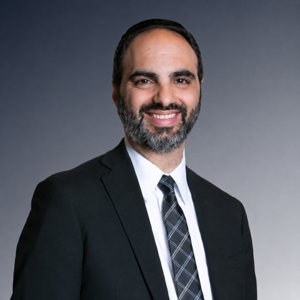
Every Erev Tisha B'Av, Rabbi Shalom Tavi would tell his family, "B'ezrat Hashem, this is going to be the last Tisha B'Av." He would say those words with a true longing for the Geula. One year, his daughter said, "Abba, you say that every year. How long are you going to continue this practice?" The Rabbi answered, "B'ezrat Hashem, this will be the last time." And he said it with a real anticipation of the Geula. The Samak writes, to believe in the coming of the Mashiach is a מצוות עשה מן התורה – it is an obligation from the Torah for every single Jew to believe. The Rambam says it is one of our 13 Principles of Faith that every Jew is required to believe. The Gemara tells us, one of the first questions a person will be asked after 120 is Did you anticipate the coming of the Mashiach? This is something so fundamental to our religion. The Ohr Yechezkel was astonished that it is not spoken about more on a day-to-day basis. It appears, he writes, that, chas v'shalom, people are embarrassed to speak about it, or that they have just given up on it. Rabbi Krevis from Kollel Yechiel Yehuda explains the words of the Ohr Yechezkel as follows: People may be embarrassed to say that they believe any moment open miracles will suddenly start taking place as we live in a very natural world. They might feel people will look at them like someone on an extremely high level if they talk about that. But in truth, it's a basic obligation that every Jew is to believe and it is not something to be embarrassed of. The second issue is that it has been so long and Mashiach has still not come. Why should we think that now will be any different? Imagine somebody bought a million tickets for the lottery and they found out that one of those tickets has the winning numbers to the billion-dollar prize. If they searched through the first 100,000 tickets and didn't find the winning one yet, would they lose hope of finding it? Of course not, the more tickets they count, the greater their anticipation becomes because they know it's for sure there, and now there are less tickets to go until they find it. So too it is with Mashiach. It is guaranteed to happen and the more years that have passed without his coming should only increase our anticipation – he was never closer than he is today to coming. But it's not good enough for us to believe that he will come. Our obligation is to anticipate his coming. How can we improve on this mitzvah of anticipating? Seemingly it is a natural feeling that you either have or you don't. If a father would tell his son he is taking him to an amusement park the following day, he would not need to tell his son to anticipate it. The boy would automatically anticipate it. But if the father would tell his son he's taking him somewhere that he doesn't really care to go to, then even if the father would command him to anticipate it, most probably it wouldn't help anyway. It follows that we need to learn more about what's going to take place in the Days of Mashiach in order that we should automatically anticipate it. If we are not yet on the level to anticipate Mashiach because of the great glory that will come to Hashem during those days, we could at least start by anticipating the physical benefits that we will have. When Mashiach comes, there will be no more sickness, no one in the hospital, nobody suffering from pain, everyone will be strong and healthy. There will be no more fighting, we will have world peace, no more terrorists, no shootings, no antisemitism, no fear, even the animals will be at peace with each other. Everyone will live in complete tranquility and happiness, everyone will have an abundance of everything they could possibly need. All of the secrets of Torah will become revealed, we will understand more about Hashem. And those who have passed on will once again come back to life and live in this world as they did before, reunited with their families. This is just a tiny glimpse into what will take place after Mashiach comes. We need to learn more about it on our own, but as far as now is concerned, we are not only to believe that Mashiach will come, but we are also to anticipate it as well.