
Sign up to save your podcasts
Or



Based on Podcast App listening data
Timestamps:
Forced to lead a dangerous double life as a covert Jew in Christian Europe, she inherited a vast fortune worth $1 billion and used her financial clout and shipping lines to organize a massive underground rescue network that smuggled thousands of fleeing Crypto-Jews across the continent.
Her visionary leadership secured the Sultan’s help to rebuild the ancient city of Tiberias, and allowed Torah to flourish in Constantinople & Salonika. Although her final days remain shrouded in mystery.
This extraordinary, high-stakes life of the "Crowned Lady", who risked everything to defend her people, leaves behind a legacy of ingenuity, bravery, and devotion.
To join our WhatsApp group, click on the link below: https://chat.whatsapp.com/FEgoaCOQoyU2VX49SwA8Aw
For further details of out 2027 Trips visit: www.historyforthecurious.com
Timestamp:
19th-century critics dismissed the mystical journal as a complete fabrication, but ground-breaking research and archaeological evidence have vindicated its authenticity.
The personal side of his halachic decision making is clearly evident throughout his numerous responsa, whereas the Printing Press allowed his Shulchan Aruch to become available across the Jewish world, despite various omissions - when publishers cut introductions to save space !
Timestamps:
00:00 – Printing omissions and errors in early Jewish texts
Join our WhatsApp group for weekly exclusive content: https://chat.whatsapp.com/FEgoaCOQoyU2VX49SwA8Aw?s=cl&p=a&ilr=4
This 2-part series discovers the dramatic life of Rabbi Yosef Karo, which was lived far beyond the pages of his famous legal code, the Shulchan Aruch.
Born into the upheaval of the 1492 Spanish Expulsion, he fled across borders from Lisbon to Cairo to Greece and eventually to Eretz Yisrael and was instructed by a spiritual maggid. But the 16th century of mass migrations threatened to fracture Jewish tradition into "countless Torahs". So he embarked on a monumental mission to write a master legal framework and unite the diaspora, which fundamentally reshaped our lives.
His story included an attempt to hasten the Messianic era, that led to him being banned from the main synagogue of Tzfas and a son born to him in his old age.
Timestamps:
Timestamps:
Join our WhatsApp group for weekly exclusive content: https://chat.whatsapp.com/FEgoaCOQoyU2VX49SwA8Aw?s=cl&p=a&ilr=4
George Mandel-Mantello was one man on his own, a Jew living in Switzerland, who ignited an international outcry against the destruction of Hungary’s Jewish community and stopped the deportation of the last 250,000 Jews. Mantello’s weapon was not a gun or an army — it was information.
With extraordinary courage and ingenuity, he forged papers, sent a courier into Hungary to gather first-hand reports about Auschwitz and forced the allies to react. But for decades afterwards, the actions of this saviour were deliberately minimised and censored.
Meanwhile in nearby Germany, the brother of the highest ranking member of the SS, was helping Jews escape the Nazi inferno. His courage also went unheralded for many years.
Timestamps:
Timestamps
00:00 – **Liberation Shock & Media Blindness**
00:41 – **Intro, Dedication & 5-Year Anniversary**
01:57 – **New WhatsApp Community**
03:34 – **What Makes the Holocaust Unique?**
06:04 – **Ideology, WWII & Other Victim Groups**
23:24 – **Dehumanization, Cruelty & Practical Uniqueness**
31:26 – **From Discrimination to the Final Solution**
35:06 – **How American Media Failed the Jews**
45:06 – **NYT, Assimilated Elites & Hashkafic Lessons**
Exploring the lives of three Jewish doctors. Living in very different settings, yet linked by a common thread: compassion. They left a lasting mark on medicine and Jewish history and were dedicated to the strong belief that every fragile life matters.
In New York, Dr Martin Couney helped save thousands of babies. His sideshow displays were controversial, but at a time when incubator technology was widely doubted, his exhibits brought life-saving technology into the public eye.
Dr Mary Gordon was born in Lithuania and her trailblazing career as a pioneering female physician who was deeply connected to Jewish life, allowed her to carry her medical calling into some of the hardest moments of the twentieth century, in Palestine, in detention camps in Cyprus and through world wars.
Dr Shlomo Adler’s reputation in London as a beloved doctor and trusted medical confidant to Gedolim and Torah leaders as well as to thousands of patients, rested on his complete commitment to care, innovation and halacha. We also hear from his son Dr Yossi Adler - who has continued a 3 generational family legacy - about AI and other issues confronting medicine today
Timestamps:
- **0:00:00 – 0:01:13** – Podcast intro, series context (Medicine Part 2), and mention of guests (Rabbi Tatz & Dr. Yossi Adler)
- **0:01:13 – 0:02:16** – Introduction of Mary Gordon; granddaughter of Reb Eliezer Gordon; name changes (Miriam → Mary, Sara → Sylvia)
- **0:02:16 – 0:03:49** – Background on the Gordon family, Telshe Yeshiva, and Reb Eliezer Gordon’s leadership and social conscience (matzah bakeries)
- **0:03:49 – 0:06:21** – Fire in Telshe (1908), Reb Eliezer Gordon’s fundraising trip to England, his death, funeral, and Mary receiving apology from the Chief Rabbi
- **0:06:21 – 0:09:00** – Mary’s struggle to enter university, re-doing exams in England, brilliance and speed of study, financial help from Rabbi Moishe Hirsh Siegel, graduation as a physician
- **0:09:00 – 0:10:27** – Status of women doctors in England; WWI, shortage of male doctors; Mary becomes first female medical student allowed to practice in the army
- **0:10:27 – 0:12:57** – Move to South Africa; reuniting with family; pioneering practice in Johannesburg General Hospital; treating rich and poor, all races; miners’ strike of 1922
- **0:12:57 – 0:15:30** – Plans to move to Palestine; WWII intervenes; army medical role, rank of captain then lieutenant colonel; final move to Palestine (1946)
- **0:15:30 – 0:18:18** – Postwar DP situation; Anglo-American committee, Truman’s proposal for 100,000 DPs; British refusal; Cyprus detention policy and harsh camp conditions
- **0:18:18 – 0:21:06** – Mary chosen by the Jewish Agency to serve in Cyprus; tiny medical team; overwhelming numbers, disease, births; her legendary dedication; quote about measuring temperature vs pain
- **0:21:06 – 0:22:28** – New Year’s 1948 story (two big ships arrive, many pregnant women and newborns); Mary persuades nurses to stay; later work in Israel with Yemenite immigrants; return to South Africa, work in Soweto clinics, death and legacy
- **0:22:28 – 0:24:04** – Introduction of Dr. Yossi Adler; recognition that “Dr. Adler” was a global communal institution
- **0:24:04 – 0:26:24** – Growing up in a house that doubled as a practice; constant stream of patients; balancing family meals with emergencies, especially before Hatzalah
- **0:26:24 – 0:28:18** – What made Dr. Adler’s practice unique: long-term relationships, personalized care, deep sense of responsibility, readiness to innovate
- **0:28:18 – 0:32:24** – Early roots of his father’s connection to Gedolim (Gerrer Rebbe, Imrei Emes); later relationships with Gedolim and Rebbes (Stipler, R’ Shach, Satmar, Klausenburger, etc.)
- **0:32:24 – 0:36:24** – Stories illustrating kavod from Rebbes (“Malach Refael goes with Dr. Adler”), and equal importance of all patients; how he handled treating Gedolim without intimidation
- **0:36:24 – 0:40:21** – Lessons Dr. Yossi learned: time use, achrayus (responsibility), integrating halacha and derech eretz into medicine; a few character-defining stories
- **0:40:21 – 0:44:04** – Role of a frum doctor today: giving clear medical facts for Rabbanim, especially in end-of-life, surgery, fasting, and shidduch situations; why doctor ≠ posek
- **0:44:04 – 0:49:05** – Community health issues:
- Vaccine hesitancy and mistrust of authorities
- Halachic support for following broadly accepted medical guidance
- SIDS reduction through “back to sleep” and risk of complacency
- **0:49:05 – 0:53:59** – Discussion on modern weight-loss medications (semaglutide, tirzepatide): when benefits outweigh risks (severe obesity) vs mainly cosmetic use
- **0:53:59 – 0:56:51** – Google and patient information: opportunities and dangers; importance of joint doctor–patient interpretation rather than self-treatment
- **0:56:51 – 0:57:40** – Rabbi Tatz introduction, playful comment about trying to “one up” Rabbi Hirsch with an unknown medical figure
- **0:57:40 – 0:59:37** – Background of Dr. Cooney (Mikhail Kohn): Jewish origins in Prussia, medical studies, interest in premature infants and early incubators
- **0:59:37 – 1:03:10** – Move to America; transformation into “Dr. Cooney”; sideshow incubator exhibits at fairs and Coney Island; hospitals giving up on babies, parents bringing infants in shoeboxes; high survival rates
- **1:03:10 – 1:05:00** – Framing ethical and halachic questions: doing something risky to save life; early incubators as both spectacle and lifesaving tool
- **1:05:00 – 1:08:32** – Classic halachic scenario: terminal/“Ha’ei Sha’ah” patient offered high-risk procedure with chance of cure vs certain shorter-term survival; introduction to “Lo chosheshin lechayei sha’ah” in this context
- **1:08:32 – 1:12:08** – Majority view:
- If chance of success >50%, patient *should* generally accept.
- If <50%, still may choose, but more complex.
- Rav Moshe Shapira’s insight: if it’s more likely to kill than to save, it may not even count as “medicine.”
- **1:12:08 – 1:14:52** – Range of poskim on how low the chance of success may be (e.g., R’ Elyashiv vs Chasam Sofer); need for sound mind and emotional stability in such decisions; Israeli law on compelling treatment when clearly in patient’s best interests
- **1:14:52 – 1:18:02** – Emotional/psychological suffering as halachically weighty; will to live; R’ Moshe Feinstein on strong pain relief that may hasten death when pain is severe
- **1:18:02 – 1:18:36** – Question about recent international medical–halachic conferences
- **1:18:36 – 1:21:01** – HeidiD Conference overview; AI in medicine as the standout theme; examples in radiology and an AI-driven ER intake system at Soroka Hospital; patients rating AI as more “empathetic” than human doctors; Rabbi Tatz’s mixed feelings (excited and worried)
- **1:21:01 – 1:21:31** – Why we daven Refa’einu when healthy: life as ongoing miracle; link to Bris Milah; physical and spiritual aspects of illness; power of davening for others
- **1:21:31 – end (~1:22:00)** – Rabbi Hirsch notes he did not know about Dr. Cooney (historic moment); teaser for upcoming three-part Holocaust series; thanks to guests and listeners; email given for feedback
The 1800s was an era when medicine sat at the crossroads of science, ruses and discoveries. New vaccines and medical impostors competed for public trust. People broke with tradition and created a new landscape.
Mordecai Wolff Haffkine Haffkine stood out as an almost legendary figure. A Jewish bacteriologist, he developed and tested vaccines against cholera and bubonic plague, putting his life repeatedly at risk and fighting to save the lives of millions of people.
Whereas Dr. Samuel Solomon showed how skilful wording and suggestion could build a reputation and a fortune. Although his contribution to public service is rather unknown, Liverpool remembers him to this day - on par with some of their other legends.
We also look at what happens when medicine and surgery produce unexpected outcomes. What are the halachic ramifications?
And how did the BBC cover a re-election campaign in Kentucky?
Timestamps:
- 0:00:00–0:00:31 — Opening advertisement read (Dr. Solomon).
- 0:00:31–0:03:47 — Hosts intro: series overview and upcoming guests.
- 0:03:47–0:08:36 — Start of Mordechai Wolf Hafkin biography (education, expulsion, Pasteur Institute).
- 0:08:36–0:12:33 — Hafkin self‑inoculates and early cholera vaccine work.
- 0:12:33–0:15:43 — Hafkin’s large vaccination campaigns in India; plague vaccine development.
- 0:15:43–0:23:00 — Political opposition, 1902 tetanus deaths, inquiry and character attack.
- 0:23:00–0:31:44 — Scientific exoneration, later life, return to Orthodoxy, philanthropy, death (1930).
- 0:31:44–0:45:06 — Dr. Samuel Solomon biography: origins, balm of Gilead, marketing, bought MD.
- 0:45:06–0:46:44 — Solomon’s social status, legacy, and mixed moral assessment.
- 0:46:44–0:53:33 — Halachic case: wrong‑kidney removal that saved the patient; discussion of intent vs. outcome and liability.
- 0:53:33–0:58:34 — Media segment: critique of BBC coverage of Thomas Massie’s election loss.
- 0:58:34 — Episode close; call for listener feedback ([email protected]) and preview of part 2.
Timestamps:
- 0:00 — Introduction & dedication
- 0:36 — Podcast intro; Mendelssohn recap
- 1:36 — Reform emergence; 17th–18th c. precursors (Sabbatai Zevi, Spinoza)
- 4:07 — Napoleon’s emancipation & identity shift
- 6:24 — Conversions & assimilation (Heinrich Heine example)
- 10:25 — Reform tactics: Bible over Talmud; “prophetic Judaism”
- 18:59 — Jacobson/Westphalia reforms (state control of rabbis, synagogue changes)
- 24:53 — Berlin vs. Hamburg differences; home services vs. public temples
- 29:41 — Abraham Geiger’s ideology; opposition to circumcision noted
- 34:49 — Philippson/Magdeburg — services, Sunday shift
- 36:49 — Rabbinical conferences (1844–46) & intermarriage stance
- 41:27 — Orthodox responses: Safer Berneis, Rav Ettlinger, haram strategy
- 48:47 — Samson Raphael Hirsch’s Neo‑Orthodoxy response
- 57:13 — Modern implications: erosion of minhagim; academia vs. masorah
- 59:05 — Closing takeaway: small changes can lead to large identity shifts
From the publisher's feed
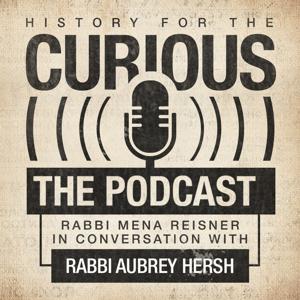
History for the Curious
The most talked-about Jewish History Podcast
History for the Curious features the dynamic historian and famous tour guide & lecturer: Rabbi…
Ranked by our users in the last 21 days

556 Listeners
332 Listeners
466 Listeners
1,983 Listeners
233 Listeners
666 Listeners

311 Listeners
1,220 Listeners

3,200 Listeners
1,067 Listeners
820 Listeners
1,121 Listeners
325 Listeners

1,065 Listeners

908 Listeners