Living Emunah

Living Emunah

By Ashear, Rabbi DavidReligion & SpiritualityJudaism
Download on the App Store
  • Favorites

    26

    Followers

  • Typical duration

    6 min

    per episode

Based on Podcast App listening data

Living Emunah episodes

  • Just a Camouflage
    The pasuk says the reason that Hashem gave the Jewish People mann in the desert was למען הודיעך כי לא על הלחם לבדו יחיה האדם כי על כל מוצא פי ה' יחיה האדם . Meaning, to teach us that man does not live on bread alone, but rather on everything that comes from the mouth of Hashem does man live. It seems to us that the body is able to function when a person eats bread because bread is a source of dietary fiber which helps keep the digestive system healthy and helps control blood sugar and cholesterol levels. However, Ibn Ezra explains, the pasuk is telling us man lives only because Hashem says he should have life. It is not the nutrients of the bread that give a person life, it is the word of Hashem. The mann did not have nutrients, it was more of a spiritual type of food that did not even get excreted. With the mann , Hashem showed us that He, not food, is the One who gives us life. The same applies when a person takes medication. We are required to do the normal hishtadlut of using the means that Hashem provided to heal ourselves with. But we are to believe with every fiber of our being that Hashem and only Hashem decides if and when a person becomes healed. When we are able to make a hishtadlut , we have to. But if we are not able to, then we are exempt and we can totally rely on Hashem. Sometimes a person does not even know that he needs to make a hishtadlut. It is in those instances that we clearly see that Hashem runs the world. A man told me, a month ago his nephew went with his family on a trip to Israel to celebrate his bar mitzvah. There were a total of 53 people on that trip who traveled daily on a large coach bus. One day, they were in the middle of a long journey when one of the people needed to get off the bus for a few minutes. They found a rest stop and they saw a nice kosher restaurant there and they all decided to get off the bus and take a break. The bus pulled into the big parking lot and all 53 people got off. About 10 minutes later, the bus exploded. Baruch Hashem, no one was on it, not even the driver, and no one was near it. The bus was completely destroyed and nobody knows the cause of the explosion. They were all so thankful that they were not on the bus at that time. They all saw clearly how Hashem made that person need to get off the bus specifically at that time and thereby change their plans so that no one would be on it when the explosion took place. It is true, Hashem could have also just prevented the explosion from happening in the first place, but then we would not get to see His loving hand involved in our lives. We are fortunate enough for Hashem to give us reminders that He is in full control of everything that is happening at every second of the day. Nature is just a camouflage for Hashem. It is not bread that gives people life, it is only Hashem.
    5 min
  • The Ultimate Consolation
    Rabbi Menashe Reizman quoted Rashi at the end of parashat Bereshit who explained the word nechama , which we normally translate to mean consolation, as מחשבה אחרת – to think a different way. The Maharal, in his Chiddusheh Aggadot in Sanhedrin explains, the essence of being consoled is when a person looks at the very same situation that brought him pain and agony with a new understanding. And because of that understanding, he is able to feel better about what happened. When Yosef HaTzaddik was trying to console his brothers for the guilt they felt for selling him, the pasuk describes it with the words וינחם אותן . Yosef gave them a completely different understanding of what had taken place. He told them it was all the doing of Hashem for the benefit of Klal Yisrael. He needed to go through the tests in Mitzrayim and pass them so that the people would have the strength to withstand the tests they would be given in Mitzrayim during their long exile in Egypt. And indeed, Hashem testified that the Jews remained pure that entire time. Yosef did not tell them something different happened, rather he made them see what happened already in a new light. This is the idea of nichum avelim . A mourner is in great pain over losing his loved one. There is a mitzvah on his friends and family not to divert the mourner's attention from what happened, but rather to give him a new understanding of what took place. It appears that the mourner's loved one is gone forever, buried under the ground. The people are supposed to give the mourner chizuk by telling him about the great life that the departed is currently living - everything he did in this world was just the prelude for the real life that is just beginning for him. The Midrash says on the words וירא אלוקים את כל אשר עשה והנה טוב מאד – Hashem saw everything He created and behold, it was very good. " טוב מאד " זה מיתה - – What was "very good"? The day of death. Life is not called very good, but death is. The Sefer HaYashar writes, this world is filled with trials and tribulations. There is nobody that has complete tranquility. Even the wealthiest individuals with everything they could ever possibly want do not have tranquility in this world. There is so much worry and anguish. There are so many things that people are filled with anger over all the time. When does it become very good? When the person goes on to the Next World. There, they have complete tranquility and bliss. If someone in mourning was made to understand that their loved one was enjoying immensely, that would ease their pain somewhat. This is the idea of nechama. To look at the very same circumstance that seems to be a tragedy and see it from a new perspective. The Gemara says, in the future we will only say the beracha of hatov v'hameitiv and not Dayan HaEmet . The Tzlach explains, this does not only mean that everything in the future will be revealed good. Rather, we are also going to look then on all of the occasions that we ever said Dayan HaEmet on in this world and we are going to say on that exact same situation hatov v'hameitiv . We will then see the inherent goodness in every tragedy that ever took place. Hashem is called the Baal HaNechamot. He is the only One who can give us real nechama , because He will show us the real reasons why things were good, even the unthinkable like the Holocaust and persecution of the Jewish People throughout the generation. Even those tragedies Hashem will show us the inherent good in and we will truly be comforted. The great avodah we currently have the opportunity to perform is to use our emunah and feel nechama in every situation that life presents us with as a challenge. Nachum Ish Gamzu, the Rabbi of Rabbi Akiva was a master at this. His name is Nachum, the same lashon as מתנחם , to be comforted. He was always able to see every situation from a different vantage point and see the goodness of Hashem in it. Rabbi Akiva learned that lesson and taught his colleagues how to feel comforted even as a fox walked through the ruins of the Bet HaMikdash. We say in the Kaddish, Hashem's Name should be exalted לעילא מן כל ברכתא שירתא… ונחמתא – more than any blessing or praise or nechama that we could possibly utter in this world. What does it mean that Hashem should be praised more than any nechama ? What does nechama have to do with praising Hashem? The answer is, when Hashem shows us the good in everything that ever happened, His honor is going to be raised so high because of the praises that everyone is going to give Him then. When we get the ultimate consolation, we will have the ultimate praises. We are asking that Hashem's Name now be more exalted even then that. We can console ourselves and praise Hashem now for everything that happens before He reveals the goodness, and those would be the most valuable praises possible.

    7 min

About Living Emunah

From the publisher's feed

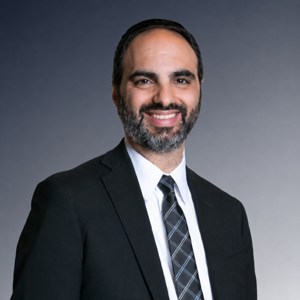
A Daily ethical teaching by Rabbi David Ashear

Best of Living Emunah

Ranked by our users in the last 21 days

More shows like Living Emunah

The Rabbi Sacks Legacy by Rabbi Lord Jonathan Sacks

The Rabbi Sacks Legacy

558 Listeners

The Israel Guys by The Israel Guys

The Israel Guys

309 Listeners

Jewish Stories to Inspire: Motivational & Spiritual Stories Based on the Torah's Ethics, Values and Wisdom by Stories to Inspire

Jewish Stories to Inspire: Motivational & Spiritual Stories Based on the Torah's Ethics, Values and Wisdom

186 Listeners

Living with Emunah by Rabbi Efrem Goldberg

Living with Emunah

109 Listeners

Meaningful People by Meaningful Minute

Meaningful People

1,986 Listeners

From the Inside Out: With Rivkah Krinsky and Eda Schottenstein by Rivkah and Eda

From the Inside Out: With Rivkah Krinsky and Eda Schottenstein

264 Listeners

The Q & A with Rabbi Breitowitz Podcast by Rabbi Dr Yitzchak Breitowitz

The Q & A with Rabbi Breitowitz Podcast

235 Listeners

Call Me Back - with Dan Senor by Ark Media

Call Me Back - with Dan Senor

3,202 Listeners

The Times of Israel Daily Briefing by The Times of Israel

The Times of Israel Daily Briefing

1,070 Listeners

Kosher Money by Living Lchaim

Kosher Money

819 Listeners

History for the Curious - The Jewish History Podcast by JLE

History for the Curious - The Jewish History Podcast

231 Listeners

Gedale Fenster - Podcast by Gedale Fenster - Podcast

Gedale Fenster - Podcast

398 Listeners

Honestly with Bari Weiss by The Free Press

Honestly with Bari Weiss

8,478 Listeners

Inspiration for the Nation with Yaakov Langer by Living Lchaim

Inspiration for the Nation with Yaakov Langer

1,121 Listeners

Stories Of Hope With Tzipora Grodko by Meaningful Minute

Stories Of Hope With Tzipora Grodko

325 Listeners