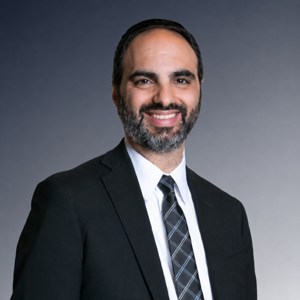
Living Emunah

Living Emunah

By Ashear, Rabbi DavidReligion & SpiritualityJudaism
Download on the App Store
  • Favorites

    26

    Followers

  • Typical duration

    6 min

    per episode

Based on Podcast App listening data

Living Emunah episodes

  • The Secret to Blessing
    The Beit HaMikdash was destroyed because of sinat chinam , which is usually translated to mean baseless hatred. Rav Elya Lopian writes, any hatred which is not sanctioned by halacha is called baseless. Many times people justify why they are permitted to hate another individual. They may even convince themselves that it is a mitzvah to hate. But in the majority of cases, it's just the evil inclination getting them to sin. Hatred is rarely permitted. Rather than justifying our reasons for hating, we should be looking to do just the opposite and go out of our way to show love. Hashem loves when we are at peace with each other. If we have a hard time doing it ourselves, we should do it for Him. I read a story about a man who had one child, a son who was very successful in his Torah learning. When it came time for him to get married, he was told of a girl with the finest qualities. However, after further investigation, they found out that she had a very low level of hearing. The boy did not want to pursue the shidduch . The father of the girl told the father of the boy he would give the boy as a dowry for his daughter one million shekels. The boy's father really wanted his son to be able to learn with peace of mind and he did not have the funds to support him. The girl did have sterling middot and was able to hear, albeit with difficulty. They agreed to go out and, soon enough, the shidduch was finalized. A couple of months after the wedding, the father of the girl informed the couple that the million shekels that he gave them was actually a loan he took out and put in their names. He basically lied to get his daughter married. The young man obviously had no way of paying back that debt, especially since he used most of the money to buy an apartment. And he honestly didn't want to have anything to do with his father-in-law anymore. He went to Rav Chaim Kanievsky z"l, to ask what to do. Rav Chaim told him to overcome his natural inclination and give honor to his father-in-law, despite what he did, and everything would be fine. The boy obediently listened. On Yom Kippur, he bought his father-in-law a very special aliyah and on Simchat Torah he bought him another one. This boy was learning in the Mir Yeshiva and since he came from America, he learned with a group of American boys. One day, a new boy came to the yeshiva and he was very homesick. He wasn't happy with his bed, the food was not to his taste, and he wanted to go home. He was also an only child to his parents. When the newly married young man found out about this boy's problems, he tried to give him chizuk . He told him he was also an only child and he also had a hard time when he started out in the yeshiva, but now he loves it. He offered to learn with this boy chavruta and the boy accepted. That Chanukah, this boy's father, who is extremely wealthy, took his private jet to Israel to visit his son. While there, his son told him of how this nice young man saved his entire year and how much he loves the yeshiva because of him. His father was so appreciative, he asked the young man what he could do to help him. The young man, seeing how wealthy this man was, told him about the million shekel debt and how it happened. The wealthy man happily went and paid back the debt in full. Rav Chaim knew that the secret to blessing is when a person goes against his inclination and loves people instead of hating. If we could all find it within ourselves to get rid of any hatred we have and give love and honor instead, b'ezrat Hashem we will turn the sad day of Tisha B'Av into the greatest holiday, celebrating the rebuilding of the Beit HaMikdash . Amen.
    5 min
  • The Last Tisha B’Av
    Every Erev Tisha B'Av, Rabbi Shalom Tavi would tell his family, "B'ezrat Hashem, this is going to be the last Tisha B'Av." He would say those words with a true longing for the Geula. One year, his daughter said, "Abba, you say that every year. How long are you going to continue this practice?" The Rabbi answered, "B'ezrat Hashem, this will be the last time." And he said it with a real anticipation of the Geula. The Samak writes, to believe in the coming of the Mashiach is a מצוות עשה מן התורה – it is an obligation from the Torah for every single Jew to believe. The Rambam says it is one of our 13 Principles of Faith that every Jew is required to believe. The Gemara tells us, one of the first questions a person will be asked after 120 is Did you anticipate the coming of the Mashiach? This is something so fundamental to our religion. The Ohr Yechezkel was astonished that it is not spoken about more on a day-to-day basis. It appears, he writes, that, chas v'shalom, people are embarrassed to speak about it, or that they have just given up on it. Rabbi Krevis from Kollel Yechiel Yehuda explains the words of the Ohr Yechezkel as follows: People may be embarrassed to say that they believe any moment open miracles will suddenly start taking place as we live in a very natural world. They might feel people will look at them like someone on an extremely high level if they talk about that. But in truth, it's a basic obligation that every Jew is to believe and it is not something to be embarrassed of. The second issue is that it has been so long and Mashiach has still not come. Why should we think that now will be any different? Imagine somebody bought a million tickets for the lottery and they found out that one of those tickets has the winning numbers to the billion-dollar prize. If they searched through the first 100,000 tickets and didn't find the winning one yet, would they lose hope of finding it? Of course not, the more tickets they count, the greater their anticipation becomes because they know it's for sure there, and now there are less tickets to go until they find it. So too it is with Mashiach. It is guaranteed to happen and the more years that have passed without his coming should only increase our anticipation – he was never closer than he is today to coming. But it's not good enough for us to believe that he will come. Our obligation is to anticipate his coming. How can we improve on this mitzvah of anticipating? Seemingly it is a natural feeling that you either have or you don't. If a father would tell his son he is taking him to an amusement park the following day, he would not need to tell his son to anticipate it. The boy would automatically anticipate it. But if the father would tell his son he's taking him somewhere that he doesn't really care to go to, then even if the father would command him to anticipate it, most probably it wouldn't help anyway. It follows that we need to learn more about what's going to take place in the Days of Mashiach in order that we should automatically anticipate it. If we are not yet on the level to anticipate Mashiach because of the great glory that will come to Hashem during those days, we could at least start by anticipating the physical benefits that we will have. When Mashiach comes, there will be no more sickness, no one in the hospital, nobody suffering from pain, everyone will be strong and healthy. There will be no more fighting, we will have world peace, no more terrorists, no shootings, no antisemitism, no fear, even the animals will be at peace with each other. Everyone will live in complete tranquility and happiness, everyone will have an abundance of everything they could possibly need. All of the secrets of Torah will become revealed, we will understand more about Hashem. And those who have passed on will once again come back to life and live in this world as they did before, reunited with their families. This is just a tiny glimpse into what will take place after Mashiach comes. We need to learn more about it on our own, but as far as now is concerned, we are not only to believe that Mashiach will come, but we are also to anticipate it as well.

    6 min

About Living Emunah

From the publisher's feed

A Daily ethical teaching by Rabbi David Ashear

Best of Living Emunah

Ranked by our users in the last 21 days

More shows like Living Emunah

The Rabbi Sacks Legacy by Rabbi Lord Jonathan Sacks

The Rabbi Sacks Legacy

558 Listeners

The Israel Guys by The Israel Guys

The Israel Guys

309 Listeners

Jewish Stories to Inspire: Motivational & Spiritual Stories Based on the Torah's Ethics, Values and Wisdom by Stories to Inspire

Jewish Stories to Inspire: Motivational & Spiritual Stories Based on the Torah's Ethics, Values and Wisdom

186 Listeners

Living with Emunah by Rabbi Efrem Goldberg

Living with Emunah

109 Listeners

Meaningful People by Meaningful Minute

Meaningful People

1,986 Listeners

From the Inside Out: With Rivkah Krinsky and Eda Schottenstein by Rivkah and Eda

From the Inside Out: With Rivkah Krinsky and Eda Schottenstein

264 Listeners

The Q & A with Rabbi Breitowitz Podcast by Rabbi Dr Yitzchak Breitowitz

The Q & A with Rabbi Breitowitz Podcast

235 Listeners

Call Me Back - with Dan Senor by Ark Media

Call Me Back - with Dan Senor

3,202 Listeners

The Times of Israel Daily Briefing by The Times of Israel

The Times of Israel Daily Briefing

1,070 Listeners

Kosher Money by Living Lchaim

Kosher Money

819 Listeners

History for the Curious - The Jewish History Podcast by JLE

History for the Curious - The Jewish History Podcast

231 Listeners

Gedale Fenster - Podcast by Gedale Fenster - Podcast

Gedale Fenster - Podcast

398 Listeners

Honestly with Bari Weiss by The Free Press

Honestly with Bari Weiss

8,478 Listeners

Inspiration for the Nation with Yaakov Langer by Living Lchaim

Inspiration for the Nation with Yaakov Langer

1,121 Listeners

Stories Of Hope With Tzipora Grodko by Meaningful Minute

Stories Of Hope With Tzipora Grodko

325 Listeners