
Sign up to save your podcasts
Or

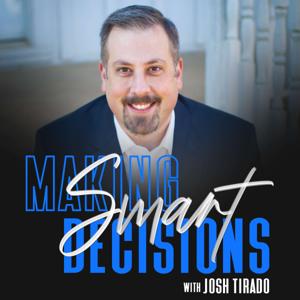


You're listening to making smart decisions with Josh Tirado. Today's topic is what questions to ask when you're interviewing a financial advisor. So essentially, I'm giving you the questions to ask when you're interviewing me. Here's what to ask me when I'm trying out for the job of being your advisor; I started this off because this is a very, very often asked question on Google. And if you Google, what questions to ask an advisor or how do you interview a potential advisor money manager, There are an absolute ton of questions out there. What I find interesting is most of them, especially at the top of the search, are very operational in nature.
[00:02:20] They're having to ask your advisor questions, such as what clearing firm are they using for the investments. What is this fee? What is that fee? what is the timeframe to handle X, Y, or Z? How are you handling these options? But nowhere are they going into asking about what is the person's investment philosophy? What value you add the does the firm offer?
[00:02:42] Do they have any unique value proposition? How often are they going to be in touch with you as a client? Are they going to be conducive to your needs or not? but rather than asking questions to form a relationship.
[00:02:53] And to truly interview the person that you're to going to be trusting with your money. They're asking things that are very operational, very basic in nature that I really don't think help you make a decision or gain a comfort level to work with that professional. The other issue I have with a number of questions or questionnaires out there. Does he give me the questions to ask? And then they don't tell you what the answer should be. So what good does the questionnaire have if you ask your advisor all of these questions without getting the answers? Then you have no point of reference.
[00:03:22] If the answers are a quote, unquote, good or bad, or right for you and your needs. So, what I'm going to tend to do today is give you a number of what I think are valuable questions, my answers to those questions and how it relates to you
[00:03:38], number one. Are you a fiduciary? My answer is yes. And I think the answer should be unequivocal. Yes. A fiduciary legally must put their client's financial interests ahead of their own. And not all financial advisors are fiduciary. The last two people that have interviewed me to become their financial advisor.
[00:03:58] The number one question they asked me was, are you a fiduciary? in this day and age and moving forward, I think the answer has to be yes. Why would you hire a professional who wasn't legally required to put your interests ahead of their own? I mean, that's, that's the whole reason you need trust behind it.
[00:04:12] But I think that's the right step forward in starting that conversation. Are you a fiduciary? My answer is yes. I think the answer should be yes. Question two and question three, roll into another. Let me give you both questions and then tell you how those answers for most advisors will probably overlap.
[00:04:31] And the next question is, how are you compensated for your services? And the fourth question is, do you get paid by anyone other than your clients? So this goes into there's a variety of ways. Advisors can be compensated; they can be compensated via commission. They can be fee-only where they're just charging a fee to manage your money, or they're charging a fee for the advice, the financial.
[00:04:53] planning
[00:04:54] Josh: or, in my case, I'm, fee-based I say fee-based because 80-90% of my practice is based around the fees for managing money and the fees.
[00:05:05] First and foremost, for doing the financial planning for my clients. There are still some investment options out there that longterm are cheaper for you as the client to do on a commission basis. Then on a fee basis. And one of the big pushes right now, in the compliance-world, related to my field, is to try and make that a level playing field that if you're charging a fee, at some point, you stopped the fees of the fees equal to what, the commission would be.
[00:05:31] Or the commission structure is more in line with what a fee structure would be. And I think that's, that is excellent. That's a great move forward, but there's still. Some investment strategies and some investments out there that just by the nature of how they're structured, presently in 2020, are not offered on a fee platform.
[00:05:51] They're only offered in a commission format. The next question is, are you paid by anyone other than your clients? Again, that's what fits into are you paid commissions by some company as opposed to the fee?
[00:06:05] So I really think these two questions go to go together. The other followup is if you're paying a fee, what are the terms of the fee you want to know? Are you paying an hourly basis? Are they going to bill you every time you meet for the hours they spent with you and behind the scenes, are you paying quarterly?
[00:06:23] Are you paying semiannual? Are you paying annually? What is the structure? Does it fit, with your needs and your budget? And most importantly, based on the fee you're paying, are you getting the services that you need in the want for what you're paying? I don't need to have a discussion with you about value.
[00:06:42] You understand the value, but oftentimes "You get what you pay for" really does resonate, even in this industry.
[00:06:51] The next question. Is what is your investment philosophy or approach? Now? I think this is an important question. I also think it's kind of a loaded question. As things change over time, your needs are going to change. Perhaps your advisor's philosophies are going to change. Not only because they've had a change of heart, but they're adapting to the environment and what's going on around you.
[00:07:16] There's an old saying that everyone's strategy works right up until it doesn't. Mike Tyson often said everyone has a plan until they get punched in the mouth. Things change. The world changes rapidly. So there's nothing wrong with adjusting your strategy. If anything, I think that's a smart move, but you do want to know what their basic philosophy and approaches. If someone's very aggressive and you're very conservative, you're not going to get along.
[00:07:39] It is not going to be harmonious—type practice. So ask him about their philosophy and approach, but understand that that can change over time. And as it changes, that's a conversation they should have with you, but don't be alarmed. Don't hold it against them. If it's changing, it's probably changing for the right reasons.
[00:07:56] In my case, we've, we've trademarked an approach that we call practical tactical. The practical part being is there are a core investment philosophy and a core of stable investment holdings that, that we view the base of your strategy. It can be in different accounts. It can be different investment products, different investment types, but we have a core.
[00:08:19] The tactical part is then the overlay. I liken it to adding seasoning to a soup. It doesn't take a whole lot to change the flavor and add a whole lot of taste to it.
[00:08:29] So our strategy is practical. Tactical. Some places use something similar. They referred to it as core and satellite. some firms refer to it as just being properly diversified. It's all in how they structure it, but there should be some sort of philosophy.
[00:08:44] Next question. Do you specialize in certain types...
You're listening to making smart decisions with Josh Tirado. Today's topic is the backdoor Roth IRA. In the last year to the backdoor Roth IRA, concept has gained popularity. If you Google it, you will find a number of articles online, explaining and detailing the backdoor Roth IRA. And also a lot of times it's.
[00:02:04] Heavily sprinkled with the author's opinion on the strategy. So I want to talk today about some of the rules concerning the backdoor Roth IRA, how you could utilize it. If it's something that is for you or not, and what you want to consider. First and foremost, let me say that consulting with your professional.
[00:02:23] When it comes to the tour Roth IRA, whether using a backdoor Roth IRA or doing some sort of Roth IRA conversion, you definitely have to speak with your professional because we have software. We can run multiple scenarios and compare and contrast and see if this is the right strategy for you. For some people, it's a home run. For some people, it should really be a no go.
[00:02:44] And there is a large amount of a gray area. But a lot of it's dependent upon your strategy. And what I don't like is a lot of the articles I'm finding online concerning the backdoor Roth IRA concept, as I said before, heavily influenced by the author's opinion and a lot of the opinions for or against the concept.
[00:03:02] Are based on some outlier factors and really what would not have applied to the majority of people out there, but what would apply to the minority. So they're looking more for the exception than the rule. the Roth IRA, there are some limitations to contribute to a Roth IRA.
[00:03:21] There is an income limitation.
[00:03:23]For instance, in 2019, if you are a single head of household person filing your taxes. If you make less than 122,000 modified adjusted gross income, you can contribute a maximum of $6,000 a year to Roth IRA. If you're age 50 or older, you can contribute $7,000. That's been adjusted in the year 2020. You have to make less than 124,000 modified adjusted gross income to maximize your contribution.
[00:03:53] Above 124,000 up to 139. The amount you can contribute is reduced and above 139,000. No contribution is allowed. If you are married and filing jointly, the number that you have to make is less than 196,000 from 196 to 206,000; your contributions are reduced a to 6 and above no contribution is allowed at all above that.
[00:04:16]Also, the contributions are available. You can make them up to the following year. So say you wanna make a 20, 20 contribution and you're now in 2021, cause you wanted to see how your income is going to look to see if you're going to be allowed to contribute or not. You can still make a 2020 contribution in the year 2021.
[00:04:32] It just simply has to be done earlier than April 15th or whenever your taxes are filed. And before that, you can make a contribution for the preceding year. Again. It's something to 6,000 a year or 7,000 a year for age 50 or older. And you do have to show that you made some income.
[00:04:49]also you can be, you can, there are different rules concerning the spouse, whether or not the spouse is working, the spouse can also potentially contribute. So what we're looking at here are people that would like to do a Roth IRA, but make, and I'm doing air quotes that are making too much money to be able to contribute to one.
[00:05:05] So this concept of a backdoor Roth IRA has become very popular. there are a few methods. The two most popular are if you're working and you're enrolled in a 401K plan, and your 401k offers a Roth 401k option, you can utilize that regardless of your income, you can contribute to the Roth portion of a 401k.
[00:05:25] And it's also not subject to the six or $7,000 limit. It's subject to the normal 401k contribution limits. So you can put even more money into it. That's pretty straightforward. The other concept is to contribute to a traditional IRA, the six or $7,000. And either you can do it right after you contribute, or you can wait and let it build-up, but you contribute to a regular IRA, traditional IRA, and then you do a conversion and convert the traditional IRA over to a Roth IRA.
[00:05:56] The conversion is not subject to your income. So if your income is above those thresholds, you can always convert a traditional line. At least the way the law stands. Currently, . you can convert a traditional IRA to a Roth IRA. Now the main difference here is traditional IRA is pretax money where your contributions tax-deductible, a Roth IRA is using after you've paid tax post-tax money.
[00:06:21] So there's no deduction. And if you make a contribution, there's no deduction. They will both grow tax-deferred, but in the end, everything you pull out of a traditional IRA will be considered ordinary income. And it'll be subject to taxes, normal income tax, a Roth IRA will grow tax-deferred, and then every single pull out of it, both principle and gain will be completely tax-free.
[00:06:45] So the trade-off is you don't get the tax break in the beginning, but in the end, everything you have in there is completely tax-free. Now there's a lot of speculation about what our tax is going to be in the future. If this is a good strategy or not, if you are receiving a lot of your income down the road and , if it's coming in the form of capital gains on other investments, that's currently taxed a lower rate than income.
[00:07:09] However, most people are relying on income and retirement coming from IRAs and other pretax sources. So it will be counted as taxable income. It is very nice to have options when you go to utilize your income in retirement. And when I say options, some money is pretax. So when you pull it out, it's taxable; some money has been contributed after tax.
[00:07:32] Maybe it just went to a brokerage account. Or where you went into a Roth IRA at that point, it gives you options. We can say, okay, somebody should come out of a traditional IRA where it's taxable. Some of that can come out of a Roth IRA or another investment where it's not taxable, and you can really have much more control or what your taxable income looks like in any given year in retirement.
[00:07:55] So I liked the idea of being able to access to a Roth IRA as well as a traditional IRA.
[00:08:01]I won't say it's a problem, but where a lot of these articles come in is they're suggesting that depending on the level of income you need or what tax bracket you're going to be in retirement, maybe doing a Roth or rough conversion is not a good idea, but a lot of these articles are addressing some in their forties or fifties.
[00:08:17] And it's hard to project when you retire, and you're in your sixties, seventies or eighties, and you're going out 20 or 30 years, what tax rates are going to look like, what tax bracket you're going to be in. So I'm very much of the opinion of it is great to have some pre-tax money and some after-tax money and straddle the fence, if you will.
[00:08:35] So no matter what the landscape looks like, you can adjust accordingly. So when it comes to a backdoor Roth, we really have to analyze the number of features going in. Where are you getting the money from? How are you going to pay the taxes on the Roth conversion? Do you want to give up the tax deductibility now, and will it really benefit you?
[00:08:54] Generally speaking, when I found clients is the longer that they're invested, the better, the Roth will work for them. And if they have an outside source to pay the taxes, do when they convert a traditional IRA to a...
You're listening to making smart decisions with Josh Tirado, and today's topic is life insurance and marijuana. before you start going into your preconceived notions of this topic of life insurance and marijuana, let me start with a quote from a very old hall of fame baseball player, Yogi bear. He was asked once, what is the best type of life insurance to have?
[00:02:06] And yoga was quoted as saying, I don't know which type is the best, but I know that none is bad. So
[00:02:12] let
[00:02:12] Josh: me start first and foremost with the need and the importance of life insurance. And at the time this is being recorded. It is September and September is actually national life insurance awareness month.
[00:02:24]But on the topic of life insurance, things over the years have changed dramatically in regard to life insurance and marijuana. And this has been brought to my attention because, in the last several months, I have literally handled half a dozen insurance cases for people who are using marijuana and needed to upgrade or update their life insurance.
[00:02:47]And almost every one of these people is a professional who has a very high household income. They all married with children, but marijuana is being used for a number of different purposes. Some of them it's recreational. Some of them it's strictly medicinal and prescribed by the doctor.
[00:03:03] Some are in States where medicinal marijuana is not yet legal, but marijuana is being used for medicinal purposes. To allow them to not use some traditional pharmaceuticals. The marijuana was able to take the place of some other drugs that they don't want to have to continuously take, and they can use less marijuana with the same effects than taking the prescription drugs, and they've admitted it to their doctor.
[00:03:27] It's in their medical records, and it's all on the up and up. But these people are very concerned, saying, I'm using marijuana. And a number of cases, technically it's still illegal. at least on the federal level with not the state. And they're very concerned as to how it's gonna affect their life insurance.
[00:03:41]I'm here to tell you that things have changed dramatically, but let me give you a little background. I'm insurance licensed now for 23 years. And when I first started, you can not test positive for marijuana and get life insurance. You would be declined because it was drug use, and they did take, they did test the urine samples for THC.
[00:04:00] To make sure you weren't using marijuana. And if you don't realize this marijuana is fat-soluble, so it stays in your system for quite a long time. And this was always a concern for people that use it recreationally, fast forward 20 something years, and the trends companies have much more data to go on.
[00:04:17] And this is what every insurance company bases their prices and their acceptance on is their own individual data, which is why some insurance companies are more favorable towards health issues than others. I have some companies that are very lenient. If someone has heart disease, I have some that are more lenient.
[00:04:34] If you're diabetic, I have some that are more lenient based on your height and weight. if you're a little too heavy for your height, those things come up, but each company has a different appetite, and based on their own data, they decide what's a good risk or not even comes to tobacco.
[00:04:48] Now, they have a lot of information over a lot of years concerning marijuana. So they're able to adjust that. And this is, let me make one point here. This is where it's important to have access or use an insurance person that has access to a number of insurance carriers. I have over 30 insurance companies I can utilize, and no one company is the right fit for every person and every need.
[00:05:09] And the appetite of the insurance company changes over the over time as well. Sometimes they feel they've taken on too much risk in a certain area or certain health conditions, and they move on to another area. But the bottom line is there's a number of large—respect insurance companies, a-rated insurance companies, national companies that are very lenient or accepting towards marijuana.
[00:05:30]when we look at the marijuana use, if you're admitting to it and it's in your doctor's records, there's no need to be scared. There's no need to hide first and foremost. One of the questions asked when you apply for life insurance asks about drug use, different things, ask about marijuana use.
[00:05:47] The important thing is that you admit to it and say, yes, especially if it's in your doctor's records. Cause it will be found out anyway. And you don't align the life insurance application because the last thing you want to do. Is pass away, go to use the life insurance, and they have to do an investigation because there are concerns that you lied on the application. so first and foremost, if you're using marijuana, don't say no and try to cover it up because if they find it, they then feel that you lied about drug use, and he will be declined coverage. when the question is up to you, use marijuana, you say, yes, they ask frequency and purpose, and you let them know.
[00:06:25] For some companies, as long as it's recreational, it's below a certain number of times per week. you don't even get rated. You can't get the best rating. You can't get super preferred or best preferred a slight preferred, but you can still get a healthy non-smoker or preferred health rating for some companies, depending on the amount of marijuana you utilize, they will give you a smoker rating.
[00:06:47] Or a light smoker ratings. So you'll still get a standard healthy person, but there'll be more of a surcharge added on for smoking. Cause they're going to classify as tobacco use. And it does matter if medicinal or not, if you're using it in an edible form, if you're smoking it, whatever the delivery system to your body matters too.
[00:07:06] So you tell them how often when you're using it, how you're using it. Okay. And that can help your agent determine which company is the right fit for you. And they can find a company that best meets your needs, medicinal or not. So when the marijuana question comes up, don't be scared. Don't think you're on meth and get turned down.
[00:07:24] Don't think that it's going to cost you a lot more money. There are good companies out there that will double-take you. the one caveat I've seen is I know some of them that was declined because it was not medicinal marijuana, and they were using it multiple times a day, every day. And the that was just too much to not have a prescription for, but if you're using it to reduce your dependence on some sort of another drug, (by the way, when I say the itger drug, I'm referring to prescription drugs) if you're using it to, reduce or get rid of your dependence on some other drug, or you're simply doing it too, improve the quality of your life, or you're using it recreationally, or you're using it because.
[00:08:06] 2020 has been such an awful year, and this is what's helping you through. You're still able to get life insurance and get it on a favorable basis. The other thing I would like to bring up as well is in this day and age, because of social distancing, everything that's going on. A number of insurance companies have also gone away from traditional underwriting, where they're doing blood and urine, where they're simply doing a questionnaire and a 10 to 15 minute telephone interview.
[00:08:33] Now. If you answer yes to certain questions, one...
Josh Tirado: I'm Josh Tirado. And you're listening to making smart decisions. Today's topic. I want to discuss the fiduciary standard and how that applies to financial advisors in this segment. I'm also going to discuss my personal experience and how this plays into my practice, but please know that this is a very touchy subject.
[00:02:02] The standards for this are influx, constantly changing. I am going to try to be as weary and correct as I can be in doing this. So according to in grant, this is not the end all be all, sure, but according to Wikipedia, a fiduciary is a person who holds a legal or ethical relationship of trust with one or more other parties.
[00:02:25] Typically a fiduciary prudently takes care of money. Or assets for another person. Now that fiduciary definition is a little different than Wikipedia. That's a little different in Merriam Webster's dictionary. And right now the sec security exchange commission and, the CFP board certified financial planning board and different entities are working on the wording of what they feel is the appropriate fiduciary.
[00:02:52] Definition and responsibility and standard that they can hold members to. there's a lot of going back and forth with that. But what I want to say is that the core of it is trust. The fiduciary responsibility is that someone is trusting you to help them handle their affairs, their decisions, their money, their assets, the underlying thing is trust.
[00:03:14]And trust can be very subjective. It's hard to define that where it's going to be legally binding, but as far as I'm concerned, whoever you're working with as a financial advisor, the number one thing, the first thing that needs to be there is that level of trust. Whether they're fiduciary or not, whether they're required by law or not, that's a discussion for a different time, but I feel that it's not just a legal responsibility, but that's a moral responsibility that there should be trust there that you're acting in the other person's best interest at all times, because that is why you're being hired as an advisor that you put that person's interest ahead of your own.
[00:03:55] So to me, the fiduciary responsibility is very important. And let me just discuss a little bit of how it fits into my own personal experience. So I've been insurance licensed for over 22 years now. I have been securities investment licensed, over 20 years now. So my practice has span the time when I have seen the tech bubble.
[00:04:18] Burst in 2000, 2001, I have been here through the financial crisis and the corresponding mortgage and housing crisis in Oh eight Oh nine. now I'm around now living through 20, 20 COVID-19 and all the craziness that the market, the job market, interest rates, inflation, everything that everyone is seeing right now.
[00:04:41] So my experience I have been through three major. Downturns and recoveries, and I've helped my clients through them. And each one has been very different. The reasons that caused it have been very different, but the underlying what happens at the end of the day with the money going down, the money going up, and handling someone's emotions, and that trust.
[00:05:02] That's continuous that's dealing with humans and the human condition and trusting and caring for people and guiding them through what has happened in each one of those instances. So to me from day one that trust a fiduciary, that moral responsibility has always been there, but now legally it's becoming more important than ever.
[00:05:24] And you do need to ask your advisor and you're interviewing someone or your current advisor, ask them if they're a fiduciary. Because there's a certain licensing to have. There's a certain title on what they need to have. depending who they're governed by, they might be a fiduciary. They might not be.
[00:05:39] if you've worked with your advisor for 40 years and you trust them and they're awesome. They're probably putting your best interest ahead of their own, and they're doing what they should, whether they're legally responsible or not. But I think that fiduciary and that trust level are extremely important.
[00:05:55] And I do not think that should be overlooked in today's market. That should be question number one. And also the feeling you have for that person, that gut feeling. Do you trust that person? Do you get along with that person? Do you like that person? Because I'll tell you right now. I'm much more proactive in reaching out to my clients, and they are in reaching out to me.
[00:06:16] They hire me for a reason. They know I'm there, I'm working for them. during good times, people are usually happy during the bad times when people grumble and complain. And I'm very fortunate. My clients are educated on our strategies. What we're doing,g when things start to go down or things are happening, geopolitically or things go quote unquote, bad.
[00:06:35] Generally speaking, my clients are not too worried and I'm reaching out to them, but that is when an advisor is most needed, most effective. And that's when the trust and the fiduciary responsibility really kicks in when things are not going perfect. When they're not going smoothly, when they have to help you through things financially, emotionally, and help manage the situation.
[00:06:57] That's when a good advisor is worth their weight in gold. And that trust has to be there.
[00:07:03]
Welcome to making smart decisions with Josh Tirado. Today's topic is investing in 2020 and beyond the survival of the fittest. Now, if you think back to school and learning about the survival of the fittest, but I imagine it is a lion running across a Prairie, tackling another weak animal, and having lunch. And if that's not what you imagine it is now, because I just planted that thought in your head, but that would be completely wrong.
[00:02:07] When Darwin actually looked at the survival of the fittest, one of them reads organisms best adjusted to their environment are the most successful in surviving and reproducing. Therefore, it is not always the biggest, the strongest, the fastest, but rather the animals or organisms that are most adept at adapting to their environment because, in the wild, the environment is always changing in the market and in society.
[00:02:33] And especially in 2020 and beyond, because this year has been amazing. Things are constantly changing, and people who just. Sit by and go with the flow or stick to whatever they've been using that has been working for a long time and aren't adapting will be passed by. So it's not often, you probably hear survival of the fittest compared to investing, but in this case, I feel that is very important.
[00:03:00]2020, and moving forward, there are a lot of things going on, geopolitically, the market interest rates, the pandemic we're dealing with. And things are changing, and they're changing rapidly. People who can adjust their goals, their investment strategies, they're planning to adapt to that environment will survive and thrive.
[00:03:21] People who are not adapting will be left behind. I feel that one of the greatest attributes that a person can continue doing throughout their lifetime is learning. And the learning also applies to investments. In fact, in a recent poll of my clients, the top two reasons that clients chose to work with me and have stayed with me over the years are, first and foremost, the issues they're educated on.
[00:03:48] The planning concepts that we're using the topics, the investments they're in, and they've gained a comfort level with their strategy. And what they're doing second is this survival of the fittest type theory. Clients have commented that they're getting new and better ideas. for me on a regular basis, and they feel so they're very cutting edge.
[00:04:09] That doesn't mean we use every single idea with every single client. And it doesn't mean that we're looking at things that are a flash in the pan. Things need to have a track record. Things need to be well-vetted, but in constantly trying to improve, you don't have lazy money. You don't have things sitting on the sidelines.
[00:04:25] You know that things are moving, things are changing. And if you adapt, you will do a better job and be able to hit your goals quicker. When I put together a financial plan for someone, I view it as the roadmap to their success. And that's why our slogan is guiding your journey, but constantly evaluating what's going on and looking and changing and adapting is essentially the turn by turn instructions to keep you on that map, headed in the right direction and achieving your goals.
[00:04:55] So when I look at investing in this crazy year of 20, 20 and beyond, I think some things are gonna change a number of years ago, people started using the phrase a new normal, I do think some fundamental things have changed, and people are going to have to adapt. So the better you can adapt forward, the quicker and most efficiently you can reach your goals.
This is Josh Tirado. You're listening to Making Smart Decisions. And this episode, we're going to touch on longterm care insurance. So when it comes to the topic of longterm care insurance, there has become more public acceptance recently, but for a very long time, People did not want to discuss longterm care insurance.
[00:02:00] They would actually just rather discuss life insurance, longterm care insurance because the concept of being here and not being here was easier than the concept of being here, but being physically impaired in some way and needing longterm care. I started selling longterm care insurance and handling it from my clients about 20 years ago.
[00:02:18]the market for it has come. Full circle. it's come so far in 20 years. It is amazing how much better is now. It also amazes me, the understanding that the general public has and the need for it. And also the level of care. brief history when longterm care first started out, they were called nursing home policies.
[00:02:37] designed to cover the cost of a nursing home over time, though, that has greatly evolved in longterm care has actually become an anti nursing home or facility type policy where the purpose of longterm care is to help you stay independent and in your own home and deal with whatever has happened to you.
[00:02:54] And if possible, recover from it and go back to living, as opposed to saying, we're just covering the costs of what's going to happen for the nursing home. It's actually much more of a recovery and lifestyle enhancement type policy. So it will cover a number of things. But what I want to address is when it first came out, and a lot of people still have this preconceived notion when it first came out, I very much likened it to your auto insurance.
[00:03:20] You paid for it, you had it for your entire life, and you really hoped you never used it. And in the end. All that money for all those years was gone. You didn't get anything back, but you were happy that you didn't use it the way they structure longterm care insurance. Now, previously, that what I just described was a traditional longterm care insurance policy that only, I think, comprises about I'd say 10 or 20% of longterm care insurance that is put in place today.
[00:03:46] And out of my personal practice, I haven't used a traditional policy in over eight years. The new policies are hybrid policies. this is going to get a little technical, maybe a little nerdy, but you'll see why this is important.
[00:03:59] Just second longterm care insurance is governed by the laws for health insurance. premiums can be raised coverages, and things can be changed. The newer policies. Or a hybrid policy where it's a combination of a life insurance policy and a longterm care policy, but the base of it is life insurance.
[00:04:20] So the whole policy is governed by the laws that govern life insurance, not the laws that govern health insurance and those laws are night and day different. it's more advantageous for you as the consumers, the end-user to have it based on life insurance. You now have a base of life insurance with a longterm care insurance rider on top of it.
[00:04:39]And with that allows you to do is not lose out on your money. the way it works now is the money you put into that policy is going to stay there, and it will also provide longterm care. It will also provide a life insurance benefit. So he'll get from the standpoint of. If you need longterm care, this hybrid policy will provide you with longterm care benefits.
[00:05:00] If you passed away and did not use your longterm care, this hybrid policy will provide you with a life insurance benefit. If, at any point you decide, I don't want this policy. Either you're older, and you need or want the money out of it, and you don't want to use it. Or something has drastically changed within healthcare in this country.
[00:05:18] And longterm care is now paid for by the government or becomes passe. And you no longer need it at any point. If you want to cancel a policy, depending on which policy you have, you can get back a hundred percent of the premium that went in. Some policies give you back about 75 or 80% of the premium that went in.
[00:05:34] But there is a few more benefits. so there's a little bit of a trade-off with what direction you want to go in, but you can get back most or all of your premium. So if you think about it that way, what does actually becomes is a different asset allocation you think about, okay, where can I pull the money from?
[00:05:55] And what was it doing, where it was, and move it over into a hybrid longterm care policy. And that money is now providing me a life insurance benefit. It's providing me a longterm care insurance benefit. And if at any point I need my money, I can get my money back out of it without there being a penalty.
[00:06:13] your money's still sitting there as an emergency fund. Now you can look at and say; my money's not making a return when it's sitting in that policy. True. But at the same time, you're also no longer paying a life insurance premium, or longterm care premium is covered. Bring those for you at the same time.
[00:06:28] I can't say it's a no-lose type of situation, but it covers you. If you need care, it covers you if you pass away. And if at any point you want to get the money out and cancel the policy, you can take your money out. So the policies have come a long way from what they used to be.
[00:06:42] And. It is the fastest-growing insurance or investment product currently in the country. And if you look at the number of people that will need longterm care, at some point in their lives, it's yes, you have better than a 50% chance of meeting it. And the fact of the matter is statistics show women need it more often than men.
[00:07:06] That's just something because our life expectancy isn't as long, we tend to die first. And, oftentimes there's, a woman in the household to help take care of the man. So maybe he doesn't need the care. It's important for men and women, but there's a almost a 50/50 chance that men will need it.
[00:07:22] And there's a greater than 50/50 chance that women will need it. on a personal note, I put my mom's policy in place probably about 15 years ago. And it was before these hybrid policies came to be, so hers is still a traditional policy because it was that old.
[00:07:40], but from a personal standpoint, I did it because. My father had ms. I had ms for a lot of years and didn't need longterm care and needed that help before he passed away. And I can see what it can do to a family, one, the stress of having to care for someone and to the cost. So personally, I've always thought it was important, but it has become so important now If you are a fiduciary advisor to your clients, if you're a field near fee-based advisor, doing planning for your clients, the courts have even determined that longterm care is so important that it must be offered to your clients. So I know for a fact there's been a number of cases, one specifically in Texas, but there's been a few cases brought up, in recent years where.
[00:08:26] An individual or a couple has sued their financial advisor because the financial advisor did not recommend longterm care insurance to them. And then they had health conditions that required longterm care and how much it costs and the devastation it did to their net worth. They felt that if that person was a true fiduciary, they should have made them aware of longterm care.
[00:08:48]They brought suit against them, and the court sided with the clients...
From the publisher's feed
26 Listeners
42 Listeners

29 Listeners
24 Listeners

6 Listeners
4 Listeners

0 Listeners

7 Listeners
19 Listeners

7 Listeners

5 Listeners

0 Listeners

0 Listeners

0 Listeners

0 Listeners

0 Listeners

8 Listeners
3 Listeners

5 Listeners
0 Listeners