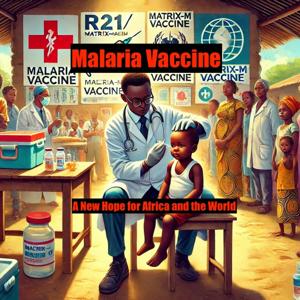
Malaria vaccine rollout across Africa is accelerating despite funding cuts and supply strains, with Gavi reporting on January 28, 2026, that 25 countries have integrated WHO-endorsed RTS,S (Mosquirix) and R21 vaccines into routine immunization programs. These shots, which reduce child cases by over 50 percent in the first year after dosing, are building on successes like Kenya's Malaria Vaccine Implementation Programme, where RTS,S—developed over 35 years by GlaxoSmithKline with WHO, Gavi, and PATH support—has lowered deaths and hospitalizations in young children since 2019, according to Tropical Health Matters.
Recent momentum includes Nigeria's Bauchi State launching a major March drive targeting polio and malaria vaccines for two million children under five, as detailed in a Spreaker podcast on April 5, 2026. Yet challenges mount: U.S. funding suspension could spark 12.5 to 17.9 million extra cases and 71,000 to 166,000 deaths this year, while six endemic countries face under three months of rapid diagnostic tests, per Roll Back Malaria Partnership data cited by Tropical Health Matters. UNICEF highlights surging demand outstripping supply, complicated by production limits, supply chains, pricing, and health system integration.
Vaccine hesitancy persists, with a Ghana study finding 34.5 percent of parents reluctant for R21/Matrix-M despite its high safety, efficacy, and WHO approval—often among those skipping routine shots. A fresh Kenyan study, reported by The Standard five days ago, casts doubt on RTS,S effectiveness in adults, questioning its role in broader elimination efforts.
Hope lies in innovation. Centivax secured March 30, 2026, investment from Meiji Seika Pharma for malaria candidates via its universal immunity platform, per the Spreaker update. Australia's Griffith University advances PlasProtecT, a whole-parasite vaccine targeting blood-stage infection with over 5,000 proteins for broad strain protection; stable when frozen or freeze-dried, it nears Phase 1 trials funded by AU$3.1 million from Rotary International, with data expected by 2028. Rotary notes it complements RTS,S and R21's liver-stage focus, potentially averting half a million child deaths by 2035 if scaled, per WHO modeling.
Experts like Prof. Carlton Hay emphasize science's promise amid over 600,000 annual deaths for three years, with Gavi aiding country readiness and WHO bridging funding gaps. As global malaria control pivots to new tools against resistant parasites, vaccines remain a cost-effective cornerstone for Africa's high-burden regions.
This content was created in partnership and with the help of Artificial Intelligence AI.