
Sign up to save your podcasts
Or

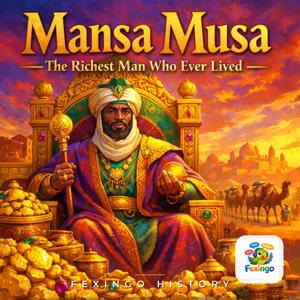


After Mansa Musa's legendary 1324 Hajj that crashed Cairo's gold market, he returned to Mali to find a restless empire. This episode follows the emperor's first year back: the border skirmishes he had to pacify, the administrative reforms he rushed through, and the building projects that reshaped Niani and Timbuktu. We examine the specific reforms Mansa Musa enacted in 1325–26 based on al-Umari's accounts: the reorganization of the farba tax system, the appointment of new provincial governors, and the expansion of the qadi courts. We also look at how he handled the Mossi threat on the southern frontier and the diplomatic overtures to the Marinid sultan in Fez. Drawing on the Tarikh al-Sudan and Ibn Battuta's later observations, we piece together a portrait of an emperor who, having seen the wider Islamic world, came home determined to transform his kingdom. Not just the richest man alive, but one of its most ambitious builders.
#MansaMusa #MaliEmpire #Hajj #WestAfrica #MedievalAfrica #TarikhAlSudan #AlUmari #IbnBattuta #Niani #Timbuktu #Farba #Qadi #Mossi #Marinid #Fez #Sahel #History #FexingoHistory
Keep every episode free: buymeacoffee.com/fexingo
In this episode, Lucas and Luna trace the vast network of gold trade routes that transformed Mansa Musa's Mali Empire into the wealthiest state of the medieval world. They explore the Bambuk and Bure goldfields, the silent trade with the Wangara miners, and the vital trans-Saharan arteries through Taghaza and Takedda. The conversation highlights the role of dyula merchants, the governance of farba officials, and how Mansa Musa's 1324 hajj showcased this wealth in Cairo. Discover the true scale of Mali's gold output—perhaps four million mithqals per year—and the ingenious systems that kept it flowing for centuries.
#MansaMusa #GoldTrade #TransSaharanTrade #Bambuk #Bure #Wangara #SilentBarter #Dyula #Farba #Taghaza #Takedda #Sijilmasa #Cairo #MedievalMali #WestAfrica #History #FexingoHistory #GoldRush
Keep every episode free: buymeacoffee.com/fexingo
In 1324, Mansa Musa of the Mali Empire set out on the hajj to Mecca, taking with him a caravan of staggering wealth. This episode of Fexingo History digs into the precise amount of gold he carried—from 100 camel-loads to the more than 8,000 pounds of pure gold documented in Cairo. Lucas and Luna explore how the chronicler al-Maqrizi recorded the crash in gold prices, how Mansa Musa's spending shook the Mamluk economy, and what the Catalan Atlas reveals about Mali's global reach. They consider debates among historians over the true scale of the gold, the role of the farba administrators, and the lasting legend of the richest man ever to live. Drawing on primary sources like al-Umari's Masalik al-Absar and the Tarikh al-Sudan, this episode brings fresh detail to a familiar story.
#MansaMusa #Hajj1324 #Gold #MaliEmpire #Cairo #al-Maqrizi #al-Umari #CatalanAtlas #MasalikalAbsar #farba #dyula #Timbuktu #Niani #Sijilmasa #MedievalAfrica #EconomicHistory #History #FexingoHistory
Keep every episode free: buymeacoffee.com/fexingo
In this episode of Fexingo History, Lucas and Luna explore the lost cartographic traditions of the Mali Empire under Mansa Musa. While no maps survive from Mali itself, clues from Arabic and European sources—like the 1375 Catalan Atlas and writings of al-Umari—reveal how Mansa Musa's reign was mapped by others. They discuss the role of dyula merchants in transmitting geographic knowledge, the possible use of oral mapmaking by jeliw, and how Mansa Musa's hajj put the Mali Empire on the world map. The conversation touches on the limits of surviving evidence, the biases of external cartographers, and what might have been lost.
#MansaMusa #MaliEmpire #Cartography #CatalanAtlas #alUmari #Dyula #Jeliw #Hajj #WestAfrica #Sahel #Timbuktu #Niani #Sijilmasa #IbnBattuta #OralHistory #History #FexingoHistory #LostKnowledge
Keep every episode free: buymeacoffee.com/fexingo
In 1324, Mansa Musa's legendary hajj through Cairo caused a gold glut that crashed the city's economy for over a decade. This episode unpacks the chaos: how the emperor's lavish spending—handing out gold so freely that its value plummeted—triggered inflation, bankrupted merchants, and forced Cairo's markets to restructure. We explore al-Maqrizi's historical accounts, the role of moneychangers (sayrafa), and the long shadow this economic shock cast on Mamluk trade. Lucas and Luna also examine Musa's gold-for-goods spree, the real cost of his generosity, and whether the inflation was a myth or a medieval monetary crisis. A fresh angle on the richest man in history's most famous journey.
#MansaMusa #MaliEmpire #CairoInflation #Hajj1324 #GoldGlut #MamlukSultanate #al-Maqrizi #Sayrafa #MedievalEconomy #WestAfricanHistory #EconomicHistory #HistoryPodcast #FexingoHistory #KankuMusa #Sijilmasa #Cairo #Inflation #Gold
Keep every episode free: buymeacoffee.com/fexingo
Lucas and Luna explore the unsung heroes of Mansa Musa's empire: the engineers and laborers who built the wells, cisterns, and underground canals that made trans-Saharan travel and trade possible. From the foggaras of Taghaza to the qanat-like systems adapted in the Sahel, this episode uncovers how water management sustained Mali's wealth and power. Learn about the role of the farba in organizing these projects, the geological constraints of the Sahara, and the technological exchange with North Africa. Specific figures include the Berber hydrologist Abu al-Hasan al-Tilimsani, who may have advised Musa's court. The episode also touches on the dispute over whether Musa commissioned a 700-kilometer canal to the Niger, as recorded in the Tarikh al-Sudan, and what recent satellite imagery suggests. A fresh angle that connects empire-building, climate, and innovation.
#MansaMusa #Sahel #MaliEmpire #WaterEngineering #Sahara #Foggaras #Taghaza #TarikhAlSudan #AbuAlHasanAlTilimsani #KankuMusa #Farba #TransSaharanTrade #AncientIrrigation #DesertWater #Timbuktu #NigerRiver #History #FexingoHistory
Keep every episode free: buymeacoffee.com/fexingo
This episode explores the role of the jeliw — the hereditary praise-singers and oral historians who preserved Mali's imperial memory. Lucas and Luna discuss how these poet-musicians served as living archives, chronicling Mansa Musa's reign and the epic of Sundiata Keita. They examine the jeliw's training, their instruments like the kora, and their social status under the farba system. The conversation also touches on the tension between oral tradition and written accounts from al-Umari, and how the jeliw's art shaped political legitimacy in the Sahel. No prior episodes covered this cultural pillar of Mansa Musa's court.
#MansaMusa #Jeliw #Griot #MaliEmpire #OralTradition #Kora #SundiataKeita #Farba #Sahel #WestAfrica #History #FexingoHistory #AfricanHistory #CourtPoets #ImperialMemory #AlUmari #TarikhAlSudan #PraiseSong
Keep every episode free: buymeacoffee.com/fexingo
In this episode, Lucas and Luna explore the architectural legacy of Mansa Musa's reign, focusing on the mysterious abandoned minaret in Gao. They discuss the role of the Andalusian architect Abu Ishaq al-Sahili, who designed the Djinguereber Mosque in Timbuktu and possibly the Gao minaret. The conversation covers the construction techniques using banco (mud-brick), the political tensions between the Mali Empire and the Songhai people of Gao, and why the minaret was left unfinished or fell into disrepair. They also touch on the accounts of Ibn Battuta and al-Umari, and the cultural significance of the mosque as a symbol of Mali's golden age. The episode ends with a reflection on how architecture can reveal the complexities of empire and cultural exchange.
#MansaMusa #Gao #Minaret #AbuIshaqalSahili #Djinguereber #MaliEmpire #Songhai #Banco #Mudbrick #Architecture #WestAfrica #MedievalAfrica #SundiataKeita #IbnBattuta #AlUmari #Timbuktu #History #FexingoHistory
Keep every episode free: buymeacoffee.com/fexingo
In this episode of Fexingo History, Lucas and Luna explore the life and career of Modibo Muhammad al-Wangari, the chief qadi of the Mali Empire under Mansa Musa. Who was this jurist, and how did his appointment transform Timbuktu into a center of Islamic jurisprudence? Drawing on the Tarikh al-Sudan and al-Umari's accounts, we trace al-Wangari's journey from Djenné to Niani, his role in codifying Maliki law across the Sahel, and his influence on the Sankore curriculum. We also discuss the tensions between Mansa Musa's absolute authority and the qadi's independent legal rulings, including a controversial case involving a farba's abuse of power. This episode sheds light on the intellectual infrastructure behind Mali's golden age, revealing how one judge's decisions echoed across the Niger bend for generations.
#MansaMusa #MaliEmpire #Qadi #AlWangari #Timbuktu #Sankore #TarikhAlSudan #AlUmari #Maliki #IslamicLaw #Sharia #Djenné #Niani #Sahel #NigerBend #WestAfrica #History #FexingoHistory
Keep every episode free: buymeacoffee.com/fexingo
This episode dives into one of the great unsolved puzzles of the Mali Empire: what happened to the gold mines that made Mansa Musa the richest man in history? We trace the known sources — Bambuk and Bure — and examine the evidence from al-Umari and Ibn Battuta about the secretive Wangara goldfields. But by the late 1300s, production plummeted. Was it resource depletion, political turmoil, or deliberate concealment? Lucas and Luna explore the geological and historical clues, including the role of the dyula traders, the silent barter system, and the possibility that the mines were never truly lost — just hidden from foreign eyes. A fascinating look at how empires rise on resources, and how those resources can vanish from the record.
#MansaMusa #GoldMines #Bambuk #Bure #Wangara #SilentBarter #MaliEmpire #WestAfrica #MedievalAfrica #Gold #Dyula #AlUmari #IbnBattuta #ResourceHistory #FexingoHistory #History #Podcast #LostGold
Keep every episode free: buymeacoffee.com/fexingo
From the publisher's feed