
Sign up to save your podcasts
Or

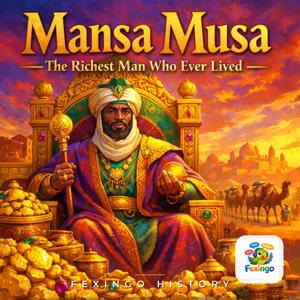


In 1326, Mansa Musa launched one of his most audacious projects: a canal to bypass the Niger River's treacherous rapids at Koulikoro and irrigate the dry plains of the Sahel. This episode explores the engineering, politics, and legacy of the Canal of the Mansa — a massive ditch that would have transformed West African agriculture. We discuss the role of farba (provincial governors), the forced labor of Songhai captives, the technical challenges of digging through laterite, and why the project was abandoned after Musa's death. Drawing on Arabic sources like al-Umari and the Tarikh al-Sudan, plus oral traditions recorded by jeliw (griots), we also examine the canal's environmental impact and its place in the empire's hydraulic ambitions. Was this a visionary scheme or a monument to imperial overreach? And why did no subsequent mansa revive it? Join Lucas and Luna as they dig into the dirt of Mali's lost waterworks.
#MansaMusa #MaliEmpire #NigerRiver #Canal #Irrigation #Sahel #Koulikoro #Songhai #farba #jeliw #alUmari #TarikhAlSudan #HydraulicEngineering #WestAfrica #14thCentury #Infrastructure #History #FexingoHistory
Keep every episode free: buymeacoffee.com/fexingo
In 1324, as Mansa Musa passed through Cairo on his legendary hajj, he wasn't just spending gold—he was exchanging knowledge. This episode uncovers a little-known facet of Mali's golden age: the emperor's deep investment in astronomy and celestial observation. Drawing on the writings of al-Umari, Ibn Battuta, and the Tarikh al-Sudan, we explore how Musa brought scholars from North Africa and the Middle East to his court, established an observatory in Niani, and used the stars for navigation, agriculture, and religious timekeeping. Discover the role of the farba (provincial governor) in funding observatories, the jeliw (oral historians) who preserved astronomical knowledge, and the controversial theory that Musa's hajj caravan used celestial navigation across the Sahara. Learn about the forgotten astronomer al-Wangari, whose star charts may have guided caravans to Taghaza and Timbuktu. We also examine the later decline of Malian astronomy under Songhai rule and the destruction of the Niani observatory. This episode challenges the stereotype that sub-Saharan Africa had no scientific tradition before European contact, revealing a sophisticated culture of observation and calculation that flourished under Mansa Musa's patronage.
#MansaMusa #MaliEmpire #AfricanAstronomy #HistoryOfScience #MedievalAfrica #SaharaDesert #Niani #AlUmari #IbnBattuta #TarikhAlSudan #StarCharts #CelestialNavigation #AlWangari #GoldAndStars #FexingoHistory #History #Podcast #WestAfrica
Keep every episode free: buymeacoffee.com/fexingo
Before Mansa Musa's famous hajj, before the mosques of Timbuktu, there was a man named Abu Ishaq al-Sahili. In this episode, Lucas and Luna explore the life and work of the Andalusian poet-architect who became Mansa Musa's master builder. They discuss al-Sahili's journey from Granada to the Sahel, his design of the Djinguereber Mosque and the Madugu palace, and the controversy over how much credit he deserves versus local Mande builders. Along the way, they examine the role of the jeliw (griots) in preserving architectural knowledge, the use of banco (mud-brick) construction, and the political reasons Mansa Musa imported foreign talent. This episode also touches on the lost palace of Niani and the ongoing archaeological debates about al-Sahili's true influence. A story of cultural exchange, imperial ambition, and the built environment of the Mali Empire.
#MansaMusa #alSahili #DjinguereberMosque #Timbuktu #MaliEmpire #Sahel #WestAfrica #IslamicArchitecture #Niani #MaduguPalace #Jeliw #Griots #Banco #Granada #Hajj #History #FexingoHistory #MedievalAfrica
Keep every episode free: buymeacoffee.com/fexingo
When we think of Mansa Musa, we picture camel caravans crossing the Sahara. But Mali's wealth depended just as much on its river highways. In this episode, Lucas and Luna explore the emperor's little-known river fleet — the war canoes and cargo boats that patrolled the Niger, suppressed Songhai rebellion, and moved goods from goldfields to trading cities. They examine the Tarikh al-Sudan's account of the 1325 naval campaign against Gao, the role of the farba's river tax collectors, and the engineering of dugout canoes that could carry fifty men. Along the way, they touch on the Mande oral tradition's jeliw songs about the 'canoe master' and the strategic use of islands like Korioumé as military bases. How did a land-based empire dominate a thousand miles of river? And why did the fleet vanish from the historical record after the 14th century?
#MansaMusa #MaliEmpire #NigerRiver #NavalHistory #WestAfrica #Songhai #Gao #TarikhAlSudan #Farba #Jeliw #Korioumé #CanoeWarfare #RiverEconomy #MedievalAfrica #MilitaryHistory #TradeRoutes #History #FexingoHistory
Keep every episode free: buymeacoffee.com/fexingo
Lucas and Luna peel back the pageantry of Mansa Musa's legendary 1324 Hajj to examine the thousands of ordinary people who made it happen: the porters, cooks, guards, sailors, and slaves who carried the emperor's gold and his household across 4,000 miles of Sahel and Sahara. Drawing on al-Umari's Masalik al-Absar and fragments from the Tarikh al-Sudan, they piece together the logistics of feeding, watering, and protecting a mobile city of perhaps 60,000 souls. Who were the farba overseers who managed the camel herds? How did the women of the imperial household, including Musa's wife Inari Konte, navigate the journey? What happened to the servants left behind in Cairo? The episode explores the human cost of the pilgrimage that crashed Egypt's gold market, and asks whether Mansa Musa was a generous ruler or an extravagant one. Along the way, they touch on the silent barter system that supplied the caravan's salt, and the Tuareg guides who led them through the desert. A humane look at a legendary journey, focused on the unseen majority.
#MansaMusa #MaliEmpire #Hajj1324 #WestAfrica #alUmari #MasalikAlAbsar #Sahara #Sahel #Farba #InariKonte #Tuareg #Wangara #SilentBarter #MedievalAfrica #Pilgrimage #History #FexingoHistory #AfricanHistory
Keep every episode free: buymeacoffee.com/fexingo
After decades of conquering, building, and trading, Mansa Musa returned to Niani in 1330 not just as a king but as a living ancestor — a figure whose baraka, or divine blessing, was so immense that his subjects began to worship him as a semi-divine being. In this episode, Lucas and Luna explore how Musa deliberately cultivated this cult of personality, blending Mande ancestral traditions with Islamic concepts of sainthood. They examine the role of the jeliw, or griots, in crafting his public image, the construction of the new palace complex at Niani with its 'Throne of Gold', and the reports from al-Umari that describe how Musa was addressed as 'Kanku Musa' — a title meaning 'Musa the Conqueror' but also implying spiritual mastery. The conversation also covers the controversy surrounding his treatment of the farba, the imperial governors, and how Musa's self-deification strained relations with Muslim scholars who accused him of shirk, or polytheism. Drawing on the Tarikh al-Sudan, the Masalik al-Absar, and oral traditions, the hosts reveal a nuanced portrait of a ruler who understood that power in the Sahel required both earthly authority and otherworldly reverence. A must-listen for anyone interested in the intersection of religion, politics, and spectacle in medieval West Africa.
#MansaMusa #KankuMusa #MaliEmpire #Mande #Niani #al-Umari #MasalikAlAbsar #TarikhAlSudan #Jeliw #Griot #Baraka #Shirk #WestAfrica #Sahel #ThroneOfGold #AncestorVeneration #DivineKingship #FexingoHistory
Keep every episode free: buymeacoffee.com/fexingo
Mansa Musa didn't just bring back gold and architecture from his hajj — he brought back books. In this episode, Lucas and Luna explore the little-known story of how Mali's 14th-century emperor laid the foundation for Timbuktu's legendary manuscript culture. They discuss the scholars he recruited, the libraries he endowed, and the network of scribes — from Sankore to Djenné — who copied and translated works of theology, astronomy, medicine, and law. The conversation draws on accounts by the 17th-century chronicler Abd al-Rahman al-Sa'di (author of the Tarikh al-Sudan) and the 16th-century historian Ahmad Baba, whose own library of 1,600 volumes was a testament to the city's intellectual wealth. Lucas explains how Mansa Musa established the first state-funded libraries in Mali, stocked with books from Cairo, Fez, and Baghdad — many copied in the new script adapted for the Mande languages. He also commissioned works in Ajami (Arabic-script African languages), a tradition that would flourish for centuries. Luna asks what happened to these libraries after Mali's decline, and Lucas traces their survival through families like the Kati and the al-Wangari — and the recent efforts to digitize and preserve the remaining manuscripts in Bamako, Gao, and Timbuktu. A conversation about paper, ink, and the quiet revolution of the written word in the Sahel.
#MansaMusa #TimbuktuManuscripts #TarikhAlSudan #AhmadBaba #Ajami #Sankore #MaliEmpire #WestAfricanHistory #BookHistory #Sahel #MedievalAfrica #ManuscriptCulture #FexingoHistory #History #Africa #IslamAfrica #Libraries #OralTradition
Keep every episode free: buymeacoffee.com/fexingo
When Mansa Musa set out on his legendary hajj in 1324, he brought a military force that could field 10,000 soldiers and 60,000 porters across 4,000 miles of desert, savanna, and mountain. This episode goes behind the grand narrative of gold and generosity to examine the logistical backbone that made the journey possible: the camel corps, the water stations, the supply depots, and the specialized roles of the farba and farari. We trace how Musa's military logistics built on traditions inherited from Sundiata Keita, how they fed and watered tens of thousands in the Sahara, and how the same system later allowed Mali to project power from the Atlantic to the Niger Bend. Drawing on al-Umari's Masalik al-Absar, Ibn Battuta's travel accounts, and the Tarikh al-Sudan, we explore the forgotten infrastructure of the richest man in history.
#MansaMusa #MaliEmpire #Logistics #SaharaTrade #CamelCorps #Farba #Farari #alUmari #IbnBattuta #TarikhAlSudan #MasalikAlAbsar #SundiataKeita #Taghaza #NigerBend #WestAfrica #MedievalHistory #History #FexingoHistory
Keep every episode free: buymeacoffee.com/fexingo
Trade routes, diplomacy, and theological debate: this episode explores Mansa Musa's little-known embassy to the Ilkhanate court in Baghdad. In 1324, as the Mali emperor made his famous hajj, he dispatched a delegation to Sultan Abu Sa'id Bahadur Khan, ruler of the Mongol Ilkhanate. Drawing on the Persian chronicle Tarikh-e Wassaf and Mamluk sources, we piece together the mission's purpose: securing alliances, exchanging gifts, and positioning Mali as a global Islamic power. What did the Ilkhanate know of West Africa? Why did Musa seek ties with a Mongol state? And what does this reveal about his vision for the Mali Empire? Lucas and Luna discuss the envoy's journey across the Sahara and the Red Sea, the gifts of gold and enslaved scholars, and the geopolitical chess game that connected the Sahel to Persia. Mentions: al-Umari, Masalik al-Absar, Tarikh-e Wassaf, Abu Sa'id, Ilkhanate, Baghdad, Tabriz, Qadi al-jama'a, farba, Kanku Musa, Mande, Niani, Cairo, Sijilmasa, trans-Saharan trade.
#MansaMusa #MaliEmpire #Ilkhanate #Baghdad #Tarikh-eWassaf #AbuSa'id #AlUmari #MasalikAlAbsar #TransSaharanTrade #MedievalDiplomacy #WestAfricanHistory #MongolHistory #1324 #KankuMusa #FexingoHistory #History #Sahara #GoldTrade
Keep every episode free: buymeacoffee.com/fexingo
In 1328, Mansa Musa launched a brutal campaign against the Mossi kingdoms south of the Niger bend. The Mossi had raided the vital trade town of Timbuktu, threatening Mali's control of the Sahelian gold-salt routes. This episode explores the Mossi cavalry tactics, their decentralized chieftaincies, and how Musa's general Farba Bureima used scorched-earth warfare to push them back. We also examine the aftermath: the tribute system imposed on the Mossi, the cultural exchanges that followed, and why this war is often overlooked in favor of Musa's more famous hajj. Primary sources come from the Tarikh al-Sudan and oral traditions preserved by the jeliw. A lesser-known but pivotal conflict that shaped the borders of medieval West Africa.
#MansaMusa #MossiKingdoms #MaliEmpire #Timbuktu #FarbaBureima #TarikhAlSudan #Jeliw #Sahel #NigerBend #GoldSaltTrade #ScorchedEarth #Cavalry #OralTradition #1328 #WestAfrica #MedievalHistory #FexingoHistory #History
Keep every episode free: buymeacoffee.com/fexingo
From the publisher's feed