
Sign up to save your podcasts
Or

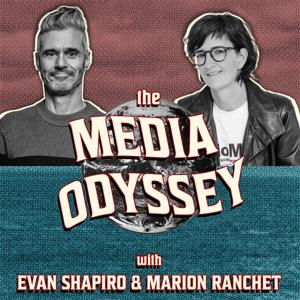

Full Disclosure meets Media Odyssey in this crossover episode of The Media Odyssey podcast with Roben Farzad, host of Full Disclosure on NPR and former Wall Street reporter for BusinessWeek and Bloomberg.
The episode covers a wide sweep of interconnected stories: the proposed Paramount-Warner merger, the editorial independence implications of foreign money in US media, the GameStop-eBay bid as a case study in social media-driven market manipulation, and the state of M&A activity across the Atlantic.
From Roben's firsthand perspective on the lack of US media coverage of Iran and the effect of Gulf sovereign wealth funds acquiring stakes in major news organizations to a forensic breakdown of the Skydance-Paramount deal, Evan Shapiro, Marion Ranchet, and Roben Farzad discuss the 60 Minutes settlement, the Colbert cancellation, the Bari Weiss hiring, and the White House's reported role in pushing the merger through before a potential political shift in the fall. They close with a frank debate on the future of professional journalism and whether public media, billionaire backstops, or direct-to-consumer Substacks can fill the gap left by a collapsing legacy news industry.
Key Takeaways
1. Foreign Money in US News
Roughly 50% of the Skydance-Paramount acquisition is being funded by foreign interests, including Middle Eastern sovereign wealth funds. Roben notes that editorial independence becomes structurally compromised the moment a controlling financier has geopolitical interests that conflict with the newsroom's reporting mandate.
2. The M&A Math Doesn't Add Up
Global M&A deal volume in media dropped 30% year over year, while total deal value rose 10%. This means fewer but larger bets. Warner Brothers Discovery was valued at roughly $60 billion at merger and shed close to 70% of that value before recovering, driven almost entirely by the Zaslav-engineered auction rather than operational performance.
3. Social Media as Market Manipulation
GameStop CEO Ryan Cohen publicly floated a bid for eBay, a company worth roughly 5x GameStop's market cap, with no serious financing behind it. The move drove GameStop's stock up and forced eBay to respond publicly. Roben frames this as a direct extension of the meme stock playbook: social media reach, combined with extreme wealth, can now move markets in ways that previously required regulated financial instruments.
4. The Merger Approval Odds
Roben puts the probability of the Paramount-Warner merger getting approved at approximately 65%, driven primarily by White House pressure to push it through before a potential political shift after the fall election. Marion is skeptical that EU regulators will independently block it if the US approves, noting that European authorities are increasingly prioritizing survival of local media players over strict competition concerns.
5. The Journalism Funding Problem
The New York Times has reached a $12 billion market cap by building a subscription-driven lifestyle and news bundle. NPR, by contrast, has failed to become a digital native, still relies heavily on pledge drives targeting Boomers and late Gen Xers, and has lost significant talent to for-profit outlets. There is a small but growing tier of independent journalists going direct to consumer as the most promising emerging model, though it leaves out readers who can't afford paid subscriptions.
Thank you Roben Farzad for joining the pod!
Roben Farzad - https://www.linkedin.com/in/robenfarzad/
Full Disclosure Podcast - https://www.npr.org/podcasts/1062190100/full-disclosure
Interested in sponsorship? https://forms.gle/2LCWfX2HBNT8mtpx8
Connect with us on Linkedin:
Evan Shapiro - https://www.linkedin.com/in/eshap-media-cartographer/
Marion Ranchet - https://www.linkedin.com/in/marionranchet/
The Media Odyssey Podcast - https://www.linkedin.com/company/the-media-odyssey-podcast
 View all episodes
 By Evan Shapiro & Marion Ranchet

4.6
99 ratings
Full Disclosure meets Media Odyssey in this crossover episode of The Media Odyssey podcast with Roben Farzad, host of Full Disclosure on NPR and former Wall Street reporter for BusinessWeek and Bloomberg.
The episode covers a wide sweep of interconnected stories: the proposed Paramount-Warner merger, the editorial independence implications of foreign money in US media, the GameStop-eBay bid as a case study in social media-driven market manipulation, and the state of M&A activity across the Atlantic.
From Roben's firsthand perspective on the lack of US media coverage of Iran and the effect of Gulf sovereign wealth funds acquiring stakes in major news organizations to a forensic breakdown of the Skydance-Paramount deal, Evan Shapiro, Marion Ranchet, and Roben Farzad discuss the 60 Minutes settlement, the Colbert cancellation, the Bari Weiss hiring, and the White House's reported role in pushing the merger through before a potential political shift in the fall. They close with a frank debate on the future of professional journalism and whether public media, billionaire backstops, or direct-to-consumer Substacks can fill the gap left by a collapsing legacy news industry.
Key Takeaways
1. Foreign Money in US News
Roughly 50% of the Skydance-Paramount acquisition is being funded by foreign interests, including Middle Eastern sovereign wealth funds. Roben notes that editorial independence becomes structurally compromised the moment a controlling financier has geopolitical interests that conflict with the newsroom's reporting mandate.
2. The M&A Math Doesn't Add Up
Global M&A deal volume in media dropped 30% year over year, while total deal value rose 10%. This means fewer but larger bets. Warner Brothers Discovery was valued at roughly $60 billion at merger and shed close to 70% of that value before recovering, driven almost entirely by the Zaslav-engineered auction rather than operational performance.
3. Social Media as Market Manipulation
GameStop CEO Ryan Cohen publicly floated a bid for eBay, a company worth roughly 5x GameStop's market cap, with no serious financing behind it. The move drove GameStop's stock up and forced eBay to respond publicly. Roben frames this as a direct extension of the meme stock playbook: social media reach, combined with extreme wealth, can now move markets in ways that previously required regulated financial instruments.
4. The Merger Approval Odds
Roben puts the probability of the Paramount-Warner merger getting approved at approximately 65%, driven primarily by White House pressure to push it through before a potential political shift after the fall election. Marion is skeptical that EU regulators will independently block it if the US approves, noting that European authorities are increasingly prioritizing survival of local media players over strict competition concerns.
5. The Journalism Funding Problem
The New York Times has reached a $12 billion market cap by building a subscription-driven lifestyle and news bundle. NPR, by contrast, has failed to become a digital native, still relies heavily on pledge drives targeting Boomers and late Gen Xers, and has lost significant talent to for-profit outlets. There is a small but growing tier of independent journalists going direct to consumer as the most promising emerging model, though it leaves out readers who can't afford paid subscriptions.
Thank you Roben Farzad for joining the pod!
Roben Farzad - https://www.linkedin.com/in/robenfarzad/
Full Disclosure Podcast - https://www.npr.org/podcasts/1062190100/full-disclosure
Interested in sponsorship? https://forms.gle/2LCWfX2HBNT8mtpx8
Connect with us on Linkedin:
Evan Shapiro - https://www.linkedin.com/in/eshap-media-cartographer/
Marion Ranchet - https://www.linkedin.com/in/marionranchet/
The Media Odyssey Podcast - https://www.linkedin.com/company/the-media-odyssey-podcast
9,622 Listeners
554 Listeners
1,231 Listeners
32 Listeners
5,485 Listeners

374 Listeners
3,336 Listeners
1,111 Listeners
114 Listeners

805 Listeners
2,300 Listeners

1,489 Listeners
199 Listeners
63 Listeners

64 Listeners