
Sign up to save your podcasts
Or

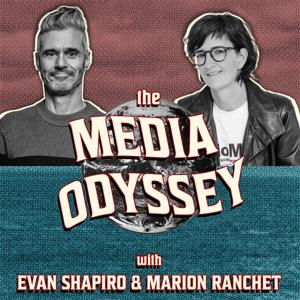


Premium streaming lost 89% of the subscribers that signed up for new subscriptions last year, and the audience it’s chasing is watching video in the bedroom, on the bus, and on the toilet. Evan Shapiro’s keynote makes the case that media has to redefine broadcast and follow the whole consumer.
In this keynote episode of the Media Odyssey Podcast, recorded on stage at Jupiter Festival in Miami, Evan Shapiro unveils the newest Media Universe map and the Creator Ecosphere map. He walks through cross-screen attention data from 23 regions, including why YouTube, TikTok, and vertical video are winning the phone-first audience, how the creator economy is shifting toward the affinity economy, and why the “cannibalization” fear is a myth, using World Cup viewership as proof. He also covers streaming retention, the rise of advertising over subscriptions, vertical premium television, employee-generated content, and how brands and media companies can win by thinking like creators in the user-centric era.
Key Takeaways:
1. The User-Centric Era Is Here, and the Phone Is the Remote Control
81% of the world’s population is 54 or younger, and phones beat television sets for video time by more than two to one in the US and more than three to one in Brazil and Mexico. In the 23 regions surveyed, the bedroom was the top place to watch video, and 75% of the Indian Premier League cricket final was watched on phones.
2. YouTube Wins by Serving the Whole Consumer
The new de-duplicated cross-screen attention index (index.eshap.tv) puts YouTube first in the US because it is the only platform on both television sets and phones, with a vertical product. Among under-55s TikTok ranks second, and among under-25s TikTok wins total attention in the US.
3. Premium Streaming Is Plateauing as Advertising Overtakes Subscriptions
In the past year SVOD added 175 million subscribers and lost 156 million, a net retention of just 11%. PwC data shows advertising surpassing subscriptions in global revenue for the first time in a long time, which explains why premium streamers are rushing into ads.
4. The Cannibalization Myth Doesn’t Hold Up
During the World Cup, CazéTV in Brazil hit 24 million concurrent YouTube streams for the final while 70 million people watched on broadcast at the same time. RTL in Germany reports a 26% increase in paid subscriptions and a 126% increase in sampling from audiences reached on YouTube, and BBC Studios’ Jasmine Dawson says that in every case studied, social distribution is additive.
5. Think Like a Creator
Indie creators on the Affinity 100 list showed three to five times better engagement quality than mega creators. Heinz drove about $45 million in earned media and a 12% sales lift by mocking FIFA’s stadium branding rules, and Kit Kat’s stolen-truck posts reached 128 million people and $224 million in earned media. World of Wonder’s WOW Presents, built on its Drag Race fandom, reports 96% retention.
Interested in sponsorship? https://forms.gle/2LCWfX2HBNT8mtpx8
Connect with us on Linkedin:
Evan Shapiro - https://www.linkedin.com/in/eshap-media-cartographer/
Marion Ranchet - https://www.linkedin.com/in/marionranchet/
The Media Odyssey Podcast - https://www.linkedin.com/company/the-media-odyssey-podcast
YouTube built the kids content economy, then broke its own monetization pipeline. Now it's time to fix kids content.
This episode of the Media Odyssey Podcast features hosts Evan Shapiro and Marion Ranchet with kids media analyst Emily Horgan (The Kids Streamersphere), breaking down her latest Netflix Kids Content Performance Report. They dig into why Netflix isn't building new kids IP, YouTube's broken monetization pipeline for children's content, and how what's actually working for creators and franchises in a brutally competitive kids' content landscape can be the roadmap to fixing kids content.
Key Takeaways:
1. Netflix Is the Stage, Not the Lab
Netflix's recent kids hits (Gabby's Dollhouse, Creature Cases) mostly originated five-plus years ago, and newer breakouts like Ms. Rachel and the digital-first animation flooding Netflix (Sheriff Labrador, ChuChu TV) were built elsewhere, mainly on YouTube. Emily Horgan argues Netflix is "North Starred on streaming" rather than franchise-building, licensing proven IP (Paw Patrol, Peppa Pig, Miraculous Ladybug) rather than developing new characters from scratch.
2. YouTube's Kids Monetization Pipeline Is Broken
Advertising revenue for kids content on YouTube has collapsed over the past five years following FTC regulation (COPPA enforcement) and cooling advertiser appetite even though kids content represents roughly 15% of platform usage. This has throttled the pipeline that once produced hits like Cocomelon, making it far harder for "the next Ms. Rachel" to emerge.
3. Old IP Still Dominates (But Legacy Live-Action Is Resurging)
Decade-old Nickelodeon live-action shows like The Thundermans and Sam & Cat continue to perform strongly on Netflix, a trend Emily Horgan's team began tracking closely around the Paramount-Warner Bros merger. Shows like SpongeBob and Bluey show that durable franchises, often 20+ years old, dominate the kids top 10. New entries can take 28 months or more to build an audience.
4. AI's Double-Edged Role in Kids Animation
Studios like Toonstar are using AI-assisted animation to cut production costs to roughly 5% of traditional costs, enabling profitable, creator-led shows and faster turnaround. But the same efficiency is flooding YouTube with low-quality "AI slop," which erodes parental trust that is already weakened among Gen Z parents.
5. The Playbook: Build the Audience, Then the Business
The winning model is audience-first, not commission-first. Success shows now need to build direct relationships with fans via YouTube, live events, and merch before pursuing traditional distribution deals. Examples include Steven and Parker (now reaching 30 million weekly viewers across six languages) and Sesame Street's multi-platform windowing strategy between Netflix and YouTube.
Thank you to Emily Horgan for joining the pod!
Emily Horgan - https://www.linkedin.com/in/emohorgan/
Kids Media Club Podcast - https://kids-media-club-podcast.captivate.fm/listen
The Kids Kids StreamerSphere - https://thekidsstreamersphere.substack.com/
Interested in sponsorship? https://forms.gle/2LCWfX2HBNT8mtpx8
Connect with us on Linkedin:
Evan Shapiro - https://www.linkedin.com/in/eshap-media-cartographer/
Marion Ranchet - https://www.linkedin.com/in/marionranchet/
The Media Odyssey Podcast - https://www.linkedin.com/company/the-media-odyssey-podcast
An Anthropic engineer warned AI could destroy humanity, but Silicon Valley's sudden AI "safety" panic looks a lot like a marketing campaign.
This episode of the Media Odyssey Podcast with Evan Shapiro and Marion Ranchet breaks down how California's attorneys general settled in the Paramount-Warner Bros Discovery merger, what the deal's mandates actually require, and why the AI industry's sudden doomsday messaging conveniently coincides with OpenAI and Anthropic's IPO troubles. Plus a look at how Europe is positioning itself in the AI race.
Key Takeaways
1. The AI "Safety Panic" Marketing Campaign
A former Anthropic engineer's viral tweet warning that AI companies were racing toward "recursive self-improvement" was quickly echoed throughout Sillicon Valley. But the timing argues the timing (right as OpenAI delayed its IPO citing cash problems and Anthropic prepared to raise at a $2 trillion valuation) makes the warnings look more like hype-driven marketing than genuine risk.
2 Meta's Muse Shows the Gap Between Hype and Reality
Meta's new AI app Muse became the top downloaded app in app stores days after launch, despite requiring access to users' email, texts, and banking information. But within a single day, security researcher Patrick Wardle hacked his own instance of Muse and planted malware.
3. Europe's AI Position: Enterprise Over Frontier Models
Mistral has pivoted away from competing directly with OpenAI and Anthropic on frontier models, focusing instead on enterprise distribution and infrastructure. Marion Ranchet notes Mistral's most recent $3 billion funding round, led by Samsung, values the company at $21 billion, a fraction of Anthropic's and OpenAI's valuations, but Europe is still finding places for its own AI.
4. The Paramount-Warner Bros Deal's Mandates
Attorney General Rob Bonta settled the merger under political pressure, securing commitments including 30-32 theatrical film releases per year, a $25 million independent film fund, mandatory separate operation of Paramount and Warner Bros, keeping studio lots, and an independent oversight board to monitor editorial interference at at CNN.
5. Massive Layoffs Are Coming
With $81 billion in combined debt against roughly $12 billion in declining EBITDA, and a plan requiring $6 billion in synergies plus 50% EBITDA growth in 36 months, Evan Shapiro estimates around 20,000 layoffs at Warner Bros and Paramount over the next few years.
Interested in sponsorship? https://forms.gle/2LCWfX2HBNT8mtpx8
Connect with us on Linkedin:
Evan Shapiro - https://www.linkedin.com/in/eshap-media-cartographer/
Marion Ranchet - https://www.linkedin.com/in/marionranchet/
The Media Odyssey Podcast - https://www.linkedin.com/company/the-media-odyssey-podcast
Blair Imani just beat MrBeast on a brand-new ranking of creator influence and and the metric behind it could change how brands spend their money on YouTube, TikTok, and Instagram.
This episode of The Media Odyssey Podcast, recorded outside at IBC, features hosts Evan Shapiro and Marion Ranchet with special guest Shira Lazar. They unpack the newly released Affinity 100, a ranking of the most impactful creators of 2026 built on a new metric called the Affinity Quotient, developed with Whalar Group and Foam.
Key Takeaways:
1. A New Way to Measure Influence
The Affinity Quotient weighs likes and comments, adds shares at double weight, and divides by views to measure engagement per view rather than engagement per post. It captures depth of impact rather than raw reach.
2. Blair Imani Tops the List, MrBeast Ranks 85th
Educator and historian Blair Imani (fewer than 1 million total followers) ranked #1, while MrBeast, the world's biggest creator with half a billion followers, landed at 85. The list shows a shift from "creator economy" to the "affinity economy," where depth of engagement matters more than scale.
3. Indie and Expert Creators Are Rising
The list highlights "indie creators" and niche experts (a finance guru, a film reviewer, a makeup artist turned inclusivity consultant) showing that creators with as few as 10,000-50,000 highly engaged fans can build sustainable, meaningful businesses.
4. Brands Still Chase Follower Counts Despite the Shift
Even as the industry talks about quality over quantity, brand briefs still specify minimum follower counts (e.g., "250K-plus"). Shira Lazar argues B2B and knowledge creators are starting to shift that mindset, since the people following niche experts are often the ones making purchasing decisions.
5. The Creator Ecosphere Map Returns in October
Evan Shapiro will unveil the second edition of the Creator Ecosphere Map on October 8th at the inaugural Jupiter Festival in Miami, sponsored by YouTube. The new version will rank roughly 800 creators using the Affinity Quotient across all major platforms, with all underlying data made publicly available for validation.
Thank you to Shira Lazar for joining the pod!
Shira Lazar - https://www.linkedin.com/in/shiralazar/
Interested in sponsorship? https://forms.gle/2LCWfX2HBNT8mtpx8
Connect with us on Linkedin:
Evan Shapiro - https://www.linkedin.com/in/eshap-media-cartographer/
Marion Ranchet - https://www.linkedin.com/in/marionranchet/
The Media Odyssey Podcast - https://www.linkedin.com/company/the-media-odyssey-podcast
Europe's public broadcasters are losing over 5% of their funding on average, and some budgets are being slashed by up to 70%. It's not because of economics, but ideology.
This bonus episode, recorded live at SME Live 2026 in Amsterdam, features Marion Ranchet with Serge Schick (France Medias Monde), Lieven Vermaele (VRT), Christophe Chantraine (RTBF), and Bastiaan Toering (NPO), discussing the funding pressures and strategic countermeasures reshaping European public service media.
Key Takeaways
1. Public Service Media Reach Is Massive, But Funding Is Shrinking
PSM reaches over 80% of Europeans weekly (close to 70% among 15-24 year-olds) at a cost of just €3.60 per citizen per month. At the same time, average funding fell more than 5% between 2019 and 2024, with some countries like Switzerland cutting budgets by 70% despite no public deficit, reflecting political and ideological pressure rather than economics alone.
2. Broadcasters Are Cutting Costs to Protect Content
RTBF is reducing its workforce by 10% over four years mainly through attrition, cutting a radio station, and some sports rights. VRT is rationalizing its brand portfolio down to three core digital platforms (news, sport, audio-visual) while keeping 65% of its budget tied to content production.
3. SVOD and Partnerships Are New Revenue Levers
NPO's NPO+ SVOD service, launched in 2016, has driven a decade of added revenue, and its co-production "Wolven" with Disney+ shows public broadcasters increasingly open to streamer partnerships. This mindset shift wouldn't have happened five years ago, contrasting with France's failed Salto SVOD venture.
4. YouTube Strategy Varies by Broadcaster
France Médias Monde treats YouTube as essential reach across 18 markets it can't cover alone, RTBF uses release-window delays to protect its own platform while benefiting from a large audience halo effect outside Belgium, and NPO/VRT build YouTube-native content designed to funnel viewers back to their own platforms.
5. Collaboration Across PSM Remains Limited
European public broadcasters still rarely share technology or infrastructure the way commercial groups like RTL or Bedrock do across markets, despite recognizing the need for scale. Efforts like the EBU-backed Public Space Incubator offer a small but promising start.
Thank you to all the panelists:
Serge Schick - https://www.linkedin.com/in/serge-schick-447019104/
Lieven Vermaele - https://www.linkedin.com/in/lievenvermaele/
Christophe Chantraine - https://www.linkedin.com/in/christophechantraine/
Bastiaan Toering - https://www.linkedin.com/in/bastiaan-toering/
Interested in sponsorship? https://forms.gle/2LCWfX2HBNT8mtpx8
Connect with us on Linkedin:
Evan Shapiro - https://www.linkedin.com/in/eshap-media-cartographer/
Marion Ranchet - https://www.linkedin.com/in/marionranchet/
The Media Odyssey Podcast - https://www.linkedin.com/company/the-media-odyssey-podcast
Streaming platforms are spending anywhere from 9% to 30% of revenue just to run their tech stack and a new study finally puts real numbers behind the guesswork.
Don’t miss this special episode recorded on stage at Streaming Made Easy Live with Jonas Engwall (CEO of Bedrock Streaming), Bjarne Andreas Myklebust (NRK, Norway's public broadcaster), and Rowan de Pomerai (CEO of the DPP). They unpack the new Streaming Platform Ratio study benchmarking 16 European platforms against Netflix, why public broadcasters are outperforming commercial ones on tech efficiency, and the coming wave of premium vertical video.
Key Takeaways:
1. The Streaming Platform Ratio Benchmark
Bedrock and the DPP surveyed 16 mostly-European streaming platforms to measure tech spend as a percentage of streaming revenue, anonymizing all results. They used Netflix as the public baseline and its publicly disclosed tech and development spend comes out to roughly 10% of revenue, a figure that's held steady for the past five to six years.
2. Scale Is the Biggest Cost Driver
Platforms with revenue above roughly $100 million showed nearly half the proportional tech cost of smaller platforms. Public broadcasters performed slightly better than commercial players overall because larger organizations benefit from fixed costs spread across more revenue.
3. Legacy Broadcasters Are Still Paying Two Bills
NRK reports that traditional DTT distribution still consumes about 90% of its budget, while OTT already accounts for 20-25% of consumption. Public broadcasters that started streaming early (echoing BBC's iPlayer) built in competitive advantages like NRK running three CDNs with annual price competition to control distribution costs.
4. Buy, Don't Build
Panelists agreed that most platforms are shifting from CapEx to OpEx, buying software and licensing CDN capacity rather than building in-house infrastructure, since content is where broadcasters create value. The DPP noted that no broadcaster builds its own transmission towers or satellites either, so the same logic should extend to streaming infrastructure.
5. Premium Vertical Video Is the Next Wave
Bedrock has rolled out vertical video feeds across three of its four platforms, converting short-form teasers into long-form viewership and subscriptions. NRK is launching a vertical original microdrama series, "21 Days," aimed at younger audiences. European broadcasters are leading here by leaning into vertical.
Thank you to Jonas Engwall, Rowan de Pomerai, and Bjarne Andreas Myklebust for coming on the pod!
Bedrock Streaming: https://fr.linkedin.com/company/bedrock-streaming?trk=public_profile_topcard-current-company
Jonas Engwall: https://fr.linkedin.com/in/jonas-engwall
Rowan de Pomerai: https://www.linkedin.com/in/rdepom/
Bjarne Andreas Myklebust: https://no.linkedin.com/in/bmyklebust
Interested in sponsorship? https://forms.gle/2LCWfX2HBNT8mtpx8
Connect with us on Linkedin:
Evan Shapiro - https://www.linkedin.com/in/eshap-media-cartographer/
Marion Ranchet - https://www.linkedin.com/in/marionranchet/
The Media Odyssey Podcast - https://www.linkedin.com/company/the-media-odyssey-podcast
00:00 Live Show Kickoff
01:08 Why Measure Platform Spend
03:21 Streaming Platform Ratio Explained
05:01 Netflix as Baseline Benchmark
06:31 Public Broadcasters and OTT Transition
08:55 Scale Drives Lower Costs
10:12 What the Results Mean
13:20 Europe vs US and Chasing Scale
16:27 Next Steps and Benchmarking Goals
18:47 Build vs Buy and CapEx to OpEx
21:09 Vertical Video and Microdramas
25:10 Premium Vertical Wave in Europe
27:51 Wrap Up and Thanks
The 2026 World Cup shattered streaming records worldwide, Paramount and Warner Bros are locked in a multi-billion-dollar antitrust standoff, and Meta just settled a landmark child-safety case for $18 billion. The Media Odyssey podcast is back and we know what you did last summer.
This episode marks the Season 3 premiere with hosts Evan Shapiro and Marion Ranchet catching up after their summer break. They cover all the biggest news of the last month including the World Cup's record-breaking viewership clip culture, ESPN’s faulty sports rights math, and Disney’s stale IP. They also discuss how the Paramount-Warner Bros merger battle with 12 state attorneys general suing to block it and Meta's $18 billion child-safety settlement with state AGs.
Key Takeaways
1. The World Cup's Record-Breaking, Clip-Driven Reach
CazéTV in Brazil broke the world concurrent-streaming record five times, peaking at 24 million concurrent streams, while Globo drew 70 million live TV viewers. In the US, TikTok clip culture (24 billion hours watched) dwarfed YouTube's full-match viewership (2.4 billion hours), signaling that conversation and clips now outpace matches themselves.
2. Paramount-Warner Bros Heads Toward Trial
Twelve state attorneys general are suing to block the merger under the Clayton Act, citing monopoly concerns in cable and film. Paramount owes a $7 million-per-day ticking fee starting October 1st and a $7 billion breakup fee if the deal collapses — and Larry Ellison's $40 billion personal backing puts the whole deal at risk.
3. Meta's $18 Billion Child-Safety Settlement
Meta admitted to feeding harmful, addictive content to minors and agreed to structural changes: capped scrolling time, blocked notifications during school hours, and no app access for minors overnight. The hosts debate whether the settlement (the largest child-safety settlement in history) meaningfully changes behavior or just avoids public disclosure of internal wrongdoing.
4. Disney's Aggregation Era
Under new CEO Damaro, Disney has struck a wave of deals including a TikTok content-curation partnership, 15+ European broadcaster deals, and sports rights tie-ups. The bigger challenge remains stale IP (Moana, Toy Story 5, Mandalorian and Grogu underperforming) and whether ESPN's sports-rights spending pencils out as a subscription product.
5. The Vertical Video Market Is Smaller Than Reported
A widely cited $150 billion "vertical market" figure is misleading — $131 billion of it is just social-media ad revenue (Reels, TikTok, Shorts), leaving roughly $19 billion for actual vertical drama apps, none of which are public companies. Meanwhile, subscription fatigue is real: 2025 saw only 11% net subscriber retention industry-wide, down from 33% four years ago, pushing streamers toward ad-supported tiers.
Interested in sponsorship? https://forms.gle/2LCWfX2HBNT8mtpx8
Connect with us on Linkedin:
Evan Shapiro - https://www.linkedin.com/in/eshap-media-cartographer/
Marion Ranchet - https://www.linkedin.com/in/marionranchet/
The Media Odyssey Podcast - https://www.linkedin.com/company/the-media-odyssey-podcast
Happy Summer Break from The Media Odyssey podcast!
What if the future of entertainment fits in your pocket and a six-year-old startup from Ukraine is already building it?
Welcome to the Media Odyssey Podcast, recorded live at StreamTV Europe, featuring Bogdan Nesvit, founder of HOLYWATER TECH and the microdrama platform My Drama. What started six years ago as an interactive fiction app has quietly evolved into one of the most data-sophisticated entertainment companies operating today. One that is now partnering with Fox Entertainment and eyeing a full theatrical release.
If you've ever wondered how a media startup goes from zero to 7 million monthly active users without a single piece of traditional distribution, Bogdan doesn't just tell you what HOLYWATER TECH built, he gives raw data and operational transparency you almost never get from a founder.
Beyond content strategy, Bogdan pulls back the curtain on the business model to detail the full transition from microtransactions to subscription, how the platform runs over 1,000 A/B tests per year, and why he believes proprietary user data (not product or AI) will be the defining competitive advantage of the AI era. He also touches on the Fox partnership, the road to ad monetization, and his personal philosophy around meditation, focus, and leadership.
Key Takeaways:
1. Scale is Accelerating Fast
My Drama currently has close to 300 titles on the platform, targeting 500 by the end of 2026 and 1,000 by the end of 2027. Each title contains around 90 one-minute episodes, effectively repackaging a full 90–120 minute film into bite-sized vertical content.
2. The Subscription Model Dominates
The platform fully shifted away from microtransactions with more than 90% of customers subscribing. Subscription users retain at 2x the rate of in-app purchase users and consume 3x more content. Users on an ad-supported tier consume an average of 1.5 hours of content per day, a striking engagement metric.
3. AI Slashes Production Costs and Timelines
Live-action microdrama costs $120K–$250K per title and takes roughly four months to produce. Netflix takes 100 weeks. AI-generated content on the MyMuse platform costs only a few thousand dollars and can be produced and tested in two weeks. Scripts, however, remain 100% human-written.
4. Paid and Organic Impressions Are Needed Together
My Drama generates two billion monthly impressions across Facebook, Instagram, and YouTube using a cliffhanger-driven content preview strategy for a 70/30 paid-to-organic acquisition split. At any given month, the team runs 30,000 unique video ad creatives across Facebook, Snapchat, and TikTok. Despite heavy paid spend, the company is currently profitable and growing more than 2x year-over-year.
5. It’s a Growing Market
The global microdrama market is $11–12B today, projected to reach $25B by 2030. China dominates the current market (the format originated there around 6 years ago). Outside China, the market is much smaller today but is projected to hit ~$10B, mostly driven by the US, by 2030. Holywater is betting that expanding beyond the current five core content tropes into genres like thriller, fantasy, and detective stories is essential to moving microdrama from niche to mainstream.
Thank you to Bogdan Nesvit for joining the pod!
Bogdan Nesvit - https://www.linkedin.com/in/bogdannesvit/
HOLYWATER TECH - https://www.linkedin.com/company/holywatertech/
Interested in sponsorship? https://forms.gle/2LCWfX2HBNT8mtpx8
Connect with us on Linkedin:
Evan Shapiro - https://www.linkedin.com/in/eshap-media-cartographer/
Marion Ranchet - https://www.linkedin.com/in/marionranchet/
The Media Odyssey Podcast - https://www.linkedin.com/company/the-media-odyssey-podcast
Happy Summer Break from The Media Odyssey podcast!
Jimmy Kimmel is at the center of the conversation where politics, free speech, and billion-dollar mergers collide.
In this episode of the Media Odyssey Podcast, hosts Evan Shapiro and Marion Ranchet unpack the dramatic suspension and reinstatement of Jimmy Kimmel—a flashpoint that highlights the collision of politics, regulation, and the crumbling power of broadcast TV. Shapiro explains the FCC’s limited authority, why Chair Brendan Carr’s threats crossed constitutional lines, and how Disney’s rapid cave-in to political pressure triggered a fierce backlash.
The discussion broadens to late-night’s decline, the chilling precedent for free speech in U.S. broadcasting, and the looming wave of media consolidation involving Paramount, Warner Bros Discovery, and possibly Netflix. Marion draws contrasts with Europe’s regulatory environment, where broadcasters face different pressures but free expression is protected in opposite ways.
Key Takeaways:
Interested in sponsorship? https://forms.gle/2LCWfX2HBNT8mtpx8
Connect with us on Linkedin:
Evan Shapiro - https://www.linkedin.com/in/eshap-media-cartographer/
Marion Ranchet - https://www.linkedin.com/in/marionranchet/
The Media Odyssey Podcast - https://www.linkedin.com/company/the-media-odyssey-podcast
Happy Summer Break from The Media Odyssey podcast!
244 million followers and a six-month content calendar: Jordan Schwarzenberger explains why showing up daily is the only strategy that matters. Welcome to The Media Odyssey Podcast.
In this episode, Evan Shapiro and Marion Ranchet break down the Nielsen/MRC measurement crisis that rocked the US advertising industry, then sit down with Jordan Schwarzenberger, CEO and co-founder of Arcade Media and manager of the Sidemen. The conversation reveals how the entire US advertising market transacted on flawed data for a year, while simultaneously showing how creator-led media companies are building sustainable businesses by thinking like traditional media. Rather than defending old systems, Jordan makes the case for why daily content and ritualistic consistency combined with treating YouTube channels as distinct brands is the only path forward.
The episode is a reality check on how broken measurement has become in traditional media, while creator-led companies are professionalizing their operations, building real media plans, and capturing budgets that were previously reserved for legacy broadcasters.
Key Takeaways:
1. Nielsen and MRC Hid Flawed Measurement Data for Nearly a Year
The Media Rating Council discovered problems in Nielsen's methodology almost a year ago but said nothing to the industry. The entire US advertising industry transacted in the Upfront on data they knew was not properly vetted. Sean Cunningham from VAB stated this cost the industry hundreds of millions of dollars.
2. BBC Hired Matt Brittin, Ex-President of Google Europe
The BBC hired Matt Brittin, former president of Google in Europe, as their new CEO. This represents a shift toward hiring digital natives to lead public service media organizations. Brittin previously worked in traditional broadcasting before a successful career at Google, making him someone who understands both the BBC culture and big tech.
3. The Sidemen Have 244M Followers and a 55-Person Team
The Sidemen have 244 million followers across all platforms and employ 55 people in their entertainment team. They plan content six months in advance, which allows them to sell to brand planners who set budgets quarters ahead. Their goal is to be bought like LabBible and Vice were—on media plans with CPMs and economies of scale. Most creators can't access major advertiser budgets because they lack the planning, consistency, and inventory that media planners require.
4. Daily Content and Ritualistic Consistency Are Essential for Success
Weekly podcasts are no longer enough. Audiences now expect daily content to build ritualistic habits. The Daily Wire built 900,000 paid subscribers at their peak by showing up every day with 20-40 minute shows since 2013-2014. Streamers on Twitch and Kick are "winning the most out of anyone." Getting into people's daily habits is the key to building connection in a decentralized, saturated world.
5. YouTube Is Underserved and Users Run Out of Quality Content
YouTube production is hard, time-intensive, and resource-heavy compared to podcasts, so creators default to lower-effort formats. There's a massive lack of consistent, regular, high-quality programming that becomes part of users' daily rituals.
6. Netflix and YouTube Combined Create the Strongest Media Strategy
Jordan states that the combination of Netflix and YouTube together represents the best media strategy. Netflix provides the premium, appointment-viewing content while YouTube delivers daily touchpoints and ritualistic engagement.
7. Individual YouTube Channels Should Be Content-Specific
Channel 4's 4.0 made the mistake of aggregating all content on one channel instead of spinning out individual format channels. YouTube wants to find specific audiences over time, so when a viewer watches one video and doesn't watch the next 10 on an aggregated channel, it signals disinterest to YouTube and hurts the entire channel's performance.
Thank you to Jordan Schwarzenberger for joining the pod!
Jordan Schwarzenberger - https://www.linkedin.com/in/jordanschwarzenberger/
Arcade - https://www.linkedin.com/company/wearearcade/
Interested in sponsorship? https://forms.gle/2LCWfX2HBNT8mtpx8
Connect with us on Linkedin:
Evan Shapiro - https://www.linkedin.com/in/eshap-media-cartographer/
Marion Ranchet - https://www.linkedin.com/in/marionranchet/
The Media Odyssey Podcast - https://www.linkedin.com/company/the-media-odyssey-podcast
From the publisher's feed

9,602 Listeners
555 Listeners

1,177 Listeners
34 Listeners

5,361 Listeners
374 Listeners

3,062 Listeners

1,124 Listeners
115 Listeners

827 Listeners

2,247 Listeners

1,434 Listeners
195 Listeners
64 Listeners
60 Listeners