
Sign up to save your podcasts
Or

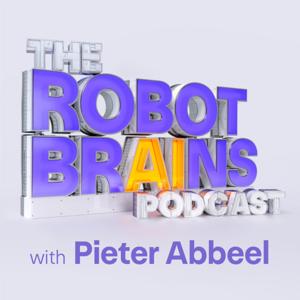

One thing every AI researcher knows is that most foundational AI research is actually happening in open-source. Indeed, most AI researchers publish their research findings openly on arxiv, a freely accessible, open repository originally mostly used by physics researchers. And the code underlying many AI breakthroughs is often published on github, where it’s readily accessible to anyone.
Historically, these papers and codebases have originated from the leading universities and tech companies. But the open culture in the AI community means that aspiring researchers can study the latest AI breakthroughs and codebases, and in principle, start making their own contributions. It hasn't really been done before in a meaningful until Ross Wightman came along.
As an independent researcher, Ross Wightman has grown into one of the most prominent contributors to AI research and codebases. In a previous life, an engineer at a Canadian unicorn start-up, his current full-time occupation is building new AI models that are freely available for use by anyone and everyone. And he's essentially self-taught.
He chats with Pieter about his inspirations, his belief in open-source citing Kaggle, Hugging Face, Eleuther.AI, and his latest papers like ResNet Strike Back.
SUBSCRIBE TO THE ROBOT BRAINS PODCAST TODAY | Visit therobotbrains.ai and follow us on YouTube at TheRobotBrainsPodcast, Twitter @therobotbrains, and Instagram @therobotbrains.
| Host: Pieter Abbeel | Executive Producers: Alice Patel & Henry Tobias Jones | Production: Fresh Air Production
Hosted on Acast. See acast.com/privacy for more information.
 View all episodes
 By Pieter Abbeel

4.9
158158 ratings
One thing every AI researcher knows is that most foundational AI research is actually happening in open-source. Indeed, most AI researchers publish their research findings openly on arxiv, a freely accessible, open repository originally mostly used by physics researchers. And the code underlying many AI breakthroughs is often published on github, where it’s readily accessible to anyone.
Historically, these papers and codebases have originated from the leading universities and tech companies. But the open culture in the AI community means that aspiring researchers can study the latest AI breakthroughs and codebases, and in principle, start making their own contributions. It hasn't really been done before in a meaningful until Ross Wightman came along.
As an independent researcher, Ross Wightman has grown into one of the most prominent contributors to AI research and codebases. In a previous life, an engineer at a Canadian unicorn start-up, his current full-time occupation is building new AI models that are freely available for use by anyone and everyone. And he's essentially self-taught.
He chats with Pieter about his inspirations, his belief in open-source citing Kaggle, Hugging Face, Eleuther.AI, and his latest papers like ResNet Strike Back.
SUBSCRIBE TO THE ROBOT BRAINS PODCAST TODAY | Visit therobotbrains.ai and follow us on YouTube at TheRobotBrainsPodcast, Twitter @therobotbrains, and Instagram @therobotbrains.
| Host: Pieter Abbeel | Executive Producers: Alice Patel & Henry Tobias Jones | Production: Fresh Air Production
Hosted on Acast. See acast.com/privacy for more information.
1,299 Listeners
1,095 Listeners
434 Listeners
306 Listeners
347 Listeners

235 Listeners
209 Listeners
202 Listeners
311 Listeners
562 Listeners
512 Listeners

599 Listeners

227 Listeners
675 Listeners
459 Listeners