
Sign up to save your podcasts
Or

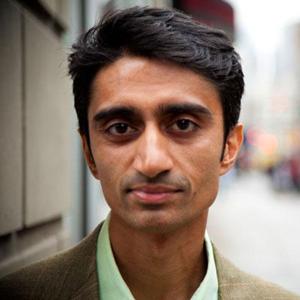


When he was 17 years old, Kedar Powell's dad handed him a jar filled with $25 in change and kicked him out of the house.
"'This is what you want to do? Bye,'" Kedar recalls his dad saying. "And that's how life started for me."
Kedar is gay. His father is Muslim. His mother had already rejected him — she is a devout Christian who had divorced his father years earlier. But he found redeeming moments in his religious upbringing in Brooklyn.
"I was always in the church, in the choir. I loved to sing. Singing is my passion," he said.
But as he came of age, he realized he was "different." His mother tried to set him straight at church, but eventually turned him out, sending him to live with his father — but things were even worse there. And after his father sent him away, he became another gay homeless youth on the streets of New York.
"I slept in abandoned buildings. I slept in the train," he said. "I used to break into abandoned buildings and sleep on the floor."
For more than five years, he survived by performing sex work, occasionally escaping life-threatening situations. He said God guided him out of those episodes.
Jennie Livingston, director of "Paris is Burning," the classic documentary which explored the underground world of voguing and ballroom, said LGBT youth are disproportionately homeless.
"Who do they get thrown out by? Generally the religious parents. And it's ironic, it's sick, it's really unfortunate. I don't know how those parents define what love is, or what the inner principles of those religions are," she said.
As many others have, Kedar found community through the voguing scene, but at 27, he feels he's too old to regularly participate. But he hasn't aged out of God. Even though he now has a stable home in Queens, he still visits an outreach program for LGBT youth run by the Church of St. Luke in the Fields. He's stopped going to church, though. He said he's tired of people trying to make him straight.
Instead, he expresses his spirituality through dance.
"It's very important for us to perform. That's how we get our energy. Our life. Everything," he said.
America has a long history of religious hucksterism — people who have used God to sell everything from widgets to wars. But in a cynical city like New York, Micropolis wonders if that tactic can possibly work.
“Hector the Inventor" says he has escaped death three times due to divine intervention. He is convinced God will help make him rich while also eliminating world poverty.
"I’m not afraid of God, and I know what I’m doing," says Hector. "Because I’m guided."
Hema Ramaswamy, a resident of Middletown, New Jersey has Down syndrome, but that didn’t stop her from rigorously studying Indian classical dance and mythology for years, and giving a grueling solo performance before hundreds of friends and family members.
This loving portrait of Hema affirms the power of religious and cultural communities, and the ability of art to shape a young woman’s identity.
Backstage before her arangetram, Hema receives encouragement from friends.
Hema studied in preparation for four-and-a-half years.
Hema is flanked by her sisters Uma Shankar and Geetha Radhakrishnan as she thanks the audience after her arangetram performance.
For those in the business of Muslim P.R., 2014 has been a pretty rough year.
In the wake of ISIS beheadings and movements like Boko Haram, Americans increasingly believe that Islam encourages violence more than other religions. This, despite research from the conservative Manhattan Institute that Muslims in America are actually highly assimilated.
But in recent months, Muslims have taken to social media — with a campaign called "Not in My Name." It's an earnest attempt by Western Muslims to distance themselves from extremists, with hashtags and YouTube videos.
That was followed by a counter-hashtag, the much snarkier #MuslimApologies.
Sorry for making the first hospital in the world, the first university, algebra, and medicine. #MuslimApologies
I'm sorry your addiction to caffeine was instigated by an Arab inventing coffee. #MuslimApologies http://t.co/cE8ImY4WxF
I am sorry or re-introducing #Greek #philosophy to the #west and for inventing the toilet and for #coffee and #cigarette #MuslimApologies
I'm so sorry for coffee, cheques, parachutes, chemistry, soap... #muslimapologies v @mehdirhasan @abdullahoguk http://t.co/6ju9qaiTSH
One of the "apologists," executive director of the Arab-American Association of New York Linda Sarsour, said she thinks "Not in My Name" is pointless, because it won't sway ISIS or the Westerners who already hate Muslims.
"Sometimes I tell my people, 'Is it worth it that you go out there and say this or write these statements? Why do you feel so defensive? Why do you feel like you have to defend yourself? You're a good American. You're leading a congregation. You're talking about social justice. You're a law-abiding citizens. Why do you always feel compelled to have to apologize for every damn Muslim out there that does something crazy or does something violent?" Sarsour said.
But communications expert Robert Perez, who worked on a successful campaign to convince the Presbyterian Church to ordain gays and lesbians as clergy, said that earnestness actually works.
People respond to what he calls "Journey Stories," Perez said. "You show the conflict, you show the concern, you even show the fear and those stories proved to be very powerful."
Those types of stories encourage empathy, Perez said, and it's empathy, not irony, that changes minds.
A version of this story originally ran in On the Media.
The “War on Christmas” has become a perennial rallying cry on Fox News and conservative talk radio. But in multicultural New York City, even non-Christians who don’t celebrate Christmas get a kick out of the holiday spirit.
Micropolis talks to The Daily Show's Aasif Mandvi, New York Times columnist Andrew Ross Sorkin and artist Swati Khurana on why, contrary to staging a war on Christmas, they are engaging with it in their own way. Arun also discovers that in the Orthodox Jewish enclaves of Brooklyn, some people don’t even know it's Christmastime.
Nihal Kajjam remembers the precise moment when he encountered the Hare Krishnas in New York. He was wearing jeans and a black Megadeth t-shirt and was walking near the statue of Gandhi, in Union Square.
And then he heard a small group of people dressed in saris and traditional robes, chanting — and it captivated him.
Kajjam grew up in a religious, Krishna-worshipping family in India, but had since personally "dwindled." He ate meat, grew a little too cocky about his jumpshot, fell hard for a girl who broke his heart. Watching the Hare Krishnas chanting, though, inspired him, and earlier this year he left his NYU dorm and moved into the Hare Krishna ashram in Bedford-Stuyvesant. He's become a vegetarian and he's celibate.
The Hare Krishnas, he said, have given him a sense of purpose and a community.
"If you give up the senses for the right reason, you get a higher taste. And that higher taste is tasty, bro. It’s really good. It’s awesome! Now I have meaning to my life," Kajjam said.
Kajjam is just one of those drawn to the new Hare Krishnas, who are making a comeback in New York. The International Society for Krishna Consciousness was founded in the East Village in 1965 by A.C. Bhaktivedanta Swami Prabhupada, known as Prabhupad. Prabhupad became one of the central figures of the counterculture, and for a while, the Hare Krishna chant was everywhere — on the streets, in pop music, and on TV.
But then the religious group seemed to vanish.
Steven Gelberg, who joined the Hare Krishnas in 1970 and left in the 80s, said that the Krishnas had become aggressive — and dishonest. He recalled a Krishna technique he dubbed The Changeup: First, a Krishna would give someone a book. Then (seemingly on second-thought), he or she would ask for a small donation, and convince the mark to hand over a $20 with the promise of change. But then the Krishna would never give the change back.
"And so they put people in the position that they had to be almost rude and say, 'No, give me more money back. I'm gonna give you $5, I want $15 back.' So it became a very manipulative thing, and that really pervaded the organization," Gelberg said.
Various Hare Krishna scandals followed, and people left the fold or moved away. Some of the especially devout, like Abhiram, born John Sims, moved to India and chanted there.
Then Occupy Wall Street happened in 2011. Some Krishnas led the Occupiers in chanting and it sparked a rebirth.
"We decided we should bring the Hare Krishna mantra back to the streets of NYC. Just as Occupy Wall Street have gone to the streets," said Abhiram, who now presides over the Bed-Stuy ashram. "No social change ever in history comes from the intellectuals, comes from the leadership, comes from the vested interests. Ever. Never. It always comes from the bottom. It always comes from the street. And so we're taking it to the streets."
With the Hare Krishna revival came a new business plan. Instead of conning strangers out of their cash, the Krishnas make organic, gluten-free, vegan, dark chocolate chip oatmeal raisin cookies. They're being sold for $3.50 each at The Bean chain and other fine coffeeshops.
Freshly-baked cookies receiving Krishna's blessings
For Kajjam, the sense of belonging he's found with his fellow Krishnas has been invaluable.
"All these guys, I feel like taking their legs and putting them on my head," he said. "Because if it wasn’t for their mercy, I’d be so lost."
In the days since the shooting death of Michael Brown by a white police officer in Ferguson, Mo., international attention has been focused on the racial divide in this St. Louis suburb.
But Ferguson is hardly an anomaly. It is in fact similar to many communities across America, where white flight has led to poverty, a depleted social infrastructure and a lingering gap between residents of color and the white officials who govern them.
In the 1950s and 60s, the suburbs were overwhelmingly white: pristine enclaves straight out of Mad Men. This mono-culture was maintained through a variety of ways, some of these explicitly racial, others more subtle.
In time, said sociologist Andy Wiese, class became a proxy for race.
Wiese, author of Places of Their Own: African American Suburbanization in the 20th Century, said communities prevented apartment complexes from being built within their borders, as well as affordable housing, and even demanded minimum house sizes.
“They began to lay out zoning regulations which specified minimum lot sizes. Not just a quarter-acre that was common at Levittown, but half-acre, acre-lot subdivisions,” he said.
The point was clear: only wealthy Americans need apply.
“But in an America where only a handful of African Americans were in the upper class, those were in effect de facto racial restrictions, and they were meant as such,” he said.
Eventually, African Americans did move out of the cities in large numbers: half of all Hispanics and blacks now live in suburbs, like Ferguson. But when African Americans moved in, whites moved out, to the exurbs.
Ferguson is now two-thirds black, but the mayor — and five out of six of its council members — are white. As are almost all of its police officers. The median household income in Ferguson is around $37,000, about $10,000 less than the state average. And the local poverty rate is considerably higher: 22 percent versus 15 percent statewide.
The problems in places like Ferguson don't just affect poor black people, but also wealthy ones.
Using 2010 Census data, Brown University sociologist Logan and a colleague looked at suburban households across America: specifically black ones earning over $75,000 dollars and poor white ones earning under $40,000.
“The affluent black household actually lives in a poorer neighborhood than the poor white household,” said Logan, “and this is because of the high degree of segregation by race, and the fact that affluent black households are actually steered towards, [and] end up in less advantaged communities.”
According to Logan, the suburbs that affluent blacks live in have schools with lower test scores, more low-income residents, housing stock with higher vacancy rates, and higher crime rates.
“So even when they've made it, made it in terms of income, you've managed to move to suburbia, but actually you're not doing as well as relatively poor white households.”
America's neighborhoods are more diverse than they used to be. But the rate at which they've integrated is far slower than what Logan expected when he became a researcher in the 1960s.
And it's not just places like St. Louis. In fact, among cities with large black populations, St. Louis has the ninth worst level of segregation. Number one on that list is a tie, between Detroit and Milwaukee. And right behind them is New York City, which is only marginally less segregated than it was in 1980.
“Every decade, I have reason to think, 'Well, things are changing. Opportunities are opening up. The black middle class is expanding. Whites are changing their attitudes,’” said Logan. “In all the survey research it shows they're less resistant to having a black neighbor, and so on. And by golly, we elected a black president. And so, by 2010, you might've thought that we'd see better outcomes than this. But actually the color line turns out to be extremely persistent.”
But some people are more hopeful.
Clement Price, Professor of History at Rutgers University-Newark, is black and grew up at the tail end of segregation. He acknowledges that young people of color are deeply pessimistic about their future, in part because of an economy that hasn’t translated into good jobs for them, and because of deeply-entrenched civil rights issues.
And yet, he said, the media attention surrounding Michael Brown’s death might be seen as a sign.
Perhaps Americans are capable of “looking at tragedy and trying to figure out a way not just to cope with it, but solve it," he said, "and put ourselves as a society, as a nation, as a collective, on a much higher plane.”
New York City -- universal beacon for gays and lesbians, right? Maybe, but ask some people how safe they feel on the streets, and they'll say, not very. Especially transgender women of color, who speak of constant harassment, threats and actual violence.
New York has more foreign-born residents than any other city in the world: more than L.A. or Hong Kong, and two-and-a-half times as many as London. But in this latest episode of Micropolis, we consider what's lost when people of different cultures and belief systems try to co-exist. In other words, what's the downside of diversity?
The beleagured Charlie Rangel, rather his likeness, made the cut on this weekend's Saturday Night Live, during a segment also featuring Rachel Maddow, John Boehner and Nancy Pelosi. There were a few nice bits of dialogue -- and Pelosi's sudden eye bulge made me laugh out loud -- but all in all, I found the sketch lackluster, especially the Rangel impersonation. Where was the trademark rasp, or the magical rhetorical flow? Judge for yourself.
From the publisher's feed

43,766 Listeners

6,817 Listeners

9,176 Listeners

1,566 Listeners

7,721 Listeners

14,444 Listeners

6,401 Listeners
17,065 Listeners
16,827 Listeners

1,450 Listeners