
Sign up to save your podcasts
Or

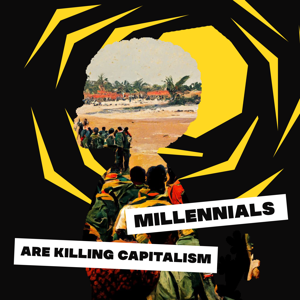


In this episode Josh was joined by special co-host Noah Tesfaye and they interviewed several organizers from Students for a Democratic Society (SDS) who have been organizing solidarity encampments this spring. This interview took place about a month ago, so the events they describe are not reflections of the most current activity on their campuses, but nonetheless this conversation is a useful look into the organizing going on in student encampments across the country.
We also hosted livestreams recently with organizers at UCLA and Cornell, as well as multiple scholars who have faced repression or arrests for their involvement with organizing on their campuses.
Thanks to Josh and Noah for hosting this conversation and to Seth Gunter for work editing this episode.
If you like the work that we do please become a patron of the show, even if just a small annual or monthly contribution. Recently we've had more people lowering their support or cancelling than we've had people signing up. So first of all just a shout-out to everyone who supports our work and makes it possible, but secondly we are trying to increase the amount of audio content we're releasing again which has led us to expanding the number of people we're working with as guest hosts and audio editors. And we would like to have the resources to also pay these folks for their work and continue to make some equipment upgrades. This week Noah and I will be out at a conference on the life's work of Cedric Robinson and we hope to capture some good audio and video content while we're out there as well that we can share with you all. Become a patron for as little as $1 a month at patreon.com/millennialsarekillingcapitalism.
SDS's National Instagram and UMN SDS's twitter.
In this episode we speak with Paul Renfro about his book Stranger Danger: Family Values, Childhood, and the American Carceral State
Paul Renfro is an associate professor of history and an affiliate faculty in the Women's, Gender, and Sexuality Studies program at Florida State University. In addition to Stranger Danger, He is also the coeditor of Growing Up America: Youth and Politics since 1945, and the author of the forthcoming book The Life and Death of Ryan White: AIDS and Inequality in America which comes out this fall on UNC Press.
Stranger Danger tells the story of how bereaved parents of missing and slain children turned their grief into a mass movement and, alongside journalists and policymakers from both major political parties, propelled a moral panic. Leveraging larger cultural fears concerning familial and national decline, these child safety crusaders warned Americans of a supposedly widespread and worsening child kidnapping threat, erroneously claiming that as many as fifty thousand American children fell victim to stranger abductions annually. The actual figure was (and remains) between one hundred and three hundred, and kidnappings perpetrated by family members and acquaintances occur far more frequently.
We get into all of that and focus intently in this conversation on how Stranger Danger functioned from its inception as a moral panic or a sex panic. A panic Renfro argues we've never emerged from, one that still animates the reality of mass incarceration today, but is often less discussed than other contributing factors to the largest system of carceral control and punishment in the world.
This conversation was originally recorded all the way back on September 8th and was slated to be released on Halloween to time it up with the ridiculous annual copaganda about strangers lacing children's candy a reliable myth propelled by the child safety regime. Obviously that timeline was dramatically derailed by our focus on work around Palestine which has largely taken the form of videos on our YouTube channels. My apologies to Paul Renfro for taking so long to get this excellent conversation edited and released. Even though the conversation certainly has nothing to do with Palestine directly, as I was finalizing the edit for this episode, it was interesting to think in this moment about the demonization of student protesters, the notion that student encampments have been somehow been infiltrated by so-called "terrorists" who are poisoning their minds with radical islam, teaching them anti-semitic rhetoric, and guerrilla warfare tactics. Certainly this has many of the hallmarks of a moral panic. And there are others we discuss in the show the panic around schools teaching sex education, the dangers of drag balls, or concerns about transgender kids in sports. It is important to be able to recognize attempts to manufacture panics, and to think critically about how we respond to these multifaceted propaganda efforts.
If you want to support our work, the best way to do so is to become a patron of the show. You can do so for as little as $1 a month at patreon.com/millennialsarekillingcapitalism
In the episode members of the Kenya Organic Intellectuals Network returns to the podcast. Folks will recall that we had a conversation with them last year on their book Breaking the Silence on NGOs in Africa.
This conversation started thinking about the situation in Haiti. We previously had a discussion with Dr. Jemima Pierre on the current situation and the western backed invasion of Haiti for which Kenya is sending police. But also I was interested in how the struggle in Palestine was being received in Kenya both at a governmental level and among the masses. Along those lines, often Sudan, Congo, and Haiti are raised up as other examples of genocide, of imperialism, of terrible violence and humanitarian catastrophe as people seek to expand our analysis of what's happening in Palestine beyond that individual conflict. I wanted to get their perspectives on all of these situations as folks who organize from a Pan African Scientific Socialist perspective from the Kenyan context.
Just a note that May 25th is African Liberation Day and we also hosted a conversation with the All-African People's Revolutionary Party on our YouTube channel the other day.
Our guests are Gacheke Gachihi, Lewis Maghanga, Okakah Onyango, and Wanjiru Wanjira.
Gacheke Gachihi is the Coordinator of Mathare Social Justice Centre and a member of the Organic Intellectuals Network.
Lewis Maghanga is a member of the Organic Intellectuals Network and an organiser with the Revolutionary Socialist League based in Kenya.
Okakah Onyango is a member of the Revolutionary Socialist League, Organic Intellectuals Network and Social Justice Movement. He is a dedicated tech-driven community organizer, blending roles of revolutionary intellectualism and communications strategist.
Wanjira Wanjiru is a social justice advocate and artivist with a decade of experience as a grassroot human rights defender. She is Co- founder of the Mathare Social Justice centre and coordinator of Matigari kids book club where children learn about pan-african history. She is a writer with the Kenya Organic Intellectuals Network and co-host of Liberating Minds podcast, a history channel on Youtube. She is also working with the African Social Justice Network team in South Africa and Zambia.
After we recorded this episode Mathare experienced major floods. We've included a video of Wanjira discussing the floods. There was also a mass arrest of human rights defenders at the Mathare Social Justice Centre. We encourage folks to reach out to the Mathare Social Justice Centre to see if there are ways that we can provide support. And I would just note that in this discussion obviously we focused so much on struggles elsewhere and its important to connect and look for ways to support these comrades in their struggles as well.
We hope that people will connect with these comrades to discuss how they can learn more from them and coordinate struggles with them as they suggest in the episode.
I will just note I know a majority of our work has been on the Youtube side in recent months, make sure you subscribe to our YouTube feed so that you can access all of that content as well. We do have a lot of audio work that needs to be edited and released as well and we're working to find the right balance to get that work done. To support our work as always become a patron of the show at patreon.com/millennialsarekillingcapitalism
This episode was recorded on March 28, 2024 Music is provided as always by Televangel
Links:
Mathare Social Justice Centre
Revolutionary Socialist League (Kenya)
Liberating Minds podcast
Pio Gama Pinto book
Breaking the Silence on NGOs in Africa (Book)
In this episode Josh interviews Amba Guerguerian and Harry to discuss the New York War Crimes project and their efforts to get people to Boycott, Divest, and Unsubscribe from the New York Times.
Amba Guerguerian is an associate editor at The Indypendent and a contributor at The New York War Crimes.
Harry is a writer, educator and organizer with Writers against the War on Gaza and a contributor at The New York War Crimes.
The New York War Crimes is a project dedicated to de legitimizing the imperial mouthpiece that is The New York Times through focused contemporary and historical critique, while providing an alternative platform for Palestinian and Arab authors, poets and artists — precisely what you won't find in the pages of The Times.
If you would like to support our work the best way to do so as always is to become a patron of the show for as little as $1 a month at patreon.com/millennialsarekillingcapitalism. We are also still working to increase our subscriber base over on the YouTube channel so subscribing to that feed is another great way. We have four, possible five live episodes coming this upcoming week so make sure you are subscribed there or on patreon to catch all of that content.
This episode was recorded on March 31, 2024
This episode was co-edited/produced by Aidan Elias and Jared Ware
Music is provided as always by Televangel
Links:
The New York War Crimes
The Indypendent
Writers Against the War on Gaza
U.S. Media Control and October 7th with Bryce Greene
Electronic Intifada
Mondoweiss
The Anti-Empire Project with Justin Podour
MAKC YouTube Channel
In this episode Abdaljawad (Abboud) Omar returns to the show.
This is the lightly edited audio from a livestream we recorded on March 24th
Abdaljawad Omar is a writer, analyst, and lecturer based in Ramallah, Palestine. He currently lectures in the Department of Philosophy and Cultural Studies at Birzeit University. He has written extensively in Arabic. In English Abboud has contributed to Electronic Intifada, Mondoweiss, and Ebb Magazine among other outlets.
We discuss his essay "Bleeding Forms: Beyond the Intifada," which is available open access through Duke University press.
We will also talk about recent developments in the US-co-authored zionist genocidal war on Palestinians. Although we would note that because this was recorded a little over a week ago, a few of my comments are not totally current to the most recent developments, but the analysis remains quite relevant nonetheless.
We discuss some of the recent developments from the Palestinian resistance which continues to maintain a heroic resistance against the zionist occupation's forces. And of course we touch on the siege on Al Shifa hospital, the full extent of which we revealed yesterday when the IOF retreated from the area.
This was our seventh conversation with Abdaljawad Omar since November. Previously we have released a couple of them as audio podcasts, but there are still 4 others that have not been converted yet and all of them are up on a playlist on our Youtube channel that we'll link in the show notes:
Also want to note that since October 7th we've also had a few conversations with Dr. Lara Sheehi discussing recent developments from a decolonial psychoanalytic perspective. And we also have created a playlist for those.
In addition some of our recent guests on the Youtube feed include Steven Salaita, Within Our Lifetime, Decolonize Palestine, Celeste Winston, Matteo Capasso, Hanif Abdurraqib, Dylan Rodríguez, and more.
We also have three more livestreams prepared for this coming week so remember to subscribe to the Youtube channel, turn on notifications and catch those.
To gain access to our study groups or just to support our work, become a patron of the show for as little as $1 a month or $10.80 per year at patreon.com/millennialsarekillingcapitalism
Livestream conversations with Abdaljawad Omar
Livestream conversations with Lara Sheei (including one with Stephen Sheehi as well)
In this conversation we welcome Eugene Puryear back to the podcast to talk about the recently published book The Black Belt Thesis: A Reader which was compiled by The Black Belt Thesis Study Group and features a foreword by Eugene Puryear.
The reader itself was published by 1804 Books, and they have published a lot of really good stuff recently that I just want to take a moment to shout-out. They recently along with the Palestinian Youth Movement translated and published The Trinity of Fundamentals which hopefully we will be hosting a conversation on at some point soon. They also recently published a translation of Ghassan Kanafani's The Revolution of 1936-1939 in Palestine and of course the collection of Hugo Chavez's speeches that we discussed with Manolo de los Santos last year and much more. So I just say that to say if you go pick this book up from them, that there is a bunch of really good stuff you can grab while you're there.
Eugene Puryear is a journalist, activist, politician, and host on Breakthrough News. He is a founding member of the Party for Socialism and Liberation, and is the author of Shackled and Chained: Mass Incarceration in Capitalist America.
In this discussion we ask Eugene to contextualize the origins of the Black Belt thesis, to discuss some of the articulations and development of the thesis as undertaken by Comintern and the CPUSA. We discuss some of the organizing implications of it, its role in the development of the US communist movement particularly with regards to Black people, and the challenging of the problem of white racism as it exists within the history of the US left and white workers as well. Also Eugene discusses the centrality of national oppression within the political economy of US capitalism.
Along the way we talk about some of the contributions from figures like W.E.B. Du Bois, Harry Haywood, Louis Thompson Patterson, Claudia Jones and others.
A couple of other things I want to highlight is that we have been hosting a lot of conversations over on our YouTube page recently the majority of which we have not released as audio episodes. We will link that in the show notes, but also you can just find it by searching Millennials Are Killing Capitalism on YouTube.
And as always the best way to support our work is to become a patron of the show for as little as $1 a month at patreon.com/millennialsarekillingcapitalism
The Black Belt Thesis: A Reader
Millennials Are Killing Capitalism on YouTube
Tip of the Spear Reading Group (for patrons)
Credits:
This episode is co-hosted by Joshua Briond and Jared Ware. It is co-produced by Aidan Elias and Jared Ware. Our guest for this episode is Eugene Puryear. Our music is from Televangel.
In this episode we interview Tammy Kovich and El Jones to discuss the book Antifascism Against Machismo
Published by our good friends at Kersplebedeb, and described as
"An intergenerational dialogue on the meaning of feminist antifascism.
Anti-Fascism Against Machismo collects and continues a conversation begun by Tammy Kovich (as "Petronella Lee") in 2019. Four feminist, antifascist revolutionaries jump off from each other's reflections and bring the particularities of their varied contexts to bear on one central problem: What has and will a women's war against fascism look like?"
We pick up this conversation with Tammy Kovich who wrote the original zine upon which the book is constructed as well as El Jones who wrote the introduction. The book itself also includes contributions from Veronica L and from the late great Butch Lee who became an ancestor in 2021, and who we all spend time honoring in this conversation.
Among other things we discuss different variants of fascist or far right patriarchy and misogyny, the problems of the politics of representation and neocolonialism, and histories of the resistance of women in antifascist movements including in Ethiopia, Yugoslavia, and Spain.
I will add that we recorded this conversation back in August, and I am sure that if we had recorded it after October 7th we would have talked about what an antifascist war against zionism might look like and the contributions of women and children in the Palestinian struggle against genocide.
We very much appreciated this book and encourage folks to pick it up from Kersplebedeb's retail arm which is leftwingbooks.net/. It is currently 40% off for the month of March along with over 400 titles at their online bookstore.
If you appreciate the work that we do, becoming a patron of the show or increasing your pledge to the show if you can afford to do so, are the most meaningful ways you can help us keep it going. We would not be able to bring you these episodes on a weekly basis and the livestreams we put out multiple times per week without the support of our listeners. We also will be starting a new study group in April and the best place for you to find out more about that and track everything we release is to become a patron for as little as $1 a month at patreon.com/millennialsarekillingcapitalism
In this conversation we talk to Zeyad el Nabolsy about two of his recent pieces on Marxism-Leninism in the East African context. One piece is entitled, "Lenin in East Africa: Abdul Rahman Mohamed Babu and Dani Wadada Nabudere" from The Future of Lenin: Power, Politics, and Revolution in the Twenty-First Century and the other is "Questions from the Dar es Salaam Debates" which is in the book Revolutionary Movements in Africa: An Untold Story which was recently released from Pluto Press.
Zeyad El Nabolsy is an Assistant Professor at York University, he has written extensively on African philosophy, and we hope to have many more conversations with him in the future. I will note as a caveat again that this is one of the conversations that we recorded prior to October 7th so if it feels like Palestine, or the Congo or Haiti or Sudan or even more discussion on Fanon might be meaningful for us to engage with in this discussion given recent events, there is a reason that we do not and that the context that we do discuss in passing are the anticolonial coup d'etats in West Africa.
Zeyad has done some interesting work on Edward Said and some work on western philosophy and Islam so hopefully we can have another conversation with him soon that is able to weave together some more current events with his historical and philosophical research interests. Nonetheless, this is a very interesting discussion and highlights some East African Marxists that we should be more familiar with given the importance of their thought and their political formulations, but who are often not well known outside of circles who are more knowledgeable about African Marxism or African Marxism-Leninism.
In this discussion we do talk about East African-Marxism Leninism, Pan Africanism, African Socialism, and the famous Dar Es Salaam Debates. We also talk about Dani Nabudere's work on imperialism, taking Lenin's theory of imperialism and updating and applying it to the African context. There's much more to say, but we'll leave for the conversation itself.
As always to support our work become a patron of the show. It's the best way you can ensure that we're able to continue bringing you livestreams which we do multiple times each week on our YouTube page, that we are able to bring you podcast episodes, and of course our study groups as well. You can support us at patreon.com/millennialsarekillingcapitalism for as little as $1 a month.
Aidan Elias and Jared Ware co-produced this episode.
Sources/Links:
"Lenin in East Africa: Abdul Rahman Mohamed Babu and Dani Wadada Nabudere" from The Future of Lenin: Power, Politics, and Revolution in the Twenty-First Century
"Questions from the Dar es Salaam Debates" from Revolutionary Movements in Africa: An Untold Story
Zeyad El Nabolsy's PhilPapers site (where you can download free pdfs of his pieces)
For this episode we interview Ernest McMillan to discuss his memoir Standing: One Man's Odyssey During the Turbulent '60s which came out last summer. McMillan grew up in the highly segregated heart of Dallas, Texas. We talk to him about his childhood experiences within his segregated Black community, and his experiences organizing against white supremacy in Dallas and across the South with the Student Nonviolent Coordinating Committee (SNCC).
McMillan's story is one of the power of organizing, but also of fierce state repression, police raids, trumped up charges, and a j ourney to find refuge in West Africa, time in the underground, political imprisonment, and prison organizing. There are many more aspects of his life story of course, but those are some of the ones he discusses in Standing and in this episode as well.
A couple of notes, McMillan offers a few words on solidarity with Palestinians, and on the importance of this today. This conversation was recorded in September, and I say that just to underscore the long history of solidarity between SNCC members and the Palestinian Liberation struggle. If we had recorded it after October I'm sure we would've talked about that solidarity in more detail, but I'll just say it's a common thread that has come up in most of our conversations with SNCC veterans.
We do have a number of new episodes on their way soon. I apologize to the audio listeners that I have been a little busier on the video side in recent months, but Aidan Elias - who co-produced this episode - is helping to produce and release the audio content we have and more is on its way soon.
We encourage folks to pick up Ernest's book to learn more about his life and political odyssey.
To support our work please consider contributing to our patreon. You can do so for as little as $1 a month at patreon.com/millennialsarekillingcapitalism
Other conversations we've had with SNCC veterans or about SNCC (or SNCC members) in some capacity.
In this episode we speak to Pulitzer Prize winning composer and musician Henry Threadgill and the co-author of his autobiography Brent Hayes Edwards. The book we discuss, which was published last year is entitled Easily Slip into Another World: A Life in Music.
Henry Threadgill was born in Chicago in 1944. He is one of the most significant and innovative composers of the 20th and 21st Century. In addition to being an award winning composer is an amazing saxophonist and flautist. He also is known for his percussion work, in particular the invention of the hubkaphone, a marimba like instrument made out of hub caps. He has been a leader or co-leader of the bands Air, Ensemble Double UP, Make a Move, The Henry Threadgill Ensemble, The Henry Threadgill Sextett, The Situation Society Dance Band, Very Very Circus, X-75, Zooid and 14 or 15 Kestra: Agg and probably some others I didn't track down. If we went into all the bands and groups Henry was a part of the list would be three times as long. In recent years Threadgill has established a completely new chromatic system for musical composition outside the confines of diatonic harmony. In 2016, he was awarded the Pulitzer Prize for In For a Penny, In for a Pound, an album he composed for his sextet, Zooid. He currently lives in New York.
Brent Hayes Edwards is a Professor at the Center for Jazz Studies at Columbia University and the Director of the Scholars-in-Residence Program at the Schomburg Center for Research in Black Culture at the New York Public Library.
So why this episode, it's a bit outside of most of our content here. Perhaps the closest things we've done to a conversation like this would be the dialogue we hosted between Fred Moten & Hanif Abdurraqib or the interview we did with Dionne Brand last year. But although I didn't ask it directly, the guiding question that animated this interview and engagement with Henry and Brent's book for me was: what insights might a truly revolutionary composer have for aspiring revolutionary organizers or for cultural workers seeking to maximize the revolutionary possibilities of their work?
We hope you enjoy this conversation and that it proves as meaningful to you as it was to us. It was a tremendous honor to sit down with Henry Threadgill and Brent Hayes Edwards to discuss their beautiful book which is available now everywhere.
Thank you to Aidan Elias for co-producing this episode.
If you appreciate the work that we do, as always you can support our work for as little as $1 per month at patreon.com/millennialsarekillingcapitalism. Our podcast is fully supported by individual contributions of folks like you and we encourage you to join the amazing folks who make it possible for us to bring you these conversations on a weekly basis.
From the publisher's feed

1,861 Listeners

1,460 Listeners

1,585 Listeners

336 Listeners
3,320 Listeners

3,912 Listeners
934 Listeners

321 Listeners

546 Listeners
1,125 Listeners
1,012 Listeners
251 Listeners
605 Listeners
555 Listeners

487 Listeners