
Sign up to save your podcasts
Or

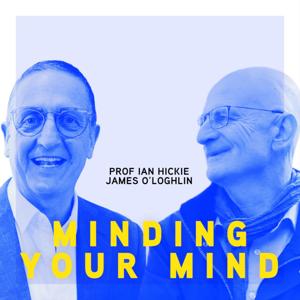


What is trauma? If something traumatic happens to you as a child or an adult, how does your mind and memory process it? How can that trauma affect us, even years later? What can we do to deal with those affects?
If you have any questions or comments email Ian and James at [email protected] . Let them know any other topics you’d like them to cover.
To find out more about depression and support services you can contact Head to Health at www.headtohealth.gov.au Beyond Blue at www.beyondblue.org.au , Lifeline at www.lifeline.org.au or on 13 11 14 and www.headspace.org.au. Thanks to Future Generation Global
Professional golfers sometimes forget how to putt. They’ve spent years putting thousands of balls, then suddenly they can’t do it anymore. It’s called ‘The Yips’ and a similar thing can afflict gymnasts, baseball players and tennis players. What is ‘The Yips’? How can you forget an action that you have practiced for years? Is it about anxiety, or something else? How do you cure ‘The Yips’?
If you have any questions or comments email Ian and James at [email protected] . Let them know any other topics you’d like them to cover.
To find out more about depression and support services you can contact Head to Health at www.headtohealth.gov.au Beyond Blue at www.beyondblue.org.au , Lifeline at www.lifeline.org.au or on 13 11 14 and www.headspace.org.au. Thanks to Future Generation Global.
COVID prompted discussion about how we reconcile economic priorities with our collective mental health and wellbeing. Why can’t we have both? Should we broaden our focus past economic growth and the simplistic notion that ‘the economy comes first’ to include the ‘mental wealth’ of our nation. What would that even mean? How would it help? How would you measure it? SMH Economics Editor Ross Gittins joins us to discuss.
If you have any questions or comments email Ian and James at [email protected] . Let them know any other topics you’d like them to cover.
To find out more about depression and support services you can contact Head to Health at www.headtohealth.gov.au Beyond Blue at www.beyondblue.org.au , Lifeline at www.lifeline.org.au or on 13 11 14 and www.headspace.org.au. Thanks to Future Generation Global
What is bi-polar disorder. How does it manifest? Why does it happen? What do you about it?
If you have any questions or comments email Ian and James at [email protected] . Let them know any other topics you’d like them to cover.
To find out more about depression and support services you can contact Head to Health at www.headtohealth.gov.au Beyond Blue at www.beyondblue.org.au , Lifeline at www.lifeline.org.au or on 13 11 14 and www.headspace.org.au. Thanks to Future Generation Global.
Obsessive Compulsive Disorder, or OCD, is having repetitive, intrusive thoughts, or feeling the need to repeat routines, like washing your hands, counting, or checking doors are locked. Many of us have habits and routines, but some find they take over their life. How do you know when patterns and routines become an issue you should deal with? Why does OCD happen? How do you treat it?
If you have any questions or comments email Ian and James at [email protected] . Let them know any other topics you’d like them to cover.
To find out more about depression and support services you can contact Head to Health at www.headtohealth.gov.au Beyond Blue at www.beyondblue.org.au , Lifeline at www.lifeline.org.au or on 13 11 14 and www.headspace.org.au. Thanks to Future Generation Global.
Former Prime Minister Malcolm Turnbull talks openly about experiencing depression following his loss of the Liberal leadership in 2009, and what he learnt from that experience about himself. Afterwards, knowing he had a vulnerability to depression, he explains how he managed it.
If you have any questions or comments email Ian and James at [email protected] . Let them know any other topics you’d like them to cover.
To find out more about depression and support services you can contact Head to Health at www.headtohealth.gov.au Beyond Blue at www.beyondblue.org.au , Lifeline at www.lifeline.org.au or on 13 11 14 and www.headspace.org.au. Thanks to Future Generation Global
Sometimes we realise we’re not perfect. It’s very confronting. If you want to change something about yourself – become less irritable, or more assertive, stop losing your temper, worry less – how do you do it? Are our character traits hard-wired, or can we change our brains and improve ourselves?
If you have any questions or comments email Ian and James at [email protected] . Let them know any other topics you’d like them to cover.
To find out more about depression and support services you can contact Head to Health at www.headtohealth.gov.au Beyond Blue at www.beyondblue.org.au , Lifeline at www.lifeline.org.au or on 13 11 14 and www.headspace.org.au. Thanks to Future Generation Global
High profile athletes look like they’re living the dream, but they are often under tremendous psychological pressures. They might have support from psychologists etc, but does that actually help? What can we learn from high profile sportspeople about what psychological strategies work, and which don’t?
If you have any questions or comments email Ian and James at [email protected] . Let them know any other topics you’d like them to cover.
To find out more about depression and support services you can contact Head to Health at www.headtohealth.gov.au Beyond Blue at www.beyondblue.org.au , Lifeline at www.lifeline.org.au or on 13 11 14 and www.headspace.org.au. Thanks to Future Generation Global.
What is ‘burnout’? A temporary loss of motivation and energy at work that can be fixed by a week at the beach? Or an indicator of mental exhaustion and a sign a person might be psychologically unwell? If you experience ‘burnout’, what should you do?
If you have any questions or comments email Ian and James at [email protected] . Let them know any other topics you’d like them to cover.
To find out more about depression and support services you can contact Head to Health at www.headtohealth.gov.au Beyond Blue at www.beyondblue.org.au , Lifeline at www.lifeline.org.au or on 13 11 14 and www.headspace.com . Thanks to Future Generation Global.
As kids grow up, the two places they learn most about mental health and wellbeing, are at home and at school. What role do educational institutions - childcare, school, tertiary education – play in teaching children and young adults about mental health? How do they do it? Should they be doing more? What is the right balance between challenging students to help them build skills and confidence, and creating a pressure filled environment that can contribute to anxiety and mental illness? Former ABC boss and NSW Dept of Education head, now Vice Chancellor of USyd, Mark Scott joins us to discuss
If you have any questions or comments email Ian and James at [email protected] . Let them know any other topics you’d like them to cover.
To find out more about depression and support services you can contact Head to Health at www.headtohealth.gov.au Beyond Blue at www.beyondblue.org.au , Lifeline at www.lifeline.org.au or on 13 11 14 and www.headspace.com . Thanks to Future Generation Global.
From the publisher's feed

103 Listeners

95 Listeners

798 Listeners

761 Listeners

10 Listeners

126 Listeners
58 Listeners
21 Listeners

224 Listeners

322 Listeners
84 Listeners
20 Listeners

236 Listeners

19 Listeners

50 Listeners