
Sign up to save your podcasts
Or



We live in a culture that measures influence by followers, views, and platforms. But real influence isn’t always that easy to measure.
In this episode, we talk about the life effect of a disciple: the cumulative impact of ordinary faithfulness, everyday conversations, intentional relationships, and putting the kingdom of God on display in the natural rhythms of life. We explore how the people who have shaped us often did so in ways they may never have fully realized, and how our own influence can reach much farther than we may ever see.
You don’t need a massive platform to make a significant impact. Every disciple is influencing somebody. The question is, what kind of influence are we having?
Can God be both familiar and fearsome?
Scripture invites us to draw near to God, call him Father, and come boldly to the throne of grace. Yet that same Scripture tells us to fear the Lord, describes him as a consuming fire, and shows people falling before him in awe.
In this episode, we explore what the Bible actually means by “the fear of the Lord” and how it fits with the extraordinary access we've been given to God. Is fearing God simply another way of saying we respect him? Should knowing God more deeply make us less overwhelmed by who he is, or more?
The God who invites us near is still holy. We can come boldly without coming casually.
Jesus said the world hated Him because He testified that its works were evil. Are Christians still willing to do the same?
In this episode, we wrestle with whether the church has become so concerned with being liked that we've lost the boldness to confront the culture around us. Have we confused loving people with needing their approval? Have we become afraid to call something wrong when the culture celebrates it? And have we forgotten that Jesus repeatedly told His followers that faithfully following Him would sometimes produce hatred?
The goal isn't to be hated, and boldness is never an excuse to be ugly. But if the Jesus way really is true and good, we have to be willing to proclaim it—even when the world doesn't want to hear it.
Should Christians want America to be a Christian nation? For many believers, even asking the question feels uncomfortable.
In this episode, we wrestle with why Christians who genuinely believe Christianity is true and good have become hesitant about its influence beyond our churches and personal lives. Have we accepted a privatized version of faith? Have we learned to compartmentalize Christianity? Have we become so accustomed to seeing Christianity through the eyes of its critics that we now apologize for wanting Christian values to influence society?
There is a difference between coercing someone to believe and seeking to influence the world with what we believe is true and good. If Christianity really is good for humanity, why wouldn't we want more of its influence in the world?
In a world filled with competing voices, everyone is asking for our agreement. But what does it really mean to say “Amen”?
In this episode, we look at Deuteronomy 27 and discover that “Amen” is more than a church word or a response to something we like. It represents alignment, agreement, and a willingness to live according to what has been spoken. From the voices shaping our culture to the desires and perspectives shaping our own lives, the real question is: Who gets our agreement?
Discipleship means settling that question. Jesus doesn't simply ask us to believe in him. He calls us to align our lives with his way, his truth, and his Word. In every part and every place, our response must be: Amen.
In this episode, we discuss a recent news story surrounding abortion legislation in Massachusetts and use it as a starting point for a larger conversation: How should disciples of Jesus approach the issues shaping our culture?
In a world where headlines quickly become political and emotional, followers of Jesus must learn to think and respond differently. Our convictions and responses should be shaped first by Scripture and our commitment to follow Jesus.
We talk about what it means to view the topics of the day through the lens of discipleship, engage difficult cultural conversations with both truth and wisdom, and allow the way of Jesus to shape not only what we believe, but how we respond.
Is there a common starting point that helps people embrace a lifestyle of evangelism and disciple-making? Is it something that can be taught, or is it something that must first be formed in the heart?
In this episode, Kris and Ken think out loud about one of the biggest challenges facing the church today: helping everyday believers move from believing the mission to actually living it. Rather than offering a formula, they explore the deeper questions behind missional living and wrestle with what truly creates lasting passion and personal ownership for the mission of Jesus.
If you've ever wondered why some people naturally live on mission while others struggle to take the first step, this conversation is for you.
What should the Church do when God moves in extraordinary ways?
From camp meetings and conferences to tent revivals and community evangelistic events, God continues to draw people to Himself through powerful moments of revival. We celebrate every person filled with the Holy Ghost, every baptism, every miracle, and every life transformed.
But how should followers of Jesus think about these moments through the lens of the mission of the church?
In this episode, Kris and Ken discuss the biblical value of mass evangelism, the encouragement and momentum it brings to the Church, and why revival and disciple-making are never competing priorities. Looking to the Book of Acts, they explore how extraordinary moments of revival and the everyday mission of making disciples have always belonged together.
Because when revival comes to town, the mission doesn't pause—it moves forward.
In this episode, Kris and Ken tackle one of Jesus' most challenging calls: "If anyone desires to come after Me, let him deny himself, take up his cross, and follow Me."
What does self-denial actually mean? Is Jesus calling us to misery, or to freedom? And why is this the essential first step of discipleship?
They explore why a disciple is someone who lets Jesus change what they care about—and how surrendering self-rule transforms our priorities, our purpose, and ultimately our mission. Because until self is denied, self still decides what matters.
What happens to a debt when it's forgiven?
In this episode, we explore one of the most overlooked lines in the Lord's Prayer: "Forgive us our debts, as we forgive our debtors." Drawing from personal devotion and Paul's teaching on the Body of Christ, we wrestle with a simple but profound truth: debt never simply disappears. Someone always absorbs the cost.
But what about the debts that can't be measured in dollars? What happens when someone steals your peace, damages your reputation, weakens trust, or leaves emotional wounds behind? How do those debts get paid?
We discuss the connection between forgiveness and body life, why unresolved offenses affect more than just the people involved, the difference between restitution and restoration, and why true discipleship requires us to stop justifying our own failures while magnifying the failures of others.
At its core, forgiveness is not simply a matter of obedience. It's a matter of faith. Do we trust that when we release what we're owed, God is able to restore what was lost?
This conversation will challenge the way you think about forgiveness, responsibility, community, and the transforming power of grace.
From the publisher's feed
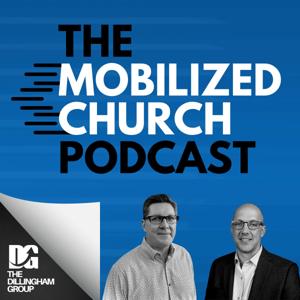
Pastors Ken and Kris Dillingham tackle the topics and discuss the strategies of getting the church "out of the box."

890 Listeners

73 Listeners

228 Listeners
96 Listeners
814 Listeners

689 Listeners
1,010 Listeners
69 Listeners

531 Listeners
700 Listeners

115 Listeners
153 Listeners

62 Listeners

43 Listeners

9 Listeners