
Sign up to save your podcasts
Or

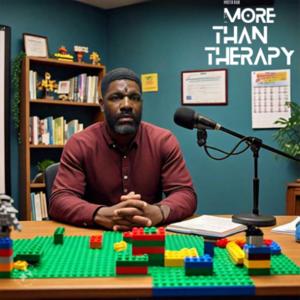


Aquanda Green, LCAS-A and Felipe Blue, LCAS, CSI discuss being emotionally healthy on this episode of More Than Therapy brought to you by:
TRU BOSS KOLLECTION, Where all the bosses shop! TruBossKollection offers a collection of fashionable goods at affordable prices.
You can achieve emotional health by:
Felipe Blue, LCAS, CSI discusses strategies to have effective goal setting.
Episode Plug the "must have book to weather this storm" Post-Pandemic Depression and Anxiety and Strategies to Beat It
Aquanda and Felipe discuss healthy habits and the importance of adhering to such. In their observations, Aquanda and Felipe find that clinicians discuss strategies and interventions with their clients so they can live healthier lives but then do no adhere to such for themselves. This is complicated by a number of factors of course.
If you find yourself in such a situation, or need additional support, please do so at More Than Therapy.
Some quick tips:
This episode is in promotion of MINDFUL BODIES. Mindful Bodies’ mission is to increase mental, physical, emotional & behavioral health & wellness through programs, products & services for all people.
Carolina Fonseca Jimenez
Books: Lupita and her Magical Dreams
Lupita and the Magic of Mexico
BIO:
I was brought to the United States at the age of 2 years old. We came here in search of
In writing these books I learned that love has no borders and that stories can unite us in
Book Information
Lupita and the Magic of Mexico
After growing up in the United States, Lupita finally has the opportunity to explore her
Lupita and her Magical Dreams
Have you ever woken up terrified from a scary dream? Lupita has, and she's
Additional Notes: These books are available in English and in Spanish and offer
https://www.lupitainspires.com/
Interview by Jessica Salazar
Felipe Blue, LCAS, CSI had a rough week, but he remembered that yesterday does not define today and with hope, yields change.
What do you tend to focus on in life? Do you see the "good news" within you?
Aquanda Green, LCAS-A and Felipe Blue, LCAS, CSI discuss when a clinician experiences "dislike" for a client.
Since dislike of a client is not an ethical reason for referring or terminating, here are some tips for when you do not like, are annoyed by, or dread sessions with a client.
Felipe Blue, LCAS, CSI discusses acceptance (finding himself reflecting on this skill/concept) at More Than Therapy located at 201 W Main Street Suite 316 Durham, NC 27701.
Whenever life gets tough, there is a natural tendency to want to avoid it. Practicing acceptance helps reduce stress and fear. You can learn how to cope with just about anything - as long as you know how.
Fear plays a big factor here. You might pray that the problem goes away without having to do anything. Or, you spend too much time trying to create a certain outcome.
It makes me thinking of that saying "What you resist persists."
Avoiding something it doesn't make it go away, instead the thing you’re trying to avoid just lingers. You start worrying about the "what ifs" rather than living in today.
Resisting takes up a lot of energy. The more you worry the less serenity you will have. In this blog you’ll learn how practicing acceptance can ease your anxiety in any situation.
What is acceptance?
Practicing+Acceptance+Blog+for+Recovery+and+Relationships.png
Acceptance means facing reality as it is without trying to change or control it.
This takes continued effort and patience. It’s more of a practice than something you achieve immediately.
Practicing acceptance decreases negative thoughts and worry. When we stop fighting what’s happening we can learn to embrace it.
Practicing Acceptance
When something challenging happens, don't assume a negative outcome. Nothing has actually happened yet.
Letting go is hard for most of us. Even the thought of having to let go of someone or something precious to us often triggers fear.
Fear is False Evidence Appearing Real which means what you fear rarely happens!
Instead, focus on staying present in the moment. Bring your thoughts back to what's really happening not what you’re worrying about. Being in the moment is a quick way to get a reality check - which can lessen anxious thoughts.
#DBT #DialecticalBehavioralTherapy #Acceptance #Mindfulness #SheDontLoveMeAnymore
T-Shirt in poster sold by Therapy Is Light. Congratulations on your recent success Lacrisha Holcomb, LCAS, NCC.
Get her book Diagnosis Consciousness: The Insanely Sane Musings of a Sophisticated Ratchet Hippie Thug Scholar on Amazon!!
Felipe Blue, LCAS, CSI has a discussion with his former professor, mentor, and long time friend, Dr. Tracey Phillips regarding counselors transitioning to coaching.
In order to ethically offer coaching as a licensed therapist, you must: Treat coaching clients as therapy clients, and abide by all state laws and rules governing your license, including but not limited to mandated reporting, dual relationships, and record keeping. Offer coaching under a business separate from your therapy business. Educate clients and potential clients about the limits of coaching as a service, and how you will proceed if it becomes clear that they need therapy. Additional considerations: Whether you want to become a coach as your sole profession, or offer coaching services in addition to therapy. Your coaching qualifications. Your coaching niche and scope of practice. Whether or not you need to start a new, separate business. The laws and rules of your state regarding your professional license. The relevance of your profession’s ethical code in regards to coaching (you can consult your national professional association for free legal advice). The need for specific and separate client contracts and paperwork. Defining the boundary between therapy and coaching for yourself and clients. Developing a policy for identifying therapy needs as well as referral procedures. Separate and/or additional liability insurance.
Connect and learn more about Dr. Tracey Phillips at:
http://linkedin.com/in/dr-tracey-m-phillips-64654b6
Writevision.net https://www.facebook.com/Writevision-Consulting-LLC-373190306175919/
How do you define your "authentic self?" Are you always this person?
Recorded by Felipe Blue, LCAS, CSI at More Than Therapy located at 201 W Main Street Suite 316 Durham, NC 27701.
Shoutout to the real ones... and thanks to ________ _______.
Why might we see things as in our lives for good? How realistic is such a view of life?
-recorded by Felipe Blue, LCAS, CSI at More Than Therapy located at 201 W Main Street Suite 316 Durham, NC 27701.
🤦♀️ (missing her, but accepting this state of impermanence, for what else can I do?)
From the publisher's feed