
Sign up to save your podcasts
Or

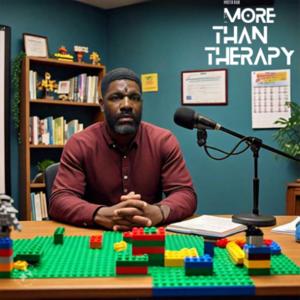


Felipe Blue, MA, LCAS interviews Sabriya Dobbins regarding the changes her company, Project Passport, has gone through since the pandemic. Listen to how Sabriya remixes her viewpoint of the world and how she becomes the master of her destiny on behalf of women everywhere.
F. Khristopher Blue of More Than Therapy interviews Sabriya Dobbins of Project Passport about her traveling adventures, her pursuit of entrepreneurship at such a young age, being a boss, and captain of her own destiny as well as some not so secret information about her. Join her on this podcast adventure and learn more about Sabriya Dobbins!!
#projectpassport #morethantherapy #mentalhealthwellness #retreats #travel #boss #diva #entrepreneurship
Favorite day of the week: Thursday
Least Favorite Food: Guacamole
F. Khristopher Blue of More Than Therapy interviews Alice Sarti of the Listening Sessions series/campaign about her journey, mental health, domestic violence, raising a bi-racial son, her motivation for Listening Sessions, and her poetry along with her book "Psalm from the Psych Ward".
Listening Sessions is a unique opportunity for White women to hear directly from brilliant Black women educators, artists, activists, and storytellers about a diversity of topics close to their hearts. Learn more about contributors Lavinia Jackson, Keisha McKane, Phyllis G. Williams, Jodi James, and Marla Dobbs Hawkins at Listening Sessions Facebook event.
F. Khristopher Blue of More Than Therapy interviews Aubrea Ageda, a social worker in Durham, Wake, and Franklin County, NC discuss the impact of grief, a focus more recently due to the tragic death of Kobe Bryant, his daughter, and seven others. The 7 Stages of Grief Shock and Denial When someone first brings you that bad news, it can be difficult to believe. You want to just shake your head and say, "no way." You may start to feel numb. The shock and disbelief are actually suspending your pain, and this may last for several weeks. This doesn't mean the loss didn't impact you. It's simply the first stage in the grief process. Pain and Guilt Once your shock starts to fade, you'll notice the pain. This is when it first starts to hit you that your loss is real. The pain may be extremely difficult to handle, and it may feel physical as well as emotional. You may even start to feel guilty about something you could or should have done for the person (even if it's illogical). Anger and Bargaining Next, many people feel angry. You may feel angry with your religion, with someone who was taking care of that person, with the person responsible, or the person themselves. It may be completely unreasonable who you feel angry with, but you seek out someone you can blame for the loss. You may even attempt to bargain to bring that person back. Depression, Reflection, and Loneliness Depression, reflection, and loneliness usually come later. When many of your family or friends are starting to overcome their suffering or starting to think you should be overcoming your own suffering, you may feel depressed. It can hit even harder than the initial pain, because you're truly coming to terms with the loss. You're not feeling the pain as much as feeling the change to your life. Maybe you've lost someone you spent a lot of time with or the person you always told secrets to. This material loss can cause depression, reflection on the way things were, and loneliness as you realize those times are gone. The Turn Finally, just when you think there can't possibly be anything good coming ever again, you'll start to feel a little better each day. It may be so slight that you don't even realize it at first, and you won't feel happy all at once. What you may feel is a little less pain, a little less sadness, and more of being okay. Reconstruction and Working Through This is where you'll start to work your way through the aftermath of losing that loved one. Maybe you have to take care of some financial troubles either caused by the loss or the grief. Maybe you need to just put yourself back together. This is the stage where it all begins. Acceptance The final stage is the one you'll be in for the rest of your life: you start to accept the loss fully and begin to move on with your life. That's not to say you ever "get over it," but that you start to feel okay. You're able to think and talk about your loss without feeling the despair or intense pain. It may make you sad to think about, but it may also make you happy, because now you can remember the good times.
F. Khristopher Blue interviews Asia Elzein Platt about her role as a social worker and life coach in Chapel Hill, NC and subject matters on Domestic Violence, Medication Management, and her podcast called Black Healers in Focus which is streaming EVERYWHERE!! https://anchor.fm/asia-elzein-platt (check out the interview on UBUNTU with Felipe Blue) . Asia and Felipe then transition into a discussion about the impact of mental health on relationships.
Recorded at
More Than Therapy
201 W Main Street
Suite 217
Durham, NC 27701
www.morethantherapy.org
Originally recorded on 2-1-2020
How easy is it for you to notice all that is around you? Can you do it all of the time? Most of the time?
Recorded by F. Khristopher Blue for More Than Therapy and Ede Mwen Health Services
When you do something for someone else, what kind of expectations do you have of how that other person should react to your help?
Recorded by F. Khristopher Blue for More Than Therapy and Ede Mwen Health Services
Do you see the glass as half empty or half full?
Recorded by F. Khristopher Blue for More Than Therapy and Ede Mwen Health Services.
How often do you commit small, seemingly insignificant acts to help others? What are the effects of those acts?
Recording by F. Khristopher Blue for More Than Therapy and Ede Mwen Health Services.
From the publisher's feed