
Sign up to save your podcasts
Or

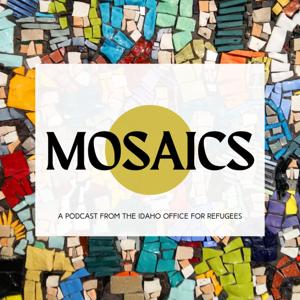


This week we talk about what it means to feel welcomed, and what it takes to reach the next level of belonging. We hear from Lana Graybeal, City of Boise Senior Community Outreach Manager, and Beth Norton, Idaho Office for Refugees Events & Partnerships Coordinator.
In September, communities across the country celebrate Welcoming Week. This global initiative by Welcoming America brings together neighbors of all backgrounds to build strong connections and affirm the importance of inclusive places in achieving collective prosperity.
Lana and her family experienced the meaning of welcome when she was 5 years old and resettled in the United States as refugees. And Beth, who moved around a lot as kid, remembers feeling alone in a new school and how it felt to have someone reach out. Tune in to hear their experiences.
Links and events mentioned in this episode:
Idaho Welcoming Week Events 2023:
Other Events and Resources:
Contact us with your ideas, questions, and feedback at [email protected].
Thank you to the M.J. Murdock Charitable Trust for the grant funding to produce this podcast, and to the Afrosonics for our theme song, Mosaic.
Halima Hamud is a Boise State University graduate who moved to Minnesota last year to pursue a graduate degree in Development Practices.
Halima was born to Somali parents in a refugee camp in Kenya. She and her family resettled in Boise in 2009 when she was in fourth grade.
Halima was among just 62 students in the country selected as Truman Scholars in 2021. She is now studying at the University of Minnesota’s Humphrey School of Public Affairs. She has created the Circle of Excellence platform and is launching a podcast series to highlight the stories of women who have overcome obstacles to continue their profession in the states.
“I want to be able to improve the lives of refugees and former refugees here in the states,” she said, “and I want to be able to work with an organization that is stiving to improve and empower and inspire women.”
The deep polarization of our time can feel overwhelming. On today's episode, we'll explore how to move from hostility to hospitality. That's the title of a workshop created by Nick & Laura Armstrong of Glocal Community Partners and Reshma Kamal of the Islamic Center of Boise and International Rescue Committee of Boise. They aim to increase understanding of current and historical expressions of social hostility toward refugees and immigrants, and to create connections that help us see our shared humanity.
Something most Idahoans can unite around is our disdain for goatheads, also known as puncturevine. These lovely plants came to Idaho in the 1800s on sheep and livestock and have been piercing heels and paws and popping bike tires ever since.
Often people who relocate to Boise through the refugee resettlement program don’t have a car right away, so bikes are a crucial form of transportation. For them and other community members, a flat tire isn’t just a nuisance, it’s a barrier to getting to work or appointments or the grocery store.
The problem is so ubiquitous that the Boise Bicycle Project has even created a bike parade and festival called the Goathead Fest that inspires people to get out and become weed warriors, working together to clear as much of this invasive plant as we can.
And now, thanks to a partnership between the city of Boise and Boise State University, researchers have created a new hot-spot map (goatheadmap.com) to help us know where the biggest problems are.
Today’s guest is Richard Rachman, a plant ecologist, doctoral student at BSU, and one of the researchers on that team. He’s here to share with us his team's findings and how each of us can play a role in creating a more equitable city for all cyclists and pedestrians.
You can find Richard on Instagram: @a_wandering_ecologist
And be sure to check out Goathead Fest on August 19 (www.boisegoatheadfest.com), where you can meet Richard and the Idaho Office for Refugees team.
This week we’re taking a few moments to catch up on resettlement news and events in Idaho. For the next six minutes you’ll hear updates on Global Talent’s cohort of Afghan pilots, Global Gardens (which is selling at farmers markets and just opened sign-ups for its Fall CSA!), and upcoming events.
Thanks for tuning in and being part of the MOSAICS community. We’d love to hear from you! What questions, feedback, or story suggestions do you have? Please email Holly at [email protected].
Links from today’s episode:
Contact Us: [email protected]
Maya and her family came from Bosnia to Boise as refugees in 1997 when she was 11 years old. As she has seen and been a part of Boise's growth from a small sleepy town to the city it is now, she considers herself more Idahoan than Bosnian or American. Much to her parents chagrin, her first career was as a cosmetologist while she operated her hair salon for 10 years. Since then she has had a career in Higher Education working at Boise State University. Since the pandemic Maya has exchanged her salsa dance shoes for a power drill and is spending a lot more time on managing her properties than salsa dancing. Being involved in the community has always been a passion and she enjoys planning events and volunteering for various nonprofit organizations.
Amani and Bashir are experienced Afghan military pilots who served alongside U.S. allies. Now resettled in Idaho, they are part of Global Talent’s first cohort of pilots to work toward become certified commercial airline pilots in the U.S. It’s a demanding and expensive process – one they are navigating while supporting their families back home in Afghanistan. But they are determined. Once you fly, they said, your heart belongs to the sky. You can learn more about Global Talent's pilot project, one of the first of its kind in the U.S., and support these pilots at www.idahorefugees.org/pilots.html.
Judith Mwamba is a teaching assistant at the English Language Center in Boise. She loves math, music, and laughter. Judith resettled in Idaho in 2022 with her young son, mother and brothers, and they long for the day when they will be reunited with her father and older siblings. Judith shares what it's like to feel like an outsider in a new country (which she's experienced twice), how parenting has differed in the U.S. compared to Namibia in southern Africa, and how she has used her own experiences to be a light of hope for the students where she works.
From the publisher's feed

38,016 Listeners

29 Listeners

17 Listeners

5 Listeners
17 Listeners
1 Listeners
0 Listeners

22 Listeners
0 Listeners
3 Listeners

11 Listeners

10 Listeners
7 Listeners
22 Listeners

5 Listeners
0 Listeners
4 Listeners
0 Listeners

0 Listeners
0 Listeners