
Sign up to save your podcasts
Or



Ask Mai & Send Feedback
In this episode, Mai explores one of the most common issues she sees when working with business owners: becoming the bottleneck in your own business. From delayed invoicing and cash flow problems to decision fatigue and overwhelmed teams, Mai explains how business owners can unintentionally slow down growth by trying to control every decision and task themselves.
The discussion focuses on recognising the signs that you're the bottleneck, creating systems that allow your team to take ownership, and building a business that can operate successfully without relying on you for every answer.
In this episode, Mai talks about:
This episode is a reminder that successful businesses are built on systems, not individuals. The more decisions, knowledge and processes that live only in your head, the harder it becomes for your business to grow. By creating clear systems, empowering your team, and letting go of low-value tasks, you can free yourself to focus on leadership and long-term growth.
If you're feeling stuck in the day-to-day operations of your business and want help improving your systems, processes, and ultimately your profitability, reach out to our team at www.myaccountingadvantage.com.au. You can also submit questions or topic ideas via the Ask Mai link at the top of the show notes.
Learn more about My Accounting Advantage
Disclaimer
The advice contained in this presentation is general in nature only and should not be acted on without first seeking professional advice.
Your personal circumstances have not been taken into account, and you should consider the appropriateness of the advice to your individual needs.
Ask Mai & Send Feedback
Franking credits are one of the most valuable tax benefits available to business owners operating through a company structure. In this episode, Mai breaks down what a franking account is, how franking credits are created, and why they can play a powerful role in building and protecting long-term wealth.
The conversation also explores some of the most common business and investment structures used by Australians. With proposed changes to the taxation of family trusts on the horizon, understanding how your structure works, and whether it's still the right fit, is more important than ever.
Mai explains the practical reasons behind each structure, how profits can be moved and protected, and why a proactive review today could save significant tax and complexity in the future.
In this episode, Mai talks about:
If you'd like help reviewing your business structure, understanding franking credits, or planning for upcoming tax changes, reach out to our team at www.myaccountingadvantage.com.au. You can also submit questions or topic ideas via the Ask Mai link at the top of the show notes.
Learn more about My Accounting Advantage
Disclaimer
The advice contained in this presentation is general in nature only and should not be acted on without first seeking professional advice.
Your personal circumstances have not been taken into account, and you should consider the appropriateness of the advice to your individual needs.
Ask Mai & Send Feedback
Most people think retirement is something to worry about later. The problem is that later arrives much faster than expected.
In this episode, Mai Harris is joined by financial planner Nicholle Shepherd to discuss why building wealth and planning for retirement should start much earlier. Together, they explore the small financial habits that can have a significant impact over time, and why creating financial freedom isn't about reaching a certain age: It's about having choices.
The conversation covers the importance of understanding your current financial position, making the most of superannuation, and creating a strategy that aligns your long-term goals with your tax and wealth-building opportunities.
Whether you're in your 20s, raising a family, or starting to think seriously about retirement, this episode highlights the value of planning early and seeking advice before time becomes your biggest obstacle.
In this episode, Mai and Nicholle talk about:
This episode is a reminder that financial freedom doesn't happen by accident. The earlier you start planning, the more options you'll have when it comes time to decide how you want to spend your future.
If you'd like help aligning your tax strategy, investments and long-term wealth goals, reach out to our team at www.myaccountingadvantage.com.au. You can also submit questions or topic ideas via the Ask Mai link at the top of the show notes.
Learn more about My Accounting Advantage
Disclaimer
The advice contained in this presentation is general in nature only and should not be acted on without first seeking professional advice.
Your personal circumstances have not been taken into account, and you should consider the appropriateness of the advice to your individual needs.
Ask Mai & Send Feedback
Everything you thought you knew about borrowing has just changed.
In this timely episode, Mai unpacks one of the biggest shifts currently impacting property investors: what borrowing actually looks like now under the new lending rules.
Following the recent Federal Budget announcements, the landscape has changed almost overnight. Restrictions on negative gearing for existing properties and changes to how banks assess borrowing capacity are already flowing through to lenders, and the impact is immediate.
But this episode isn’t about panic. It’s about understanding what’s changed and how to adjust your strategy moving forward.
Joined by in-house mortgage broker Luke Talbot, the conversation brings together both tax and lending expertise to unpack how these changes are playing out in the real world.
In this episode, Mai and Luke talk about:
This episode is a reminder that while borrowing has become more complex, the opportunity to build wealth hasn’t disappeared. It just requires a more considered approach.
Reach out to the team at www.myaccountingadvantage.com.au if you’re thinking about buying, investing, or would like to review your current position.
You can also submit questions or topic ideas via the Ask Mai link at the top of the show notes.
Learn more about My Accounting Advantage
Disclaimer
The advice contained in this presentation is general in nature only and should not be acted on without first seeking professional advice.
Your personal circumstances have not been taken into account, and you should consider the appropriateness of the advice to your individual needs.
Ask Mai & Send Feedback
With multiple obligations hitting at different times—BAS, PAYG instalments, payroll tax, super, and annual income tax—it can feel like money is constantly leaving your account. This episode cuts through that confusion and explains why it often comes down to a lack of structure, visibility, and preparation.
Mai walks through how the tax system actually works, including the difference between your income tax account and your activity statement account, and why PAYG instalments often catch business owners off guard. By understanding how these obligations are calculated and when they fall due, the pressure quickly becomes more manageable.
The episode also focuses on practical systems business owners can implement immediately to stay in control, without the stress of scrambling for cash each quarter.
In this episode, Mai talks about:
This episode is a reminder that paying tax is often a sign your business is performing, but without the right systems in place, it can quickly feel overwhelming.
If you’d like help setting this up for your business or understanding your tax obligations, reach out to our team at www.myaccountingadvantage.com.au. You can also submit questions or topic ideas via the Ask Mai link at the top of the show notes.
Learn more about My Accounting Advantage
Disclaimer
The advice contained in this presentation is general in nature only and should not be acted on without first seeking professional advice.
Your personal circumstances have not been taken into account, and you should consider the appropriateness of the advice to your individual needs.
Ask Mai & Send Feedback
In this episode, Mai and Lee unpack a powerful mindset shift that’s impacting more business owners and homeowners than ever before, how we think about debt, and specifically, our mortgage. With rising costs and business pressures, many Australians are feeling the weight of their loans, but this episode challenges whether that stress is actually justified.
Using a real client case study, Mai breaks down how small shifts in perspective can completely change financial confidence, decision-making, and even business performance. The episode also explores how comparing the cost of debt to the true cost of living without it can provide much-needed clarity.
In this episode, Mai talks about:
If you’d like help understanding how your current debt structure is working for or against you, reach out to our team or speak with your accountant for tailored advice. You can also submit questions or topic ideas via the Ask Mai link at the top of the show notes.
Learn more about My Accounting Advantage
Disclaimer
The advice contained in this presentation is general in nature only and should not be acted on without first seeking professional advice.
Your personal circumstances have not been taken into account, and you should consider the appropriateness of the advice to your individual needs.
Ask Mai & Send Feedback
In this episode, Mai and Lee break down one of the most common misconceptions at tax time:
“If I spend money, I’ll get it all back in tax.”
With the end of financial year approaching, many business owners and individuals fall into the same trap. That is, making rushed purchases purely for a deduction, without considering the actual return.
This episode cuts through that thinking.
Mai unpacks why tax deductions don’t work the way most people assume, and why the real goal isn’t to reduce tax at all costs. It’s to make financially sound decisions that deliver a return.
From understanding your effective tax rate to making strategic investment decisions, this episode is a must-listen for anyone navigating EOFY planning.
In this episode, Mai talks about:
Spending money for the sake of a deduction can leave you worse off. Mai encourages you to do a sense-check before any EOFY decision: “Would I do this on 1 July?”
If you're unsure what EOFY strategies actually make sense for your situation, reach out to Mai on Instagram at the_maiharris or submit your questions via the Ask Mai link at the top of the show notes.
Learn more about My Accounting Advantage
Disclaimer
The advice contained in this presentation is general in nature only and should not be acted on without first seeking professional advice.
Your personal circumstances have not been taken into account, and you should consider the appropriateness of the advice to your individual needs.
Ask Mai & Send Feedback
In this episode, Mai and Lee tackle one of the biggest questions coming out of the recent Federal Budget: what investments still make sense when the rules are changing?
There’s a lot of noise right now. Changes to the proposed 50% CGT discount, restrictions on negative gearing, and potential new minimum tax rules for trusts. It’s no surprise investors are feeling uncertain.
But this episode isn’t about fear. It’s about refocusing on what still works and how to adjust your strategy without stepping back from building wealth.
Mai breaks down what’s actually changing, what’s still available, and why the key isn’t to stop investing, but to invest smarter, with the right structure and advice.
In this episode, Mai talks about:
This episode is a reminder that while the rules may change, wealth-building opportunities don’t disappear, they evolve.
If you’re unsure how these changes affect your current structure or future plans, now is the time to get clarity and build a strategy that works under the new rules.
You can also submit questions or topic ideas via the Ask Mai link at the top of the show notes.
Learn more about My Accounting Advantage
Disclaimer
The advice contained in this presentation is general in nature only and should not be acted on without first seeking professional advice.
Your personal circumstances have not been taken into account, and you should consider the appropriateness of the advice to your individual needs.
Ask Mai & Send Feedback
In this episode, Mai and Lee break down the key announcements from the latest Federal Budget. Importantly, they explore what these changes actually mean for business owners, property investors, and everyday Australians. With headlines creating panic and confusion, this episode cuts through the noise to focus on what matters and what actions should be taken.
Mai walks through the three major proposed changes dominating the conversation: the removal of the 50% Capital Gains Tax (CGT) discount, changes to negative gearing, and new rules around the taxation of family trusts.
Mai unpacks how negative gearing currently works, why many “investors” are actually everyday Australians taking on risk, and what removing these incentives could mean for housing supply, rental prices, and borrowing capacity. The conversation also explores how these changes may affect younger Australians trying to enter the market, and why the proposed reforms could have broader economic consequences beyond tax.
In this episode, Mai talks about:
This episode is a timely reminder that not all headlines tell the full story. Before making any decisions, it’s critical to understand how proposed changes apply to your specific situation. If you’d like help understanding how these proposed changes may affect you, reach out to our team or speak with your accountant before taking action.
You can also submit questions or topic ideas via the Ask Mai link at the top of the show notes.
Learn more about My Accounting Advantage
Disclaimer
The advice contained in this presentation is general in nature only and should not be acted on without first seeking professional advice.
Your personal circumstances have not been taken into account, and you should consider the appropriateness of the advice to your individual needs.
Ask Mai & Send Feedback
In this episode, Mai and Lee unpack one of the most misunderstood areas of running a company: director’s loans. While many business owners see this account in their financials, very few truly understand how it works, or how costly it can become if handled incorrectly.
Mai breaks down what a director’s loan actually is, why it exists, and how it’s often used to record personal spending through the business. More importantly, she explains how Division 7A rules come into play, and why they’re designed to stop business owners from accessing company funds without paying the right amount of tax.
In this episode, Mai talks about:
This episode is a reminder that understanding how you take money out of your business is just as important as how you make it. When used correctly, tools like director’s loans can provide flexibility and control, but without the right advice, they can quickly turn into one of the most expensive mistakes a business owner makes.
If you’d like a copy of Mai’s Director’s Loan Compliance Checklist, DM the word Loan on Instagram at @the_maiharris.
You can also submit questions or topic ideas via the Ask Mai link at the top of the show notes.
Learn more about My Accounting Advantage
Disclaimer
The advice contained in this presentation is general in nature only and should not be acted on without first seeking professional advice.
Your personal circumstances have not been taken into account, and you should consider the appropriateness of the advice to your individual needs.
From the publisher's feed
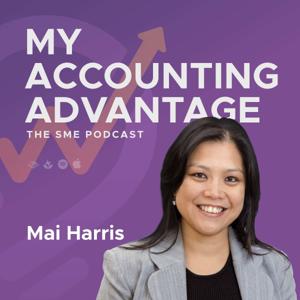
My Accounting Advantage is a practical, no‑fluff podcast for business owners, professionals, and property investors who want to make smarter financial decisions with confidence.
Hosted…
IG: www.instagram.com/the_maiharris/
Facebook: www.facebook.com/profile.php?id=61587008353108
Linkedin: www.linkedin.com/in/mai-harris-4a4698375/
Web: www.myaccountingadvantage.com.au/