
Sign up to save your podcasts
Or

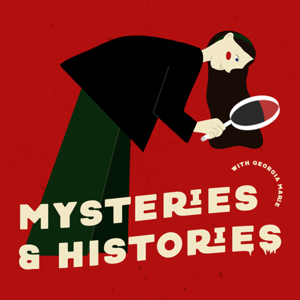
By Georgia Marie


4.5
161161 ratings


The podcast currently has 335 episodes available.
The most played episodes among Podcast App listeners.
In December 1996, 12-year-old Celina Mays went to bed after church at her family’s home in Willingboro, New Jersey. She was nine months pregnant and due to give birth within weeks. By morning, she was gone, her blankets had been arranged over pillows to make it look as though she was still asleep, while her purse, prenatal vitamins, and other belongings remained behind. No one has ever publicly identified the father of Celina’s baby. Her family said she had mentioned a 16-year-old boy but never gave a name; investigators have never established whether she gave birth or what became of her child. Nearly 30 years later, Celina has never been found. Willingboro Police and the National Center for Missing & Exploited Children still treat it as an open endangered-missing-person investigation, and authorities have said they remain hopeful that both Celina and her child could be alive.

In October 2006, a man harvesting dogwood plants found a young woman’s remains in a marshy field near the Darlington Nuclear Plant in Bowmanville, Ontario. Investigators estimated she was 18 to 25 years old and that she may have died years before she was discovered. She was found with a ring marked “Burns,” but no identification. Police believe she was likely murdered; modern DNA analysis indicates African and Southeast Asian ancestry, possibly with Caribbean roots. Nearly two decades later, Bowmanville Jane Doe still has no name, and no one has been charged in her death.
In 1887, reporter Nellie Bly faked mental illness to be committed to New York City’s Women’s Lunatic Asylum on Blackwell’s Island. For ten days, she witnessed cold baths, rotten food, beatings, neglect, and women held there despite showing no sign of mental illness. Her exposé, Ten Days in a Mad-House, shocked the public and helped secure increased funding and reforms for the institution. More broadly, it changed journalism: Bly proved that going undercover could expose abuses that officials preferred to keep hidden. Two years later, she became a global celebrity by travelling around the world alone in 72 days, 6 hours, and 11 minutes, beating Jules Verne’s fictional 80-day journey. But it was her time inside the asylum that made Nellie Bly a pioneer of investigative reporting.
On the morning of February 10, 1990, two armed men walked into Las Cruces Bowl in New Mexico, forced seven people into an office, stole less than $5,000 from the safe, and shot every victim before setting the room on fire. Steven Teran, 26; his two-year-old daughter, Valerie; six-year-old Paula Holguin; and 13-year-old Amy Houser were killed in the attack. Three others survived: bowling-alley manager Stephanie Senac, her 12-year-old daughter Melissa Repass, and cook Ida Holguin. Senac died in 1999 from complications connected to the wounds she suffered, bringing the death toll linked to the massacre to five. More than 35 years later, no one has been charged. The two gunmen have never been identified, and the Las Cruces Police Department still considers the case open, one of New Mexico’s most devastating unsolved crimes.
In 1796, English doctor Edward Jenner noticed a local belief that milkmaids who caught cowpox, a usually mild disease, seemed protected from smallpox, one of history’s deadliest infections. He tested the idea by taking material from a cowpox sore on milkmaid Sarah Nelmes’s hand and inoculating eight-year-old James Phipps. James became mildly ill, recovered, and later did not develop smallpox when Jenner tested whether the cowpox exposure protected him. The experiment was ethically unacceptable by modern standards, but it demonstrated the principle behind vaccination: safely training the immune system to recognize a dangerous disease. Jenner did not invent the broader idea of inoculation, earlier practices such as variolation already existed but his cowpox-based method was far safer and became the first successful vaccine. The word “vaccine” itself comes from vacca, Latin for cow. Almost two centuries later, worldwide vaccination campaigns led the World Health Organization to declare smallpox eradicated in 1980, the only human disease ever eradicated globally.
The podcast currently has 335 episodes available.

17,275 Listeners

2,775 Listeners
6,712 Listeners

2,646 Listeners

369,817 Listeners
1,016 Listeners
919 Listeners
18,080 Listeners

10,426 Listeners
884 Listeners
18,970 Listeners
4,509 Listeners
3,968 Listeners
466 Listeners

333 Listeners